No portrait yet
Karapapakhs Erotic
Turkey (Kars, Ardahan, Igdir provinces) and Iran (Sulduz plain around Naqadeh, West Azerbaijan province), with smaller communities in Georgia, Azerbaijan and Dagestan; ancestral home on the Borchali plain and Debed valley of the South Caucasus
Karapapakh dialect of Azerbaijani (Turkic, Oghuz branch); Turkish and Persian as national languages
Islam; Twelver Shia predominant in Iran, both Shia and Sunni communities in Turkey
Oghuz Turkic people closely related to Azerbaijanis; also known as Terekeme; regional communities in Kars, Sulduz (Naqadeh), Borchali and Derbent
About Karapapakhs People
The Karapapakhs take their name from a hat. In Turkic, qara papaq means black hat, and the tall black sheepskin cap their horsemen wore was distinctive enough that neighbors and imperial census-takers alike used it as an ethnonym. Their other name, Terekeme, comes from an Arabic plural for Turkmen and carries the sense of nomads. Both names describe the same thing: an Oghuz Turkic pastoral people of the South Caucasus borderlands, close cousins of the Azerbaijanis, who lived by horses, sheep and seasonal movement between lowland winter pastures and mountain summer camps.
Their old country lay along the Debed river and the Borchali plain, in what is now the Armenia-Georgia border zone and the Qazax district of Azerbaijan. Russia's conquest of the region in the early nineteenth century broke that homeland apart. Rather than live under the tsar, large numbers moved south and west. One body of them, under a chief who agreed to supply cavalry to the Qajar crown prince Abbas Mirza, was granted the Sulduz plain south of Lake Urmia, where their descendants still farm and herd around the Iranian town of Naqadeh. Others went to Ottoman territory around Kars, only to find Russia catching up with them when that province was annexed in 1878. When Kars returned to Turkey in 1921, the Karapapakhs there became Turkish citizens, and today they form a substantial part of the population of Kars, Ardahan and Igdir provinces, with older colonies in Amasya, Sivas and Tokat. Smaller communities remain in Georgia's Kvemo Kartli and in Azerbaijan, and a related Terekeme population lives near Derbent in Dagestan.
They speak a dialect of Azerbaijani, which is Oghuz Turkic and mutually intelligible with Turkish, close enough that in Turkey the younger generations have largely shifted to standard Turkish while keeping a recognizable accent and a stock of local words. Religion divides them more than language does. The community is Muslim, with Twelver Shia predominant in Iran and both Shia and Sunni villages in Turkey, sometimes side by side in the same district. Their most visible cultural export is the Terekeme dance, a fast, high-stepping dance performed with the arms flung wide that Azerbaijani folk ensembles treat as a signature piece. They also share in the ashiq tradition of wandering bard-poets who sing epic and improvised verse to the saz, and the bold, geometric Kazakh and Borchali rugs were woven in their old grazing country. Soviet censuses counted them separately in 1926 and then folded them into the Azerbaijani total, so their numbers are guesses. In Turkey and Iran they are increasingly a heritage identity rather than a separate way of life.
Related ethnic groups
Groups that share Karapapakhs's homeland, region, language, or religious tradition. These are likely candidates for comparative phenotype reference.
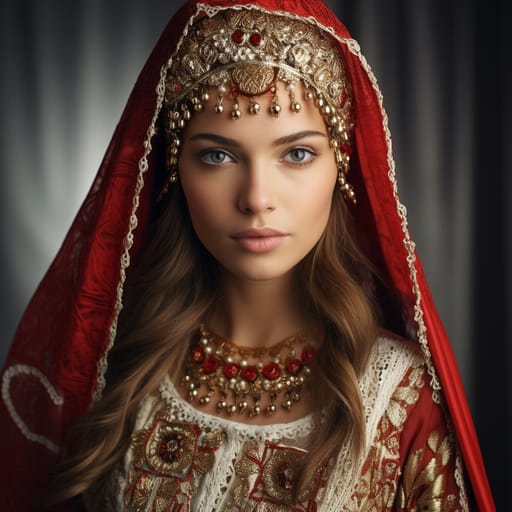
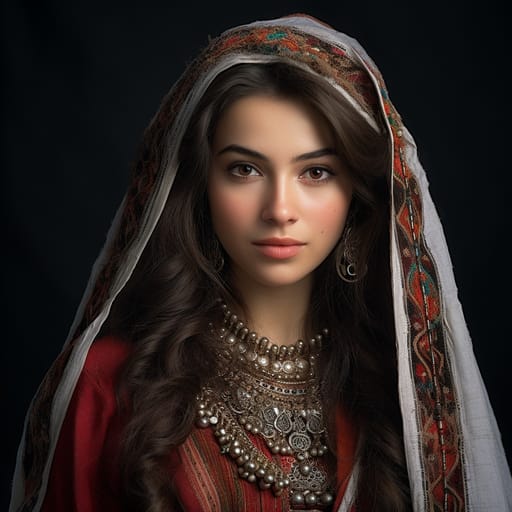
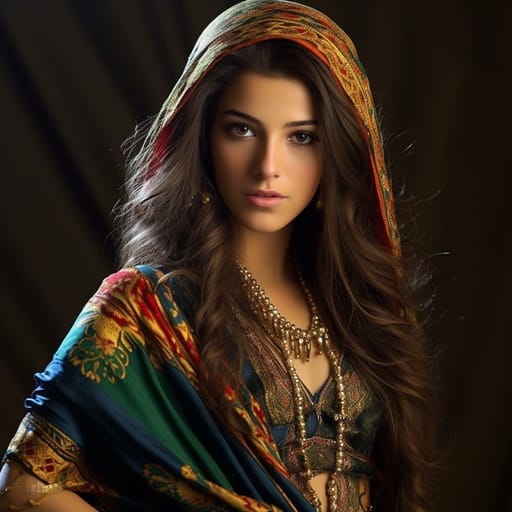
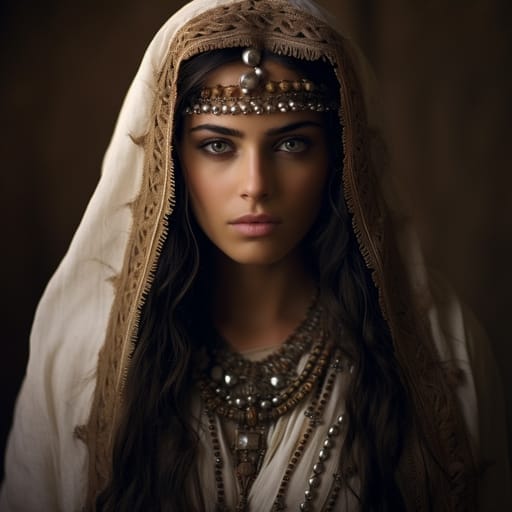
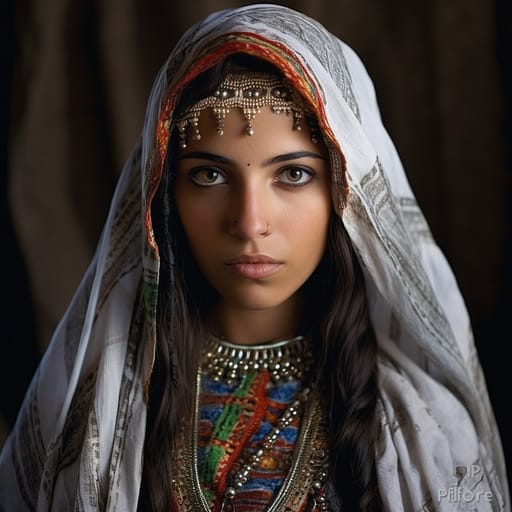
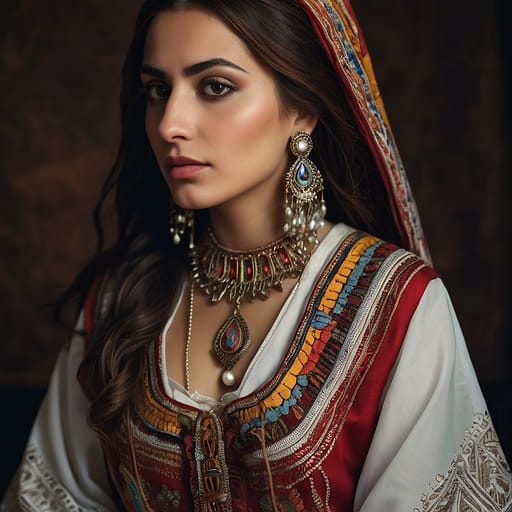
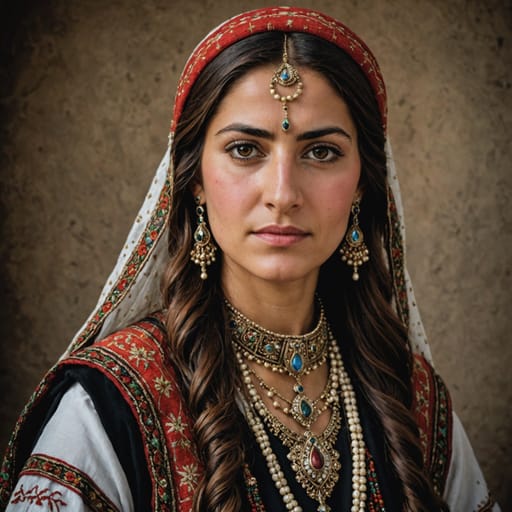
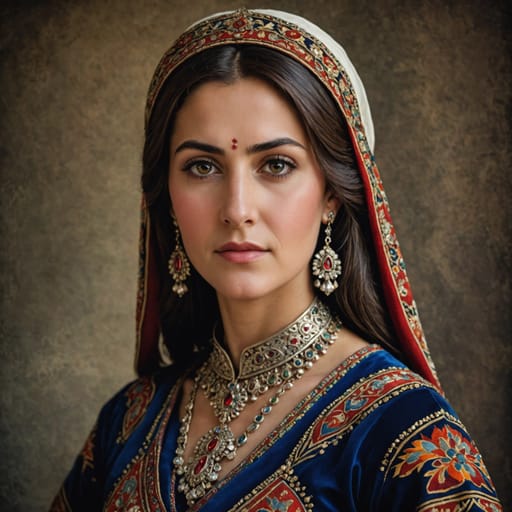
Typical Karapapakhs Phenotypes
Reference for AI generation: hair, eyes, skin, facial structure, build
Karapapakhs Body & Anatomy Reference
Per-feature anatomical profile for AI nude generation: Levantine / Mediterranean Middle Eastern phenotype
Karapapakhs Boobs & Breasts
Bust reference for Karapapakhs women: medium-to-large cup, full, moderate-to-high projection, which is typical of Levantine / Mediterranean Middle Eastern ancestry. Areolas measure about 32-46mm across, with medium-brown to dark-brown pigmentation. Body type (mesomorph with fuller hip-and-bust deposition) shapes the bust as well, so Karapapakhs tits are usually full and soft, fuller projection than the North-African Berber norm. In AI imagery, keep the forward-set shape rather than drifting toward the smaller East Asian bust profile.
Karapapakhs Ass & Hips
The Karapapakhs ass is typically medium-to-full, moderate projection, broader hip profile, which sets it apart from the slim East Asian narrow-hip profile. Underneath, the pelvis shows medium-to-wide iliac crests, fuller gluteal-femoral deposition, part of the Levantine / Mediterranean Middle Eastern skeletal pattern. For Karapapakhs butt pics and AI renders, match that silhouette and the overall build (mesomorph with fuller hip-and-bust deposition).
Karapapakhs Vagina & Pussy
Karapapakhs pussy and vulvar anatomy presents medium-brown to dark-brown labial pigmentation, fuller labia minora, consistent with the Levantine / Mediterranean Middle Eastern phenotype's pigmentation pattern. Karapapakhs pubic hair is typically wavy-to-coiled medium-coarse dark texture, dense distribution, in the inverted-triangle pattern. For anatomically accurate Karapapakhs pussy renders the labial coloration should match the surrounding olive to medium-brown skin tone with a continuous gradient, and the hair should keep its wavy-to-coiled medium-coarse dark texture.
Karapapakhs Dicks & Penis
Karapapakhs dicks follow the Levantine / Mediterranean Middle Eastern reference data: regional mean ~14cm erect; moderate-to-above-average girth; medium-brown shaft pigmentation. Shaft color should track the olive to medium-brown skin tone with a smooth change toward the glans, and Karapapakhs pubic hair keeps its wavy-to-coiled medium-coarse dark texture.
Karapapakhs Body, Curves & Build
Karapapakhs body type and overall build presents as mesomorph with fuller hip-and-bust deposition, with mean adult female BMI 25-28: the characteristic Levantine / Mediterranean Middle Eastern habitus. Karapapakhs curves and proportions should keep the regional skeletal frame (height, shoulder-to-hip ratio, limb proportions) rather than a generic mesomorph default.
Karapapakhs Skin Tone & Hair Texture
Karapapakhs skin sits in the olive to medium-brown (Fitzpatrick III-V) band. Hair is typically wavy-to-curly 2B-3B, predominantly dark-brown to black, in keeping with the Levantine / Mediterranean Middle Eastern phenotype. In nude renders the skin should stay one even tone from face to body, and body, pubic and head hair should match.
Explore phenotype categories
Structured taxonomy with peer-reviewed scales · 22 anatomical categories
Erotic Poses & Sex Positions
From the pose catalog: 219 named positions with reference skeletons
Frequently asked questions about Karapapakhs people
Where is the Karapapakhs homeland?
The Karapapakhs homeland is Turkey (Kars, Ardahan, Igdir provinces) and Iran (Sulduz plain around Naqadeh, West Azerbaijan province), with smaller communities in Georgia, Azerbaijan and Dagestan; ancestral home on the Borchali plain and Debed valley of the South Caucasus in Western Asia.
What language do Karapapakhs people speak?
Karapapakhs people primarily speak Karapapakh dialect of Azerbaijani (Turkic, Oghuz branch); Turkish and Persian as national languages.
What religion do Karapapakhs people practice?
The predominant religion among Karapapakhs people is Islam; Twelver Shia predominant in Iran, both Shia and Sunni communities in Turkey.






Make your own Karapapakhs images
Five a day, free, no credits to buy. The studio starts from this group's phenotype data, so you can set body type, pose and style and keep the traits accurate.
Start with Karapapakhs