Help us get this right
Does this portrait look right for Samaritans?
One tap. It takes a second and it is recorded.
0 say it looks right, 1 says it looks off.
Samaritans Erotic
Mount Gerizim (Kiryat Luza) near Nablus, West Bank, and Holon, Israel
Modern Hebrew and Arabic (daily); Samaritan Hebrew and Samaritan Aramaic (liturgical); Afroasiatic (Semitic)
Samaritanism (Samaritan Israelite religion; Samaritan Pentateuch; Mount Gerizim)
About Samaritans People
Samaritans (self-designated Israelite Samaritans, or Shomronim) are one of the world's smallest ethnoreligious groups, numbering only several hundred to roughly a thousand people, split between the town of Holon near Tel Aviv in Israel and the village of Kiryat Luza on Mount Gerizim near Nablus in the West Bank. They trace their descent to the ancient Israelites of the northern kingdom and practice Samaritanism, a religion based on their own version of the Torah.
Society and subsistence
Samaritan religious life centers on the Samaritan Pentateuch, on the sanctity of Mount Gerizim as the chosen place of worship rather than Jerusalem, and on a hereditary priesthood. The community observes the Sabbath, festivals, and purity laws with great strictness, and its best known observance is the Passover sacrifice on Mount Gerizim, when lambs are slaughtered and roasted in a public rite that draws visitors and reflects an ancient temple practice preserved nowhere else. In daily life Samaritans speak Modern Hebrew in Israel and Arabic in the West Bank, while their liturgy preserves Samaritan Hebrew and Samaritan Aramaic. Because of the community's small size, marriage and demographic survival have been ongoing concerns.
Appearance and adornment
Samaritans are Levantine in appearance, with olive to light-brown complexions and dark hair. In everyday life they dress in ordinary modern clothing appropriate to their Israeli and Palestinian surroundings. Distinctive dress appears in religious contexts: priests and elders wear robes and head coverings, and the red fez or tarbush was historically associated with Samaritan men. During the Passover pilgrimage participants wear white garments for the sacrifice. Religious ornament and vesture, rather than a distinct daily costume, mark Samaritan identity visually.
Related ethnic groups
Groups that share Samaritans's homeland, region, language, or religious tradition. These are likely candidates for comparative phenotype reference.
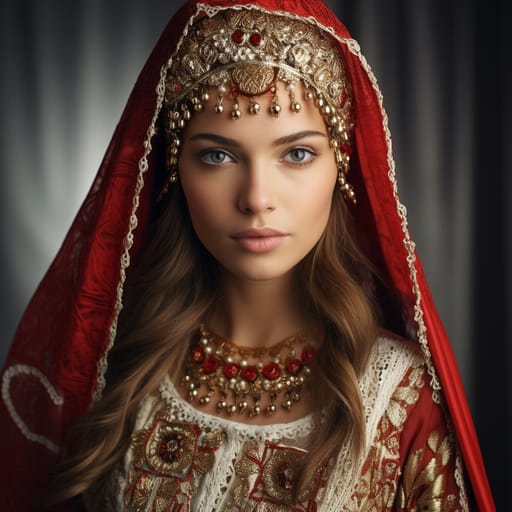
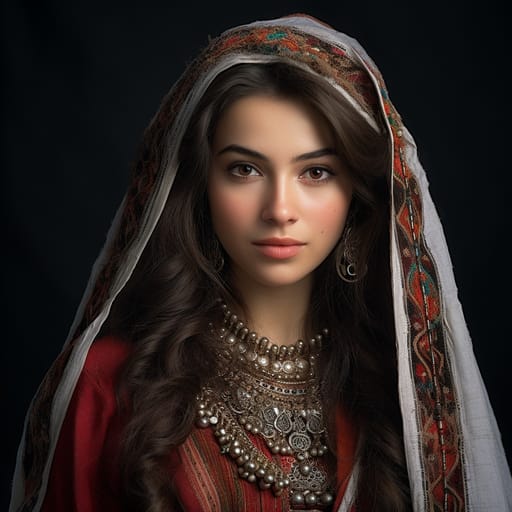
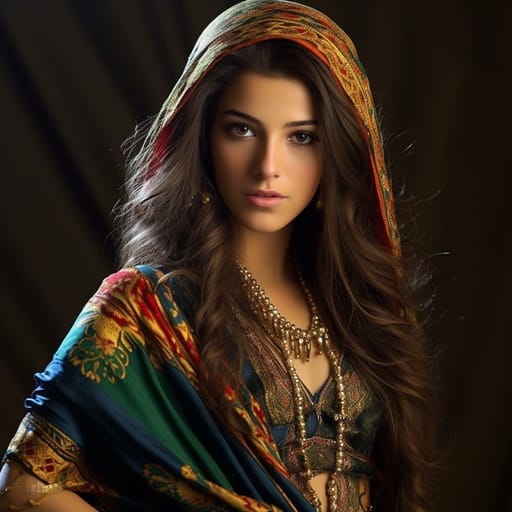
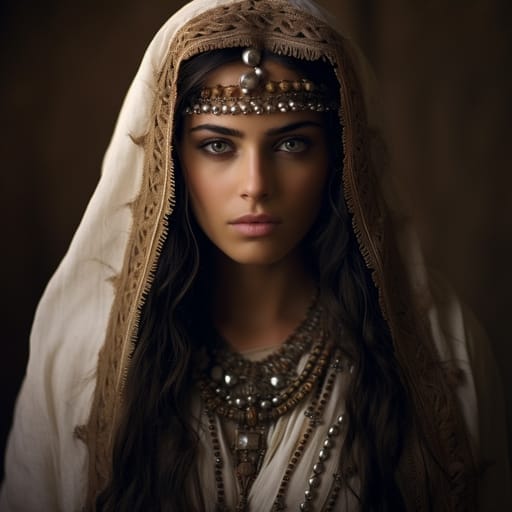
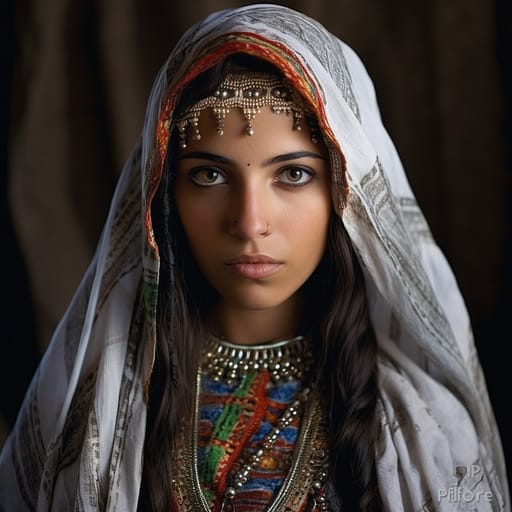
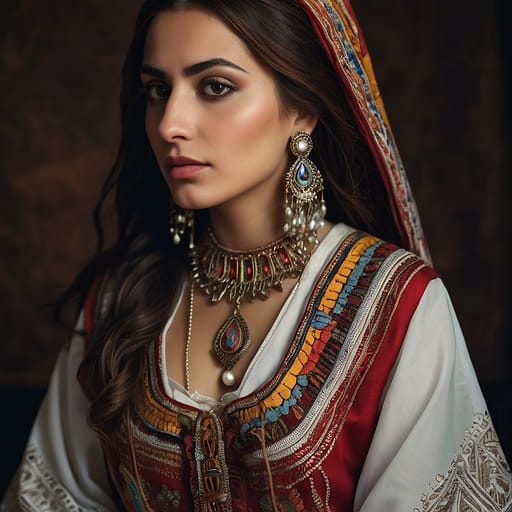
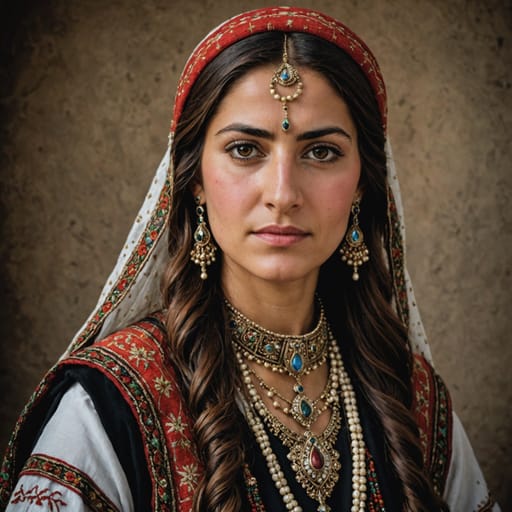
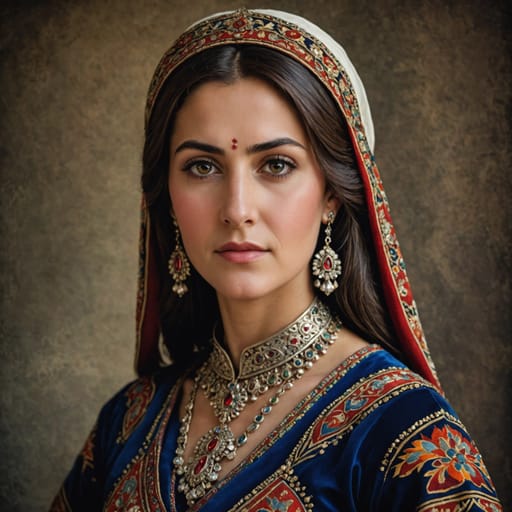
Typical Samaritans Phenotypes
Reference for AI generation: hair, eyes, skin, facial structure, build
Samaritans Body & Anatomy Reference
Per-feature anatomical profile for AI nude generation: Levantine / Mediterranean Middle Eastern phenotype
Samaritans Boobs & Breasts
The typical Samaritans bust is medium-to-large cup, full, moderate-to-high projection, in line with the wider Levantine / Mediterranean Middle Eastern pattern. Areolas usually fall in the 32-46mm range, with medium-brown to dark-brown areolar pigmentation against the olive-to-light-brown skin tone. Compared with the smaller East Asian bust profile, Samaritans breasts sit forward and are generally full and soft, fuller projection than the North-African Berber norm. A faithful AI render of Samaritans tits keeps that shape and areola size.
Samaritans Ass & Hips
Butt shape among Samaritans women: medium-to-full, moderate projection, broader hip profile, over medium-to-wide iliac crests, fuller gluteal-femoral deposition. This follows Levantine / Mediterranean Middle Eastern ancestry and looks quite unlike the slim East Asian narrow-hip profile. An accurate Samaritans ass in adult AI imagery keeps both the silhouette and the overall build (mesomorph with fuller hip-and-bust deposition) instead of a generic average.
Samaritans Vagina & Pussy
Vulvar anatomy among Samaritans women: medium-brown to dark-brown labial pigmentation, fuller labia minora. Pubic hair tends to be wavy-to-coiled medium-coarse dark texture, dense distribution, in the usual inverted-triangle pattern. Both follow Levantine / Mediterranean Middle Eastern pigmentation, which is why Samaritans pussy renders should not fall back on a pale, sparse Western template.
Samaritans Dicks & Penis
The Samaritans cock profile, from Levantine / Mediterranean Middle Eastern anthropometric data: regional mean ~14cm erect; moderate-to-above-average girth; medium-brown shaft pigmentation. Pubic hair has a wavy-to-coiled medium-coarse dark texture and forms the usual inverted-V pattern. Whether Samaritans men are circumcised follows religious and cultural practice rather than phenotype.
Samaritans Body, Curves & Build
Build and curves among Samaritans women follow the Levantine / Mediterranean Middle Eastern pattern: mesomorph with fuller hip-and-bust deposition, mean adult female BMI 25-28. Proportions matter as much as skin tone, so Samaritans figures should keep their regional height and limb ratios.
Samaritans Skin Tone & Hair Texture
The Samaritans skin range is olive to medium-brown (Fitzpatrick III-V), and hair tends to be wavy-to-curly 2B-3B, predominantly dark-brown to black. That combination marks the Levantine / Mediterranean Middle Eastern phenotype, and skin tone is the trait AI generators most often get wrong for Samaritans women.
Explore phenotype categories
Structured taxonomy with peer-reviewed scales · 22 anatomical categories
Erotic Poses & Sex Positions
From the pose catalog: 219 named positions with reference skeletons
Frequently asked questions about Samaritans people
Where is the Samaritans homeland?
The Samaritans homeland is Mount Gerizim (Kiryat Luza) near Nablus, West Bank, and Holon, Israel in Western Asia.
What language do Samaritans people speak?
Samaritans people primarily speak Modern Hebrew and Arabic (daily); Samaritan Hebrew and Samaritan Aramaic (liturgical); Afroasiatic (Semitic).
What religion do Samaritans people practice?
The predominant religion among Samaritans people is Samaritanism (Samaritan Israelite religion; Samaritan Pentateuch; Mount Gerizim).






Make your own Samaritans images
Five a day, free, no credits to buy. The studio starts from this group's phenotype data, so you can set body type, pose and style and keep the traits accurate.
Start with Samaritans