No portrait yet
Lebanese Protestants Erotic
Lebanon, mainly Beirut and its suburbs, with older congregations in Sidon, Tripoli and mountain and southern villages; diaspora in North America, Australia and Europe
Arabic, Lebanese dialect (Semitic, Afroasiatic); Armenian among Armenian Evangelicals (Indo-European); English widely used through church schools
Protestant Christianity: Presbyterian and Reformed, Armenian Evangelical, Baptist, Anglican, Pentecostal and other evangelical churches
Part of Lebanon's Christian population; includes the National Evangelical Synod, Armenian Evangelicals, Baptists, Anglicans and Pentecostals
About Lebanese Protestants People
Lebanon's Protestants are a community built on schools, a Bible translation and a few stubborn converts. Most speak Arabic, and a smaller group speaks Armenian. Their families left the older Eastern churches for congregations started by American and British missionaries in the nineteenth century. Lebanese politics is organized by religious sect, and in that system they are the Injiliyyun, the Evangelicals. They are one of the country's eighteen officially recognized religious communities, and a small one.
The story starts in Beirut in the 1820s with missionaries of the American Board. Almost all converts came from the older churches: Maronite, Greek Orthodox and Armenian. Leaving Islam was not a realistic option under Ottoman rule. Switching churches carried a price. As'ad al-Shidyaq was a Maronite scholar who took up the new teaching and died locked up in a monastery around 1830. The community still remembers him as its first martyr. Only in 1850 did an imperial decree recognize Protestants as a separate community in the empire. That meant they could handle their own marriages and records instead of answering to the churches they had left.
Their influence has always been far larger than their numbers. Missionaries and local scholars produced the Van Dyck Arabic Bible, finished in 1865 and still the standard text for Arabic-speaking Protestants. Butrus al-Bustani, a convert who helped with that translation, went on to compile an Arabic encyclopedia and dictionary and to found a school open to every sect. That work makes him a central figure of the Nahda, the Arab cultural revival of the nineteenth century. The Syrian Protestant College, opened in 1866, became the American University of Beirut. A girls' school opened by missionaries in the 1830s grew into the Lebanese American University, and Armenian Evangelicals founded Haigazian University in 1955.
Today the community is less a single church than a federation of churches. The National Evangelical Synod of Syria and Lebanon carries the Presbyterian and Reformed tradition. Alongside it are Armenian Evangelical congregations, Baptists, Anglicans, Pentecostals and several smaller groups. The Supreme Council of the Evangelical Community in Syria and Lebanon represents them all. Most members live in and around Beirut, and older congregations remain in Sidon, Tripoli and a number of villages in the mountains and the south. The community holds one reserved seat in Parliament, for Beirut. Worship centers on the sermon, hymns in Arabic or Armenian and Bible study, not on icons, saints' days or pilgrimages, which sets them apart from their Maronite and Orthodox neighbors. Like other Lebanese Christians, many have emigrated, and congregations with Lebanese roots now meet in North America, Australia and Europe.
Related ethnic groups
Groups that share Lebanese Protestants's homeland, region, language, or religious tradition. These are likely candidates for comparative phenotype reference.
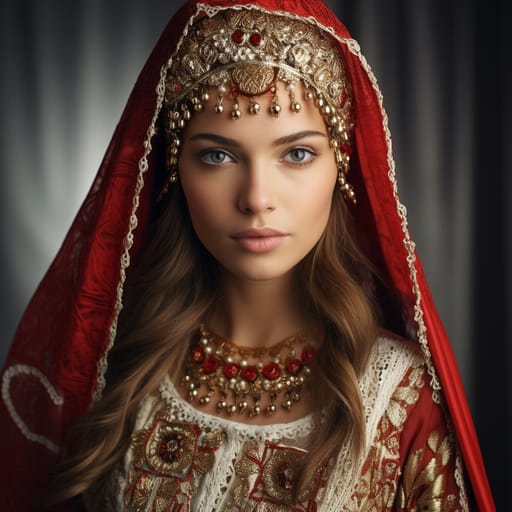
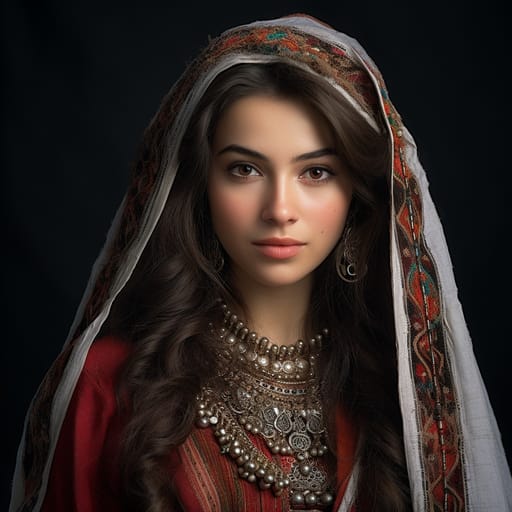
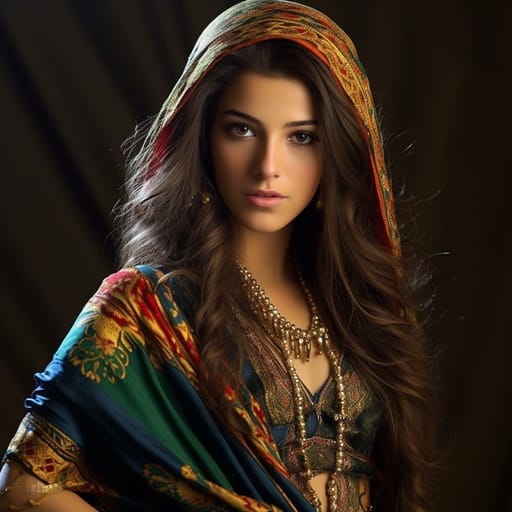
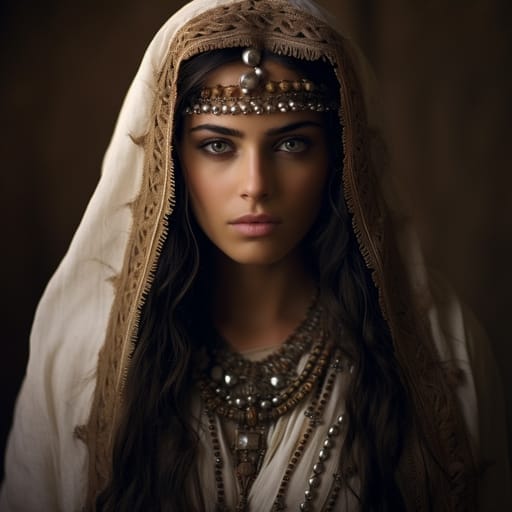
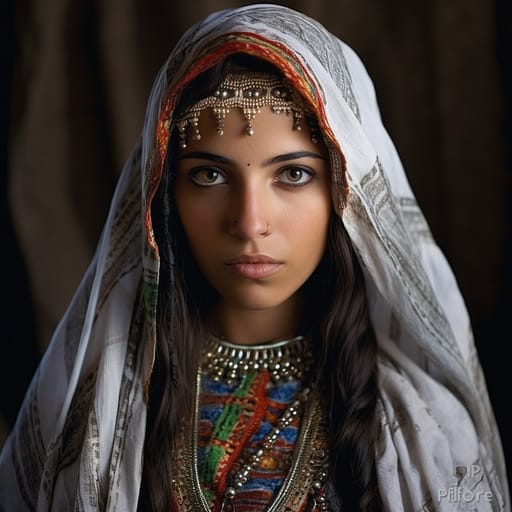
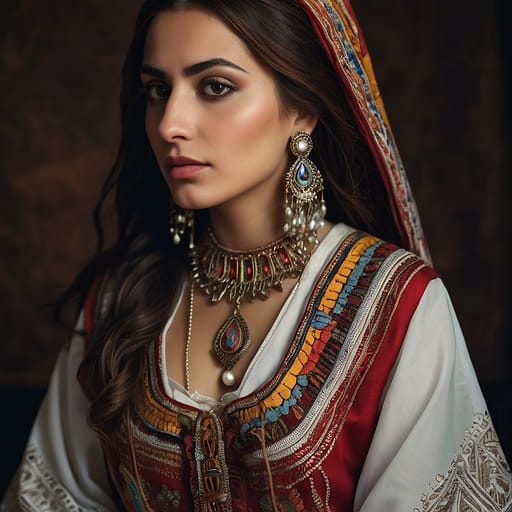
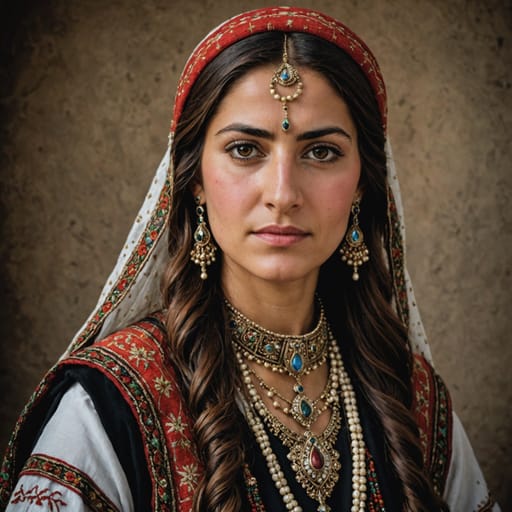
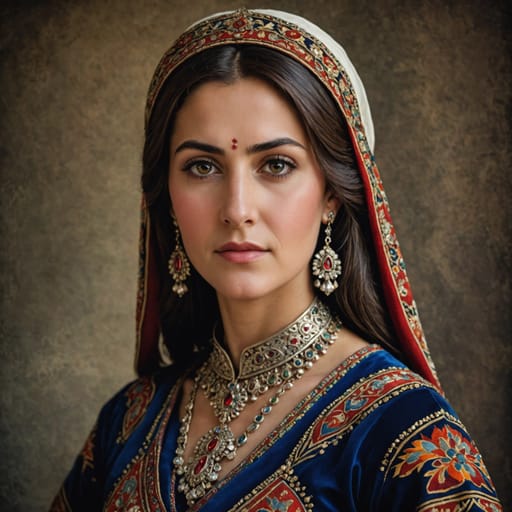
Typical Lebanese Protestants Phenotypes
Reference for AI generation: hair, eyes, skin, facial structure, build
Lebanese Protestants Body & Anatomy Reference
Per-feature anatomical profile for AI nude generation: Levantine / Mediterranean Middle Eastern phenotype
Lebanese Protestants Boobs & Breasts
Lebanese Protestants tits and boobs run medium-to-large cup, full, moderate-to-high projection, the classic Levantine / Mediterranean Middle Eastern bust profile. Lebanese Protestants nipples and areolas show medium-brown to dark-brown areolar pigmentation against the olive-to-light-brown skin tone, with areolar diameter typically in the 32-46mm range and forward-set positioning rather than the smaller East Asian bust profile. Lebanese Protestants breasts trend full and soft, fuller projection than the North-African Berber norm, a function of the mesomorph with fuller hip-and-bust deposition body habitus and the mean adult female BMI 25-28. For anatomically accurate AI-generated Lebanese Protestants nudes the render preserves the medium-to-large cup, full, moderate-to-high projection shape, 32-46mm areolas with medium-brown to dark-brown pigmentation, and the torso proportions of the Levantine / Mediterranean Middle Eastern phenotype.
Lebanese Protestants Ass & Hips
Lebanese Protestants hips and butt usually read as medium-to-full, moderate projection, broader hip profile. The skeletal base is medium-to-wide iliac crests, fuller gluteal-femoral deposition, the Levantine / Mediterranean Middle Eastern pattern. Set against the slim East Asian narrow-hip profile, the difference is easy to see, and the hip-to-waist ratio is often what identifies Lebanese Protestants women in photos.
Lebanese Protestants Vagina & Pussy
Expect medium-brown to dark-brown labial pigmentation, fuller labia minora on Lebanese Protestants women, in keeping with Levantine / Mediterranean Middle Eastern ancestry. The pubic hair is wavy-to-coiled medium-coarse dark texture, dense distribution. Coloring should run evenly from the olive to medium-brown skin of the thighs to the labia, and Lebanese Protestants nude imagery should keep the hair's wavy-to-coiled medium-coarse dark texture.
Lebanese Protestants Dicks & Penis
Lebanese Protestants dick and penile anatomy in adult AI generation should anchor on the regional reference data: regional mean ~14cm erect, moderate-to-above-average girth, and medium-brown shaft pigmentation. The Lebanese Protestants cock profile reflects the Levantine / Mediterranean Middle Eastern population's anthropometric measurements. The shaft pigmentation should track the surrounding olive to medium-brown skin tone, and the pubic hair should keep its wavy-to-coiled medium-coarse dark texture in the typical inverted-V escutcheon.
Lebanese Protestants Body, Curves & Build
Lebanese Protestants body type: mesomorph with fuller hip-and-bust deposition, with mean adult female BMI 25-28. This is the typical Levantine / Mediterranean Middle Eastern build. Height range, shoulder-to-hip ratio and fat distribution all follow from it, which is what an accurate Lebanese Protestants nude body should show.
Lebanese Protestants Skin Tone & Hair Texture
Lebanese Protestants skin tone falls in the olive to medium-brown (Fitzpatrick III-V) band, the surface signal most often miscalibrated by generic AI nude generators. Lebanese Protestants hair texture is typically wavy-to-curly 2B-3B, predominantly dark-brown to black, characteristic of the Levantine / Mediterranean Middle Eastern phenotype. In Lebanese Protestants nude renders the skin should hold that band consistently across the body.
Explore phenotype categories
Structured taxonomy with peer-reviewed scales · 22 anatomical categories
Erotic Poses & Sex Positions
From the pose catalog: 219 named positions with reference skeletons
Frequently asked questions about Lebanese Protestants people
Where is the Lebanese Protestants homeland?
The Lebanese Protestants homeland is Lebanon, mainly Beirut and its suburbs, with older congregations in Sidon, Tripoli and mountain and southern villages; diaspora in North America, Australia and Europe in Western Asia.
What language do Lebanese Protestants people speak?
Lebanese Protestants people primarily speak Arabic, Lebanese dialect (Semitic, Afroasiatic); Armenian among Armenian Evangelicals (Indo-European); English widely used through church schools.
What religion do Lebanese Protestants people practice?
The predominant religion among Lebanese Protestants people is Protestant Christianity: Presbyterian and Reformed, Armenian Evangelical, Baptist, Anglican, Pentecostal and other evangelical churches.






Make your own Lebanese Protestants images
Five a day, free, no credits to buy. The studio starts from this group's phenotype data, so you can set body type, pose and style and keep the traits accurate.
Start with Lebanese Protestants