No portrait yet
Pshavs Erotic
Pshavi, the Pshav Aragvi valley in Dusheti Municipality, Mtskheta-Mtianeti, Georgia, with settlements elsewhere in eastern Georgia
Georgian, Pshav dialect (Kartvelian)
Georgian Orthodox Christianity mixed with highland shrine traditions: local khati shrines kept by khevisberi elders, sheep sacrifice and ritual beer
A highland subgroup of Georgians; closely tied to the Khevsurs (Pshav-Khevsureti) and related to other mountain Georgians such as the Tush, Mokhevs and Mtiuls
About Pshavs People
Pshavs are Georgian highlanders, and the difference matters to them. They take their name from Pshavi, the valley of the Pshav Aragvi river in the northeast of the country, today part of Dusheti Municipality in Mtskheta-Mtianeti. With the Khevsurs over the ridge to the north, they make up one half of Pshav-Khevsureti, a mountain world of clan villages, sheep trails and village shrines where older Georgian ways held on long after the lowlands changed. Many Pshavs now live outside the valley, in villages and towns across eastern Georgia and in the cities, but Pshavi is still the place they name when asked where they come from.
They speak Georgian, a Kartvelian language, in the Pshav dialect. It belongs to the northeastern mountain group and is closest to Khevsur. Religion is where the highland character shows most. Pshavs are Orthodox Christians, but for centuries the real center of village faith was the khati, a shrine to a patron saint or guardian spirit. It was kept not by clergy but by a khevisberi, a village elder who led the prayers and sacrifices, with helpers who brewed the ritual beer. A shrine feast meant slaughtered sheep, shared tables and song. Pshav legend has its own heroes, Kopala and Iakhsari, divine warriors who cleared the mountains of devis, the many-headed ogres of Georgian folklore. The biggest gathering of the year is Lasharoba, the summer festival at the Lashari Cross sanctuary, which draws people back to the valley from wherever they have settled.
History remembers them as fighters. In 1659 Pshavs joined Khevsurs and Tush in the Bakhtrioni uprising, storming the fortresses at Bakhtrioni and Alaverdi, where Safavid Persia had planted Turkmen settlers to hold Kakheti, and wrecking that plan. The uprising found its poet in Vazha-Pshavela, the pen name of Luka Razikashvili, born in the Pshav village of Chargali in 1861. The name means roughly the Pshav man. His poems, among them Bakhtrioni, Aluda Ketelauri and Host and Guest, put the highland codes of honor, hospitality and blood feud at the heart of modern Georgian literature. The mountain economy ran on sheep, driven between high summer pastures and lower ground with the seasons. Over time many families moved down for good, which is why so many Pshavs today are born far from the Aragvi.
Related ethnic groups
Groups that share Pshavs's homeland, region, language, or religious tradition. These are likely candidates for comparative phenotype reference.
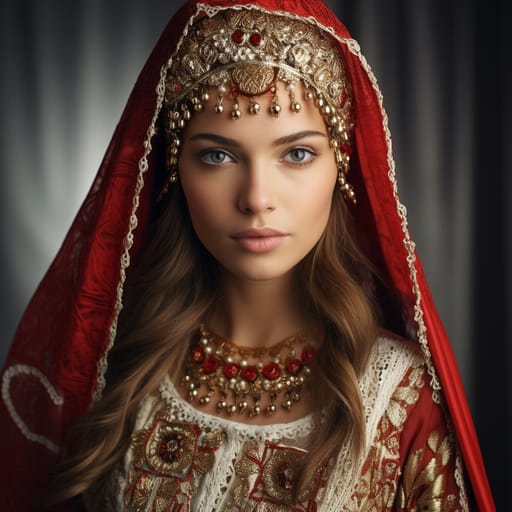
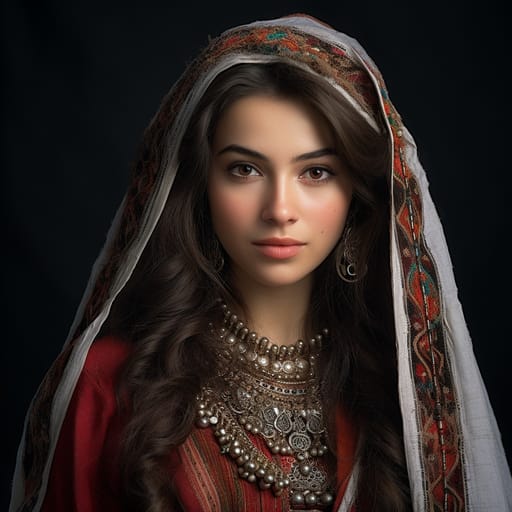
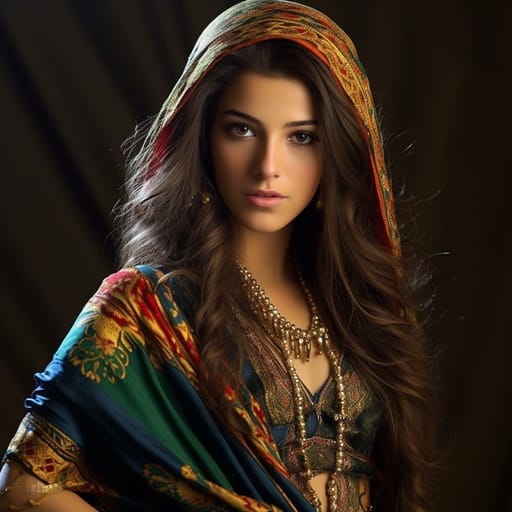
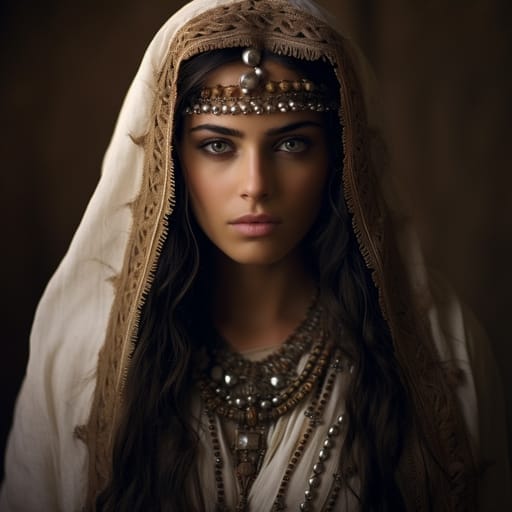
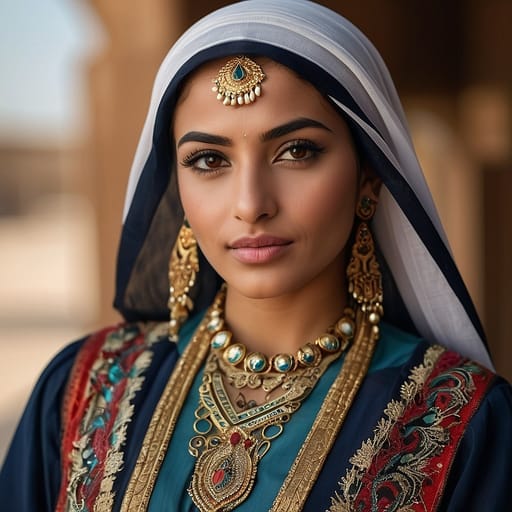
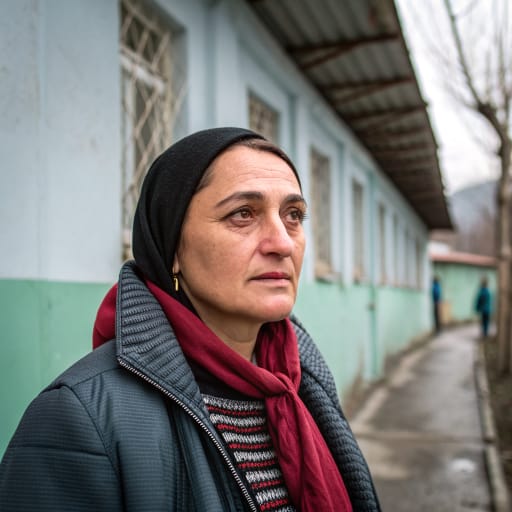
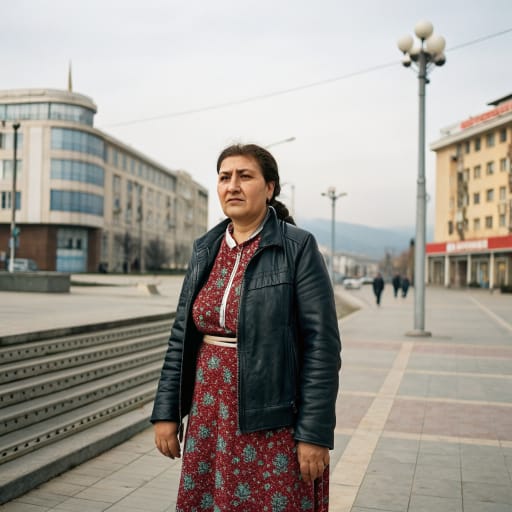
Typical Pshavs Phenotypes
Reference for AI generation: hair, eyes, skin, facial structure, build
Pshavs Body & Anatomy Reference
Per-feature anatomical profile for AI nude generation: Levantine / Mediterranean Middle Eastern phenotype
Pshavs Boobs & Breasts
Bust reference for Pshavs women: medium-to-large cup, full, moderate-to-high projection, which is typical of Levantine / Mediterranean Middle Eastern ancestry. Areolas measure about 32-46mm across, with medium-brown to dark-brown pigmentation. Body type (mesomorph with fuller hip-and-bust deposition) shapes the bust as well, so Pshavs tits are usually full and soft, fuller projection than the North-African Berber norm. In AI imagery, keep the forward-set shape rather than drifting toward the smaller East Asian bust profile.
Pshavs Ass & Hips
The Pshavs ass is typically medium-to-full, moderate projection, broader hip profile, which sets it apart from the slim East Asian narrow-hip profile. Underneath, the pelvis shows medium-to-wide iliac crests, fuller gluteal-femoral deposition, part of the Levantine / Mediterranean Middle Eastern skeletal pattern. For Pshavs butt pics and AI renders, match that silhouette and the overall build (mesomorph with fuller hip-and-bust deposition).
Pshavs Vagina & Pussy
Pshavs pussy and vulvar anatomy presents medium-brown to dark-brown labial pigmentation, fuller labia minora, consistent with the Levantine / Mediterranean Middle Eastern phenotype's pigmentation pattern. Pshavs pubic hair is typically wavy-to-coiled medium-coarse dark texture, dense distribution, in the inverted-triangle pattern. For anatomically accurate Pshavs pussy renders the labial coloration should match the surrounding olive to medium-brown skin tone with a continuous gradient, and the hair should keep its wavy-to-coiled medium-coarse dark texture.
Pshavs Dicks & Penis
Pshavs dicks follow the Levantine / Mediterranean Middle Eastern reference data: regional mean ~14cm erect; moderate-to-above-average girth; medium-brown shaft pigmentation. Shaft color should track the olive to medium-brown skin tone with a smooth change toward the glans, and Pshavs pubic hair keeps its wavy-to-coiled medium-coarse dark texture.
Pshavs Body, Curves & Build
Pshavs body type and overall build presents as mesomorph with fuller hip-and-bust deposition, with mean adult female BMI 25-28: the characteristic Levantine / Mediterranean Middle Eastern habitus. Pshavs curves and proportions should keep the regional skeletal frame (height, shoulder-to-hip ratio, limb proportions) rather than a generic mesomorph default.
Pshavs Skin Tone & Hair Texture
Pshavs skin sits in the olive to medium-brown (Fitzpatrick III-V) band. Hair is typically wavy-to-curly 2B-3B, predominantly dark-brown to black, in keeping with the Levantine / Mediterranean Middle Eastern phenotype. In nude renders the skin should stay one even tone from face to body, and body, pubic and head hair should match.
Explore phenotype categories
Structured taxonomy with peer-reviewed scales · 22 anatomical categories
Erotic Poses & Sex Positions
From the pose catalog: 219 named positions with reference skeletons
Frequently asked questions about Pshavs people
Where is the Pshavs homeland?
The Pshavs homeland is Pshavi, the Pshav Aragvi valley in Dusheti Municipality, Mtskheta-Mtianeti, Georgia, with settlements elsewhere in eastern Georgia in Western Asia.
What language do Pshavs people speak?
Pshavs people primarily speak Georgian, Pshav dialect (Kartvelian).
What religion do Pshavs people practice?
The predominant religion among Pshavs people is Georgian Orthodox Christianity mixed with highland shrine traditions: local khati shrines kept by khevisberi elders, sheep sacrifice and ritual beer.






Make your own Pshavs images
Five a day, free, no credits to buy. The studio starts from this group's phenotype data, so you can set body type, pose and style and keep the traits accurate.
Start with Pshavs