Help us get this right
Does this portrait look right for Meskhetian Turks?
Nobody has judged this one yet. You would be the first.
Meskhetian Turks Erotic
Meskheti in southern Georgia, along the border with Turkey; since the 1944 deportation, mainly Kazakhstan, Russia, Azerbaijan, Turkey, Kyrgyzstan, Uzbekistan, Ukraine and the United States
Turkish, Eastern Anatolian dialect (Turkic, Oghuz branch); Russian widely spoken, along with the languages of host countries
Sunni Islam (Hanafi school)
A branch of the Turkish people; deported in 1944 alongside Kurds and Hemshin from the same Georgian border region
About Meskhetian Turks People
Meskhetian Turks are a people whose identity was shaped as much by expulsion as by origin. Many call themselves Ahiska Turks, after the Turkish name of a town in their old homeland. They speak a Turkish close to the dialects just across the border in northeastern Anatolia. That homeland is Meskheti, a highland district of southern Georgia that the Ottomans took in 1578, though Turkic tribes had settled in the area centuries earlier. The Russian Empire annexed it after the war of 1828 to 1829. The Turkish-speaking Muslim villages stayed where they were, farming the valleys under a new flag.
The defining event came in November 1944. With many of the community's men away fighting in the Red Army, Soviet security forces loaded entire villages onto freight trains and sent them to Uzbekistan, Kazakhstan and Kyrgyzstan. Kurds and Hemshin from the same border zone went with them. Many died on the journey or in the special settlements that followed. When those restrictions eased in the 1950s, the deportees were still barred from going home. They rebuilt their communities in Central Asia, kept their language, and mostly married within the group.
A second uprooting followed in 1989, when mob violence in Uzbekistan's Fergana Valley killed about a hundred people and sent tens of thousands fleeing to Russia, Azerbaijan and elsewhere. Those who ended up in southern Russia's Krasnodar region were refused residence registration for years, which cut them off from citizenship, legal work and property. In the mid-2000s the United States accepted thousands as refugees, and cities such as Dayton, Ohio now have visible Ahiska communities. Turkey has taken in others, including families displaced by fighting in eastern Ukraine.
Their religion is Sunni Islam of the Hanafi school. Decades of Soviet rule pushed religious life into the home, and for many families faith shows most clearly in holidays, fasting, weddings and funerals. Georgia promised to allow their return when it joined the Council of Europe in 1999, but only a small number have actually resettled there. Who they are is still argued over. Some Georgian scholars say they descend from Georgians who converted to Islam and took up Turkish. Most of the community rejects that view and identifies simply as Turks. The deportation remains the event that holds a scattered people together, and it is remembered wherever they have settled.
Related ethnic groups
Groups that share Meskhetian Turks's homeland, region, language, or religious tradition. These are likely candidates for comparative phenotype reference.
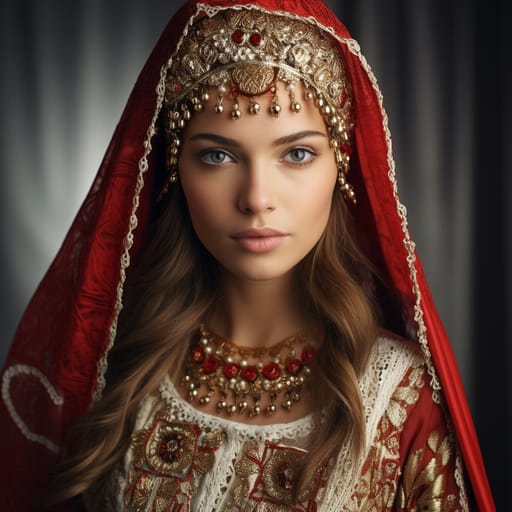
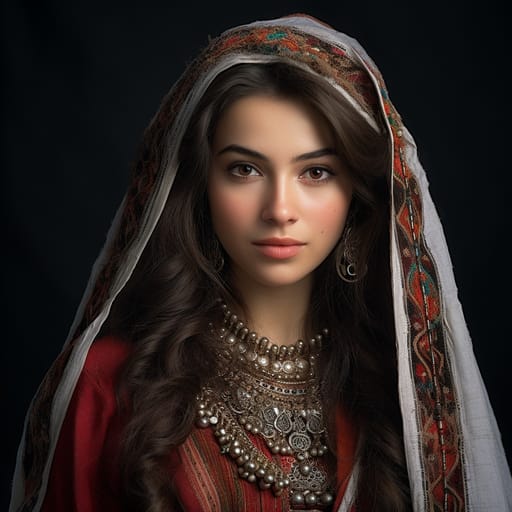
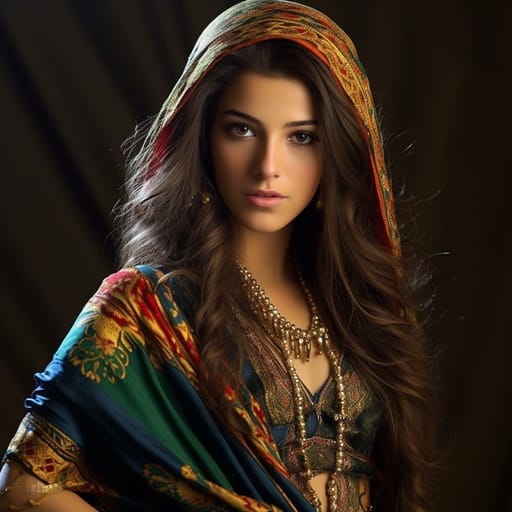
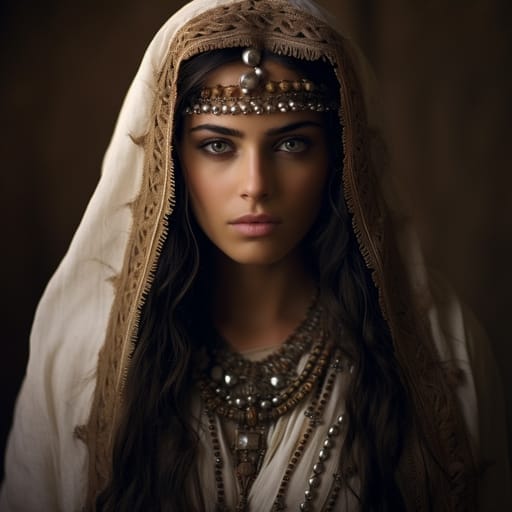
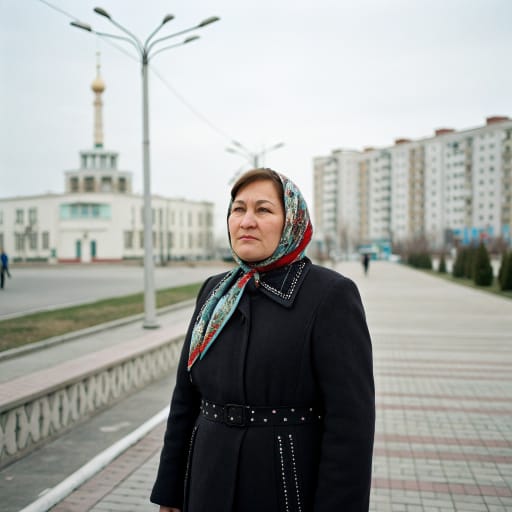
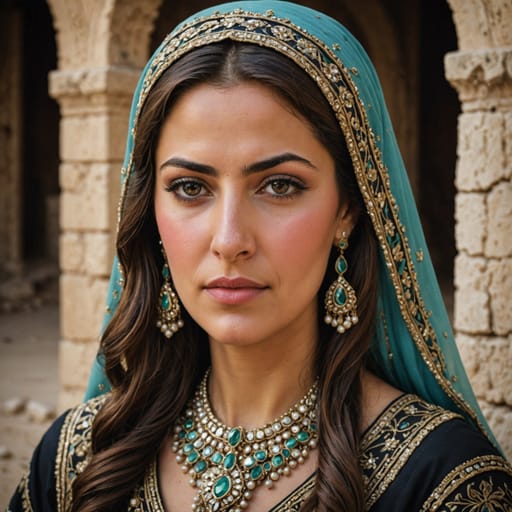
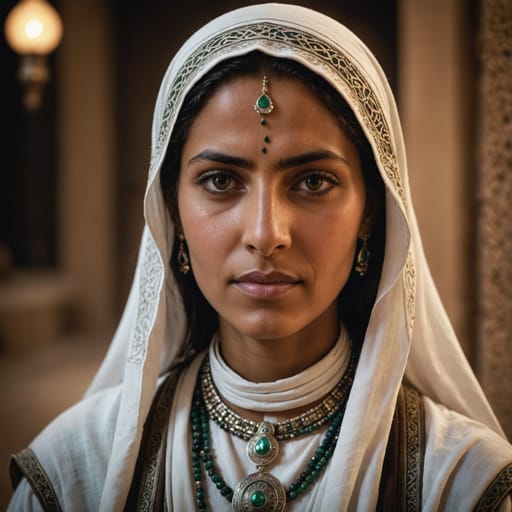
Typical Meskhetian Turks Phenotypes
Reference for AI generation: hair, eyes, skin, facial structure, build
Meskhetian Turks Body & Anatomy Reference
Anatomy by feature, Levantine / Mediterranean Middle Eastern phenotype
Meskhetian Turks Boobs & Breasts
Meskhetian Turks tits and boobs run medium-to-large cup, full, moderate-to-high projection, the classic Levantine / Mediterranean Middle Eastern bust profile. Meskhetian Turks nipples and areolas show medium-brown to dark-brown areolar pigmentation against the olive-to-light-brown skin tone, with areolar diameter typically in the 32-46mm range and forward-set positioning rather than the smaller East Asian bust profile. Meskhetian Turks breasts trend full and soft, fuller projection than the North-African Berber norm, a function of the mesomorph with fuller hip-and-bust deposition body habitus and the mean adult female BMI 25-28. For anatomically accurate AI-generated Meskhetian Turks nudes the render preserves the medium-to-large cup, full, moderate-to-high projection shape, 32-46mm areolas with medium-brown to dark-brown pigmentation, and the torso proportions of the Levantine / Mediterranean Middle Eastern phenotype.
Meskhetian Turks Ass & Hips
Meskhetian Turks hips and butt usually read as medium-to-full, moderate projection, broader hip profile. The skeletal base is medium-to-wide iliac crests, fuller gluteal-femoral deposition, the Levantine / Mediterranean Middle Eastern pattern. Set against the slim East Asian narrow-hip profile, the difference is easy to see, and the hip-to-waist ratio is often what identifies Meskhetian Turks women in photos.
Meskhetian Turks Vagina & Pussy
Expect medium-brown to dark-brown labial pigmentation, fuller labia minora on Meskhetian Turks women, in keeping with Levantine / Mediterranean Middle Eastern ancestry. The pubic hair is wavy-to-coiled medium-coarse dark texture, dense distribution. Coloring should run evenly from the olive to medium-brown skin of the thighs to the labia, and Meskhetian Turks nude imagery should keep the hair's wavy-to-coiled medium-coarse dark texture.
Meskhetian Turks Dicks & Penis
Meskhetian Turks dick and penile anatomy in adult AI generation should anchor on the regional reference data: regional mean ~14cm erect, moderate-to-above-average girth, and medium-brown shaft pigmentation. The Meskhetian Turks cock profile reflects the Levantine / Mediterranean Middle Eastern population's anthropometric measurements. The shaft pigmentation should track the surrounding olive to medium-brown skin tone, and the pubic hair should keep its wavy-to-coiled medium-coarse dark texture in the typical inverted-V escutcheon.
Meskhetian Turks Body, Curves & Build
Meskhetian Turks body type: mesomorph with fuller hip-and-bust deposition, with mean adult female BMI 25-28. This is the typical Levantine / Mediterranean Middle Eastern build. Height range, shoulder-to-hip ratio and fat distribution all follow from it, which is what an accurate Meskhetian Turks nude body should show.
Meskhetian Turks Skin Tone & Hair Texture
Meskhetian Turks skin tone falls in the olive to medium-brown (Fitzpatrick III-V) band, the surface signal most often miscalibrated by generic AI nude generators. Meskhetian Turks hair texture is typically wavy-to-curly 2B-3B, predominantly dark-brown to black, characteristic of the Levantine / Mediterranean Middle Eastern phenotype. In Meskhetian Turks nude renders the skin should hold that band consistently across the body.
Explore phenotype categories
Structured taxonomy with peer-reviewed scales · 22 anatomical categories
Erotic Poses & Sex Positions
From the pose catalog: 219 named positions with reference skeletons
Frequently asked questions about Meskhetian Turks people
Where is the Meskhetian Turks homeland?
The Meskhetian Turks homeland is Meskheti in southern Georgia, along the border with Turkey; since the 1944 deportation, mainly Kazakhstan, Russia, Azerbaijan, Turkey, Kyrgyzstan, Uzbekistan, Ukraine and the United States in Western Asia.
What language do Meskhetian Turks people speak?
Meskhetian Turks people primarily speak Turkish, Eastern Anatolian dialect (Turkic, Oghuz branch); Russian widely spoken, along with the languages of host countries.
What religion do Meskhetian Turks people practice?
The predominant religion among Meskhetian Turks people is Sunni Islam (Hanafi school).






Make your own Meskhetian Turks images
Five a day, free, no credits to buy. The studio starts from this group's phenotype data, so you can set body type, pose and style and keep the traits accurate.
Start with Meskhetian Turks