Help us get this right
Does this portrait look right for Thamud?
Nobody has judged this one yet. You would be the first.
Thamud Erotic
Northwestern Arabia, the Hijaz and Hisma between al-Hijr (Mada'in Salih) and Tabuk, in modern Saudi Arabia
Ancient North Arabian, closely related to early Arabic (Semitic, Afroasiatic); their one major surviving inscription is in Greek and Nabataean Aramaic
Pre-Islamic North Arabian polytheism; in Islamic tradition, the people sent the prophet Salih and destroyed for rejecting him
Ancient North Arabian tribal confederation; counted by Arab genealogists among the vanished Arabs (al-Arab al-ba'ida) with 'Ad, Tasm and Jadis
About Thamud People
The Thamud were an ancient Arabian people, attested from the eighth century BCE to the fifth century CE in the northwestern corner of the peninsula that is now Saudi Arabia, who then disappear from history: presumably absorbed into other tribes, and remembered chiefly as the Quran's cautionary tale of a nation that defied its prophet and was wiped out. That double existence is what makes them identifiable. Most ancient Arabian tribes left a few inscriptions and a name. The Thamud left a name that is still recited in mosques every day.
The hard evidence is thin but real. Sargon II of Assyria lists the Tamudi among desert peoples he defeated in 715 BCE. Pliny and Ptolemy locate the Thamudaei in the Hijaz. The key document is a bilingual Greek and Nabataean inscription from a temple at Rawwafa, in the Hisma desert, dated to the joint reign of Marcus Aurelius and Lucius Verus in the 160s CE. It records the Thamud as a confederation that built the sanctuary with Roman blessing, under the governor of Arabia. Two centuries later the Roman army roster known as the Notitia Dignitatum still lists cavalry units of Thamudeni in Palestine and Egypt. Then silence. By the time the Quran was revealed in the seventh century, the Thamud were already ancient history, filed with 'Ad, Tasm and Jadis among what Arab genealogists called the vanished Arabs.
They spoke a form of Ancient North Arabian, a cluster of Semitic dialects closely related to early Arabic. Scholars later borrowed their name for Thamudic, a catch-all label for tens of thousands of scratched rock inscriptions across Arabia and Jordan, most of which were almost certainly not written by Thamud at all. Religion is the pivot of their story. The historical Thamud worshiped the North Arabian pantheon. The Rawwafa temple was a pagan sanctuary. In the Quranic telling, the prophet Salih called them to one God and presented a she-camel as a sign, to be left to graze and given her turn at the well. They hamstrung her instead. A blast, or an earthquake depending on the passage, destroyed them within three days, sparing only Salih and the few who believed.
One detail worth knowing: the Quran says the Thamud carved their houses out of mountains and calls them the People of al-Hijr. Islamic tradition identified al-Hijr with Hegra, today's Mada'in Salih, whose monumental rock-cut tombs are actually Nabataean work of the first century CE. For centuries pilgrims on the Damascus road hurried past the site as cursed ground, following a report that Muhammad himself told his companions not to drink its water. That inherited unease, more than any archaeology, is the Thamud's real legacy.
Related ethnic groups
Groups that share Thamud's homeland, region, language, or religious tradition. These are likely candidates for comparative phenotype reference.
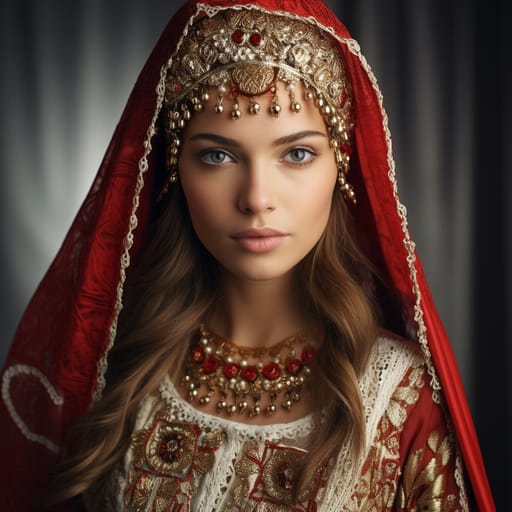
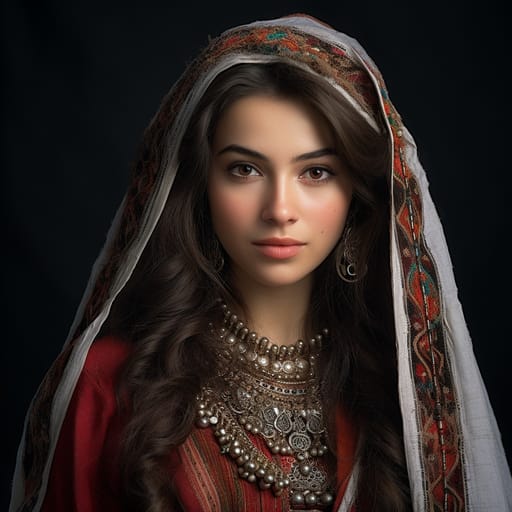
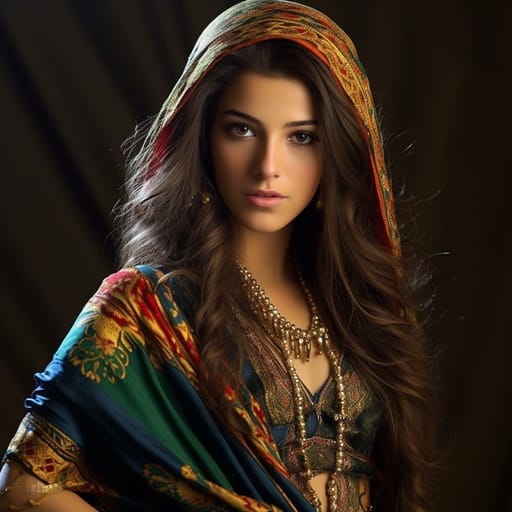
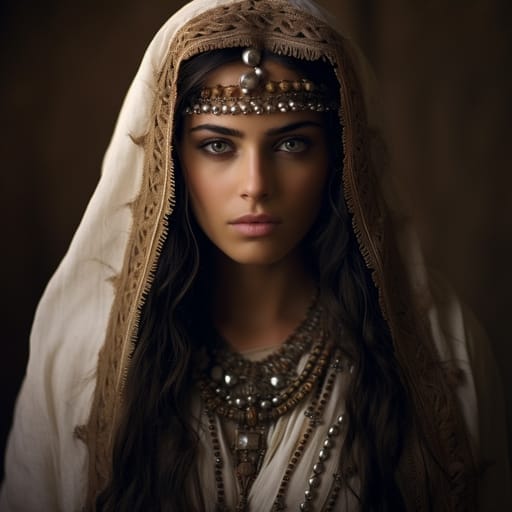
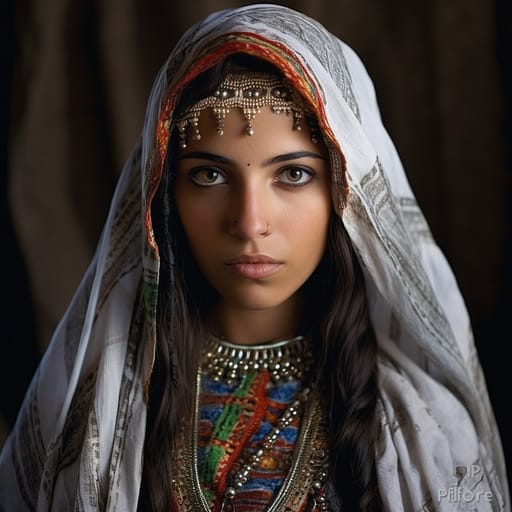
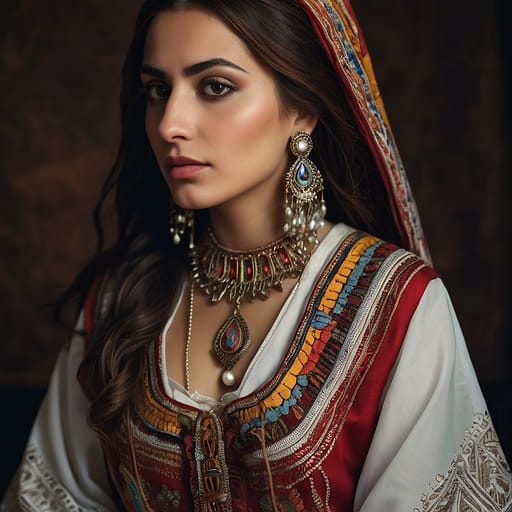
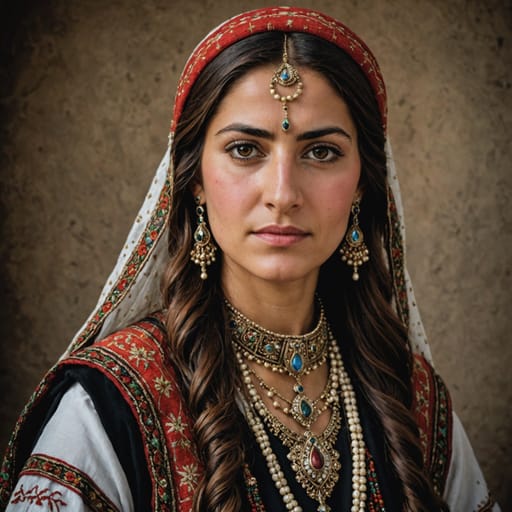
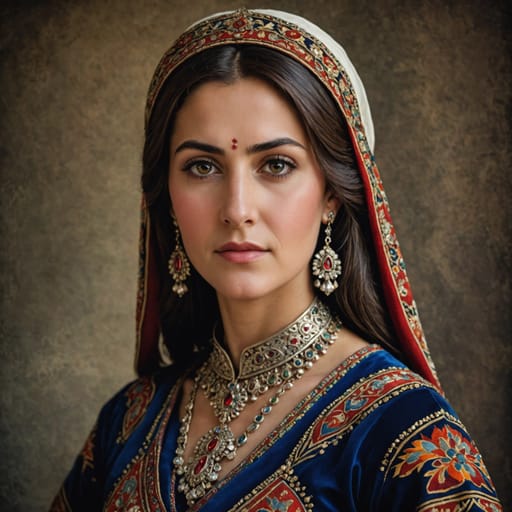
Typical Thamud Phenotypes
Reference for AI generation: hair, eyes, skin, facial structure, build
Thamud Body & Anatomy Reference
Levantine / Mediterranean Middle Eastern phenotype: anatomy reference for AI nude generation
Thamud Boobs & Breasts
The typical Thamud bust is medium-to-large cup, full, moderate-to-high projection, in line with the wider Levantine / Mediterranean Middle Eastern pattern. Areolas usually fall in the 32-46mm range, with medium-brown to dark-brown areolar pigmentation against the olive-to-light-brown skin tone. Compared with the smaller East Asian bust profile, Thamud breasts sit forward and are generally full and soft, fuller projection than the North-African Berber norm. A faithful AI render of Thamud tits keeps that shape and areola size.
Thamud Ass & Hips
Butt shape among Thamud women: medium-to-full, moderate projection, broader hip profile, over medium-to-wide iliac crests, fuller gluteal-femoral deposition. This follows Levantine / Mediterranean Middle Eastern ancestry and looks quite unlike the slim East Asian narrow-hip profile. An accurate Thamud ass in adult AI imagery keeps both the silhouette and the overall build (mesomorph with fuller hip-and-bust deposition) instead of a generic average.
Thamud Vagina & Pussy
Vulvar anatomy among Thamud women: medium-brown to dark-brown labial pigmentation, fuller labia minora. Pubic hair tends to be wavy-to-coiled medium-coarse dark texture, dense distribution, in the usual inverted-triangle pattern. Both follow Levantine / Mediterranean Middle Eastern pigmentation, which is why Thamud pussy renders should not fall back on a pale, sparse Western template.
Thamud Dicks & Penis
The Thamud cock profile, from Levantine / Mediterranean Middle Eastern anthropometric data: regional mean ~14cm erect; moderate-to-above-average girth; medium-brown shaft pigmentation. Pubic hair has a wavy-to-coiled medium-coarse dark texture and forms the usual inverted-V pattern. Whether Thamud men are circumcised follows religious and cultural practice rather than phenotype.
Thamud Body, Curves & Build
Build and curves among Thamud women follow the Levantine / Mediterranean Middle Eastern pattern: mesomorph with fuller hip-and-bust deposition, mean adult female BMI 25-28. Proportions matter as much as skin tone, so Thamud figures should keep their regional height and limb ratios.
Thamud Skin Tone & Hair Texture
The Thamud skin range is olive to medium-brown (Fitzpatrick III-V), and hair tends to be wavy-to-curly 2B-3B, predominantly dark-brown to black. That combination marks the Levantine / Mediterranean Middle Eastern phenotype, and skin tone is the trait AI generators most often get wrong for Thamud women.
Explore phenotype categories
Structured taxonomy with peer-reviewed scales · 22 anatomical categories
Erotic Poses & Sex Positions
From the pose catalog: 219 named positions with reference skeletons
Frequently asked questions about Thamud people
Where is the Thamud homeland?
The Thamud homeland is Northwestern Arabia, the Hijaz and Hisma between al-Hijr (Mada'in Salih) and Tabuk, in modern Saudi Arabia in Western Asia.
What language do Thamud people speak?
Thamud people primarily speak Ancient North Arabian, closely related to early Arabic (Semitic, Afroasiatic); their one major surviving inscription is in Greek and Nabataean Aramaic.
What religion do Thamud people practice?
The predominant religion among Thamud people is Pre-Islamic North Arabian polytheism; in Islamic tradition, the people sent the prophet Salih and destroyed for rejecting him.






Make your own Thamud images
Five a day, free, no credits to buy. The studio starts from this group's phenotype data, so you can set body type, pose and style and keep the traits accurate.
Start with Thamud