Help us get this right
Does this portrait look right for Azerbaijanis?
One tap. It takes a second and it is recorded.
0 say it looks right, 2 say it looks off.
Azerbaijanis Erotic
Also known as: Azerbaijani
Azerbaijan, Iranian Azerbaijan (Iran)
Islam / Shia Islam
Ayrums, Bayat, Karadaghis, Qajars, Küresünni, Padar, Qarapapaqs, Shahsevan, Terekeme, Yeraz, Afshar, Iranian Azeris, along with significant populations in Georgia and Russia
About Azerbaijanis People
Azerbaijanis are a Turkic-speaking people split across a hard political line: roughly ten million in the Republic of Azerbaijan, and substantially more — possibly twice that — in the northwestern provinces of Iran. The border was drawn in the early nineteenth century after Russia and Qajar Persia fought over the South Caucasus, and the Treaties of Gulistan (1813) and Turkmenchay (1828) cut the Azeri homeland in two. That partition still shapes how Azerbaijanis think of themselves. The northern half spent most of the twentieth century inside the Soviet Union and emerged in 1991 as a secular, oil-rich post-Soviet state with a Latin alphabet; the southern half remained inside Iran, where Azeris are the largest minority, write their language in Arabic script, and have furnished much of the Iranian establishment, including Supreme Leader Khamenei.
The language is Oghuz Turkic, close enough to Anatolian Turkish that Baku and Istanbul understand each other with a little patience, and saturated with Persian vocabulary in the south and Russian loans in the north. It sits among neighbors that are not its relatives — Armenian to the west, Georgian to the northwest, Iranian languages to the south — which has made Azeri identity unusually self-conscious about who is and isn't part of the family. Most Azerbaijanis are Twelver Shia, an inheritance from the Safavid dynasty (itself founded by a Turkic-speaking dynasty out of Ardabil that imposed Shiism on Iran in the sixteenth century), but religion in the republic is worn lightly after seventy years of Soviet atheism — mosques are full at Ashura and quiet the rest of the year. In Iranian Azerbaijan, observance is closer to the surrounding Iranian norm.
The sub-group names — Shahsevan, Qarapapaq, Afshar, Qajar, Terekeme — read as a roster of confederations and tribal lineages from the era when the eastern Caucasus and northwestern Iran were a patchwork of pastoral polities under shifting Safavid, Ottoman, and Russian pressure. Several of those names produced ruling dynasties; the Qajars governed Iran from 1789 to 1925. The Yeraz are a different kind of category — Azerbaijanis whose families were expelled from Armenia during the late Soviet collapse, and who carry that displacement as a defining marker. Mugham, the improvised modal vocal music recognized by UNESCO, is the cultural form Azerbaijanis tend to point to first when asked what holds the group together across the border.
Related ethnic groups
Groups that share Azerbaijanis's homeland, region, language, or religious tradition. These are likely candidates for comparative phenotype reference.
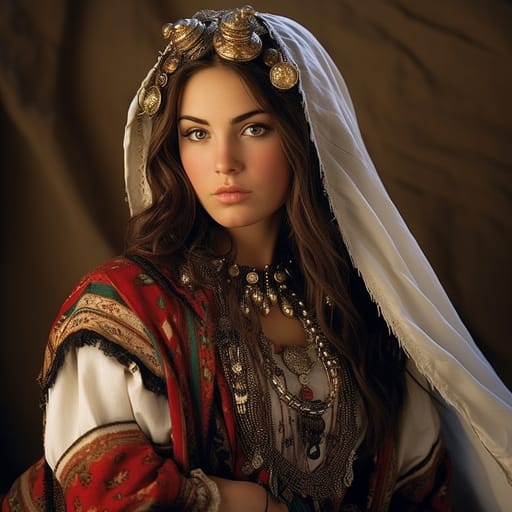
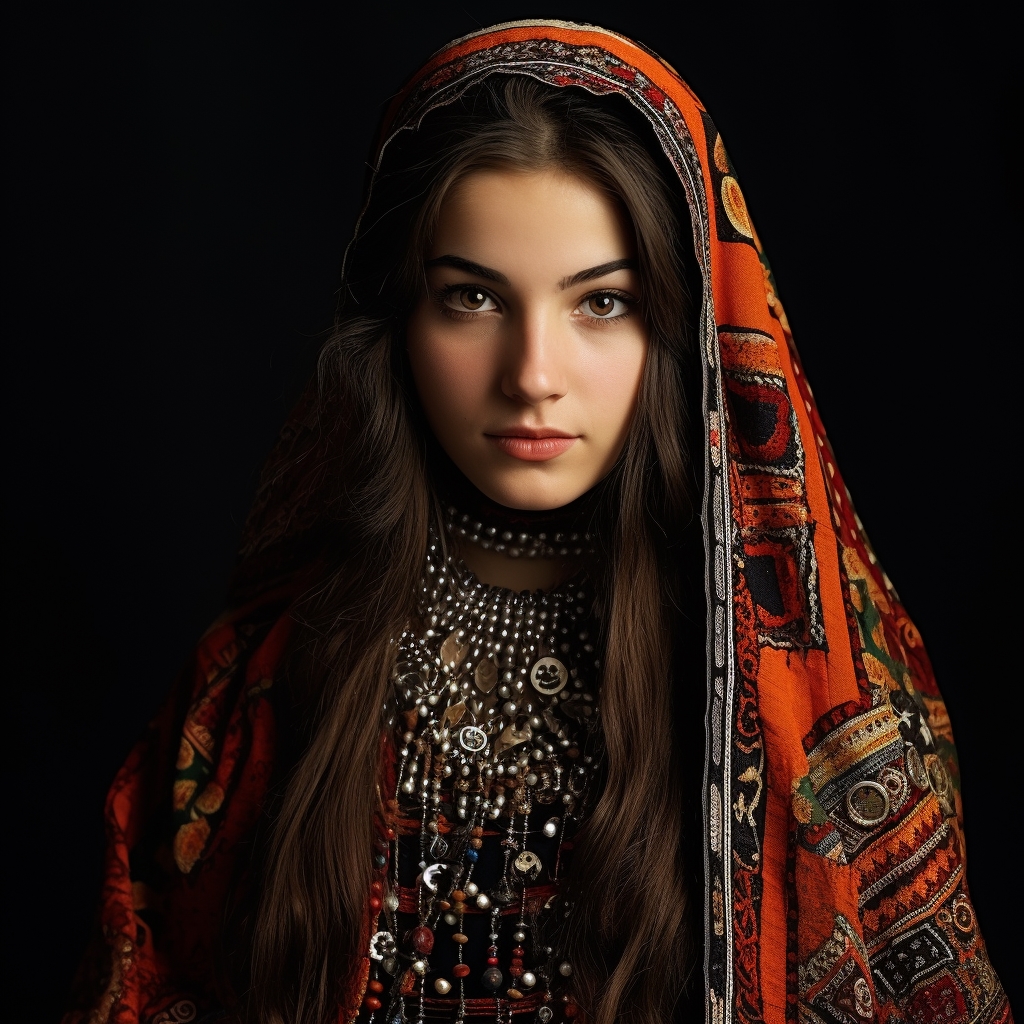
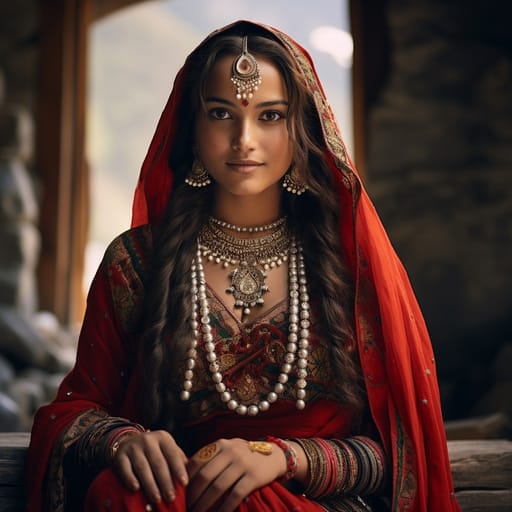
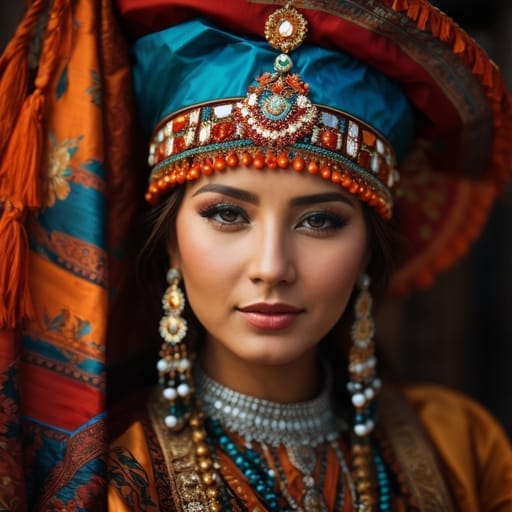
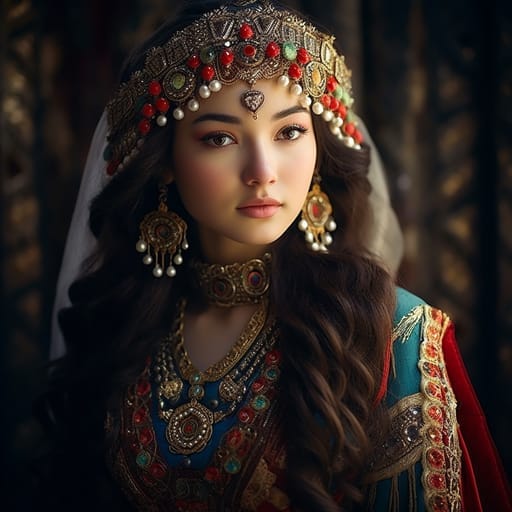
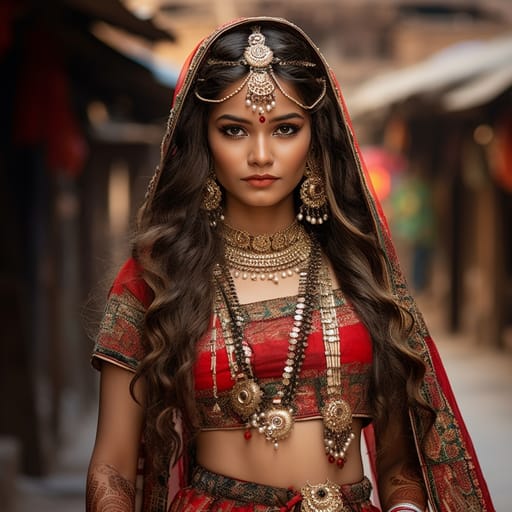
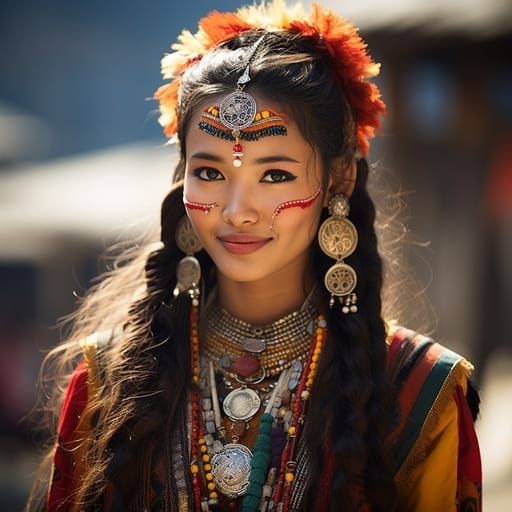
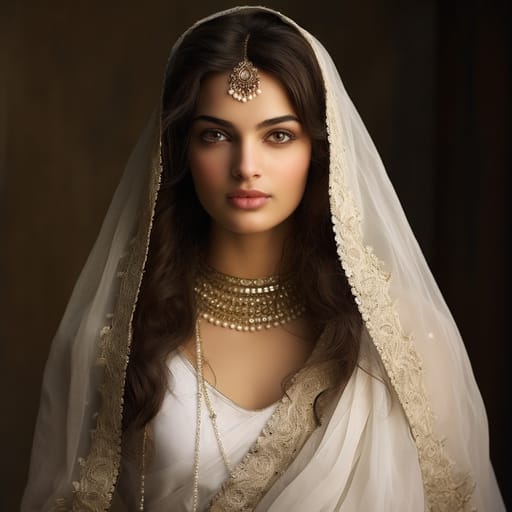
Typical Azerbaijanis Phenotypes
Reference for AI generation: hair, eyes, skin, facial structure, build
Azerbaijanis sit at a Caucasus–Iranian Plateau crossroads, and the phenotype reads exactly that way: Oghuz Turkic ancestry layered over a deep Iranic and Caucasian substrate, with no Central Asian Mongoloid signal to speak of. Hair is overwhelmingly dark — near-black to dark brown dominates, with mid-brown common in the northern lowlands around Quba and Şəki. Texture runs straight to loosely wavy; tight curl is rare. Body and facial hair grow in heavily on men, with thick beards and dense brows that often nearly meet — the unbroken brow line is a recognizable regional marker.
Eyes skew brown across the full range from near-black to honey and amber, with a meaningful minority of green and hazel, particularly among Iranian Azeris around Tabriz and in mountain communities. True blue is uncommon but present. Eyelids are open and Western in shape — no epicanthic fold — often with a pronounced upper-lid crease that gives a deep-set look under heavy brows.
Skin runs Fitzpatrick II–IV, most often a warm olive III with yellow-to-golden undertones; northern villagers can be quite fair and freckle-prone, while southern Iranian Azeri populations trend toward a deeper, more sun-stable olive. Noses tend to be prominent and straight or slightly aquiline, with a high narrow bridge and moderate alar width — a classic Iranic profile rather than a flat or button form. Lips are medium-full, mouths fairly wide. Jaws are squared in men, oval in women, with cheekbones that are present but not Asiatic-high.
Build is medium-tall — men commonly 173–178 cm — and tends toward a sturdy mesomorph frame, broader-shouldered than neighboring Iranians and shorter-legged than Georgians. Among the sub-groups, the Shahsevan and Qarapapaq of the highlands skew taller and lighter-eyed; the Yeraz and southern Afshar lean darker and more Iranian in cast; northern Ayrum populations show the highest incidence of green eyes and lighter hair.
Data depth
67/100Coverage of image-grounded phenotype observations · drives AI generation diversity
- Sample size
- 40/40· 64 images
- Image quality
- 17/30· 34% high
- Confidence
- 10/20· mean 0.68
- Source diversity
- 0/10· wikipedia
- ·Wikipedia-only source, not population-representative
Observed Distribution: Image Sample
Empirical observations from analyzed photographs · supplementary signal, not population truth
Sample: 64 images analyzed (64 wikipedia). Quality: 22 high, 32 medium, 10 low, 0 very_low. Avg analyzer confidence: 0.68.
Skin tone (Fitzpatrick): II (27%), III (47%), IV (25%), unclear (2%)
Hair color: black (56%), gray/white (34%), blonde (3%), light/medium brown (2%), dark brown (2%), unclear (3%)
Hair texture: straight (45%), wavy (33%), curly (2%), bald (5%), covered (16%)
Eye color: dark brown (70%), brown (6%), hazel (3%), blue (2%), unclear (19%)
Epicanthic fold: 3% present, 95% absent, 2% unclear
Caveats: Sample is 100% Wikipedia notable people, which skews toward male, public-life, and modern figures, not population-representative.
Last aggregated: May 7, 2026
Explore phenotype categories
Structured taxonomy with peer-reviewed scales · 22 anatomical categories
Notable Azerbaijanis People
100 reference figures, sourced from Wikipedia
- Iran, Iranian Azerbaijan)
- Russia, Derbent)
- Turkey, Kars, Iğdır)
- Jafar Abdollahi-Sharif, born 1963), president of Urmia University of Technology
- Lutfali Abdullayev, 1914-1973), actor
- Telman Adigozalov, 1953-2010), actor
- Aliagha Aghayev, 1913-1983), actor
- Alasgar Alakbarov, 1910-1963), actor
- Mirzaagha Aliyev, 1883-1954), actor
- Huseyn Arablinski, 1881-1919), actor
- Sayavush Aslan, 1935-2013), actor
- Mirza Babayev, 1903-2003), actor and singer
- Shamsi Badalbeyli, 1911-1986), theatre director and actor
- Leyla Badirbeyli, 1920-1999), actress
- Hajibaba Baghirov, 1932-2006), actor
- Bahram Bagirzade, born 1972), actor, entertainer, comedian and film director
- Rasim Balayev, born 1948), actor
- Afag Bashirgyzy, born 1955), actress
- Aghasadyg Garaybeyli, 1897-1988), actor
- Hokuma Gurbanova, 1913-1988), actress
- Nesrin Javadzadeh, born 1982), actress
- Javanshir Hadiyev, born 1969), actor
- Munavvar Kalantarli, 1912-1962), actress and folk singer
- Aygün Kazımova, born 1971), actress and singer
- Fakhraddin Manafov, born 1955), actor
- Jeyhun Mirzayev, 1946-1993), actor and film director
- Yashar Nuri, 1951-2012), actor
- Hamida Omarova, born 1957), actress
- Hagigat Rzayeva, 1907-1969), actress and singer
- Latif Safarov, 1920-1963), actor and film director
- Barat Shakinskaya, 1914-1999), actress
- Abbas Mirza Sharifzadeh, 1893-1938), actor and film director
- Rza Tahmasib, 1894-1980), actor
- Hasanagha Turabov, 1938-2003), actor
- Eldaniz Zeynalov, 1937-2001), actor
- Nasiba Zeynalova, 1916-2004), actress
- Jeyhun Hajibeyli, 1891-1962), ethnographer and journalist
- Mammadali Huseynov, 1922-1994), archaeologist
- Ishag Jafarzadeh, 1895-1982), archaeologist and ethnographer
- Sadig Dadashov, 1905-1946), architect
- Gasim bey Hajibababeyov, 1811-1874), architect
- Mammad Hasan Hajinski, 1875-1931), architect and statesman
- Mikayil Huseynov, 1905-1992), architect
- Karbalayi Safikhan Karabakhi, 1817-1910), architect
- Kamal Mammadbeyov, 1924-1997), architect
- Mikail Abdullayev, 1921-2002), painter
- Fuad Abdurahmanov, 1915-1971), sculptor
- Azim Azimzade, 1880-1943), painter and graphic artist and the founder of Azerbaijani satiric…
- Sattar Bahlulzadeh, 1909-1974), impressionist painter
- Omar Eldarov, born 1927), sculptor
- Jalal Garyaghdi, 1914-2001), sculptor
- Mirza Kadym Irevani, 1835-1875), artist
- Bahruz Kangarli, 1892-1922), painter, graphic artist and the founder of realistic easel painti…
- Tokay Mammadov, 1927-2018), sculptor
- Boyukagha Mirzazade, 1921-2007), painter
- Rustam Mustafayev, 1910-1940), scenic designer
- Togrul Narimanbekov, 1930-2013), painter
- Vidadi Narimanbekov, 1926-2001), painter
- Mir Mohsun Navvab, 1833-1918), calligrapher, poet, artist, music historian, astronomer, carpente…
- Maral Rahmanzade, 1916-2008), graphic artist
- Alakbar Rezaguliyev, 1903-1974), painter
- Tahir Salahov, 1928-2021), painter
- Fuad Salayev, born 1943), sculptor
- Gayyur Yunus, born 1948), painter
- Mirshahin Agayev, born 1963), TV presenter and journalist
- Leyla Aliyeva, born 1986), TV presenter
- Salatyn Asgarova, 1961-1991), killed by Armenian militias
- Nargiz Birk-Petersen, born 1976), TV presenter
- Emin Efendi, TV presenter and record producer
- Rafig Hashimov, newscaster and screenwriter
- Chingiz Mustafayev, 1960-1992), one of the most notable independent Azerbaijani journalists
- Sevinj Osmanqizi, born 1969), TV presenter, media personality, author and journalist
- Aras Agalarov, born 1955), businessman
- Farkhad Akhmedov, born 1955), businessman
- Vagit Alekperov, born 1950), businessman
- Shamsi Asadullayev, 1840-1913), industrial oil magnate and philanthropist
- Nigar Kocharli, born 1975), bookshop chain owner
- Hafiz Mammadov, born 1964), businessman
- Mubariz Mansimov, born 1968), businessman
- Murtuza Mukhtarov, 1865-1920), industrial oil magnate and philanthropist
- Musa Nagiyev, 1849-1919), industrial oil magnate and philanthropist
- God Nisanov, born 1972), Jewish-Azerbaijani businessman; the youngest Azerbaijani billionaire
- Haji Zeynalabdin Taghiyev, 1823-1924), industrial oil magnate and philanthropist
- Telman Ismailov, born 1956), Jewish-Azerbaijani businessman.
- Rahman Khalilov, born 1977), Russian and Azerbaijani businessman.
- Ilgar Ibrahimoglu, born 1973), cleric and human rights activist
- Allahshukur Pashazadeh, born 1949), Sheikh ul-Islam and Grand Mufti of the Caucasus
- Movlazadeh Mahammad Hasan Shakavi, 1854-1932), religious leader, philosopher, alim, the first Sheikh ul-Islam of…
- Mirza Huseyn Afandi Qayibov, 1830-1915), clergyman, literary critic, publicist, enlightener and Mufti of t…
- Ahmad Huseinzadeh, 1812-1887), third Sheikh ul-Islam of the Caucasus, son of Mahammadali Huseinz…
- Fazil Iravani, 1783-1885), second Sheikh ul-Islam of the Caucasus.
- Mahammadali Huseinzadeh, 1760-1852), first shia Sheikh ul-Islam of the Caucasus from 1823 to 1852. Mat…
- Gamar Almaszadeh, 1915-2006), first Azerbaijani ballerina
- Oksana Rasulova, born 1982), dancer, choreographer and actress
- Leyla Vakilova, 1927-1999), ballerina
- Tofig Ismayilov, 1933-1991), aerospace scientist
- Kerim Kerimov, 1917-2003), aerospace engineer
- Sona Mehmandarova, born 1894), model
- Badura Afganli, born 1912), fashion designer
- Sophie Couture, born 1990), fashion designer
Erotic Poses & Sex Positions
From the pose catalog: 219 named positions with reference skeletons
Frequently asked questions about Azerbaijanis people
Where is the Azerbaijanis homeland?
The Azerbaijanis homeland is Azerbaijan, Iranian Azerbaijan (Iran) in Southern Asia.
What language do Azerbaijanis people speak?
Azerbaijanis people primarily speak Turkic / Oghuz / Azeri.
What religion do Azerbaijanis people practice?
The predominant religion among Azerbaijanis people is Islam / Shia Islam.
What are other names for Azerbaijanis people?
Azerbaijanis people are also known as Azerbaijani.






Make your own Azerbaijanis images
Five a day, free, no credits to buy. The studio starts from this group's phenotype data, so you can set body type, pose and style and keep the traits accurate.
Start with Azerbaijanis