Help us get this right
Does this portrait look right for Apatani?
One tap. It takes a second and it is recorded.
0 say it looks right, 1 says it looks off.
Apatani Erotic
Ziro Valley, Lower Subansiri, Arunachal Pradesh, India
Apatani (Tani, Sino-Tibetan)
Donyi-Polo animism, some Christianity
About Apatani People
The Apatani (also Tanii) are a Tibeto-Burman people of the Ziro Valley in the Lower Subansiri district of Arunachal Pradesh, in the eastern Himalayas of northeast India. They inhabit a compact, fertile upland plateau where they have long practised an intensive and settled form of agriculture. Their language belongs to the Tani group of the Sino-Tibetan family, related to that of the neighbouring Nyishi and other Tani peoples. Estimates place the Apatani population at roughly 40,000 to 60,000. They are noted for a village-based society that is unusually dense and permanent for the region's hill peoples.
Society and subsistence
The Apatani are renowned for sustainable wet-rice cultivation carried out without draught animals or ploughs, in which flooded terraced paddies double as fish ponds, integrating rice and fish farming on the same fields. Bamboo groves, pine stands, and kitchen gardens complete a highly managed landscape that has drawn international attention as a model of ecological land use. Society is patrilineal and organised into clans, with wealth, ritual status, and disputes traditionally regulated through a council of elders. The indigenous faith, Donyi-Polo, venerates the Sun (Donyi) and Moon (Polo) as supreme cosmic principles, expressed through priest-led chants and seasonal festivals such as Myoko and Dree. Christianity has also gained followers in recent generations.
Appearance and adornment
The Apatani show the physical features common to Tibeto-Burman highland peoples of the region. They are best known ethnographically for a striking older tradition of facial adornment among women, who wore large circular nose plugs (yaping hullo) fitted into the sides of the nose and bore dark tattoos running from the forehead down the chin. These practices, once markers of identity and beauty, were discontinued in the later twentieth century, so that only elderly women now carry them. Men traditionally wore their hair in a knot above the forehead secured with a brass or cane skewer, and also bore tattoos. Handwoven cotton garments, cane and bamboo ornaments, and bead necklaces complete traditional dress, which is still worn at festivals alongside everyday modern clothing.
Related ethnic groups
Groups that share Apatani's homeland, region, language, or religious tradition. These are likely candidates for comparative phenotype reference.
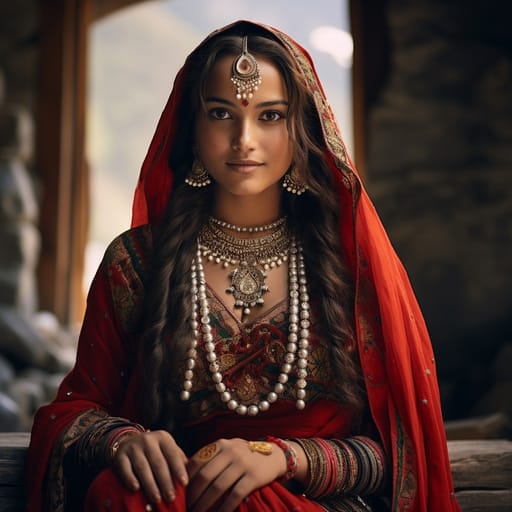
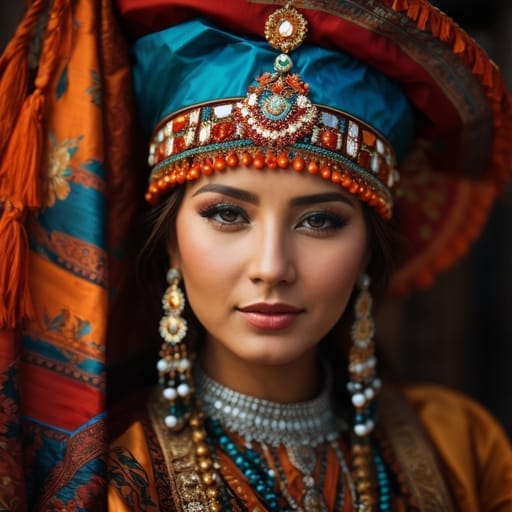
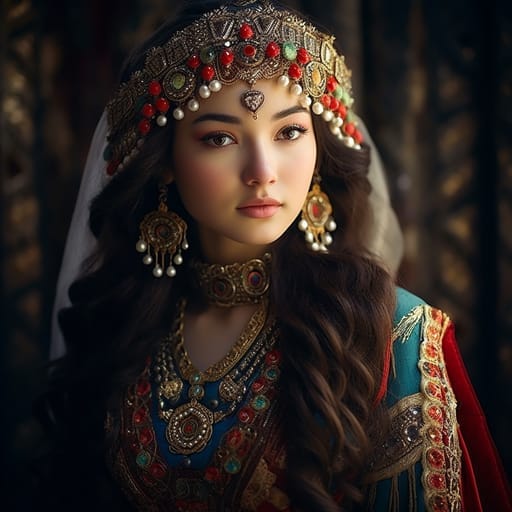
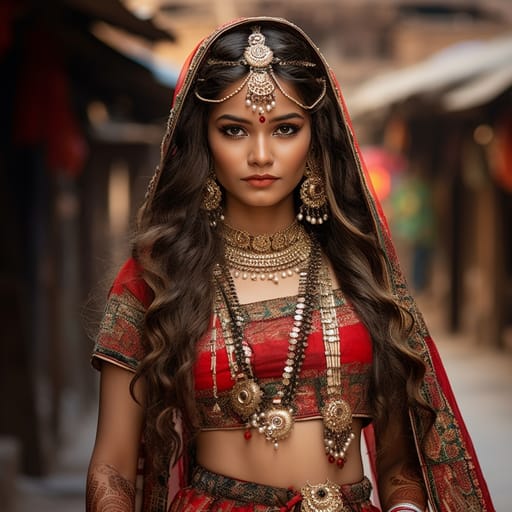
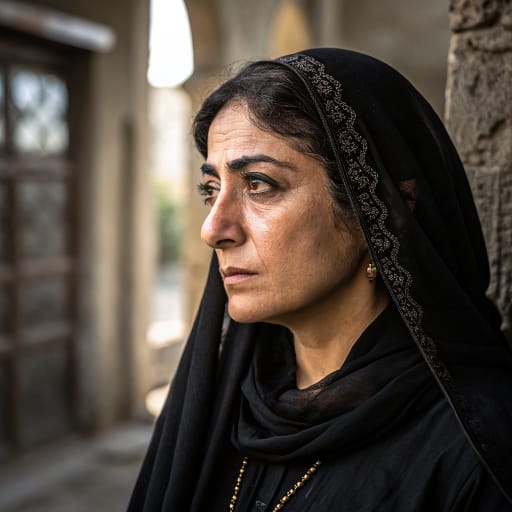
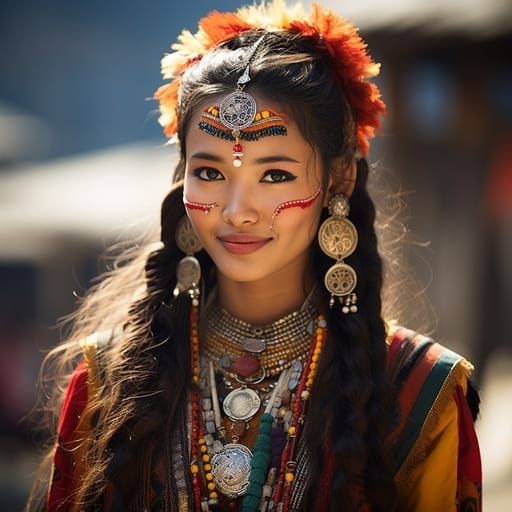
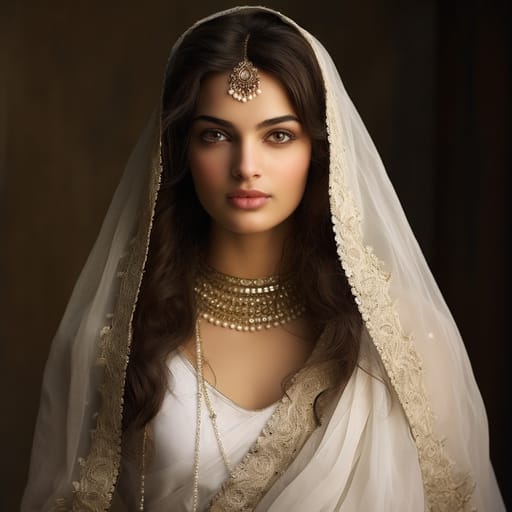
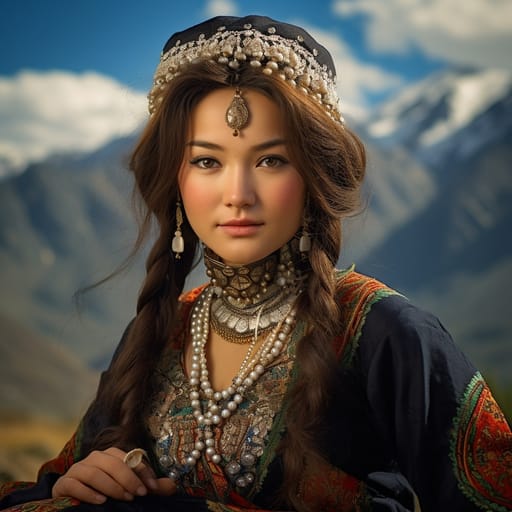
Typical Apatani Phenotypes
Reference for AI generation: hair, eyes, skin, facial structure, build
Apatani Body & Anatomy Reference
Per-feature anatomical profile for AI nude generation: Indo-Aryan / Dravidian South Asian phenotype
Apatani Boobs & Breasts
Apatani boobs follow the Indo-Aryan / Dravidian South Asian profile: medium-to-large cup, moderate-to-full projection. Areolar diameter is usually 32-46mm, and the coloring is medium-brown to dark-brown areolar pigmentation against the wheatish-to-brown skin tone. Breast shape tracks body composition (endomorph-to-mesomorph with fuller hip deposition, mean adult female BMI 22-25), so Apatani breasts tend to be full and soft, generally fuller than the East Asian norm. Expect a forward-set shape, not the smaller East Asian bust profile.
Apatani Ass & Hips
Apatani ass and hip morphology presents as medium-to-full, moderate-to-high projection, classic curvy hip profile, distinctly different from the slim hip profile of East Asian women. The Apatani pelvic profile shows medium-to-wide iliac crests, full gluteal-femoral fat distribution, anchored in the Indo-Aryan / Dravidian South Asian skeletal pattern. Apatani butt shots in adult AI imagery should render the medium-to-full, moderate-to-high projection, classic curvy hip profile silhouette with the overall build (endomorph-to-mesomorph with fuller hip deposition) and the fat distribution typical of the Indo-Aryan / Dravidian South Asian phenotype.
Apatani Vagina & Pussy
Apatani pussy anatomy typically shows medium-brown to dark-brown labial pigmentation, fuller labia minora projection. Pubic hair is usually straight-to-wavy coarse texture, dense distribution. In AI-generated Apatani nudes, labial color should blend into the wheatish to brown skin with a gradual transition, and the hair should keep its straight-to-wavy coarse texture.
Apatani Dicks & Penis
Penis reference for Apatani men: regional mean ~13cm erect, moderate girth. Coloring: medium-brown shaft pigmentation. An accurate Apatani cock in AI imagery matches the surrounding wheatish to brown skin rather than a generic porn default. Circumcision depends on religion and custom, not ancestry.
Apatani Body, Curves & Build
The Apatani figure is generally endomorph-to-mesomorph with fuller hip deposition, with mean adult female BMI 22-25, characteristic of Indo-Aryan / Dravidian South Asian ancestry. AI image tools tend to flatten regional body types into a few stock shapes; here the Apatani build is kept as its own reference.
Apatani Skin Tone & Hair Texture
Skin: wheatish to brown (Fitzpatrick III-V). Hair: straight-to-wavy 1A-2B, dense, dark-brown to black. Both are typical of Indo-Aryan / Dravidian South Asian ancestry. The most common mistake in AI nudes of Apatani women is a body rendered lighter than the face.
Explore phenotype categories
Structured taxonomy with peer-reviewed scales · 22 anatomical categories
Erotic Poses & Sex Positions
From the pose catalog: 219 named positions with reference skeletons
Frequently asked questions about Apatani people
Where is the Apatani homeland?
The Apatani homeland is Ziro Valley, Lower Subansiri, Arunachal Pradesh, India in Southern Asia.
What language do Apatani people speak?
Apatani people primarily speak Apatani (Tani, Sino-Tibetan).
What religion do Apatani people practice?
The predominant religion among Apatani people is Donyi-Polo animism, some Christianity.






Make your own Apatani images
Five a day, free, no credits to buy. The studio starts from this group's phenotype data, so you can set body type, pose and style and keep the traits accurate.
Start with Apatani