Help us get this right
Does this portrait look right for Tatars?
One tap. It takes a second and it is recorded.
2 say it looks right, 0 say it looks off.
Tatars Erotic
Tatarstan (Russia)
Islam / Sunni Islam
Volga Tatars, Crimean Tatars, Lipka Tatars, Siberian Tatars, Mishar Tatars, Finnish Tatars, Dobruja Tatars, Chinese Tatars, Nagaybak, Kryashens,
About Tatars People
"Tatar" is one of those ethnonyms that has done a lot of work over the centuries — applied by outsiders to almost every Turkic or Mongol-adjacent people moving across the Eurasian steppe, then gradually claimed and narrowed by the people themselves. The modern Tatars are the heirs of that long settling process: a Turkic, predominantly Sunni Muslim people whose demographic and cultural center sits along the middle Volga, in the republic of Tatarstan, with Kazan as its anchor city. Their language belongs to the Kipchak branch of Turkic, close enough to Bashkir to be mutually navigable and distant enough from Turkish that a speaker from Kazan and one from Istanbul will understand fragments rather than sentences.
The Volga Tatars are the largest and most visible branch, but the name covers a wider archipelago of communities shaped by very different histories. Crimean Tatars developed on the Black Sea littoral under Ottoman influence and were collectively deported by Stalin in 1944, an event that still defines the community's politics and memory. The Lipka Tatars settled in the Polish-Lithuanian Commonwealth from the fourteenth century onward, kept their faith, and produced generations of cavalry officers who fought under Polish kings. Siberian and Mishar Tatars, the Nagaybak, and the Kryashens — the last a Christianized Tatar group whose Orthodox identity has been argued over for two centuries — give some sense of how thoroughly the label resists tidy generalization. There are also the Finnish Tatars, descended from nineteenth-century Mishar traders, and the small, isolated Chinese Tatar communities in Xinjiang.
The pivotal date in mainstream Tatar history is 1552, when Ivan the Terrible took Kazan and ended the Khanate that had succeeded the western remnants of the Golden Horde. What followed was centuries of negotiation with Russian power: forced conversions in some periods, relative tolerance in others, a Tatar merchant class that became indispensable to Russia's trade with the Muslim world, and, by the late nineteenth century, the Jadidist reform movement, which pushed for modern schooling, a reformed religious vocabulary, and a literate Tatar public. That reformist current still inflects Tatar Islam today — generally Hanafi, comfortable with secular institutions, suspicious of imported austerity. Tea is taken seriously and ceremoniously, çäkçäk (honey-soaked fried dough) shows up at every wedding worth attending, and Sabantuy, the post-sowing summer festival with its wrestling and horse races, has become the cultural event the diaspora travels home for.
Related ethnic groups
Groups that share Tatars's homeland, region, language, or religious tradition. These are likely candidates for comparative phenotype reference.
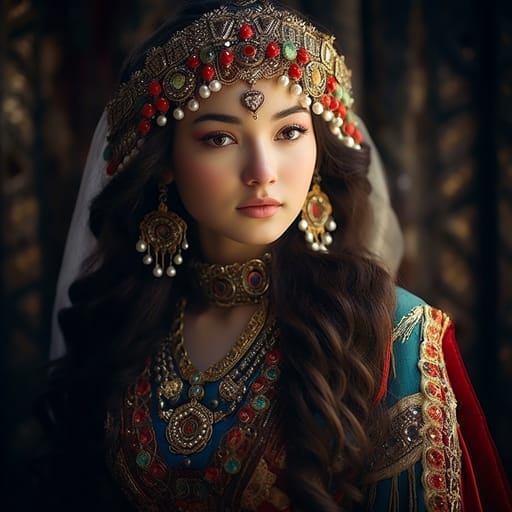
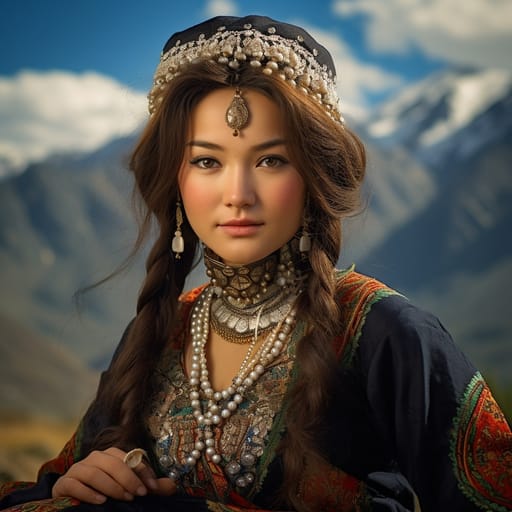
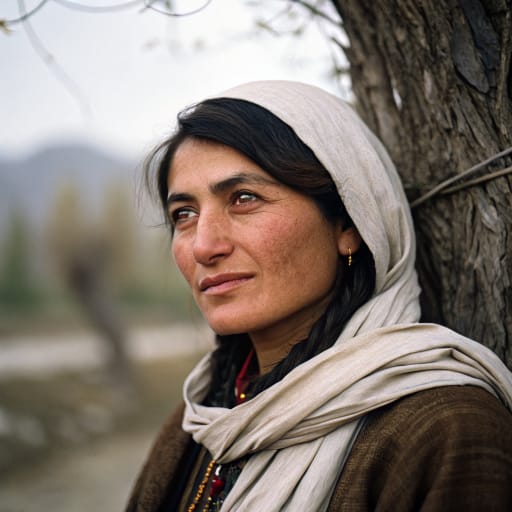
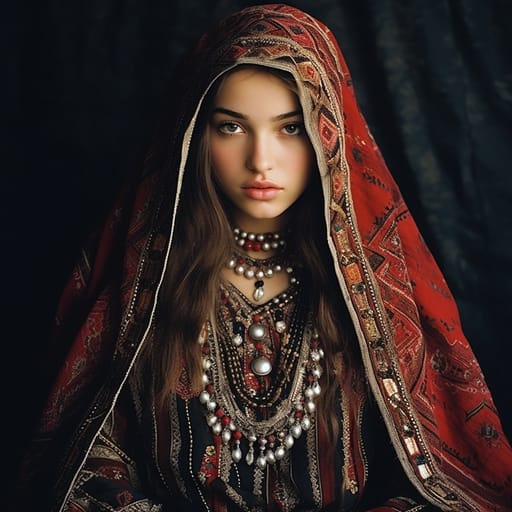
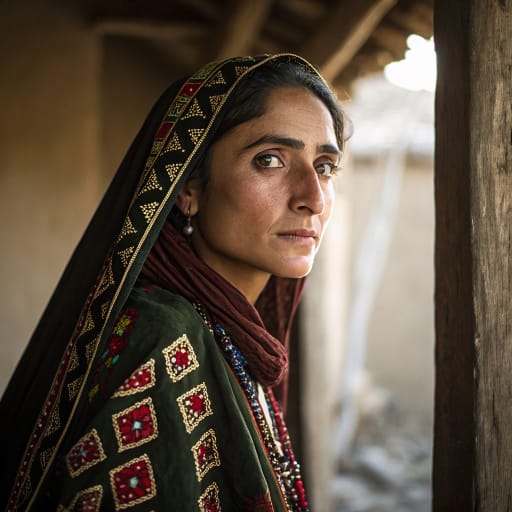
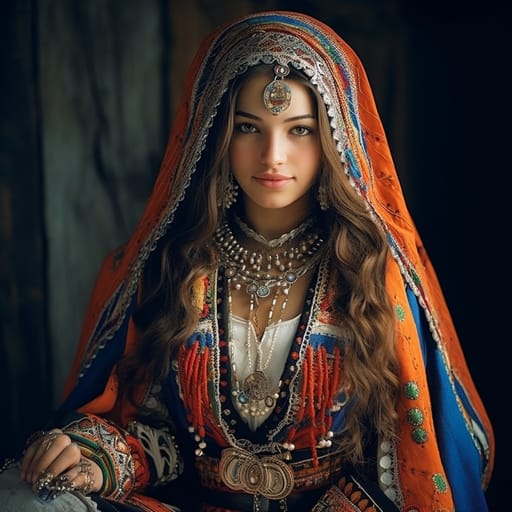
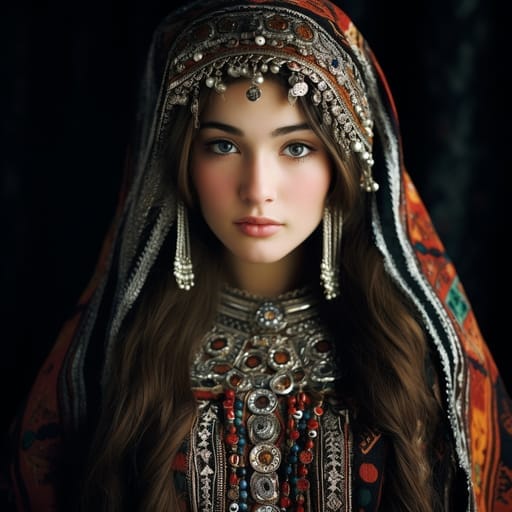
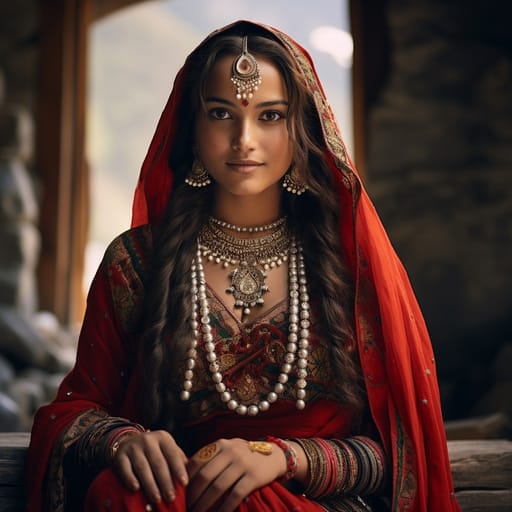
Typical Tatars Phenotypes
Reference for AI generation: hair, eyes, skin, facial structure, build
Tatars sit at a phenotypic crossroads — Turkic populations who absorbed centuries of Volga Finnic, Slavic, and Mongol contact, producing a population where you genuinely cannot predict the next face from the last. The structural through-line is moderate: medium-sized features, balanced proportions, and a tendency toward what physical anthropologists used to call sub-Uralic blending — neither fully European nor fully Central Asian, with sub-group skewing the dial in either direction.
Hair runs predominantly dark — brown to black-brown, occasionally true black — with a meaningful minority of mid- and light-brown shades, particularly among Volga and Mishar Tatars where Finno-Ugric admixture pushes lighter. Texture is mostly straight to gently wavy; tight curl is rare. Eyes are most often brown in every shade from near-black to amber-hazel, but green and grey occur regularly among western Tatars (Aida Garifullina is a clean example), and pale blue surfaces occasionally. Epicanthic fold presence is the strongest sub-group tell: largely absent in Crimean and Lipka Tatars, common but partial in Volga Tatars, frequent and pronounced in Siberian Tatars and Nagaybak.
Skin spans Fitzpatrick II through IV, with neutral-to-warm undertones — most Tatars tan readily without burning red. Faces tend toward soft ovals or gentle squares with broad, well-set cheekbones (less prominent than Kazakh or Mongol, more than Slavic), straight or slightly low-bridged noses with moderate alar width, and lips of medium fullness. Jaws are typically refined rather than heavy.
Build is generally medium — average height for Russian populations (men ~172–176 cm, women ~162–166 cm), wiry to moderately muscular frames, with a noted tendency toward lean elegance evident in the disproportionate Tatar presence in ballet (Nureyev, Vishneva). Crimean and Lipka Tatars read most European; Siberian Tatars carry the clearest Central Asian signal — flatter midface, more pronounced epicanthus, and slightly shorter stature on average.
Data depth
85/100Coverage of image-grounded phenotype observations · drives AI generation diversity
- Sample size
- 40/40· 70 images
- Image quality
- 30/30· 61% high
- Confidence
- 15/20· mean 0.73
- Source diversity
- 0/10· wikipedia
- ·Wikipedia-only source, not population-representative
Observed Distribution: Image Sample
Empirical observations from analyzed photographs · supplementary signal, not population truth
Sample: 70 images analyzed (70 wikipedia). Quality: 43 high, 20 medium, 6 low, 1 very_low. Avg analyzer confidence: 0.73.
Skin tone (Fitzpatrick): II (70%), III (19%), IV (7%), unclear (4%)
Hair color: black (40%), gray/white (31%), blonde (10%), red/auburn (6%), dark brown (4%), light/medium brown (3%), unclear (6%)
Hair texture: straight (70%), wavy (19%), curly (1%), covered (9%), unclear (1%)
Eye color: dark brown (50%), hazel (16%), blue (13%), brown (4%), other (1%), unclear (16%)
Epicanthic fold: 11% present, 83% absent, 6% unclear
Caveats: Sample is 100% Wikipedia notable people, which skews toward male, public-life, and modern figures, not population-representative.
Last aggregated: May 7, 2026
Explore phenotype categories
Structured taxonomy with peer-reviewed scales · 22 anatomical categories
- SkinFitzpatrick I to VI, undertone, pigmentation
- EyesColor, shape, eyelid, epicanthic fold
- Head hairColor, Andre Walker texture, hairline
- Body shapeHeath-Carter somatotype, WHR, frame
- NoseBridge, tip, nostril, alar width
- Lips & mouthVolume, Cupid’s bow, philtrum
Measured in Tatars portraits
Notable Tatars People
100 reference figures, sourced from Wikipedia
- Aisa Hakimcan, poet, musician, director (Finnish Tatar)
- Dajan Ahmet, actor, director (Estonian Tatar)
- Minsalim Timergazeev, [ru], sculptor
- Aleksandr Bashirov, actor (Siberian Tatar mother)
- Vadim Abdrashitov, film director (Volga Tatar father)
- Elisabeth Boehm, painter
- Talgat Nigmatulin, movie actor
- Chulpan Khamatova, actress
- Renata Litvinova, TV celebrity (Volga Tatar father)
- Charles Bronson, American actor (Lipka Tatar father)
- Marat Basharov, movie actor, TV show actor
- Marat Gaziev, [ru], artist, choreographer, ballet dancer
- Valentina Talyzina, film and stage actress (Russified Tatar father)
- Vasily Vereshchagin, Tatar ancestry)
- Stepan Krichinsky, Russian architect
- Rinat Akhmetov, billionaire, Ukraine's richest citizen, leader of the Donetsk business group
- Rustam Tariko, billionaire
- Akhat Bragin, businessman and mentor of Renat Akhmetov, former owner of FC Shakhtar Donetsk
- Ratmir Timashev, businessman
- Galiya Izmaylova, ballerina
- Ilshat Shabaev, Russian dancer
- Rudolf Nureyev, Soviet ballet dancer and choreographer.
- Diana Vishneva, ballerina (Volga Tatar mother)
- Lilia Gildeeva, journalist, newscaster with NTV
- Maxim Sharafutdinov, Russian journalist, television presenter of Channel One.
- Rosa Syabitova, television personality on the Channel One
- Elmira Abdrazakova, Kazakhstani-Russian model and Miss Russia 2013 (Volga Tatar father)
- Diana Galimullina, Russian fashion model
- Irina Shayk, Russian Model(Volga Tatar Father)
- Sara Sadiqova, composer
- Dima Bilan, singer (Volga Tatar ancestry)
- Aida Garifullina, Russian lyric soprano
- Dina Garipova, pop singer
- Rustem Hayroudinoff, pianist
- Farit Yarullin, composer, author of the music to the first Tatar ballet: Şüräle
- Zemfira, rock singer
- Eldar Djangirov, jazz pianist (Volga Tatar father)
- Halida Dinova, pianist
- Nacip Cihanov, composer
- Rustem Yakhin, composer
- Alina Ibragimova, Russian-British violinist.
- Airat Ichmouratov, composer, conductor, clarinetist
- Vladimir Rebikov, was a late romantic 20th-century Russian composer and pianist.
- Salih Saidashev, composer
- Albina Shagimuratova, opera singer
- Irina Smelaya, female hip-hop artist
- Timati, rapper, pop singer (Volga Tatar father)
- Alsou, pop singer (Volga Tatar mother)
- Sofia Gubaidulina, composer (Volga Tatar father)
- Jamala, singer, composer, winner of the Eurovision Song Contest 2016 (Crimean Tatar f…
- Zulya Kamalova, Russian-born Australian singer
- Simeon Bekbulatovich, Russian statesman
- Sayed Borhan, was Khan of the Qasim Khanate
- Elena Glinskaya, Lipka Tatar father)
- Boris Godunov, was the de facto regent of Russia
- Dmitry Petrovich Maksutov, Tatar noble family Maksutov
- Yadegar Mokhammad of Kazan, was the last khan of the Kazan Khanate
- Utameshgaray of Kazan, was Khan of the Kazan Khanate
- Natalya Naryshkina, Victoria of Baden and Juliana of the Netherlands are related to Natalya 8 gen…
- Asaf Abdrakhmanov, naval officer, participated in the Great Patriotic War, was awarded the Hero …
- Makhmut Gareyev, author, military strategist and theoretician, participated in the Great Patri…
- Shakir Geniatullin, major general in the Red Army, fought in the Russian Civil War and the Great …
- Pyotr Gavrilov, Soviet officer, World War II-era Hero of Soviet Union
- Dmitry Karbyshev, was a Red Army general
- Fatyh Sharipov, was a participant of the Second World War
- Anna Achmatova, poet (Tatar grandmother)
- Bella Akhmadulina, poet (Volga Tatar father)
- Denis Davydov, russian soldier-poet
- Gavrila Derzhavin, poet (distant Tatar ancestry)
- Musa Jalil, poet, prisoner of war during World War II
- Ghabdulla Tuqay, prominent Volga Tatar poet
- Yevgeny Yevtushenko, poet (partially Tatar origin)
- Aydar Aganin, Russian diplomat
- Aydar Akhatov, political and public figure, journalist, scientist-economist,
- Kamil Iskhakov, State Councillor of the Russian Federation, the initiator and organizer of th…
- Edkham Akbulatov, Russian politician who
- George Bakhmeteff, Imperial Russian Ambassador to the United States.
- Ural Latypov, Belarusian politician
- Mikhail Tugan-Baranovsky, Marxist, economist, and politician.
- Aleksander Sulkiewicz, co-founder of the Polish Socialist Party
- Rashid Nurgaliyev, former Russia`s Minister of Internal Affairs
- Elvira Nabiullina, former Russia's Minister of Economic Development and Trade
- Mintimer Shaimiev, Tatarstan's first president
- Ravil Geniatullin, governor of the Chita region (oblast) in Russia (Tatar father)
- Ravil Gainutdin, Grand Mufti of Russia
- Felix Yusupov, Russian nobleman, Rasputin's killer (Tatar ancestry)
- Janette Sadik-Khan, former Commissioner of the New York City Department of Transportation (under …
- Rustam Temirgaliev, is the Director General Russia-China Investment Fund
- Aman Tuleyev, governor of Kemerovo oblast (half-Volga Tatar mother)
- Mirsaid Sultan-Galiev, Volga Tatar Bolshevik
- Tatiana C. Gfoeller, is a veteran American diplomat
- Karim Khakimov, revolutionary who became a diplomat
- Marat Khusnullin, Deputy Mayor of Moscow
- Vladimir Kara-Murza, political activist
- Georgi Plekhanov, father of Russian Marxism
- Mullanur Waxitov, Revolutionary active in the Russian Revolution
- Ravil Safiullin, Ukrainian football executive and politician who served as Minister of Youth a…
- Emine Dzhaparova, politician. She was appointed the First Deputy Minister of Foreign Affairs of…
- Gabdulkhay Akhatov, linguist, professor
- Mirfatyh Zakiev, Soviet and Russian Turkologist
Erotic Poses & Sex Positions
From the pose catalog: 219 named positions with reference skeletons
Frequently asked questions about Tatars people
Where is the Tatars homeland?
The Tatars homeland is Tatarstan (Russia) in Southern Asia.
What language do Tatars people speak?
Tatars people primarily speak Turkic / Kipchak / Tatar.
What religion do Tatars people practice?
The predominant religion among Tatars people is Islam / Sunni Islam.






Make your own Tatars images
Five a day, free, no credits to buy. The studio starts from this group's phenotype data, so you can set body type, pose and style and keep the traits accurate.
Start with Tatars