Help us get this right
Does this portrait look right for Telugu?
One tap. It takes a second and it is recorded.
8 say it looks right, 4 say it looks off.
Telugu Erotic
India (Andhra Pradesh, Telangana)
Hinduism
Kamma, Reddy, Velama, Kapu, Raju, Madiga, Mala
About Telugu People
Telugu speakers number close to ninety million, which makes them one of the largest language communities in India and, by some counts, the most-spoken Dravidian language in the world. Their homeland is the eastern flank of the Deccan plateau and the long coastal strip facing the Bay of Bengal, now divided between the states of Andhra Pradesh and Telangana, a 2014 split that was as much a fight over river water and the future of Hyderabad as it was about regional identity. The terrain shapes the people in obvious ways: the coastal districts grow rice and chillies on alluvial deltas; the interior is drier, harder country where millet and groundnut do better and where the politics of irrigation has dominated public life for a century.
Telugu is Dravidian, related to Tamil, Kannada and Malayalam, but it sits a little apart: it borrowed heavily from Sanskrit during a long courtly tradition that produced poets like Nannaya and the eleventh-century Mahabharatamu, and the script has a rounded, looping appearance that distinguishes it on sight from its neighbors. Speakers themselves call the language sweet, and there is an old proverb, attributed to the emperor Krishnadevaraya of Vijayanagara, that Telugu is the most musical of the southern tongues. Whether or not one credits the king, the Vijayanagara period (14th-17th centuries) is the historical hinge most Telugus reach for: a Hindu empire that pushed back against the Deccan sultanates and patronized a flowering of literature, temple-building and kavya poetry that still anchors the cultural memory.
Society is heavily caste-stratified, and the sub-groups listed are not regional variants but jatis with distinct economic and political profiles. Kamma, Reddy and Velama are landed agricultural castes that have dominated state politics, business and the Telugu film industry for generations; Kapu is a large peasant grouping currently agitating for reservation; Raju traces itself to former warrior-zamindar lineages; Mala and Madiga are Dalit communities with their own long, separate histories of labor, leather-working and, increasingly, organized political assertion. Religion is overwhelmingly Hindu and shows the southern emphasis on temple culture: Tirumala-Tirupati, in the Tirumala hills, draws tens of millions of pilgrims a year and is one of the wealthiest religious institutions on earth. Daily practice tends to be domestic and ritual-dense: the kolam patterns drawn at the threshold each morning, the festivals of Ugadi and Sankranti tied to the agricultural calendar, and a strong vegetarian streak among the upper castes that coexists with a coastal cuisine famous for its heat.
Related ethnic groups
Groups that share Telugu's homeland, region, language, or religious tradition. These are likely candidates for comparative phenotype reference.
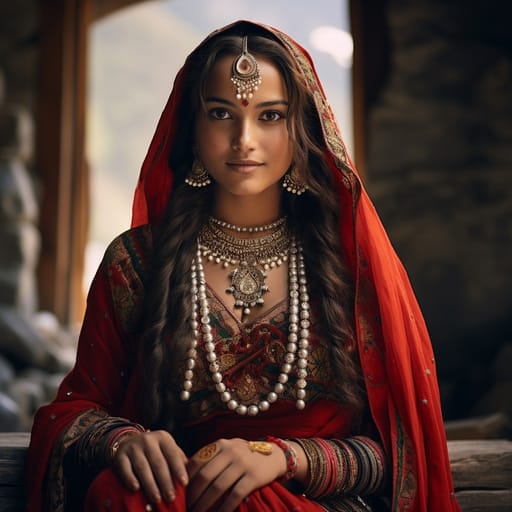
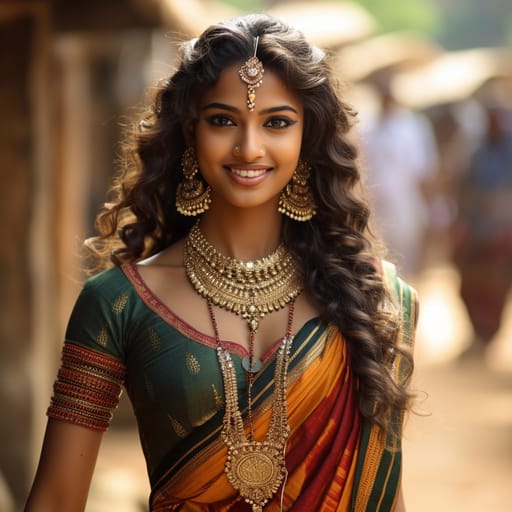
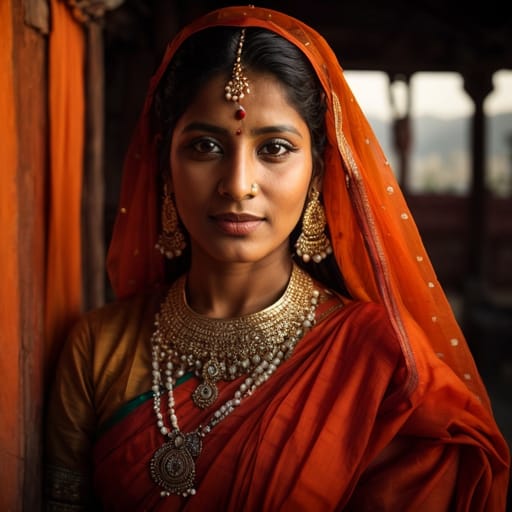
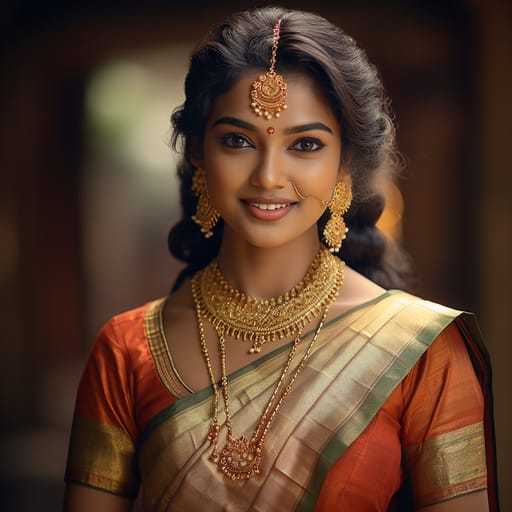
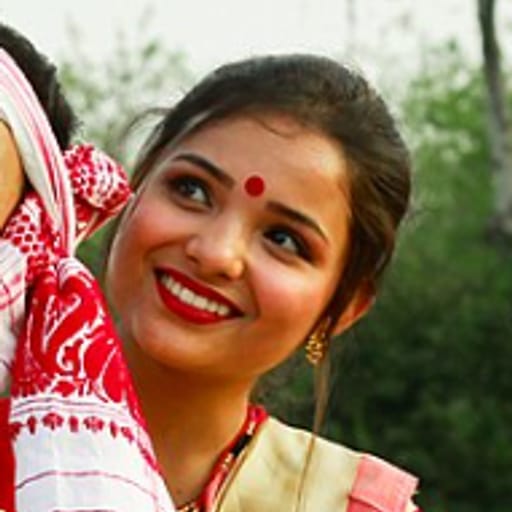
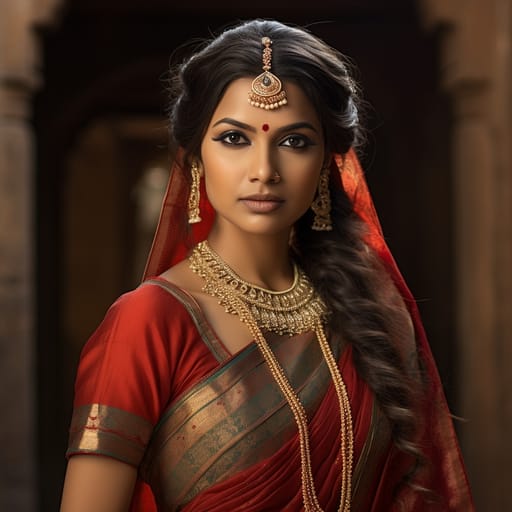
Geographic Distribution: Telugu populations across 1 country
Each row is ranked by the group's share of that country's population, with the source citation drawn from published census and demographic surveys. Click through for the full per-country phenotype profile.
| Country | Share | Source |
|---|---|---|
| India | 6.7% | India 2011 Census, Telugu Mother Tongue speakers (~81M); concentrated in Andhra Pradesh and Telangana plus diaspora communities |
Typical Telugu Phenotypes
Reference for AI generation: hair, eyes, skin, facial structure, build
Telugu people sit firmly within the Dravidian South Indian phenotype, with a population genetics distinct from North Indian groups: less Steppe ancestry, more Ancestral South Indian. The visible result is a population whose features read as recognizably South Indian: deeper skin tones than the Indo-Gangetic plain, broader facial proportions, and hair that runs darker and curlier than further north.
Hair is almost uniformly black to blue-black, with natural brown or reddish tints essentially absent in adults. Texture spans straight to wavy and loosely curly; Type 2 to 3A predominates, with tighter coil patterns appearing in some Madiga and Mala communities. Density is high; thinning and male-pattern recession are common with age. Eye color sits in the dark brown to near-black range, with light eyes vanishingly rare. Eyelid morphology is the standard South Asian open almond shape: no epicanthic fold, lashes typically thick and dark.
Skin tone is the most variable feature and the most class-stratified. Range runs from Fitzpatrick III (light wheatish, more common among coastal Andhra Kamma and Raju families) through IV and V (the modal range, warm olive-brown with golden or yellow undertones) to deep VI in many Madiga and Mala communities and rural agricultural workers. Undertones lean warm (golden, copper, occasionally reddish-brown) rather than the cooler neutral cast seen in some North Indian groups.
Facial structure tends toward rounded to oval faces with moderately full lips, medium-broad noses with a softer bridge and wider alar base than North Indian averages, and softer jawlines. Cheekbones are present but rarely sharp. Eyes often appear large relative to face width, a trait the Telugu film industry has built an entire visual grammar around.
Build runs shorter than the South Asian average: men typically 5'5"-5'8", women 5'0"-5'4", with a tendency toward a slighter frame in youth and central adiposity in middle age. Sub-group variation tracks loosely with historical occupation and region: coastal landholding castes (Kamma, Reddy, Raju) skew lighter and taller on average; Madiga and Mala communities skew darker with tighter hair texture, but overlap is enormous and individual variation swamps group means.
Telugu Body & Anatomy Reference
Anatomy by feature, Indo-Aryan / Dravidian South Asian phenotype
Telugu Boobs & Breasts
Telugu boobs follow the Indo-Aryan / Dravidian South Asian profile: medium-to-large cup, moderate-to-full projection. Areolar diameter is usually 32-46mm, and the coloring is medium-brown to dark-brown areolar pigmentation against the wheatish-to-brown skin tone. Breast shape tracks body composition (endomorph-to-mesomorph with fuller hip deposition, mean adult female BMI 22-25), so Telugu breasts tend to be full and soft, generally fuller than the East Asian norm. Expect a forward-set shape, not the smaller East Asian bust profile.
Telugu Ass & Hips
Telugu ass and hip morphology presents as medium-to-full, moderate-to-high projection, classic curvy hip profile, distinctly different from the slim hip profile of East Asian women. The Telugu pelvic profile shows medium-to-wide iliac crests, full gluteal-femoral fat distribution, anchored in the Indo-Aryan / Dravidian South Asian skeletal pattern. Telugu butt shots in adult AI imagery should render the medium-to-full, moderate-to-high projection, classic curvy hip profile silhouette with the overall build (endomorph-to-mesomorph with fuller hip deposition) and the fat distribution typical of the Indo-Aryan / Dravidian South Asian phenotype.
Telugu Vagina & Pussy
Telugu pussy anatomy typically shows medium-brown to dark-brown labial pigmentation, fuller labia minora projection. Pubic hair is usually straight-to-wavy coarse texture, dense distribution. In AI-generated Telugu nudes, labial color should blend into the wheatish to brown skin with a gradual transition, and the hair should keep its straight-to-wavy coarse texture.
Telugu Dicks & Penis
Penis reference for Telugu men: regional mean ~13cm erect, moderate girth. Coloring: medium-brown shaft pigmentation. An accurate Telugu cock in AI imagery matches the surrounding wheatish to brown skin rather than a generic porn default. Circumcision depends on religion and custom, not ancestry.
Telugu Body, Curves & Build
The Telugu figure is generally endomorph-to-mesomorph with fuller hip deposition, with mean adult female BMI 22-25, characteristic of Indo-Aryan / Dravidian South Asian ancestry. AI image tools tend to flatten regional body types into a few stock shapes; here the Telugu build is kept as its own reference.
Telugu Skin Tone & Hair Texture
Skin: wheatish to brown (Fitzpatrick III-V). Hair: straight-to-wavy 1A-2B, dense, dark-brown to black. Both are typical of Indo-Aryan / Dravidian South Asian ancestry. The most common mistake in AI nudes of Telugu women is a body rendered lighter than the face.
Data depth
47/100Coverage of image-grounded phenotype observations · drives AI generation diversity
- Sample size
- 37/40· 43 images
- Image quality
- 10/30· 21% high
- Confidence
- 0/20· mean 0.39
- Source diversity
- 0/10· wikipedia
- ·Low overall confidence
- ·Mostly low-quality source images
- ·Wikipedia-only source, not population-representative
Observed Distribution: Image Sample
Empirical observations from analyzed photographs · supplementary signal, not population truth
Sample: 43 images analyzed (43 wikipedia). Quality: 9 high, 16 medium, 15 low, 2 very_low. Avg analyzer confidence: 0.39.
Skin tone (Fitzpatrick): IV (16%), V (35%), unclear (49%)
Hair color: gray/white (40%), black (12%), other (5%), unclear (44%)
Hair texture: straight (37%), wavy (2%), coily (2%), bald (2%), shaved (2%), covered (26%), unclear (28%)
Eye color: dark brown (37%), other (5%), brown (2%), unclear (56%)
Epicanthic fold: 0% present, 60% absent, 40% unclear
Caveats: Quality skews toward older or low-resolution photos; phenotype detail may be lossy. Low average analyzer confidence: many photos partially obscured or historical. Sample is 100% Wikipedia notable people, which skews toward male, public-life, and modern figures, not population-representative.
Last aggregated: May 7, 2026
Explore phenotype categories
Structured taxonomy with peer-reviewed scales · 22 anatomical categories
Notable Telugu People
100 reference figures, sourced from Wikipedia
- Satavahana dynasty, also referred to as Andhras (2nd Century BCE to 3rd Century CE)
- Andhra Ikshvaku, 3rd Century CE to 4th Century CE)
- Bruhatpalayana, 270 CE to 285 CE)
- Salankayanas, 300 CE to 440 CE)
- Eastern Ganga dynasty, 505 CE to 1434 CE)
- Vishnukundina Dynasty, 420 CE to 624 CE)
- Eastern Chalukyas, 624 CE to 1189 CE)
- Pericchedi Kingdom, 626 CE to 1292 CE)
- Chalukyas of Vemulavada, 7th Century CE to 10th Century CE)
- Kakatiya dynasty, 1163 CE to 1323 CE)
- Kota Dynasty, 1100 CE to 1270 CE)
- Kondapadumati, Dynasty (1114 CE to 1250 CE)
- Chagi Dynasty, 1100 CE to 1477 CE)
- Reddy dynasty, 1325 CE to 1448 CE)
- Gona Dynasty, 13th Century CE)
- Aravidu Dynasty, 1336 CE to 1646 CE)
- Renati Chodas, 5th Century CE to 9th Century CE)
- Velanati Chodas, 1076 CE to 1216 CE)
- Pottapi Chodas, 11th Century CE)
- Konidena Chodas, 1050 CE to 1300 CE)
- Nannuru Chodas, 12th Century CE)
- Nellore Chodas, 11th Century CE to 12th Century CE)
- Musunuri Nayakas, 14th Century CE)
- Recherla Nayakas, 1368 CE to 1435 CE)
- Pemmasani Nayaks, 1423-1685)
- Sayapaneni Nayaks, 16th Century CE)
- Nayaks of Gingee, 1509-1649)
- Madurai Nayak dynasty, 1529-1736)
- Nayaks of Tanjore, 1532-1673)
- Nayaks of Kalahasti, 1542 CE to 1646 CE)
- Nayaks of Kandy, 1739-1815) ruled Sri Lanka.
- Gautamiputra Satakarni, He is the most powerful king of Satavahana Dynasty,
- Madhava Varma II, He is the most powerful king of Vishnukundina Dynasty, He fought and won many…
- Rajaraja Narendra, He is the most powerful king of Eastern Chalukyas, and patronage to Telugu la…
- Ganapati Deva, He is the greatest king of Kakatiya Dynasty, He Unified Telugu Lands.
- Kulottunga I, He is the first Chalukya Cholas emperor, He Conqueror Kalinga, Sri Lanka, and…
- Gonka II, He was regarded as greatest among of all Chodas and also fought as general in…
- Gopana, Army commander of Vijayanagara Empire.
- Madanna and Akkanna, [citation needed] Two Brothers and Historical Warriors.
- Jayapa Nayudu, He defeated a Velanati Chodas, Jayapa participated in the Kakatiya conquest o…
- Gona Budda Reddy, He was a poet and ruler lived in Southern India.
- Prolaya Vema Reddy, First ruler of Reddi Kingdom, He was part of the confederation of states that…
- Rama Raya, Vijayanagara Emperor, Founder of Aravidu Dynasty.
- Venkatapati Raya, Aravidu dynasty. He dealt successfully with the Deccan Sultans of Bijapur and…
- Timmarusu, was the Prime Minister of Krishna Deva Raya . He had also served as Prime Min…
- Kapaya Nayaka, Historical warrior and opposed Muslim rule.
- Palanati Brahmanaidu, Historical warrior.
- Nagama Nayaka, He defeated Veerasekhara chola, and is the father of Viswanatha Nayak.
- Viswanatha Nayak, Founder of Madurai Nayak Dynasty; defeated five Pandiyan kings.
- Thirumala Nayaka, He is the most powerful king of Madurai Nayak Dynasty, war Against Bijapur Su…
- Bangaru Thirumala Nayaka, He was a member of Madurai Nayak royal family and Military Commander of the M…
- Sevappa Nayak, first ruler of Nayaks of Tanjore.
- Raghunatha Nayak, He is the most powerful king of Nayaks of Tanjore.
- Khem Nayak, He led a Rebellion as the Military Commander of Thanjavur Nayak against the P…
- Pemmasani Ramalinga Nayudu, won the Battle of Raichur for Sri Krishna Devaraya. Commander of Vijayanagara…
- Malik Maqbul Tilangani, He was a Military Commander in the Kakatiya Dynasty.
- Shitab Khan, He joined as a foot soldier in the army of Humayun Shah, the Bahmani Sultan.
- Damarla Chennappa Nayaka, Notable Ruler of Nayaks of Kalahasti.
- Sri Vikrama Rajasinha, Last king of the Kingdom of Kandy
- Venkatarama Reddy, was the first Hindu kotwal of Kingdom of Hyderabad as in the late 19th and ea…
- Sir Pusapati Ananda Gajapati Raju, Maharaja of Vizianagaram, awarded Grand Commander of theOrder of the Indian E…
- Sir Rajagopala Krishna Yachendra, Maharaja of Venkatagiri, awarded Grand Commander of the Order of the Indian E…
- Rao Venkata Kumara Mahipati Surya Rau, Maharaja of Pithapuram, He Awarded Order of the Indian Empire From United Kin…
- Venkata Ranga Rao, Maharaja of Bobbili, He Awarded Order of the Indian Empire From United Kingdom.
- Panaganti Ramarayaningar, He is Raja of Panagal, He Awarded Order of the Indian Empire From United King…
- Rani Rudrama Devi, She is the most powerful queen of Kakatiya Dynasty.
- Rani Mangammal, She is the most powerful queen of Madurai Nayak Dynasty.
- Bhagmati, was a mystic Hindu queen.
- Nayakuralu Nagamma, was a renowned statesperson and minister to King Nalagama, the ruler of Palan…
- Bezawada Gopala Reddy, Governor of Uttar Pradesh
- P. Chandra Reddy, Governor of Andhra Pradesh
- Bandaru Dattatreya, Current Governor of Haryana and Former Governor of Himachal Pradesh
- Kambhampati Hari Babu, Current Governor of Mizoram
- C. Vidyasagar Rao, Former Governor of Maharashtra and Governors of Tamil Nadu
- V. V. Giri, Former Governor of Karnataka
- Kasu Brahmananda Reddy, Governor of Maharashtra
- Konijeti Rosaiah, Former Governor of Tamil Nadu and Karnataka
- B. Satya Narayan Reddy, Governor of Odisha
- K. V. Raghunatha Reddy, Governor of Tripura
- Kona Prabhakara Rao, Former Governor of Maharashtra
- Pendekanti Venkatasubbaiah, Former Governor of Bihar
- Marri Chenna Reddy, Former Governor of Tamil Nadu
- P. S. Ramamohan Rao, Former Governor of Tamil Nadu
- V. Rama Rao, Former Governor of Sikkim
- K. V. Krishna Rao, Former Governor of Jammu & Kashmir, Nagaland, Manipur and Tripura
- V. S. Ramadevi, Former Governor of Himachal Pradesh and Karnataka
- Neelam Sanjiva Reddy, Former Speaker of the Lok Sabha
- G. M. C. Balayogi, Former Speaker of the Lok Sabha
- Tanguturi Prakasam, Former Chief Minister of Madras Presidency and Former Chief Andhra State
- Burgula Ramakrishna Rao, Former Chief Minister of Hyderabad State
- A. Subbarayalu Reddiar, Former Chief Minister of Madras Presidency
- B. Munuswamy Naidu, Former Chief Minister of Madras Presidency
- Ramakrishna Ranga Rao of Bobbili, Former Chief Minister of Madras Presidency
- Kurma Venkata Reddy Naidu, Former Chief Minister of Madras Presidency
- P. S. Kumaraswamy Raja, Former Chief Minister of Madras Presidency
- Damodaram Sanjivayya, Former Chief Minister of Andhra Pradesh
- P. V. Narasimha Rao, Former Chief Minister of Andhra Pradesh
- Jalagam Vengala Rao, Former Chief Minister of Andhra Pradesh
- Tanguturi Anjaiah, Former Chief Minister of Andhra Pradesh
- Bhavanam Venkatarami Reddy, Former Chief Minister of Andhra Pradesh
Erotic Poses & Sex Positions
From the pose catalog: 219 named positions with reference skeletons
Frequently asked questions about Telugu people
Where is the Telugu homeland?
The Telugu homeland is India (Andhra Pradesh, Telangana) in Southern Asia.
What countries do Telugu people live in?
Telugu populations are documented across 1 country: India.
What language do Telugu people speak?
Telugu people primarily speak Dravidian / Telugu.
What religion do Telugu people practice?
The predominant religion among Telugu people is Hinduism.
What does a typical Telugu woman look like?
Telugu women typically have black to blue-black hair that is thick and straight to loosely curly, and dark brown eyes with thick lashes. Skin ranges widely, from Fitzpatrick III to VI, most often a warm olive-brown with golden undertones. Faces tend to be rounded to oval, with large eyes, a medium-broad nose, moderately full lips and soft jawlines, and women commonly stand 5'0" to 5'4".






Make your own Telugu images
Five a day, free, no credits to buy. The studio starts from this group's phenotype data, so you can set body type, pose and style and keep the traits accurate.
Start with Telugu