No portrait yet
Binjhal Erotic
Western Odisha, India, mainly Bargarh, Sambalpur, Balangir and Nuapada districts, with the closely related Binjhwar in neighboring Chhattisgarh
Sambalpuri Odia in Odisha and Chhattisgarhi among the Binjhwar (both Indo-Aryan); no separate tribal language survives
Hinduism, with strong devotion to the goddess Vindhyavasini and to local village deities
Closely related to the Binjhwar of Chhattisgarh; colonial ethnographers linked both to the Baiga of central India
About Binjhal People
The Binjhal carry their origin story in their name. Binjh is the local form of Vindhya, the range of hills that crosses central India, and the goddess they hold closest is Vindhyavasini, whose name means the one who dwells in the Vindhyas. Most Binjhal now live in farming villages across Bargarh, Sambalpur, Balangir and Nuapada districts of western Odisha, where the state lists them as a Scheduled Tribe. Over the border in Chhattisgarh, the closely related Binjhwar tell much the same story about where they came from.
They no longer have a language of their own. The Binjhal speak Sambalpuri, the western form of Odia, and the Binjhwar speak Chhattisgarhi. In everyday speech they sound like their Hindu farming neighbors. Religion works the same way. Binjhal households are Hindu in worship and in their festivals, and they celebrate Nuakhai, the new rice feast, with the rest of western Odisha. Village deities and the family goddess still matter alongside the major gods. Colonial ethnographers in the Central Provinces called the Binjhwar a Hinduized branch of the Baiga, the forest people of the Maikal hills. That label says as much about how officials sorted tribes as it does about who descended from whom.
The turning point in Binjhal history was land. Binjhal chiefs held hill estates in the Sambalpur country, Borasambar and Ghes among them, so they had a real stake in the fight when British rule closed in. During the revolt that began in 1857, Madho Singh of Ghes and his sons fought alongside Surendra Sai, and Madho Singh was later hanged. In Chhattisgarh, Narayan Singh, the Binjhwar landholder of Sonakhan, was jailed for breaking open a merchant's grain store during a famine and handing the grain out to hungry villagers. He escaped, raised armed men, and was executed at Raipur in December 1857. Today he is honored as Veer Narayan Singh, the state's first martyr of that uprising.
Most Binjhal today are small farmers and laborers. Their villages look like any other in the region, but they still remember the estates they once held and the men who were hanged for defending them.
Related ethnic groups
Groups that share Binjhal's homeland, region, language, or religious tradition. These are likely candidates for comparative phenotype reference.
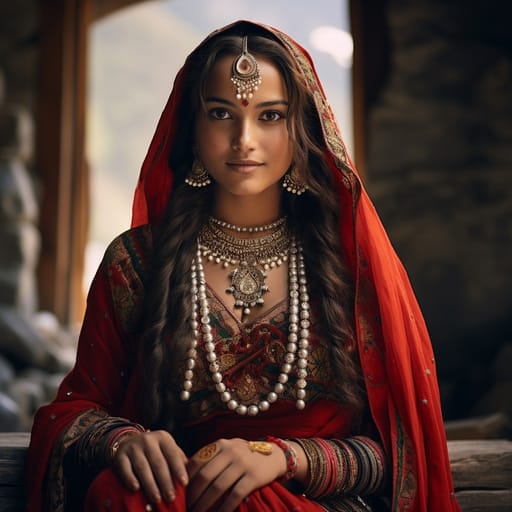
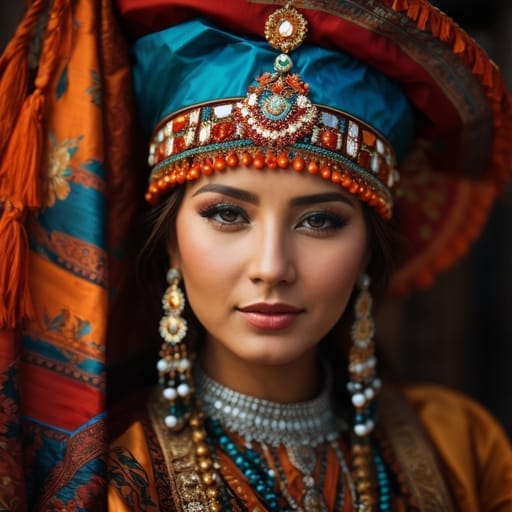
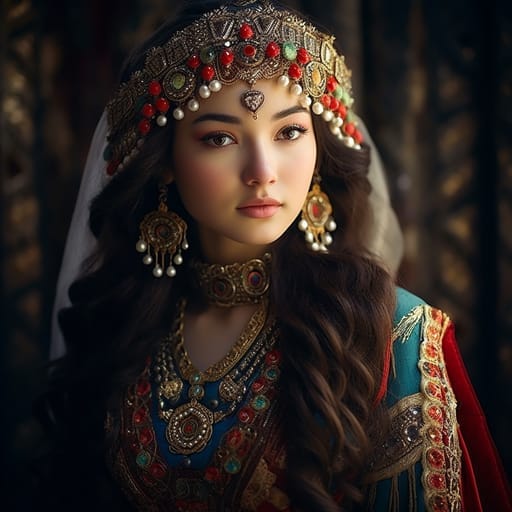
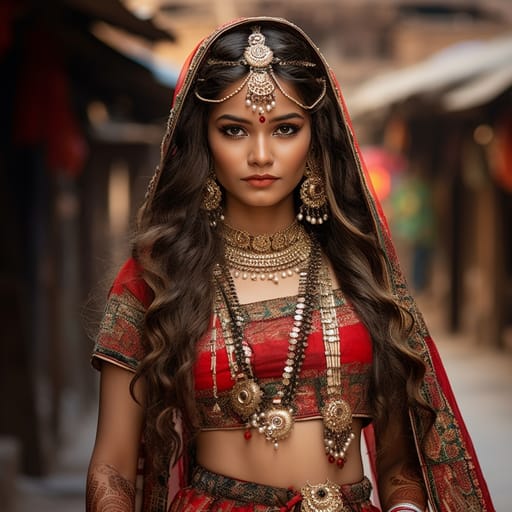
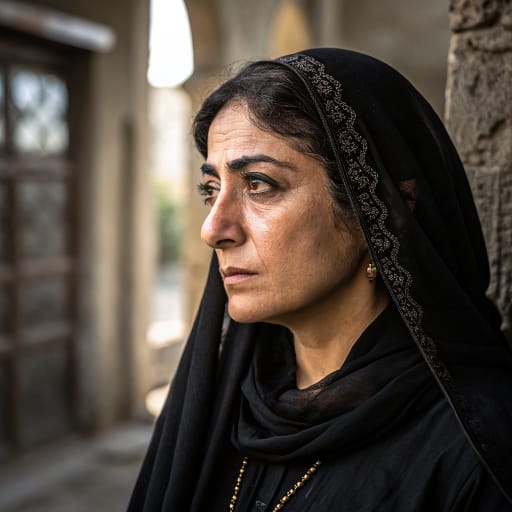
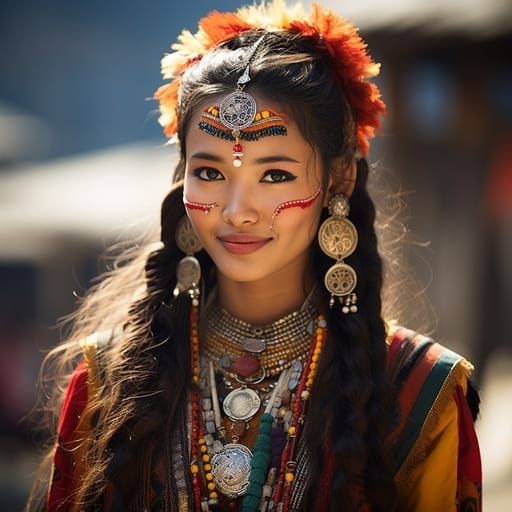
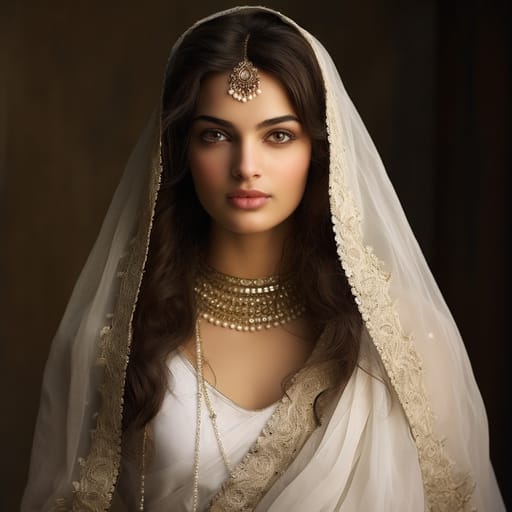
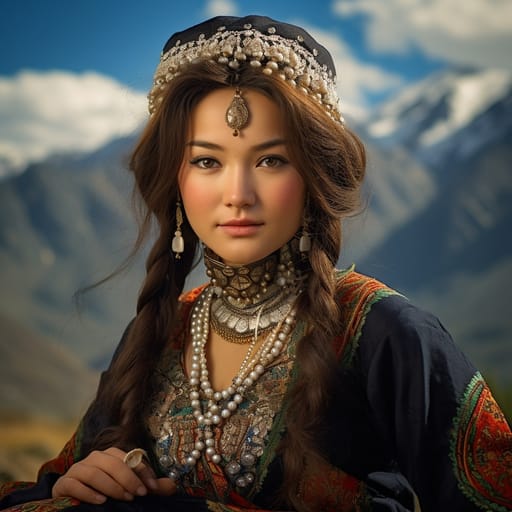
Typical Binjhal Phenotypes
Reference for AI generation: hair, eyes, skin, facial structure, build
Binjhal Body & Anatomy Reference
Indo-Aryan / Dravidian South Asian phenotype: anatomy reference for AI nude generation
Binjhal Boobs & Breasts
Binjhal boobs follow the Indo-Aryan / Dravidian South Asian profile: medium-to-large cup, moderate-to-full projection. Areolar diameter is usually 32-46mm, and the coloring is medium-brown to dark-brown areolar pigmentation against the wheatish-to-brown skin tone. Breast shape tracks body composition (endomorph-to-mesomorph with fuller hip deposition, mean adult female BMI 22-25), so Binjhal breasts tend to be full and soft, generally fuller than the East Asian norm. Expect a forward-set shape, not the smaller East Asian bust profile.
Binjhal Ass & Hips
Binjhal ass and hip morphology presents as medium-to-full, moderate-to-high projection, classic curvy hip profile, distinctly different from the slim hip profile of East Asian women. The Binjhal pelvic profile shows medium-to-wide iliac crests, full gluteal-femoral fat distribution, anchored in the Indo-Aryan / Dravidian South Asian skeletal pattern. Binjhal butt shots in adult AI imagery should render the medium-to-full, moderate-to-high projection, classic curvy hip profile silhouette with the overall build (endomorph-to-mesomorph with fuller hip deposition) and the fat distribution typical of the Indo-Aryan / Dravidian South Asian phenotype.
Binjhal Vagina & Pussy
Binjhal pussy anatomy typically shows medium-brown to dark-brown labial pigmentation, fuller labia minora projection. Pubic hair is usually straight-to-wavy coarse texture, dense distribution. In AI-generated Binjhal nudes, labial color should blend into the wheatish to brown skin with a gradual transition, and the hair should keep its straight-to-wavy coarse texture.
Binjhal Dicks & Penis
Penis reference for Binjhal men: regional mean ~13cm erect, moderate girth. Coloring: medium-brown shaft pigmentation. An accurate Binjhal cock in AI imagery matches the surrounding wheatish to brown skin rather than a generic porn default. Circumcision depends on religion and custom, not ancestry.
Binjhal Body, Curves & Build
The Binjhal figure is generally endomorph-to-mesomorph with fuller hip deposition, with mean adult female BMI 22-25, characteristic of Indo-Aryan / Dravidian South Asian ancestry. AI image tools tend to flatten regional body types into a few stock shapes; here the Binjhal build is kept as its own reference.
Binjhal Skin Tone & Hair Texture
Skin: wheatish to brown (Fitzpatrick III-V). Hair: straight-to-wavy 1A-2B, dense, dark-brown to black. Both are typical of Indo-Aryan / Dravidian South Asian ancestry. The most common mistake in AI nudes of Binjhal women is a body rendered lighter than the face.
Explore phenotype categories
Structured taxonomy with peer-reviewed scales · 22 anatomical categories
Erotic Poses & Sex Positions
From the pose catalog: 219 named positions with reference skeletons
Frequently asked questions about Binjhal people
Where is the Binjhal homeland?
The Binjhal homeland is Western Odisha, India, mainly Bargarh, Sambalpur, Balangir and Nuapada districts, with the closely related Binjhwar in neighboring Chhattisgarh in Southern Asia.
What language do Binjhal people speak?
Binjhal people primarily speak Sambalpuri Odia in Odisha and Chhattisgarhi among the Binjhwar (both Indo-Aryan); no separate tribal language survives.
What religion do Binjhal people practice?
The predominant religion among Binjhal people is Hinduism, with strong devotion to the goddess Vindhyavasini and to local village deities.






Make your own Binjhal images
Five a day, free, no credits to buy. The studio starts from this group's phenotype data, so you can set body type, pose and style and keep the traits accurate.
Start with Binjhal