Help us get this right
Does this portrait look right for Afridi?
Nobody has judged this one yet. You would be the first.
Afridi Erotic
Khyber district and the Tirah valley of Khyber Pakhtunkhwa, Pakistan, with communities in Peshawar, Kohat, Karachi and a long-settled diaspora in northern India
Pashto, Afridi dialect of the Karlani group (Indo-European, Eastern Iranian); Urdu widely spoken as a second language
Sunni Islam, Hanafi school, practiced alongside Pashtunwali customary law
Karlani branch of the Pashtuns; eight khels: Kuki Khel, Malikdin Khel, Kambar Khel, Kamar Khel, Zakha Khel, Sipah, Aka Khel and Adam Khel
About Afridi People
For most of recorded history, anyone moving goods or an army between Kabul and the Indus plain went through the Khyber Pass, and the Afridi set the price. They are a Pashtun tribe of the Karlani branch, holding the pass itself, the high Tirah valley behind it, and the Bara lowlands below, in what is now Khyber district in northwestern Pakistan. Tolls on caravans were never banditry as they saw it. They were rent on a corridor the tribe held and could close at will. Mughal, Sikh and British administrations each learned the same lesson in turn: the pass was passable on Afridi terms, by treaty and subsidy, or it was expensive.
The tribe splits into eight khels: Kuki Khel, Malikdin Khel, Kambar Khel, Kamar Khel, Zakha Khel, Sipah, Aka Khel and Adam Khel. Land in Tirah was long held under wesh, a periodic reallotment that shuffled plots between clans on a rotation, making ownership corporate and temporary rather than something a father handed to a son. Disputes go to jirga, an assembly that argues its way to consensus and has no chairman to appeal over. Both sit inside Pashtunwali, the code under which hospitality and sanctuary are obligations you cannot politely decline. Religion is Sunni Islam of the Hanafi school, and the friction between tribal custom and religious law is old, live and unresolved.
Their Pashto belongs to the Karlani dialect group and is divergent enough in its vowels that speakers of the Kandahar and Peshawar standards have to work at it. Many families still move with the seasons: Tirah is high and snowbound, so households come down to Bara and the Khyber foothills for winter and climb back in spring. The Adam Khel, on the ridges between Peshawar and Kohat, turned Darra Adam Khel into a town of gunsmiths who copy firearms by hand, part by part, working from a single sample.
Afridi fighters destroyed a Mughal column near Ali Masjid in 1672. In 1897 they rose with the Orakzai, took the Khyber posts, and pulled some forty thousand British troops into Tirah, the largest expedition the frontier ever saw. Afridis then filled the Khyber Rifles, standing on both sides of that memory. Militancy and military operations emptied much of Tirah after 2013, and in 2018 the tribal agencies were folded into Khyber Pakhtunkhwa province, ending rule by political agent. What replaces it is still being argued out.
Related ethnic groups
Groups that share Afridi's homeland, region, language, or religious tradition. These are likely candidates for comparative phenotype reference.
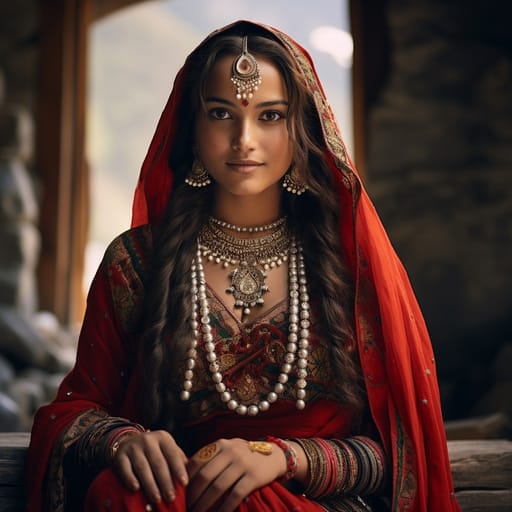
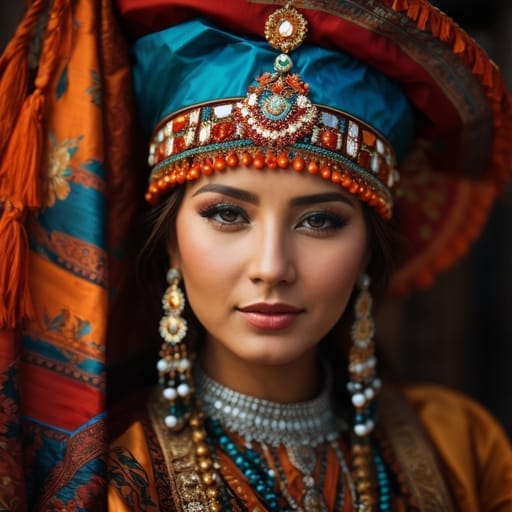
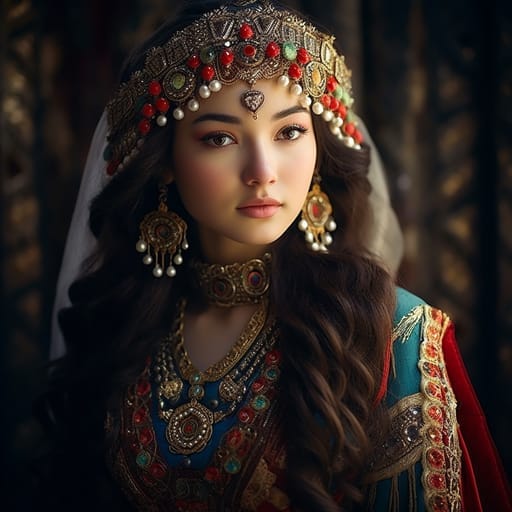
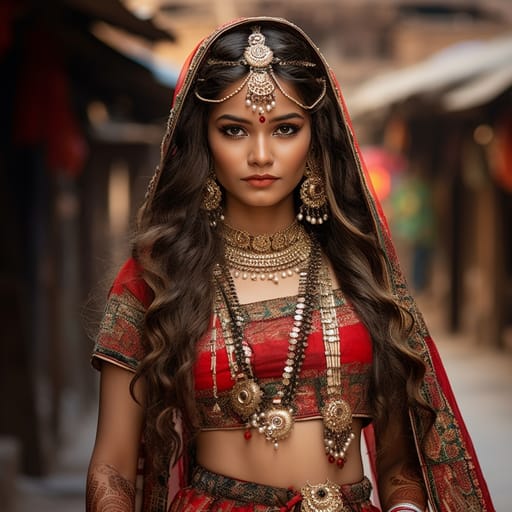
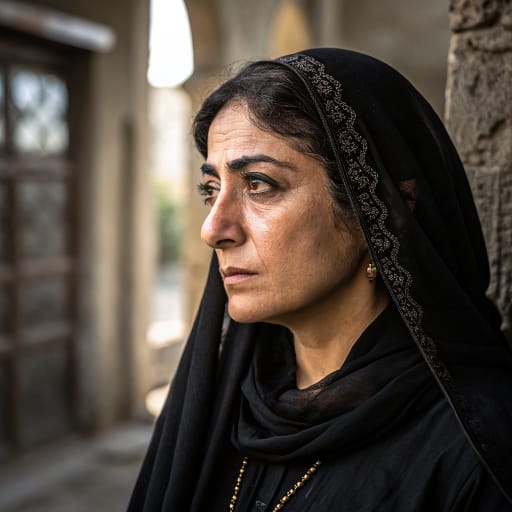
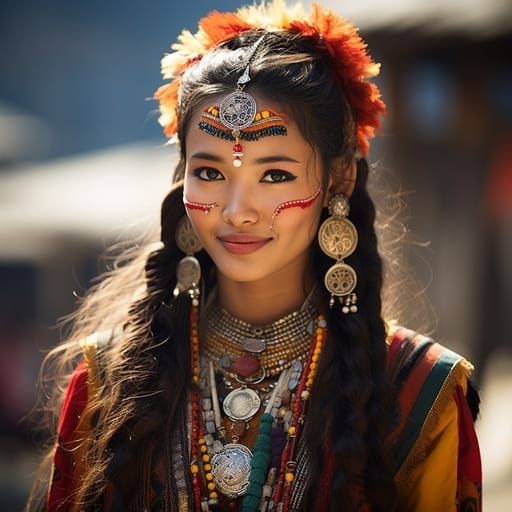
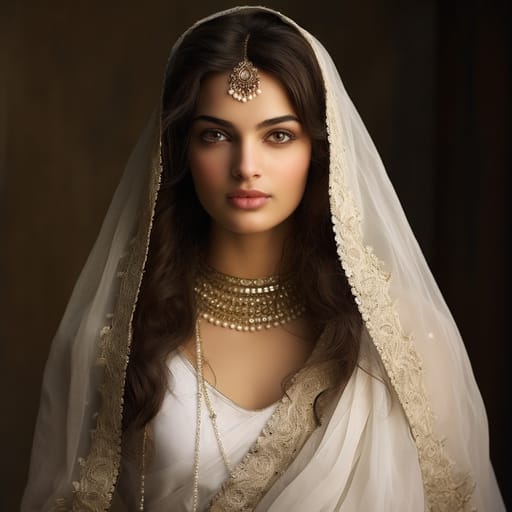
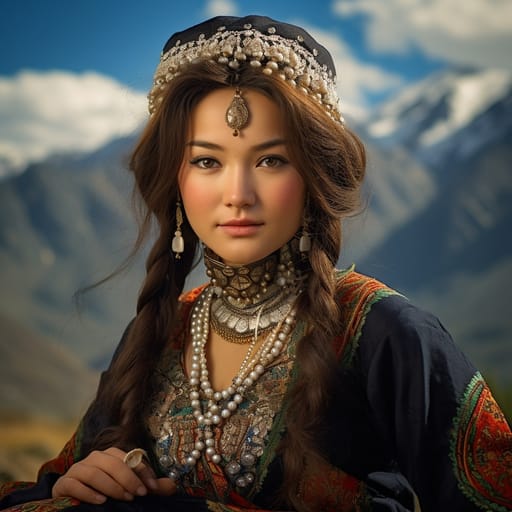
Typical Afridi Phenotypes
Reference for AI generation: hair, eyes, skin, facial structure, build
Afridi Body & Anatomy Reference
Per-feature anatomical profile for AI nude generation: Indo-Aryan / Dravidian South Asian phenotype
Afridi Boobs & Breasts
Bust reference for Afridi women: medium-to-large cup, moderate-to-full projection, which is typical of Indo-Aryan / Dravidian South Asian ancestry. Areolas measure about 32-46mm across, with medium-brown to dark-brown pigmentation. Body type (endomorph-to-mesomorph with fuller hip deposition) shapes the bust as well, so Afridi tits are usually full and soft, generally fuller than the East Asian norm. In AI imagery, keep the forward-set shape rather than drifting toward the smaller East Asian bust profile.
Afridi Ass & Hips
The Afridi ass is typically medium-to-full, moderate-to-high projection, classic curvy hip profile, which sets it apart from the slim hip profile of East Asian women. Underneath, the pelvis shows medium-to-wide iliac crests, full gluteal-femoral fat distribution, part of the Indo-Aryan / Dravidian South Asian skeletal pattern. For Afridi butt pics and AI renders, match that silhouette and the overall build (endomorph-to-mesomorph with fuller hip deposition).
Afridi Vagina & Pussy
Afridi pussy and vulvar anatomy presents medium-brown to dark-brown labial pigmentation, fuller labia minora projection, consistent with the Indo-Aryan / Dravidian South Asian phenotype's pigmentation pattern. Afridi pubic hair is typically straight-to-wavy coarse texture, dense distribution, in the inverted-triangle pattern. For anatomically accurate Afridi pussy renders the labial coloration should match the surrounding wheatish to brown skin tone with a continuous gradient, and the hair should keep its straight-to-wavy coarse texture.
Afridi Dicks & Penis
Afridi dicks follow the Indo-Aryan / Dravidian South Asian reference data: regional mean ~13cm erect; moderate girth; medium-brown shaft pigmentation. Shaft color should track the wheatish to brown skin tone with a smooth change toward the glans, and Afridi pubic hair keeps its straight-to-wavy coarse texture.
Afridi Body, Curves & Build
Afridi body type and overall build presents as endomorph-to-mesomorph with fuller hip deposition, with mean adult female BMI 22-25: the characteristic Indo-Aryan / Dravidian South Asian habitus. Afridi curves and proportions should keep the regional skeletal frame (height, shoulder-to-hip ratio, limb proportions) rather than a generic mesomorph default.
Afridi Skin Tone & Hair Texture
Afridi skin sits in the wheatish to brown (Fitzpatrick III-V) band. Hair is typically straight-to-wavy 1A-2B, dense, dark-brown to black, in keeping with the Indo-Aryan / Dravidian South Asian phenotype. In nude renders the skin should stay one even tone from face to body, and body, pubic and head hair should match.
Explore phenotype categories
Structured taxonomy with peer-reviewed scales · 22 anatomical categories
Erotic Poses & Sex Positions
From the pose catalog: 219 named positions with reference skeletons
Frequently asked questions about Afridi people
Where is the Afridi homeland?
The Afridi homeland is Khyber district and the Tirah valley of Khyber Pakhtunkhwa, Pakistan, with communities in Peshawar, Kohat, Karachi and a long-settled diaspora in northern India in Southern Asia.
What language do Afridi people speak?
Afridi people primarily speak Pashto, Afridi dialect of the Karlani group (Indo-European, Eastern Iranian); Urdu widely spoken as a second language.
What religion do Afridi people practice?
The predominant religion among Afridi people is Sunni Islam, Hanafi school, practiced alongside Pashtunwali customary law.






Make your own Afridi images
Five a day, free, no credits to buy. The studio starts from this group's phenotype data, so you can set body type, pose and style and keep the traits accurate.
Start with Afridi