Help us get this right
Does this portrait look right for Ambashtha?
Nobody has judged this one yet. You would be the first.
Ambashtha Erotic
South Bihar, India, chiefly the Magadh districts of Patna, Nalanda, Gaya and Nawada, with families in Jharkhand, Delhi and abroad. The ancient Ambashtha tribe lived on the lower Chenab in the Punjab.
Magahi and Hindi (Indo-Aryan, Indo-European); historically Persian and Urdu for administrative work, with local records kept in the Kaithi script.
Hinduism, with particular devotion to Chitragupta, the divine record keeper, honored at Chitragupta Puja two days after Diwali.
One of the twelve sub-castes of the Chitraguptavanshi Kayasthas of northern India; internally identified by khas ghar (ancestral village) lineages. The Baidya of Bengal also claim the Ambashtha name.
About Ambashtha People
Ambashtha is a name with three lives. In the oldest Sanskrit sources it belongs to a people of the Punjab. In the Hindu law books it becomes a label for hereditary physicians. Today it is carried by a scribal community of south Bihar, one of the twelve branches of the Chitraguptavanshi Kayasthas. Whether a single line of descent runs through all three is unproven, and the link is better treated as tradition than as record. What is certain is that the name has stayed attached to literate, professional work for a very long time.
The ancient Ambashthas are listed in the Mahabharata among the peoples of the northwest, and Alexander's army ran into them on the lower Chenab around 325 BCE. His historians wrote the name down in garbled Greek forms such as Abastanoi and Sambastai. Diodorus describes them as living in cities governed without a king, able to field a large force of infantry, cavalry and chariots, and says they took the advice of their elders and negotiated instead of fighting. Centuries later the law book of Manu uses Ambashtha for the child of a Brahmin father and a Vaishya mother and assigns that group the art of healing, which is why the Baidya physicians of Bengal have long claimed the name as well.
The living community is concentrated in the old Magadh country: Patna, Nalanda, Gaya, Nawada and the districts around them, with families now spread across Jharkhand, Delhi and overseas. They speak Magahi and Hindi at home, and for generations their working languages were whatever the state wrote in: Persian under the Mughals, then Urdu and English under the British. Kaithi, the quick cursive script in which Bihar's land deeds and court papers were kept into the early twentieth century, takes its name from the Kayasthas who wrote it. Many Ambashtha families still identify themselves by khas ghar, the ancestral village from which the lineage is traced.
Religion is mainstream Hinduism with one distinctive patron: Chitragupta, the clerk of the god of death, who keeps the ledger of every soul's deeds. On Chitragupta Puja, two days after Diwali, pens, inkpots and account books are placed before him, and in observant homes nobody writes until the worship is finished. Kayasthas also stand out among the upper castes of the Ganges plain for a kitchen that openly includes meat, a habit usually put down to centuries of service at Muslim courts. All Kayastha branches together came to less than one percent of Bihar's population in the state caste survey published in 2023, yet the community remains heavily represented in law, medicine, teaching and the civil service.
Related ethnic groups
Groups that share Ambashtha's homeland, region, language, or religious tradition. These are likely candidates for comparative phenotype reference.
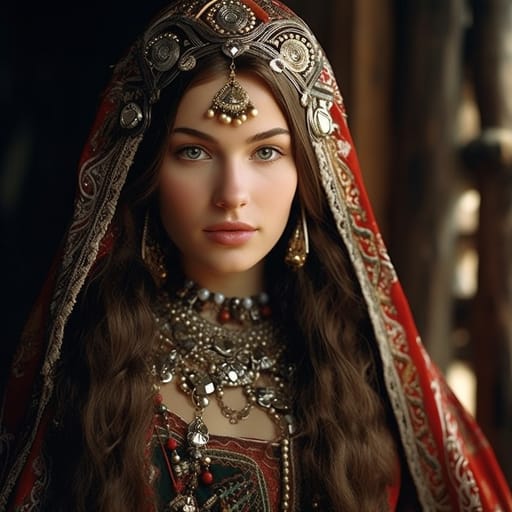
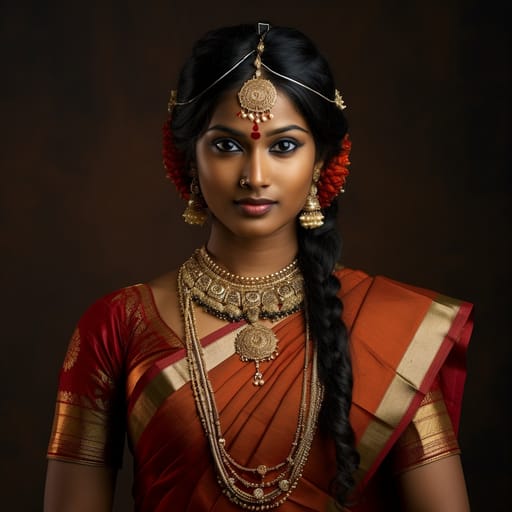
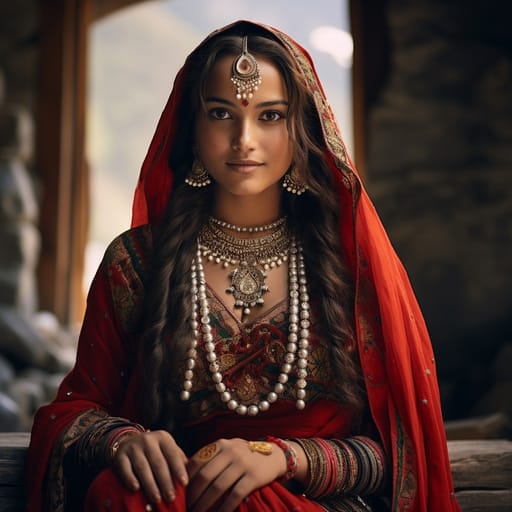
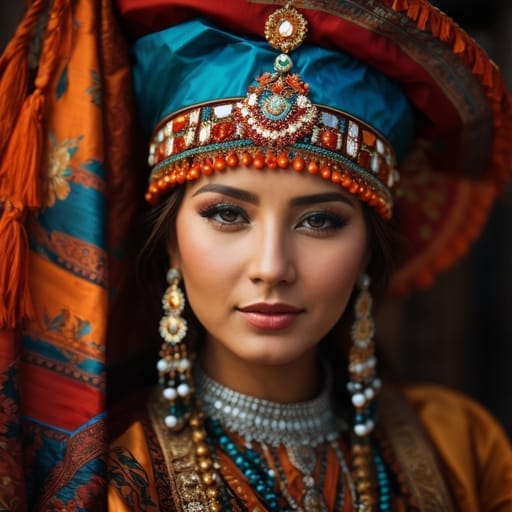
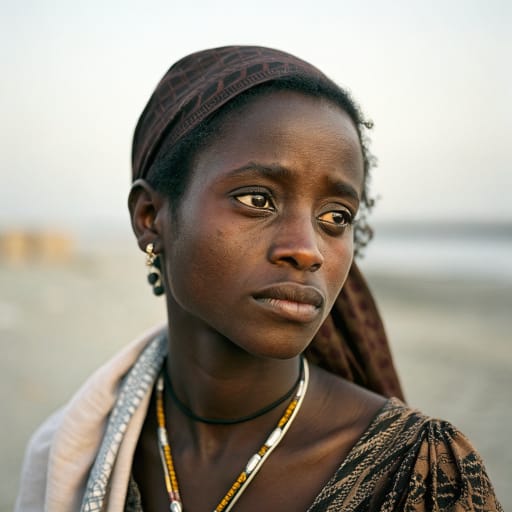
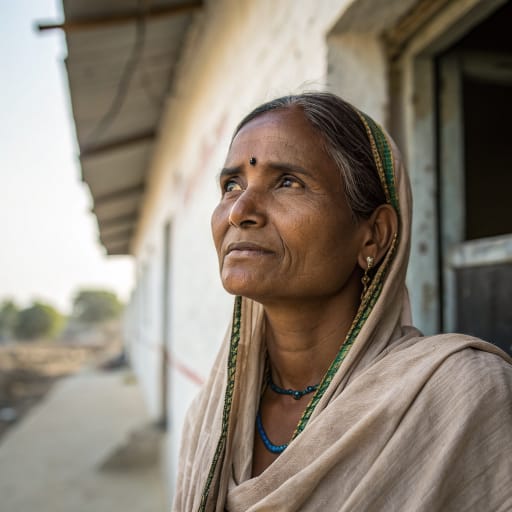
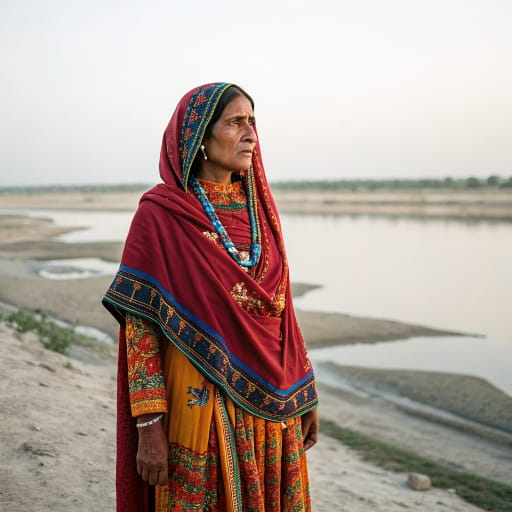
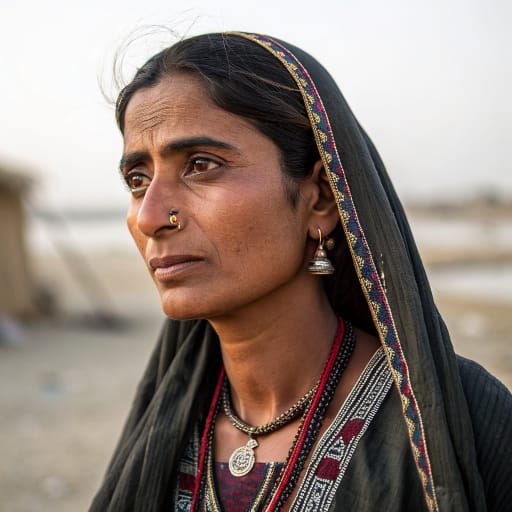
Typical Ambashtha Phenotypes
Reference for AI generation: hair, eyes, skin, facial structure, build
Ambashtha Body & Anatomy Reference
Indo-Aryan / Dravidian South Asian phenotype: anatomy reference for AI nude generation
Ambashtha Boobs & Breasts
Bust reference for Ambashtha women: medium-to-large cup, moderate-to-full projection, which is typical of Indo-Aryan / Dravidian South Asian ancestry. Areolas measure about 32-46mm across, with medium-brown to dark-brown pigmentation. Body type (endomorph-to-mesomorph with fuller hip deposition) shapes the bust as well, so Ambashtha tits are usually full and soft, generally fuller than the East Asian norm. In AI imagery, keep the forward-set shape rather than drifting toward the smaller East Asian bust profile.
Ambashtha Ass & Hips
The Ambashtha ass is typically medium-to-full, moderate-to-high projection, classic curvy hip profile, which sets it apart from the slim hip profile of East Asian women. Underneath, the pelvis shows medium-to-wide iliac crests, full gluteal-femoral fat distribution, part of the Indo-Aryan / Dravidian South Asian skeletal pattern. For Ambashtha butt pics and AI renders, match that silhouette and the overall build (endomorph-to-mesomorph with fuller hip deposition).
Ambashtha Vagina & Pussy
Ambashtha pussy and vulvar anatomy presents medium-brown to dark-brown labial pigmentation, fuller labia minora projection, consistent with the Indo-Aryan / Dravidian South Asian phenotype's pigmentation pattern. Ambashtha pubic hair is typically straight-to-wavy coarse texture, dense distribution, in the inverted-triangle pattern. For anatomically accurate Ambashtha pussy renders the labial coloration should match the surrounding wheatish to brown skin tone with a continuous gradient, and the hair should keep its straight-to-wavy coarse texture.
Ambashtha Dicks & Penis
Ambashtha dicks follow the Indo-Aryan / Dravidian South Asian reference data: regional mean ~13cm erect; moderate girth; medium-brown shaft pigmentation. Shaft color should track the wheatish to brown skin tone with a smooth change toward the glans, and Ambashtha pubic hair keeps its straight-to-wavy coarse texture.
Ambashtha Body, Curves & Build
Ambashtha body type and overall build presents as endomorph-to-mesomorph with fuller hip deposition, with mean adult female BMI 22-25: the characteristic Indo-Aryan / Dravidian South Asian habitus. Ambashtha curves and proportions should keep the regional skeletal frame (height, shoulder-to-hip ratio, limb proportions) rather than a generic mesomorph default.
Ambashtha Skin Tone & Hair Texture
Ambashtha skin sits in the wheatish to brown (Fitzpatrick III-V) band. Hair is typically straight-to-wavy 1A-2B, dense, dark-brown to black, in keeping with the Indo-Aryan / Dravidian South Asian phenotype. In nude renders the skin should stay one even tone from face to body, and body, pubic and head hair should match.
Explore phenotype categories
Structured taxonomy with peer-reviewed scales · 22 anatomical categories
Erotic Poses & Sex Positions
From the pose catalog: 219 named positions with reference skeletons
Frequently asked questions about Ambashtha people
Where is the Ambashtha homeland?
The Ambashtha homeland is South Bihar, India, chiefly the Magadh districts of Patna, Nalanda, Gaya and Nawada, with families in Jharkhand, Delhi and abroad. The ancient Ambashtha tribe lived on the lower Chenab in the Punjab. in Southern Asia.
What language do Ambashtha people speak?
Ambashtha people primarily speak Magahi and Hindi (Indo-Aryan, Indo-European); historically Persian and Urdu for administrative work, with local records kept in the Kaithi script..
What religion do Ambashtha people practice?
The predominant religion among Ambashtha people is Hinduism, with particular devotion to Chitragupta, the divine record keeper, honored at Chitragupta Puja two days after Diwali..






Make your own Ambashtha images
Five a day, free, no credits to buy. The studio starts from this group's phenotype data, so you can set body type, pose and style and keep the traits accurate.
Start with Ambashtha