No image yet

Afro-Iranians Erotic

Homeland

Iran's Persian Gulf and Gulf of Oman coast, chiefly Hormozgan (Bandar Abbas, Minab, Qeshm) and Bushehr, with smaller communities in Khuzestan, Sistan and Baluchestan, and inland cities such as Shiraz and Tehran

Language

Persian and southern coastal varieties such as Bandari and Bushehri (Indo-European, Iranian); also Arabic (Afroasiatic, Semitic) and Balochi (Indo-European, Iranian) in some regions; Swahili words survive in ritual songs

Part of the Indo-European language family

Religion

Mostly Shia Islam, with Sunni Muslims among the Baloch and some coastal communities; many take part in zar and noban spirit-healing ceremonies

Subgroups

Not a single tribe: descendants of enslaved East Africans from the Swahili coast, Zanzibar, Ethiopia and Somalia, living within Bandari, Bushehri, Arab and Baloch communities; part of the wider Indian Ocean African diaspora

About Afro-Iranians People

Afro-Iranians are not held together by a language, a tribe or a separate faith. What marks them is descent and memory. Their ancestors were carried across the Indian Ocean from East Africa, and the families they founded on Iran's southern coast kept pieces of that crossing alive in drumming, song and healing rites long after the names of the old homelands had faded. Most live in Hormozgan and Bushehr provinces, in towns like Bandar Abbas, Minab and Bushehr and on Qeshm Island. Smaller communities live in Khuzestan and Baluchestan. They generally see themselves first as Iranians and as people of their own coast, not as a separate minority.

The trade that brought them grew in the nineteenth century. Omani and Gulf merchants shipped enslaved people from Zanzibar, the Swahili coast, Ethiopia and Somalia to work as pearl divers, sailors, farmhands and household servants. Some ended up far inland, in the homes of Qajar elites in Shiraz and Tehran. A royal decree banned the seaborne trade in 1848, but smuggling went on, and slavery was not formally abolished until 1929. Freed families largely merged into the Persian, Arab and Baloch communities around them. They married in and spoke the Persian, Arabic or Balochi of their neighbors.

The clearest inheritance lives in ritual. On the southern coast, illness and misfortune can be traced to winds: spirits that settle into a person and must be calmed rather than cast out. People touched by a wind join the ahl-e hava, the people of the wind. Ceremonies such as zar and noban bring them together for long nights of drumming, chanting and trance, led by a baba or mama. The chants mix Persian and Arabic with Swahili. Afro-Iranians are Muslim, mostly Shia, with Sunnis among the Baloch and in parts of the coast. The wind ceremonies run alongside the mosque and Muharram, not against them, and they draw neighbors with no African ancestry at all.

Public recognition is recent. For much of the twentieth century Afro-Iranians barely appeared in national histories. Haji Firuz, the blackface figure who dances through the streets before Nowruz, has only lately drawn open criticism. Since the 2000s, historians, photographers and Afro-Iranians themselves have been recording the community's past on its own terms. The African roots of Bandari music, the drum-heavy sound of southern weddings, are now discussed more openly.

Typical Afro-Iranians Phenotypes

Reference for AI generation — hair, eyes, skin, facial structure, build

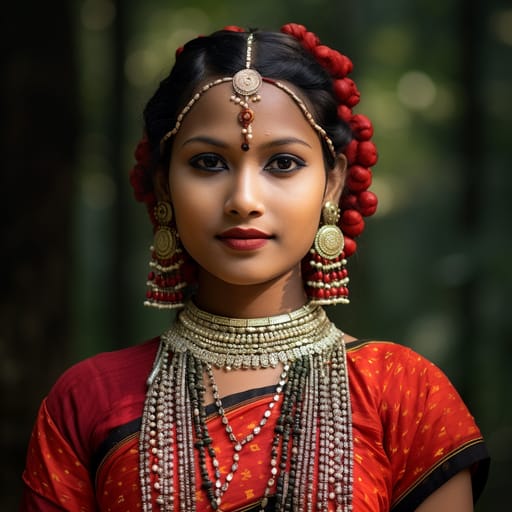
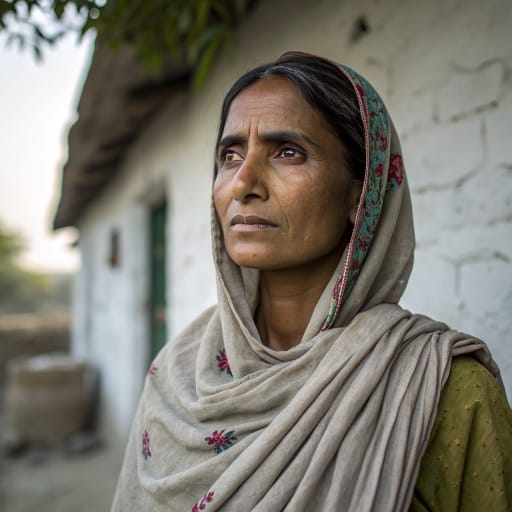
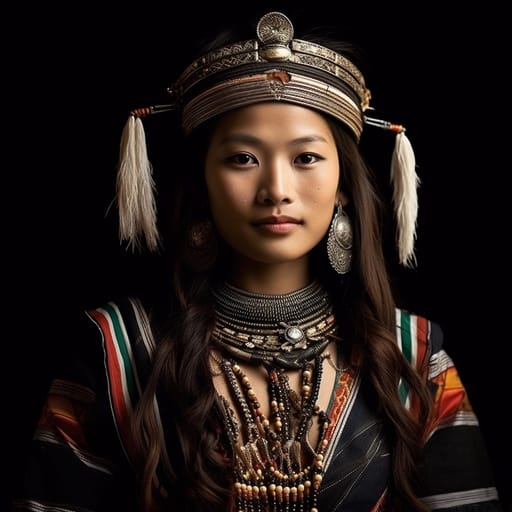
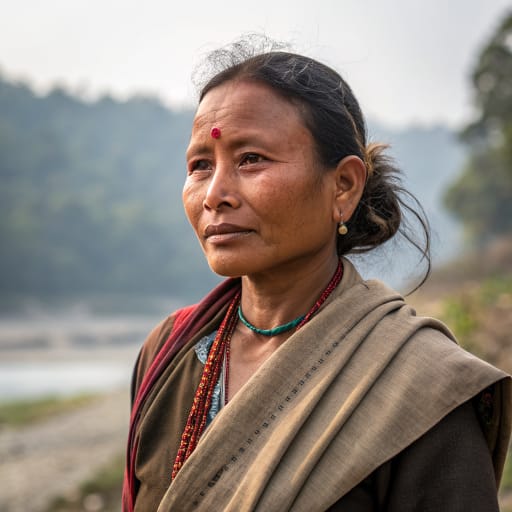
Looks vary widely after generations of marriage with Persian, Arab and Baloch neighbors. Skin tones run from deep brown to light brown, and hair from tightly curled to wavy. Everyday dress follows the southern coast: men wear long, loose shirts or tunics suited to the heat, and women often wear brightly printed chadors over trousers with embroidered cuffs. In parts of Hormozgan, some women also wear the stiff face mask known as the borqa.

Afro-Iranians Body & Anatomy Reference

Per-feature anatomical profile for AI nude generation — Indo-Aryan / Dravidian South Asian phenotype

Afro-Iranians Boobs & Breasts

Afro-Iranians tits and boobs run medium-to-large cup, moderate-to-full projection — the classic Indo-Aryan / Dravidian South Asian bust profile. Afro-Iranians nipples and areolas show medium-brown to dark-brown areolar pigmentation against the wheatish-to-brown skin tone, with areolar diameter typically in the 32-46mm range and forward-set positioning rather than the the smaller East Asian bust profile. Afro-Iranians breasts trend full and soft, generally fuller than the East Asian norm, a function of the endomorph-to-mesomorph with fuller hip deposition body habitus and the mean adult female BMI 22-25. For anatomically-accurate AI-generated Afro-Iranians nudes the render preserves: medium-to-large cup, moderate-to-full projection shape, 32-46mm areolas with medium-brown to dark-brown pigmentation, and the torso proportions of the Indo-Aryan / Dravidian South Asian phenotype.

Afro-Iranians Ass & Hips

Afro-Iranians ass and hip morphology presents as medium-to-full, moderate-to-high projection, classic curvy hip profile — distinctly different from the slim hip profile of East Asian women. The Afro-Iranians pelvic profile shows medium-to-wide iliac crests, full gluteal-femoral fat distribution, anchored in the Indo-Aryan / Dravidian South Asian skeletal pattern. Afro-Iranians butt shots in adult AI imagery should render the medium-to-full, moderate-to-high projection, classic curvy hip profile silhouette with the endomorph-to-mesomorph with fuller hip deposition build and the gluteal-femoral fat distribution typical of the Indo-Aryan / Dravidian South Asian phenotype rather than defaulting to a globally-averaged "ethnic" butt that generic AI generators produce. The hip-to-waist ratio characteristic of Afro-Iranians women is one of the identifying features of the Indo-Aryan / Dravidian South Asian regional phenotype.

Afro-Iranians Vagina & Pussy

Afro-Iranians pussy and vulvar anatomy presents medium-brown to dark-brown labial pigmentation, fuller labia minora projection — consistent with the Indo-Aryan / Dravidian South Asian phenotype's pigmentation pattern. Afro-Iranians pubic hair is typically straight-to-wavy coarse texture, dense distribution, distributed in the inverted-triangle pattern with regional-typical density. AI-generated Afro-Iranians nude imagery should preserve the medium-brown to dark-brown labial pigmentation and the straight-to-wavy coarse texture hair texture rather than defaulting to a Western-European pink-and-sparse template. For anatomically-accurate Afro-Iranians pussy renders the labial pigmentation and coloration should match the surrounding wheatish to brown skin tone of the Indo-Aryan / Dravidian South Asian phenotype, with continuous gradient rather than an abrupt color transition.

Afro-Iranians Dicks & Penis

Afro-Iranians dick and penile anatomy in adult AI generation should anchor on the regional reference data: regional mean ~13cm erect, moderate girth, and medium-brown shaft pigmentation. The Afro-Iranians cock profile reflects the Indo-Aryan / Dravidian South Asian ancestral population's anthropometric measurements rather than a globally-averaged Western-pornography default. For anatomically-accurate Afro-Iranians nude male imagery the shaft pigmentation should track the surrounding wheatish to brown skin tone, the glans-to-shaft pigmentation transition should be continuous, and the pubic hair pattern should match straight-to-wavy coarse texture texture distributed in the typical inverted-V escutcheon. Circumcision status in Afro-Iranians populations varies by religious-cultural tradition rather than ancestral phenotype.

Afro-Iranians Body, Curves & Build

Afro-Iranians body type and overall build presents as endomorph-to-mesomorph with fuller hip deposition, with mean adult female BMI 22-25 — the characteristic Indo-Aryan / Dravidian South Asian habitus. Afro-Iranians curves and proportions in adult AI imagery should preserve the regional skeletal frame (height, shoulder-to-hip ratio, limb proportions) rather than scaling to a Western-European mesomorph default. The Afro-Iranians nude female form, when rendered with anatomical fidelity, shows the height range, frame width, and adipose distribution pattern typical of the Indo-Aryan / Dravidian South Asian phenotype. Generic AI image generators tend to collapse regional body types into a few default shapes; the EthnicErotic phenotype-anchored approach preserves the Afro-Iranians build as its own reference category.

Afro-Iranians Skin Tone & Hair Texture

Afro-Iranians skin tone falls in the wheatish to brown (Fitzpatrick III-V) band — the surface signal most often miscalibrated by generic AI nude generators trained on Western-photographic datasets. Afro-Iranians hair texture is typically straight-to-wavy 1A-2B, dense, dark-brown to black, characteristic of the Indo-Aryan / Dravidian South Asian phenotype. For anatomically-accurate Afro-Iranians nude renders the skin should hold the Fitzpatrick band consistently across body surface rather than showing the lighter-than-face body shading that AI generators default to. Afro-Iranians hair pigmentation and texture on body, pubic, and head should match across the figure rather than mixing textures (a common AI artefact).

Get notified when there’s a new post about Afro-Iranians.

Discussion Board

Have a view on this? Sign in to post — your first one earns 2 generation credits.

No posts on this board yet

Log in to start the conversation.

See what’s active across the community →

Erotic Poses & Sex Positions

From the pose catalog — 219 named positions with reference skeletons

Frequently asked questions about Afro-Iranians people

Where is the Afro-Iranians homeland?

The Afro-Iranians homeland is Iran's Persian Gulf and Gulf of Oman coast, chiefly Hormozgan (Bandar Abbas, Minab, Qeshm) and Bushehr, with smaller communities in Khuzestan, Sistan and Baluchestan, and inland cities such as Shiraz and Tehran in Southern Asia.

What language do Afro-Iranians people speak?

Afro-Iranians people primarily speak Persian and southern coastal varieties such as Bandari and Bushehri (Indo-European, Iranian); also Arabic (Afroasiatic, Semitic) and Balochi (Indo-European, Iranian) in some regions; Swahili words survive in ritual songs.

What religion do Afro-Iranians people practice?

The predominant religion among Afro-Iranians people is Mostly Shia Islam, with Sunni Muslims among the Baloch and some coastal communities; many take part in zar and noban spirit-healing ceremonies.


What does a typical Afro-Iranians woman look like?

Looks vary widely after generations of marriage with Persian, Arab and Baloch neighbors. Skin tones run from deep brown to light brown, and hair from tightly curled to wavy.