Help us get this right
Does this portrait look right for Manihar?
Nobody has judged this one yet. You would be the first.
Manihar Erotic
North India, chiefly Uttar Pradesh and neighboring states of the Gangetic plain, with a community in Pakistan dating from Partition
Urdu and Hindi (Indo-Aryan), with local North Indian dialects in rural areas
Sunni Islam
A Muslim occupational biradari (caste) of North India; many use the title Siddiqui or Sheikh Siddiqui; often grouped with the Churihar bangle sellers of Bihar
About Manihar People
Ask who the Manihar are in a small town in Uttar Pradesh and you will usually hear about their trade: they are the bangle people. The Manihar are a Muslim community of North India, with a branch in Pakistan. For generations their identity has been tied to the glass bangles that women across the region wear stacked on their wrists. The name carries mani, an old word for a jewel or bead, and the work behind it was always more personal than ordinary shopkeeping. A Manihar seller did not simply hand over a box. The seller sat with the customer, took her hand, sized it by feel and eased each ring over the knuckles without cracking the glass. That gave the bangle seller an unusual place in households where men from outside the family were otherwise kept at a distance.
Manihars are Sunni Muslims, and their faith sets the rhythm of ordinary life: Friday prayer, the Ramadan fast, the two Eids, and marriages arranged mostly within the community. Their customers were never sorted by religion, though. In many Hindu households bangles mark a married woman and are broken when she is widowed, so a Muslim community stood close to the center of rituals that were not its own. At home Manihars speak Urdu or Hindi, the same Indo-Aryan speech as their neighbors, often shading into local dialects in the villages.
Like many Muslim craft castes in South Asia, the Manihar have two accounts of where they came from. Ethnographers have usually described them as a local craft and trading caste that converted to Islam over the centuries. Many families, however, have taken the name Siddiqui or Sheikh Siddiqui, which claims descent from Abu Bakr, the first caliph. The change fits a wider pattern in which groups long ranked by their trade take on a lineage with more social standing. Partition in 1947 split the community, and many of the families who went to Pakistan now go by Siddiqui alone.
Today most of the glass comes from the furnaces of Firozabad and other industrial centers rather than from family workshops. Plenty of Manihars have moved into wholesale, general shopkeeping, salaried jobs and other trades. Even so, the name still brings to mind a bangle stall at a bazaar or a wedding-season fair, and in many towns a Manihar is still the one behind the counter.
Related ethnic groups
Groups that share Manihar's homeland, region, language, or religious tradition. These are likely candidates for comparative phenotype reference.
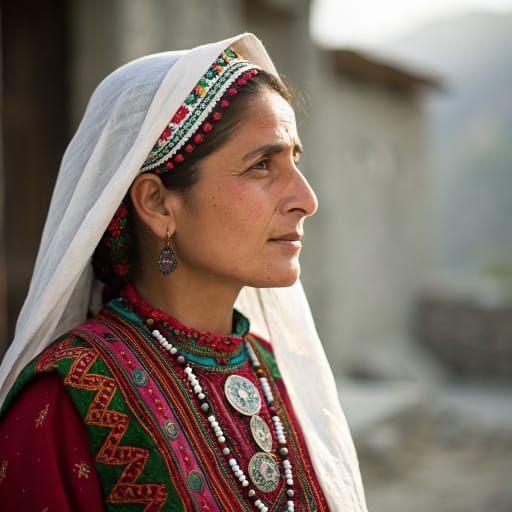
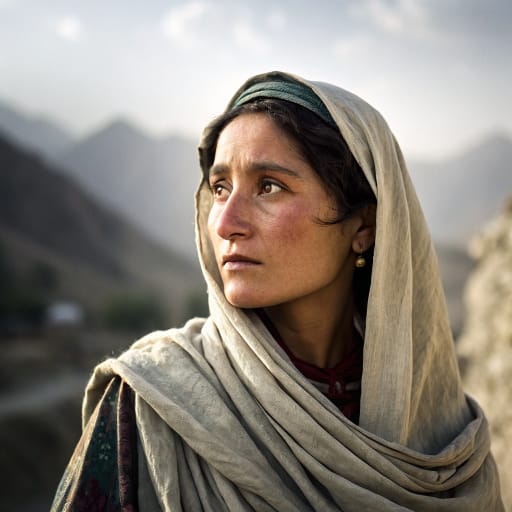
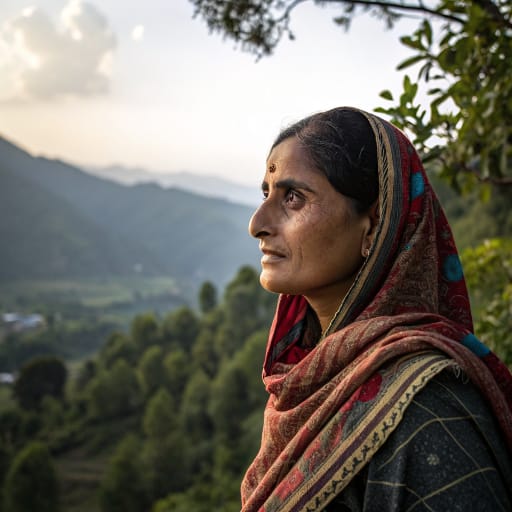
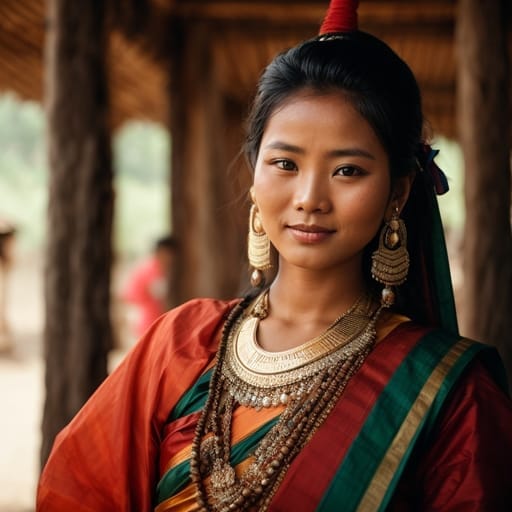
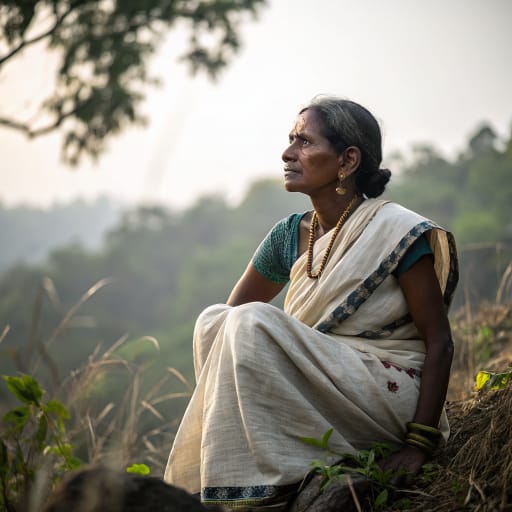
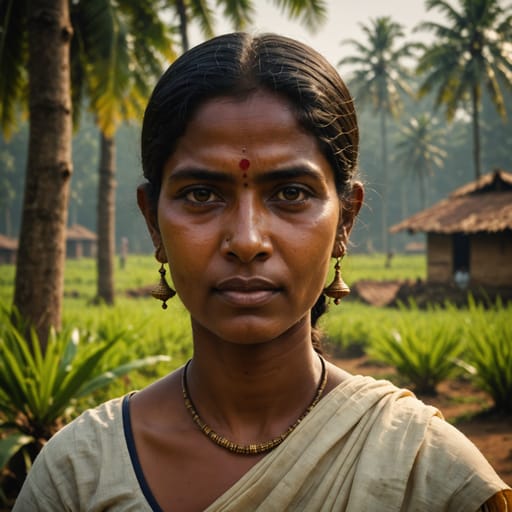
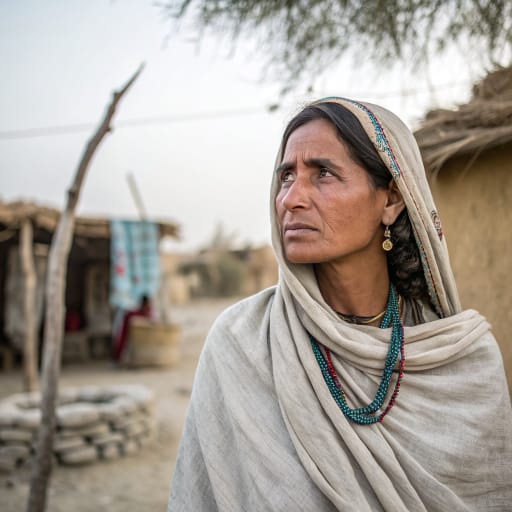
Typical Manihar Phenotypes
Reference for AI generation: hair, eyes, skin, facial structure, build
Manihar Body & Anatomy Reference
Per-feature anatomical profile for AI nude generation: Indo-Aryan / Dravidian South Asian phenotype
Manihar Boobs & Breasts
Manihar boobs follow the Indo-Aryan / Dravidian South Asian profile: medium-to-large cup, moderate-to-full projection. Areolar diameter is usually 32-46mm, and the coloring is medium-brown to dark-brown areolar pigmentation against the wheatish-to-brown skin tone. Breast shape tracks body composition (endomorph-to-mesomorph with fuller hip deposition, mean adult female BMI 22-25), so Manihar breasts tend to be full and soft, generally fuller than the East Asian norm. Expect a forward-set shape, not the smaller East Asian bust profile.
Manihar Ass & Hips
Manihar ass and hip morphology presents as medium-to-full, moderate-to-high projection, classic curvy hip profile, distinctly different from the slim hip profile of East Asian women. The Manihar pelvic profile shows medium-to-wide iliac crests, full gluteal-femoral fat distribution, anchored in the Indo-Aryan / Dravidian South Asian skeletal pattern. Manihar butt shots in adult AI imagery should render the medium-to-full, moderate-to-high projection, classic curvy hip profile silhouette with the overall build (endomorph-to-mesomorph with fuller hip deposition) and the fat distribution typical of the Indo-Aryan / Dravidian South Asian phenotype.
Manihar Vagina & Pussy
Manihar pussy anatomy typically shows medium-brown to dark-brown labial pigmentation, fuller labia minora projection. Pubic hair is usually straight-to-wavy coarse texture, dense distribution. In AI-generated Manihar nudes, labial color should blend into the wheatish to brown skin with a gradual transition, and the hair should keep its straight-to-wavy coarse texture.
Manihar Dicks & Penis
Penis reference for Manihar men: regional mean ~13cm erect, moderate girth. Coloring: medium-brown shaft pigmentation. An accurate Manihar cock in AI imagery matches the surrounding wheatish to brown skin rather than a generic porn default. Circumcision depends on religion and custom, not ancestry.
Manihar Body, Curves & Build
The Manihar figure is generally endomorph-to-mesomorph with fuller hip deposition, with mean adult female BMI 22-25, characteristic of Indo-Aryan / Dravidian South Asian ancestry. AI image tools tend to flatten regional body types into a few stock shapes; here the Manihar build is kept as its own reference.
Manihar Skin Tone & Hair Texture
Skin: wheatish to brown (Fitzpatrick III-V). Hair: straight-to-wavy 1A-2B, dense, dark-brown to black. Both are typical of Indo-Aryan / Dravidian South Asian ancestry. The most common mistake in AI nudes of Manihar women is a body rendered lighter than the face.
Explore phenotype categories
Structured taxonomy with peer-reviewed scales · 22 anatomical categories
Erotic Poses & Sex Positions
From the pose catalog: 219 named positions with reference skeletons
Frequently asked questions about Manihar people
Where is the Manihar homeland?
The Manihar homeland is North India, chiefly Uttar Pradesh and neighboring states of the Gangetic plain, with a community in Pakistan dating from Partition in Southern Asia.
What language do Manihar people speak?
Manihar people primarily speak Urdu and Hindi (Indo-Aryan), with local North Indian dialects in rural areas.
What religion do Manihar people practice?
The predominant religion among Manihar people is Sunni Islam.






Make your own Manihar images
Five a day, free, no credits to buy. The studio starts from this group's phenotype data, so you can set body type, pose and style and keep the traits accurate.
Start with Manihar