Help us get this right
Does this portrait look right for Dhakaiyas?
Nobody has judged this one yet. You would be the first.
Dhakaiyas Erotic
Old Dhaka (Puran Dhaka), the historic core of Dhaka on the Buriganga River, Bangladesh
Dhakaiya Kutti, a Bengali dialect, and Dhakaiya Urdu, a local Hindustani (both Indo-Aryan, Indo-European); standard Bengali is also widely spoken
Mostly Sunni Islam, with Shia and Hindu minorities in the old quarters
Kuttis (Bengali-speaking) and Sobbasis or Sukhbasis (Urdu-speaking); part of the wider Bengali-speaking and South Asian Muslim world
About Dhakaiyas People
Being from Dhaka and being a Dhakaiya are not the same thing. The name belongs to the old families of the Mughal-era city on the north bank of the Buriganga River, in quarters like Chawkbazar, Lalbagh, Armanitola and Shankhari Bazar. Their people were settled there long before the capital of Bangladesh grew into one of the most crowded cities on earth. Dhakaiyas are now a small minority in their own city, outnumbered many times over by migrants from the rest of the country, and that has sharpened the identity rather than dissolving it. Old Dhakaites have a reputation, which they happily cultivate, for quick humor, fierce loyalty to their neighborhood and food the newer city cannot match.
The community has two historic halves. The Kuttis speak Dhakaiya Kutti, a Bengali dialect loaded with Hindustani and Persian words and known across Bangladesh for its jokes and sharp comebacks. The name is often traced to rice husking, an old trade. The Sobbasis, also written Sukhbasi, kept Dhakaiya Urdu, a local form of Hindustani tied to the merchant and official class of the Mughal era. It has been used less and less since Bengali became the language of the state. Most Dhakaiyas are Sunni Muslims, and religion sets the calendar. During Ramadan, kasida singers walk the lanes before dawn to wake households for sehri, and the iftar bazaar at Chawkbazar draws crowds from across the city. The old quarters also hold Hindu artisan streets and a Shia center at Hussaini Dalan, where the Muharram procession has started for centuries.
The Mughals made Dhaka a provincial capital in the early 1600s, and the Nawabs of Dhaka later kept their seat at Ahsan Manzil. Partition in 1947 sent many Hindu families away while Urdu-speaking refugees arrived. For generations the neighborhoods ran their own affairs through panchayets, councils led by sardars who settled disputes, though the system has largely faded. The customs outsiders rarely hear about are the most distinctive. On Shakrain, the last day of the Bengali month of Poush in mid-January, Old Dhaka's rooftops fill with kite fighters cutting each other's lines with glass-coated string, and the night ends in fireworks and fire-breathing. The food makes the same point: bakarkhani bread, kacchi biryani and borhani, a spiced yogurt drink poured at wedding feasts, belong to Old Dhaka first and the rest of the country second.
Related ethnic groups
Groups that share Dhakaiyas's homeland, region, language, or religious tradition. These are likely candidates for comparative phenotype reference.
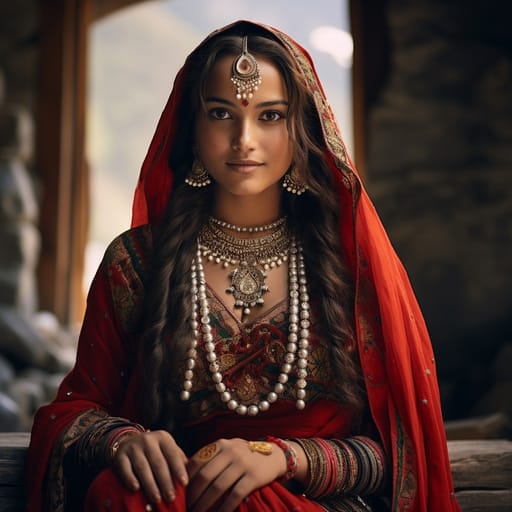
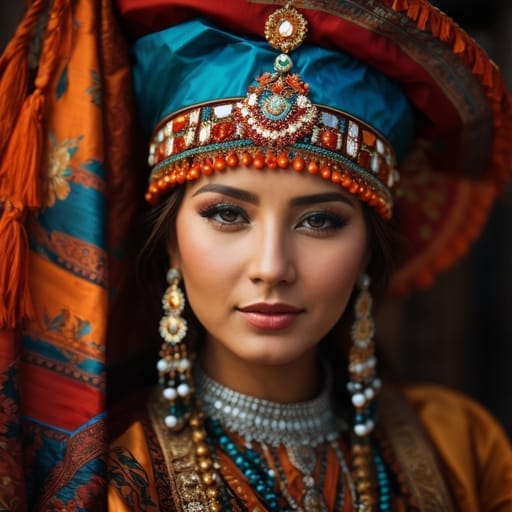
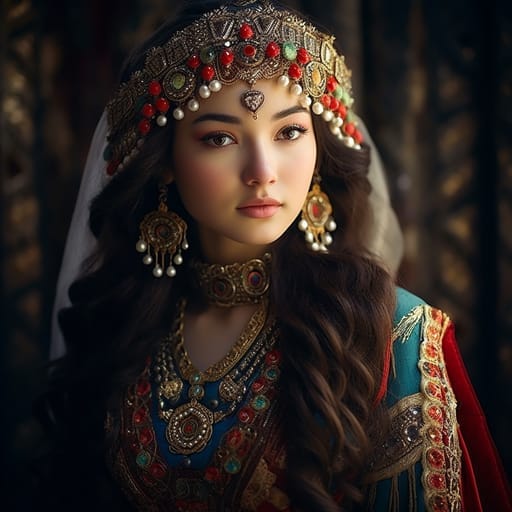
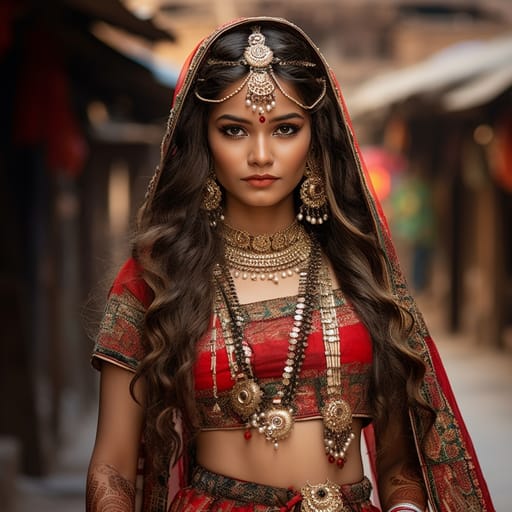
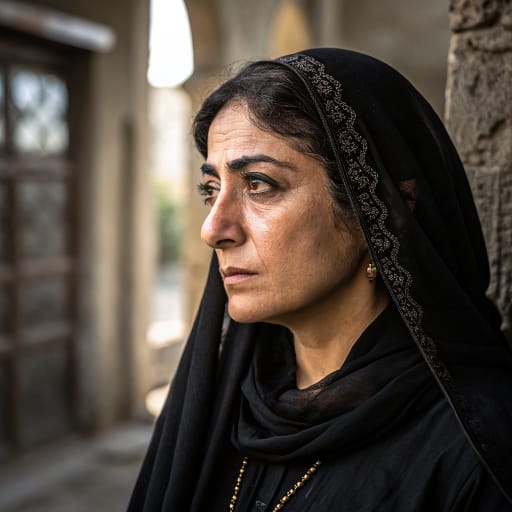
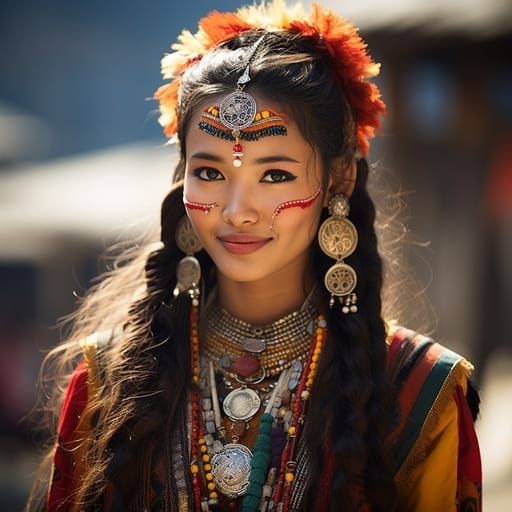
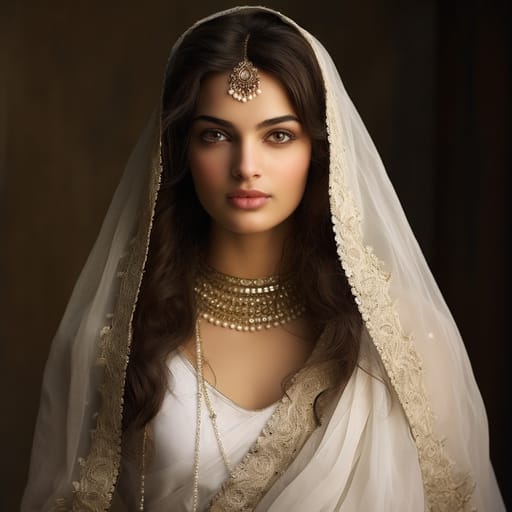
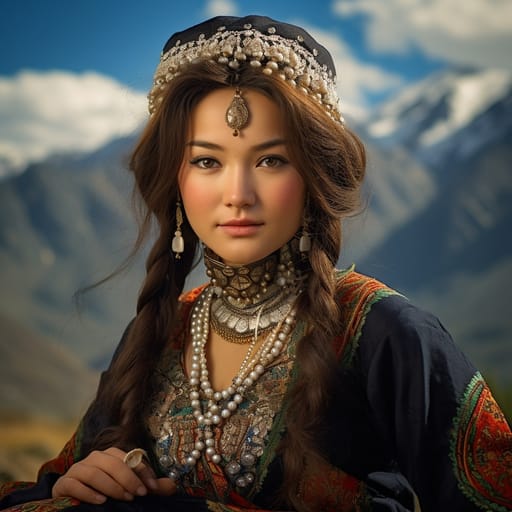
Typical Dhakaiyas Phenotypes
Reference for AI generation: hair, eyes, skin, facial structure, build
Dhakaiyas Body & Anatomy Reference
Indo-Aryan / Dravidian South Asian phenotype: anatomy reference for AI nude generation
Dhakaiyas Boobs & Breasts
The typical Dhakaiyas bust is medium-to-large cup, moderate-to-full projection, in line with the wider Indo-Aryan / Dravidian South Asian pattern. Areolas usually fall in the 32-46mm range, with medium-brown to dark-brown areolar pigmentation against the wheatish-to-brown skin tone. Compared with the smaller East Asian bust profile, Dhakaiyas breasts sit forward and are generally full and soft, generally fuller than the East Asian norm. A faithful AI render of Dhakaiyas tits keeps that shape and areola size.
Dhakaiyas Ass & Hips
Butt shape among Dhakaiyas women: medium-to-full, moderate-to-high projection, classic curvy hip profile, over medium-to-wide iliac crests, full gluteal-femoral fat distribution. This follows Indo-Aryan / Dravidian South Asian ancestry and looks quite unlike the slim hip profile of East Asian women. An accurate Dhakaiyas ass in adult AI imagery keeps both the silhouette and the overall build (endomorph-to-mesomorph with fuller hip deposition) instead of a generic average.
Dhakaiyas Vagina & Pussy
Vulvar anatomy among Dhakaiyas women: medium-brown to dark-brown labial pigmentation, fuller labia minora projection. Pubic hair tends to be straight-to-wavy coarse texture, dense distribution, in the usual inverted-triangle pattern. Both follow Indo-Aryan / Dravidian South Asian pigmentation, which is why Dhakaiyas pussy renders should not fall back on a pale, sparse Western template.
Dhakaiyas Dicks & Penis
The Dhakaiyas cock profile, from Indo-Aryan / Dravidian South Asian anthropometric data: regional mean ~13cm erect; moderate girth; medium-brown shaft pigmentation. Pubic hair has a straight-to-wavy coarse texture and forms the usual inverted-V pattern. Whether Dhakaiyas men are circumcised follows religious and cultural practice rather than phenotype.
Dhakaiyas Body, Curves & Build
Build and curves among Dhakaiyas women follow the Indo-Aryan / Dravidian South Asian pattern: endomorph-to-mesomorph with fuller hip deposition, mean adult female BMI 22-25. Proportions matter as much as skin tone, so Dhakaiyas figures should keep their regional height and limb ratios.
Dhakaiyas Skin Tone & Hair Texture
The Dhakaiyas skin range is wheatish to brown (Fitzpatrick III-V), and hair tends to be straight-to-wavy 1A-2B, dense, dark-brown to black. That combination marks the Indo-Aryan / Dravidian South Asian phenotype, and skin tone is the trait AI generators most often get wrong for Dhakaiyas women.
Explore phenotype categories
Structured taxonomy with peer-reviewed scales · 22 anatomical categories
Erotic Poses & Sex Positions
From the pose catalog: 219 named positions with reference skeletons
Frequently asked questions about Dhakaiyas people
Where is the Dhakaiyas homeland?
The Dhakaiyas homeland is Old Dhaka (Puran Dhaka), the historic core of Dhaka on the Buriganga River, Bangladesh in Southern Asia.
What language do Dhakaiyas people speak?
Dhakaiyas people primarily speak Dhakaiya Kutti, a Bengali dialect, and Dhakaiya Urdu, a local Hindustani (both Indo-Aryan, Indo-European); standard Bengali is also widely spoken.
What religion do Dhakaiyas people practice?
The predominant religion among Dhakaiyas people is Mostly Sunni Islam, with Shia and Hindu minorities in the old quarters.






Make your own Dhakaiyas images
Five a day, free, no credits to buy. The studio starts from this group's phenotype data, so you can set body type, pose and style and keep the traits accurate.
Start with Dhakaiyas