No portrait yet
Indo-Scythians Erotic
Sakastan (Sistan) in eastern Iran and Afghanistan, Gandhara and Punjab in Pakistan, and Mathura, Gujarat and Malwa in northwestern India
Saka (Eastern Iranian, Indo-European); Greek and Gandhari Prakrit in Kharoshthi script on coins, later Sanskrit in Brahmi under the Western Satraps
Iranian steppe cults on arrival; patrons of Buddhism in India, with Greek deities kept on coinage and Hindu deities such as Lakshmi adopted
A southern branch of the Saka, the eastern Scythian nomads of Central Asia; ruling houses include the line of Maues, the Azes dynasty, the Northern Satraps of Mathura, the Kshaharatas and the Western Satraps of Ujjain and Kathiawar
About Indo-Scythians People
The Indo-Scythians were an ancient people, Iranian-speaking nomads of Saka stock who rode south out of Central Asia in the second century BCE and ruled parts of what is now Afghanistan, eastern Iran, Pakistan and northwestern India until their last dynasty fell to the Guptas around 400 CE; no community survives under the name, and their descendants dissolved into the populations of Sistan, Punjab, Sindh, Gujarat and Rajasthan. What made them a group was the road behind them. The Sakas had ranged the steppe from the Aral Sea to the Ili valley for centuries. When the Yuezhi, themselves fleeing the Xiongnu, crashed into their pastures, the Sakas were shoved through Bactria into the Helmand basin, which still carries their name: Sistan, from Sakastan, land of the Sakas. From there they came down the Indus and through the passes into a Gandhara the Indo-Greek kings had held for a century. The Periplus of the Erythraean Sea simply calls the lower Indus Scythia. They did not erase the Greek world they found. They took it over.
Their kings, Maues at Taxila around 85 BCE, then Azes and Azilises, struck coins with Greek on one face and Kharoshthi Prakrit on the other, kept Zeus and Athena on the reverse, and added a signature of their own: the ruler on horseback, spear couched, in trousers and belted tunic. That mounted lord with a steppe silhouette is the Indo-Scythian brand. Satraps ruled for them at Mathura, where Rajuvula's queen paid for a relic stupa recorded on the Mathura lion capital, and at Ujjain and in Kathiawar, where the Western Satraps outlasted everyone. Rudradaman's Junagadh inscription of 150 CE, the first long royal text in polished Sanskrit, boasts of rebuilding a Mauryan dam more than four centuries old. A steppe dynasty ended up as the leading patron of Sanskrit prose.
Religion was elastic. They arrived with the Iranian cults of the steppe, borrowed Greek gods for their coinage, funded Buddhist stupas, and put Lakshmi on an elephant-flanked lotus. Indian lawgivers filed them under the Shakas, foreigners whose kshatriya status had lapsed, which did not stop a Satavahana king from marrying Rudradaman's daughter. The Shaka era of 78 CE, still the epoch of India's official civil calendar, is traditionally tied to Saka rule, though who actually started it is argued. The Indo-Parthians and then the Kushans pushed them out of the north during the first century CE. The Western Satraps held on through the Satavahana wars for three centuries more, until Chandragupta II absorbed Gujarat and Malwa in the 390s. The word Shaka, the name Sistan, the horseman on the coin: that is what remains.
Related ethnic groups
Groups that share Indo-Scythians's homeland, region, language, or religious tradition. These are likely candidates for comparative phenotype reference.
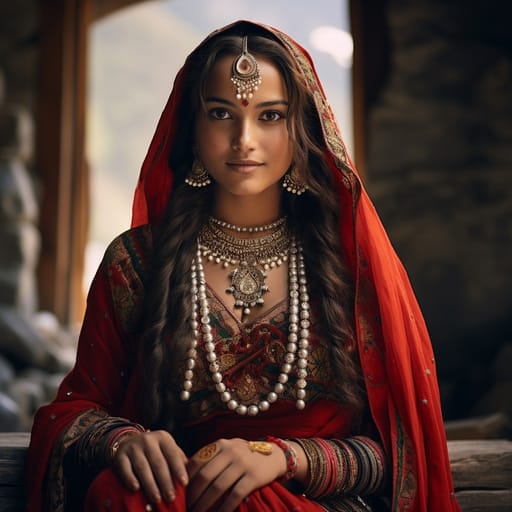
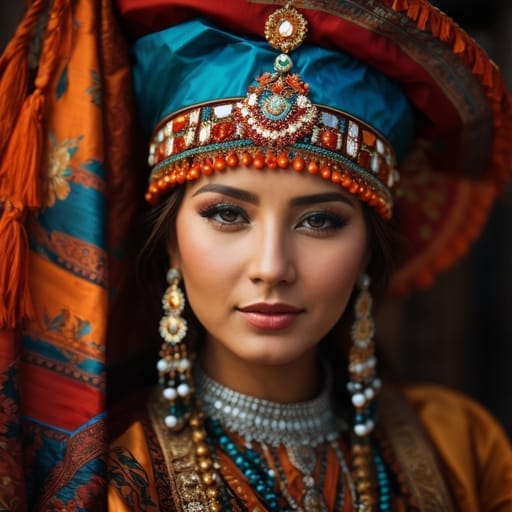
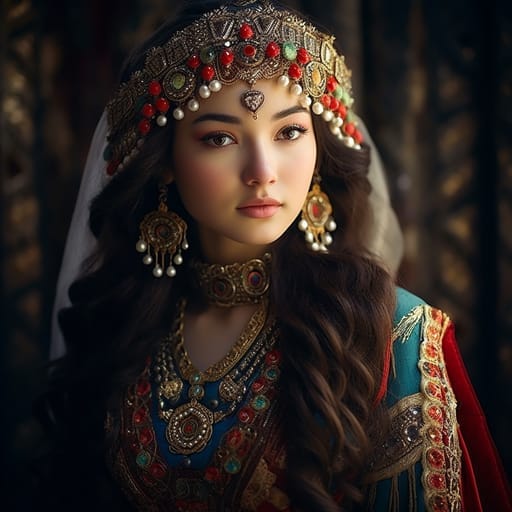
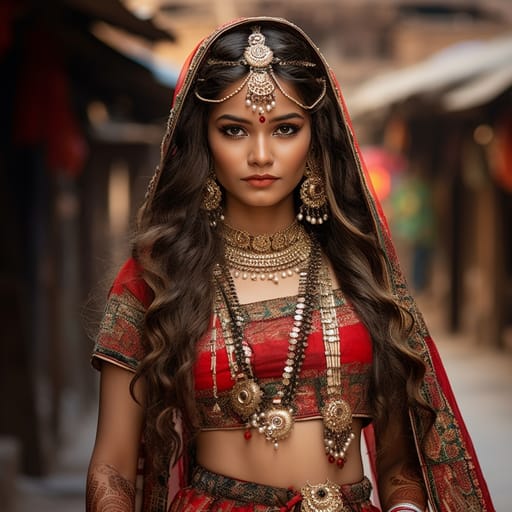
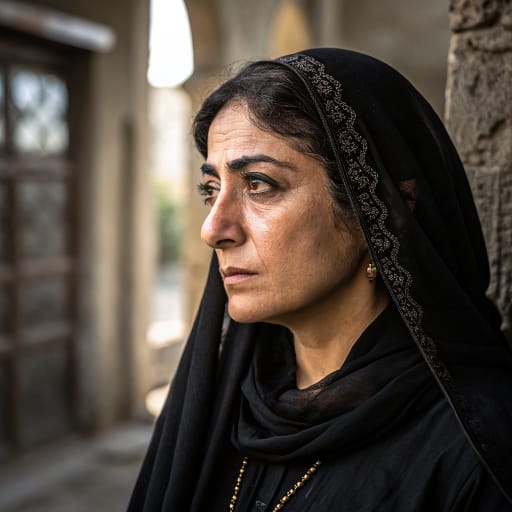
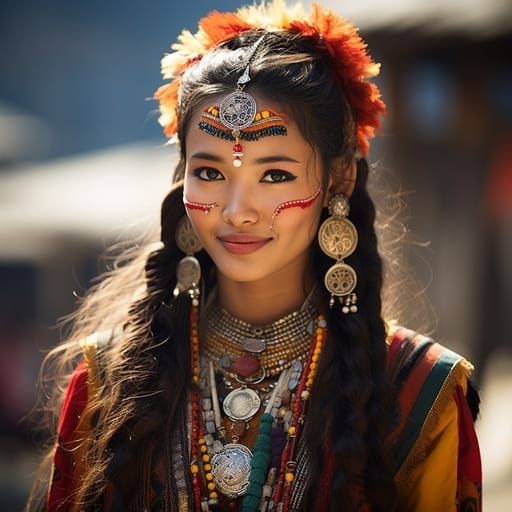
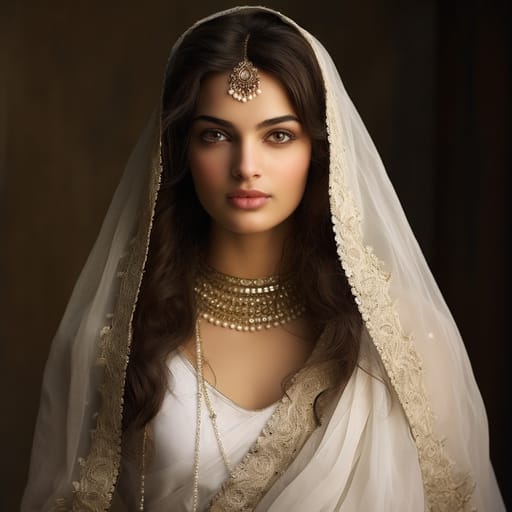
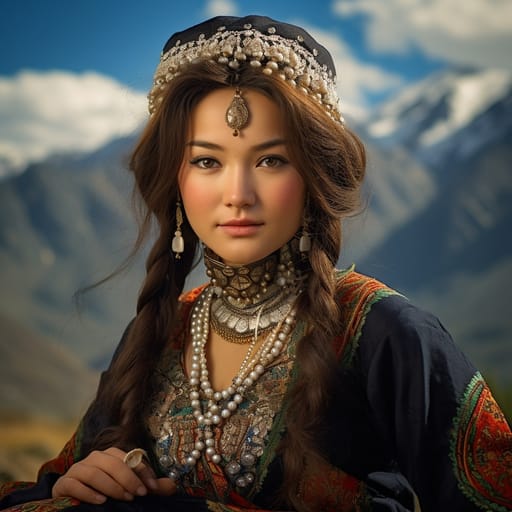
Typical Indo-Scythians Phenotypes
Reference for AI generation: hair, eyes, skin, facial structure, build
Indo-Scythians Body & Anatomy Reference
Anatomy by feature, Indo-Aryan / Dravidian South Asian phenotype
Indo-Scythians Boobs & Breasts
The typical Indo-Scythians bust is medium-to-large cup, moderate-to-full projection, in line with the wider Indo-Aryan / Dravidian South Asian pattern. Areolas usually fall in the 32-46mm range, with medium-brown to dark-brown areolar pigmentation against the wheatish-to-brown skin tone. Compared with the smaller East Asian bust profile, Indo-Scythians breasts sit forward and are generally full and soft, generally fuller than the East Asian norm. A faithful AI render of Indo-Scythians tits keeps that shape and areola size.
Indo-Scythians Ass & Hips
Butt shape among Indo-Scythians women: medium-to-full, moderate-to-high projection, classic curvy hip profile, over medium-to-wide iliac crests, full gluteal-femoral fat distribution. This follows Indo-Aryan / Dravidian South Asian ancestry and looks quite unlike the slim hip profile of East Asian women. An accurate Indo-Scythians ass in adult AI imagery keeps both the silhouette and the overall build (endomorph-to-mesomorph with fuller hip deposition) instead of a generic average.
Indo-Scythians Vagina & Pussy
Vulvar anatomy among Indo-Scythians women: medium-brown to dark-brown labial pigmentation, fuller labia minora projection. Pubic hair tends to be straight-to-wavy coarse texture, dense distribution, in the usual inverted-triangle pattern. Both follow Indo-Aryan / Dravidian South Asian pigmentation, which is why Indo-Scythians pussy renders should not fall back on a pale, sparse Western template.
Indo-Scythians Dicks & Penis
The Indo-Scythians cock profile, from Indo-Aryan / Dravidian South Asian anthropometric data: regional mean ~13cm erect; moderate girth; medium-brown shaft pigmentation. Pubic hair has a straight-to-wavy coarse texture and forms the usual inverted-V pattern. Whether Indo-Scythians men are circumcised follows religious and cultural practice rather than phenotype.
Indo-Scythians Body, Curves & Build
Build and curves among Indo-Scythians women follow the Indo-Aryan / Dravidian South Asian pattern: endomorph-to-mesomorph with fuller hip deposition, mean adult female BMI 22-25. Proportions matter as much as skin tone, so Indo-Scythians figures should keep their regional height and limb ratios.
Indo-Scythians Skin Tone & Hair Texture
The Indo-Scythians skin range is wheatish to brown (Fitzpatrick III-V), and hair tends to be straight-to-wavy 1A-2B, dense, dark-brown to black. That combination marks the Indo-Aryan / Dravidian South Asian phenotype, and skin tone is the trait AI generators most often get wrong for Indo-Scythians women.
Explore phenotype categories
Structured taxonomy with peer-reviewed scales · 22 anatomical categories
Erotic Poses & Sex Positions
From the pose catalog: 219 named positions with reference skeletons
Frequently asked questions about Indo-Scythians people
Where is the Indo-Scythians homeland?
The Indo-Scythians homeland is Sakastan (Sistan) in eastern Iran and Afghanistan, Gandhara and Punjab in Pakistan, and Mathura, Gujarat and Malwa in northwestern India in Southern Asia.
What language do Indo-Scythians people speak?
Indo-Scythians people primarily speak Saka (Eastern Iranian, Indo-European); Greek and Gandhari Prakrit in Kharoshthi script on coins, later Sanskrit in Brahmi under the Western Satraps.
What religion do Indo-Scythians people practice?
The predominant religion among Indo-Scythians people is Iranian steppe cults on arrival; patrons of Buddhism in India, with Greek deities kept on coinage and Hindu deities such as Lakshmi adopted.






Make your own Indo-Scythians images
Five a day, free, no credits to buy. The studio starts from this group's phenotype data, so you can set body type, pose and style and keep the traits accurate.
Start with Indo-Scythians