Help us get this right
Does this portrait look right for Koli?
Nobody has judged this one yet. You would be the first.
Koli Erotic
Gujarat, Maharashtra including the Mumbai coast, Himachal Pradesh and Rajasthan in India, with related Kolhi communities in Tharparkar, Sindh, Pakistan.
Gujarati and Marathi with distinct Koli dialects, Pahari varieties in Himachal Pradesh, and Parkari and Kachi Kolhi in Sindh (all Indo-Aryan).
Overwhelmingly Hindu, with strong local goddess cults such as Ekvira and Mumbadevi; small Christian and Muslim minorities.
Son Koli, Mahadev Koli, Malhar Koli, Talpada and Chunvaliya Koli, Koli Patel and Thakor in Gujarat, Parkari and Kachi Kolhi in Sindh.
About Koli People
Ask who lived in Bombay before Bombay and the answer is the Kolis. Their goddess Mumbadevi gave the city the name it formally took back in 1995, and their fishing villages, the koliwadas, still sit wedged among the towers at Worli, Mahim, Versova and Sassoon Dock, on ground now worth more per square foot than almost anywhere in Asia. The name reaches well past Mumbai, though. Kolis are spread across Gujarat, Maharashtra, Himachal Pradesh and Rajasthan, and over the border into the Tharparkar desert of Sindh, where the Parkari and Kachi Kolhi speak their own Indo-Aryan tongues. It has never meant one thing. Some branches are sea fishers, the Son Koli above all; the Mahadev Koli are hill cultivators of the Sahyadri ranges; the Talpada and Chunvaliya of Gujarat are plains farmers. The Indian state cannot settle them either, listing the same name as a Scheduled Tribe in parts of Maharashtra, a Scheduled Caste in Himachal Pradesh and an Other Backward Class in Gujarat. The category was always administrative before it was descriptive.
Much of the recorded history is a record of friction with whoever held power. Koli chiefs controlled creeks and headlands along the Gujarat and Konkan coast and taxed or raided the shipping that passed, which made them pirates in Portuguese and British ledgers and sovereigns in their own. The Mahadev Kolis rose repeatedly in the hills through the 1820s and 1840s, and Raghoji Bhangre, hanged in 1848, is still a folk hero in that country. The colonial answer was the Criminal Tribes Act, which from 1871 put whole Koli communities under standing police registration as hereditary offenders. The same administration then recruited them as a martial caste for the First World War. The Act was repealed in 1952 and the suspicion outlived it. English may even carry a trace of the encounter: coolie is usually traced back to the Koli name, though the etymology is argued over. Religion runs Hindu, with Ekvira at the Karla caves as the goddess Koli and Agri families climb to, and Mumbadevi in the city. The clearest annual marker is Narali Purnima, when the monsoon closure ends and coconuts go into the sea before the boats do. Onshore the division of labor is old and visible: men crew the boats, women run the sale, and Bombay duck goes up on the drying racks in the open air. Koli geet, the call and response songs, and the dance that goes with them have carried out of the koliwadas into Marathi popular music, which is how most of India first meets them.
Related ethnic groups
Groups that share Koli's homeland, region, language, or religious tradition. These are likely candidates for comparative phenotype reference.
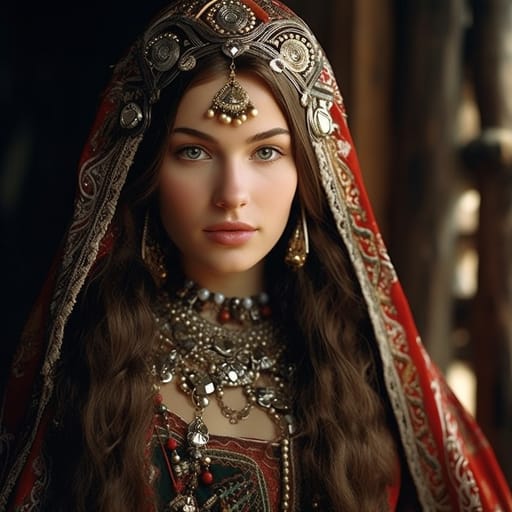
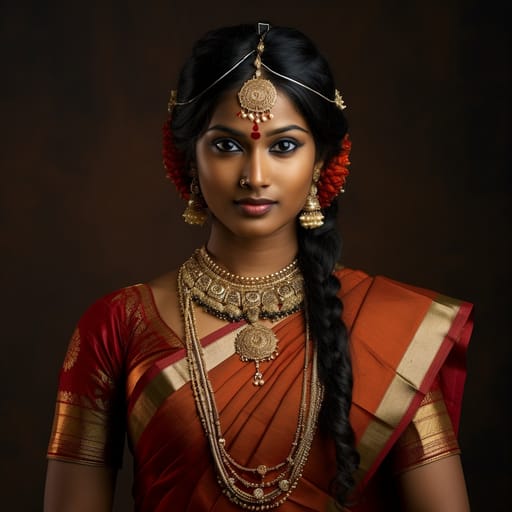
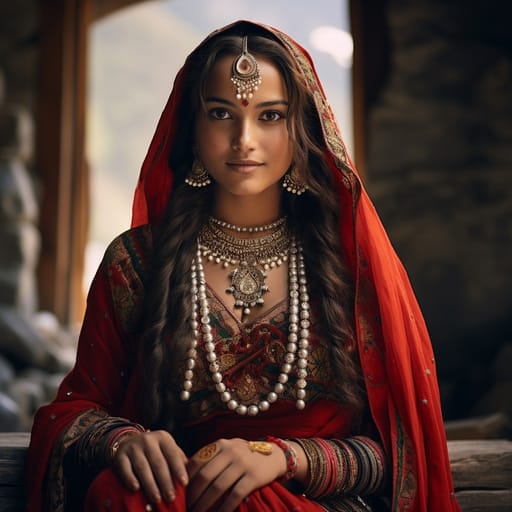
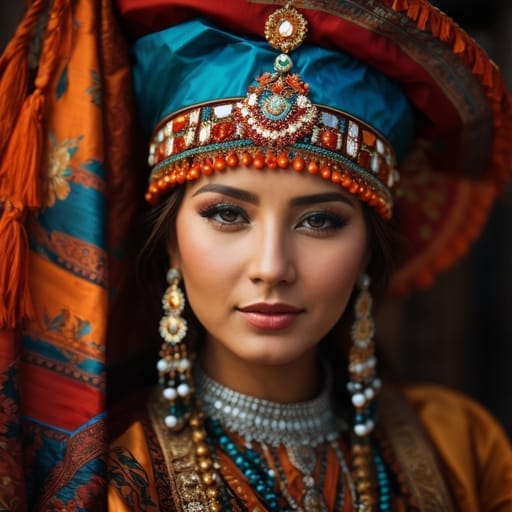
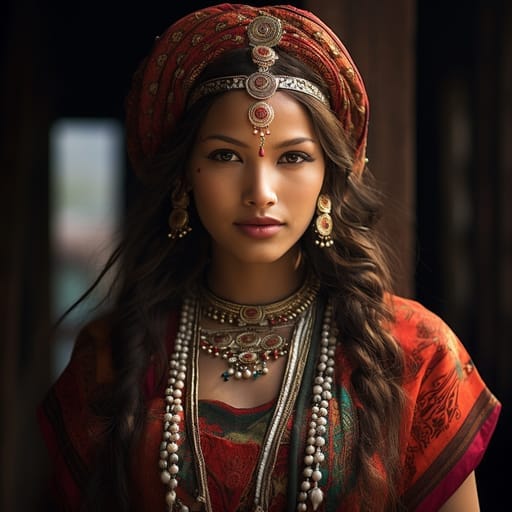
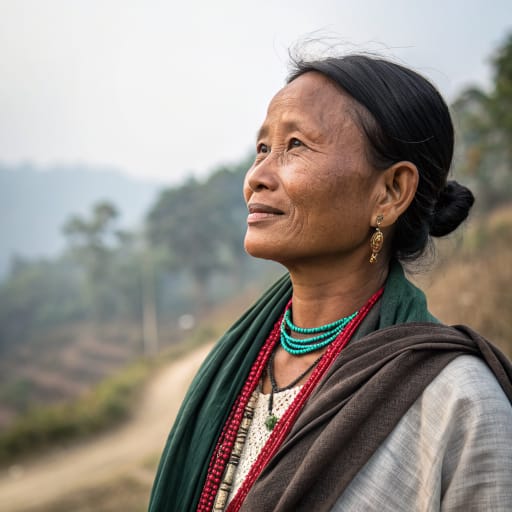
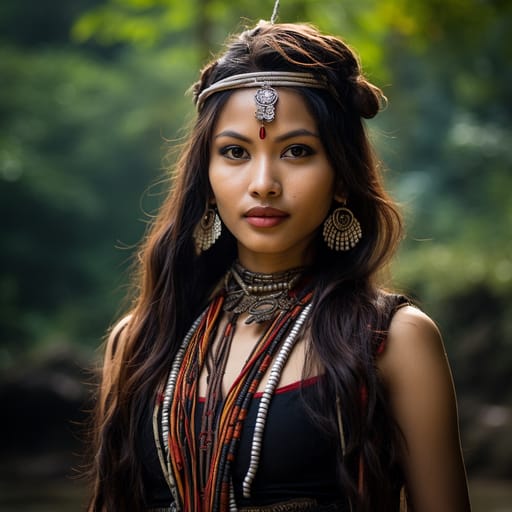
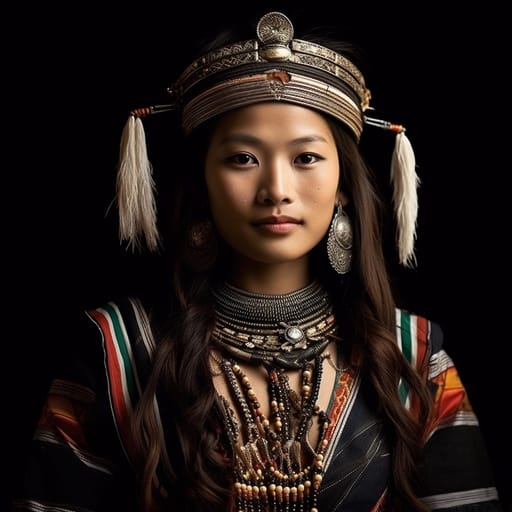
Typical Koli Phenotypes
Reference for AI generation: hair, eyes, skin, facial structure, build
Koli Body & Anatomy Reference
Anatomy by feature, Indo-Aryan / Dravidian South Asian phenotype
Koli Boobs & Breasts
Bust reference for Koli women: medium-to-large cup, moderate-to-full projection, which is typical of Indo-Aryan / Dravidian South Asian ancestry. Areolas measure about 32-46mm across, with medium-brown to dark-brown pigmentation. Body type (endomorph-to-mesomorph with fuller hip deposition) shapes the bust as well, so Koli tits are usually full and soft, generally fuller than the East Asian norm. In AI imagery, keep the forward-set shape rather than drifting toward the smaller East Asian bust profile.
Koli Ass & Hips
The Koli ass is typically medium-to-full, moderate-to-high projection, classic curvy hip profile, which sets it apart from the slim hip profile of East Asian women. Underneath, the pelvis shows medium-to-wide iliac crests, full gluteal-femoral fat distribution, part of the Indo-Aryan / Dravidian South Asian skeletal pattern. For Koli butt pics and AI renders, match that silhouette and the overall build (endomorph-to-mesomorph with fuller hip deposition).
Koli Vagina & Pussy
Koli pussy and vulvar anatomy presents medium-brown to dark-brown labial pigmentation, fuller labia minora projection, consistent with the Indo-Aryan / Dravidian South Asian phenotype's pigmentation pattern. Koli pubic hair is typically straight-to-wavy coarse texture, dense distribution, in the inverted-triangle pattern. For anatomically accurate Koli pussy renders the labial coloration should match the surrounding wheatish to brown skin tone with a continuous gradient, and the hair should keep its straight-to-wavy coarse texture.
Koli Dicks & Penis
Koli dicks follow the Indo-Aryan / Dravidian South Asian reference data: regional mean ~13cm erect; moderate girth; medium-brown shaft pigmentation. Shaft color should track the wheatish to brown skin tone with a smooth change toward the glans, and Koli pubic hair keeps its straight-to-wavy coarse texture.
Koli Body, Curves & Build
Koli body type and overall build presents as endomorph-to-mesomorph with fuller hip deposition, with mean adult female BMI 22-25: the characteristic Indo-Aryan / Dravidian South Asian habitus. Koli curves and proportions should keep the regional skeletal frame (height, shoulder-to-hip ratio, limb proportions) rather than a generic mesomorph default.
Koli Skin Tone & Hair Texture
Koli skin sits in the wheatish to brown (Fitzpatrick III-V) band. Hair is typically straight-to-wavy 1A-2B, dense, dark-brown to black, in keeping with the Indo-Aryan / Dravidian South Asian phenotype. In nude renders the skin should stay one even tone from face to body, and body, pubic and head hair should match.
Explore phenotype categories
Structured taxonomy with peer-reviewed scales · 22 anatomical categories
Erotic Poses & Sex Positions
From the pose catalog: 219 named positions with reference skeletons
Frequently asked questions about Koli people
Where is the Koli homeland?
The Koli homeland is Gujarat, Maharashtra including the Mumbai coast, Himachal Pradesh and Rajasthan in India, with related Kolhi communities in Tharparkar, Sindh, Pakistan. in Southern Asia.
What language do Koli people speak?
Koli people primarily speak Gujarati and Marathi with distinct Koli dialects, Pahari varieties in Himachal Pradesh, and Parkari and Kachi Kolhi in Sindh (all Indo-Aryan)..
What religion do Koli people practice?
The predominant religion among Koli people is Overwhelmingly Hindu, with strong local goddess cults such as Ekvira and Mumbadevi; small Christian and Muslim minorities..






Make your own Koli images
Five a day, free, no credits to buy. The studio starts from this group's phenotype data, so you can set body type, pose and style and keep the traits accurate.
Start with Koli