Help us get this right
Does this portrait look right for Karbi?
One tap. It takes a second and it is recorded.
2 say it looks right, 0 say it looks off.
Karbi Erotic
Karbi Anglong district (India)
Hinduism
Amri
About Karbi People
The Karbi are a hill people of central Assam, with their demographic and cultural center in Karbi Anglong — the largest district in the state, a country of low ridges, sal forest, and shifting cultivation plots cut into the slopes. They call themselves Arleng, "the man," and the older exonym Mikir, still encountered in colonial-era literature and some official records, has largely fallen out of polite use. The community is internally layered: the Chinthong, Ronghang, and Amri are the recognized territorial sub-groups, the Amri concentrated in the western hills toward the Meghalaya border and speaking a variety distinct enough that linguists treat it as its own dialect rather than a footnote.
Their language is Sino-Tibetan, conventionally grouped with the Kuki-Chin–Naga branches that fan across the eastern Himalayan rim, though Karbi sits awkwardly inside that family — close enough to its neighbors to share grammatical bones, distant enough that its exact placement is still argued in the journals. It is tonal, has a small but active body of written literature in the Roman script, and remains the everyday language of the hills even where Assamese is the language of the bazaar and the government office.
Religious life is layered rather than uniform. Census returns put most Karbi under the Hindu heading, but what that means on the ground is a working synthesis with the older indigenous tradition — a pantheon presided over by Hemphu, the household and clan deity, with a parallel ritual calendar handled by specialists called kurusar and uchepi. Christianity has made real inroads since the late nineteenth century, and a smaller revivalist movement has tried in recent decades to codify the pre-Hindu practice as a distinct faith in its own right.
The clearest window into Karbi public life is Chomangkan, the death festival — a multi-day ceremony, sometimes held years after the death itself, that gathers kin to send the deceased's spirit on through song cycles, dance, and recitation of the genealogies. It is expensive, communal, and treated as obligation rather than pageant. The Karbi sense of kinship runs through five exogamous clans (kur), each with its own internal lineages, and clan affiliation still governs marriage, ritual roles, and who is buried where. Karbi Anglong has held autonomous council status since 1952, a political fact that shapes how the community negotiates with the Assam state above it.
Related ethnic groups
Groups that share Karbi's homeland, region, language, or religious tradition. These are likely candidates for comparative phenotype reference.
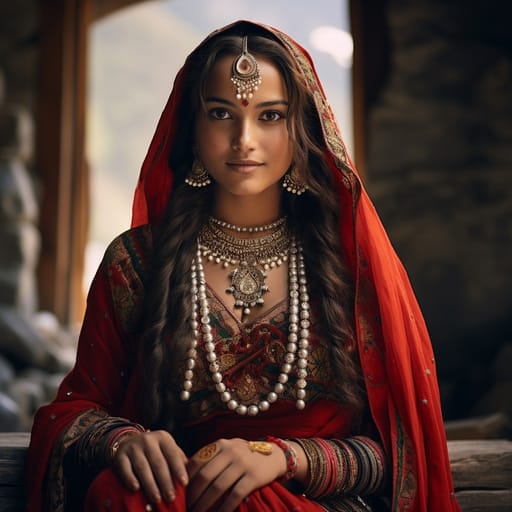
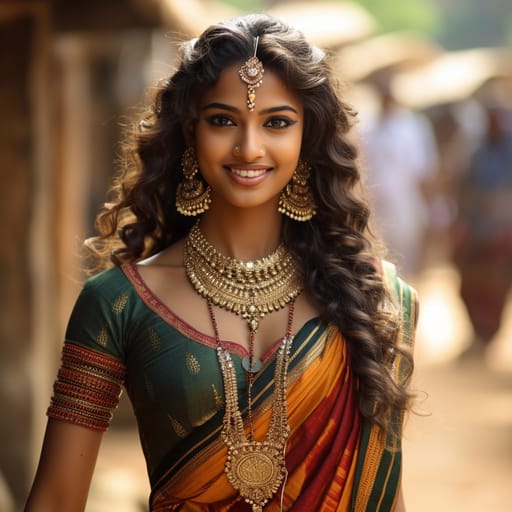
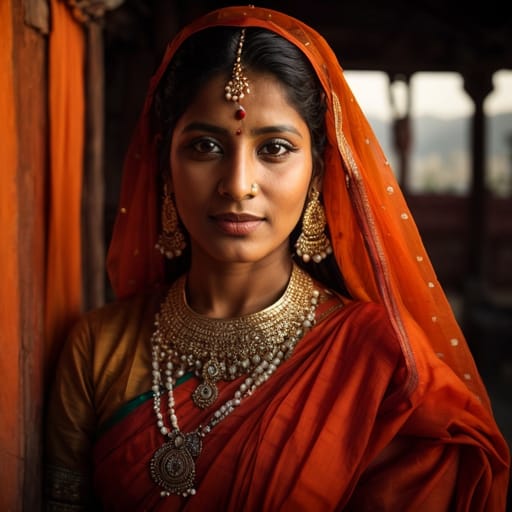
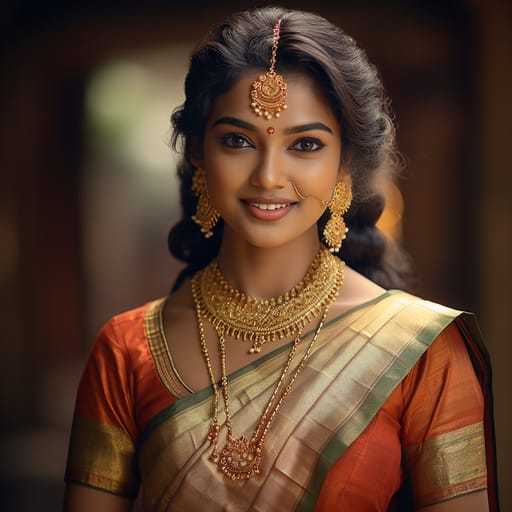
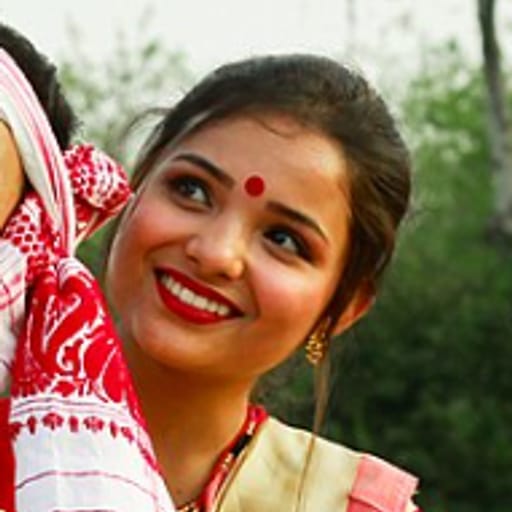
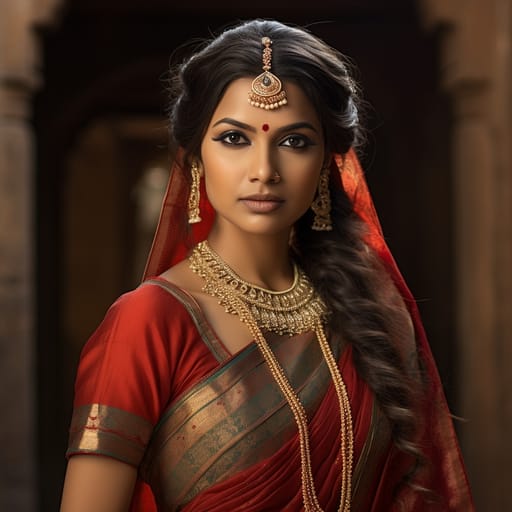
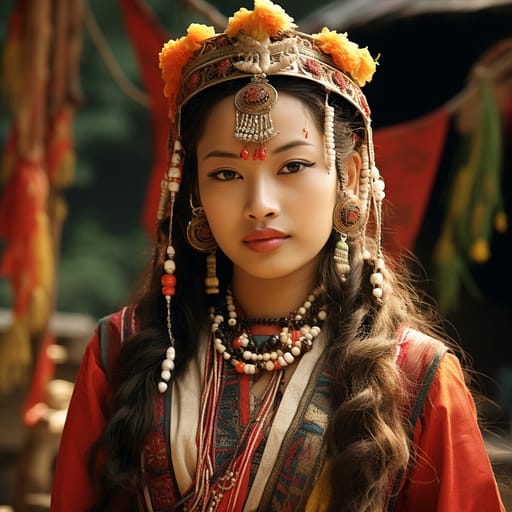
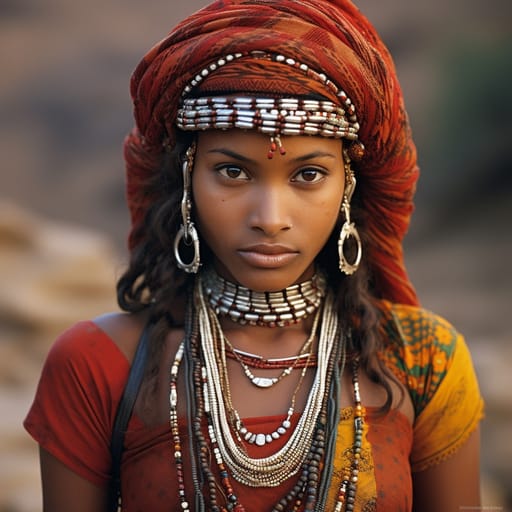
Typical Karbi Phenotypes
Reference for AI generation: hair, eyes, skin, facial structure, build
The Karbi are a Tibeto-Burman people of the central Assam hills, and their phenotype reads as a distinctly Northeast Indian variant of mainland Southeast Asian ancestry — closer in facial architecture to the Naga and Mizo than to the Indo-Aryan plains population that surrounds them. Hair is uniformly black, straight to gently wavy, and coarse in texture; greying tends to come late and stays sparse into middle age. Body hair is light, and male facial hair grows in thinly — most men carry a soft moustache rather than a full beard.
Eyes are dark brown to near-black, set under a lid morphology where a partial epicanthic fold is the norm rather than the exception — not as pronounced as in Han Chinese populations, but clearly present and giving the eye a slightly almond, narrowed shape. Brows are straight and not heavy. Skin tones run through Fitzpatrick III to IV, a warm olive-tan to light brown with yellow rather than red undertones; people working the upland rice terraces and shifting-cultivation plots weather to a deeper IV/V, while women and elders kept out of direct sun stay noticeably lighter.
Facial structure is the clearest tell. Cheekbones sit high and broad, the midface is flat rather than projecting, and the jaw tapers to a relatively narrow chin — giving a softly diamond or oval face shape. Noses are short to medium with a low-to-moderate bridge and modest alar width, neither the high narrow nose of the Indo-Aryan north nor the broad flat nose of some Austroasiatic neighbours. Lips are medium in fullness, the lower slightly fuller than the upper.
Build is compact. Men typically run 160–168 cm, women 148–156 cm, with lean, wiry frames, narrow shoulders relative to hip, and low subcutaneous fat — a body composition shaped by generations of hill agriculture. The Amri Karbi of the plains-fringe foothills tend to show slightly more admixture with neighbouring Assamese populations, sometimes carrying a marginally taller stature and a softer fold at the eye.
Karbi Body & Anatomy Reference
Indo-Aryan / Dravidian South Asian phenotype: anatomy reference for AI nude generation
Karbi Boobs & Breasts
Bust reference for Karbi women: medium-to-large cup, moderate-to-full projection, which is typical of Indo-Aryan / Dravidian South Asian ancestry. Areolas measure about 32-46mm across, with medium-brown to dark-brown pigmentation. Body type (endomorph-to-mesomorph with fuller hip deposition) shapes the bust as well, so Karbi tits are usually full and soft, generally fuller than the East Asian norm. In AI imagery, keep the forward-set shape rather than drifting toward the smaller East Asian bust profile.
Karbi Ass & Hips
The Karbi ass is typically medium-to-full, moderate-to-high projection, classic curvy hip profile, which sets it apart from the slim hip profile of East Asian women. Underneath, the pelvis shows medium-to-wide iliac crests, full gluteal-femoral fat distribution, part of the Indo-Aryan / Dravidian South Asian skeletal pattern. For Karbi butt pics and AI renders, match that silhouette and the overall build (endomorph-to-mesomorph with fuller hip deposition).
Karbi Vagina & Pussy
Karbi pussy and vulvar anatomy presents medium-brown to dark-brown labial pigmentation, fuller labia minora projection, consistent with the Indo-Aryan / Dravidian South Asian phenotype's pigmentation pattern. Karbi pubic hair is typically straight-to-wavy coarse texture, dense distribution, in the inverted-triangle pattern. For anatomically accurate Karbi pussy renders the labial coloration should match the surrounding wheatish to brown skin tone with a continuous gradient, and the hair should keep its straight-to-wavy coarse texture.
Karbi Dicks & Penis
Karbi dicks follow the Indo-Aryan / Dravidian South Asian reference data: regional mean ~13cm erect; moderate girth; medium-brown shaft pigmentation. Shaft color should track the wheatish to brown skin tone with a smooth change toward the glans, and Karbi pubic hair keeps its straight-to-wavy coarse texture.
Karbi Body, Curves & Build
Karbi body type and overall build presents as endomorph-to-mesomorph with fuller hip deposition, with mean adult female BMI 22-25: the characteristic Indo-Aryan / Dravidian South Asian habitus. Karbi curves and proportions should keep the regional skeletal frame (height, shoulder-to-hip ratio, limb proportions) rather than a generic mesomorph default.
Karbi Skin Tone & Hair Texture
Karbi skin sits in the wheatish to brown (Fitzpatrick III-V) band. Hair is typically straight-to-wavy 1A-2B, dense, dark-brown to black, in keeping with the Indo-Aryan / Dravidian South Asian phenotype. In nude renders the skin should stay one even tone from face to body, and body, pubic and head hair should match.
Data depth
0/100Coverage of image-grounded phenotype observations · drives AI generation diversity
- Sample size
- 0/40· 0 images
- Image quality
- 0/30· 0% high
- Confidence
- 0/20
- Source diversity
- 0/10
- ·No image observations yet
Explore phenotype categories
Structured taxonomy with peer-reviewed scales · 22 anatomical categories
Erotic Poses & Sex Positions
From the pose catalog: 219 named positions with reference skeletons
Frequently asked questions about Karbi people
Where is the Karbi homeland?
The Karbi homeland is Karbi Anglong district (India) in Southern Asia.
What language do Karbi people speak?
Karbi people primarily speak Sino-Tibetan / Kuki-Chin-Naga / Karbi.
What religion do Karbi people practice?
The predominant religion among Karbi people is Hinduism.






Make your own Karbi images
Five a day, free, no credits to buy. The studio starts from this group's phenotype data, so you can set body type, pose and style and keep the traits accurate.
Start with Karbi