Help us get this right
Does this portrait look right for Bengali Hindus?
Nobody has judged this one yet. You would be the first.
Bengali Hindus Erotic
West Bengal, Tripura, Assam's Barak Valley and the Andaman and Nicobar Islands in India, plus Bangladesh, with sizable communities elsewhere in India
Bengali (Indo-Aryan, Indo-European)
Hinduism: mainly Shakta (Durga, Kali) and Gaudiya Vaishnava traditions, plus regional deities such as Manasa and Shitala; smaller Matua and Brahmo communities
Part of the wider Bengali people; split into Ghoti (West Bengal roots) and Bangal (East Bengal roots), with castes including Brahmin, Baidya, Kayastha, Mahishya and Namasudra
About Bengali Hindus People
Bengali Hindus are bound by two things at once: the Bengali language and a Hinduism with an unmistakably Bengali accent. It is a faith that puts the goddess at the center, where even many Brahmin households eat fish, a blown conch shell still marks dusk in many homes, and women's ululation, ulu, greets auspicious moments. They make up roughly a third of all Bengali speakers: the majority in West Bengal, Tripura and Assam's Barak Valley, and the largest religious minority in Bangladesh. Bengali is an Eastern Indo-Aryan language, a close relative of Assamese and Odia, written in essentially the same script as Assamese. Religious life runs along two main channels. The Shakta current worships Durga and Kali, and Durga Puja each autumn is the great event of the year: clay images from potters' quarters such as Kolkata's Kumartuli are installed in neighborhood pavilions for days of worship, then carried to the river and immersed. Kolkata's Durga Puja joined UNESCO's intangible heritage list in 2021. The Vaishnava current follows Chaitanya, the sixteenth-century saint of Nabadwip whose movement made congregational singing, kirtan, a form of worship in its own right. Village goddesses such as Manasa, who rules snakes, and Shitala, invoked against disease, remain part of ordinary worship, and married women commonly wear sindoor in the hair parting along with white conch-shell and red bangles.
The modern community took shape in colonial Calcutta, where an educated Hindu middle class, the bhadralok, drove the nineteenth-century reform and literary movement known as the Bengal Renaissance, the world of Ram Mohan Roy, Vidyasagar and Tagore. Partition in 1947 cut that world in two. Over the following decades millions of Hindus moved west out of East Pakistan, and the 1971 war that created Bangladesh drove another surge. The result is a lasting line between Ghoti, families rooted in West Bengal, and Bangal, those whose people came from the east, a difference audible in dialect, argued over in the kitchen, and fought out every season in the football rivalry between Mohun Bagan and East Bengal. Caste still counts. Brahmin, Baidya and Kayastha families dominated the old professional elite, while large communities such as the Namasudra and Mahishya carry their own histories of mobilization, including the Matua devotional movement among Namasudras. In Tripura, the Bengali majority was built largely by twentieth-century migration from the east, a sensitive fact in a state whose indigenous peoples became a minority along the way.
Related ethnic groups
Groups that share Bengali Hindus's homeland, region, language, or religious tradition. These are likely candidates for comparative phenotype reference.
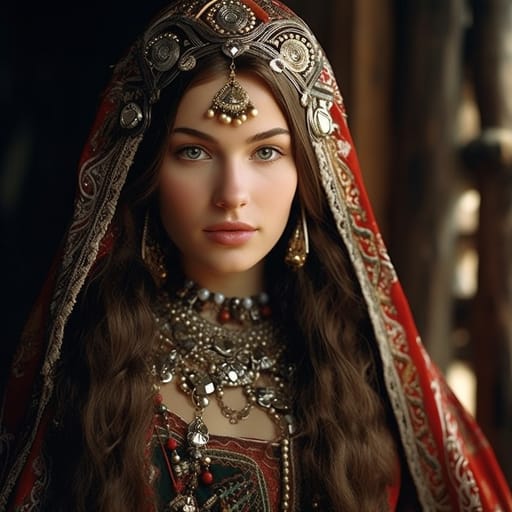
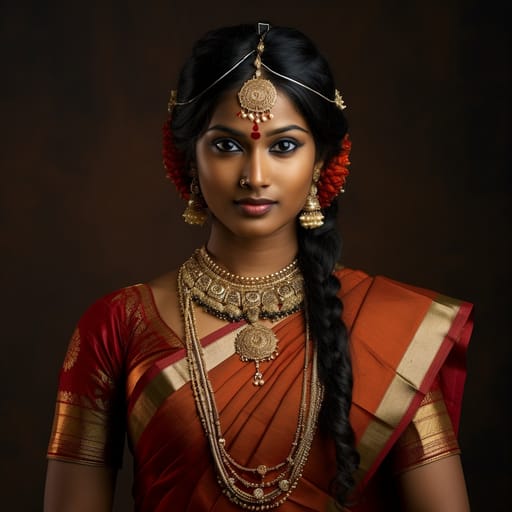
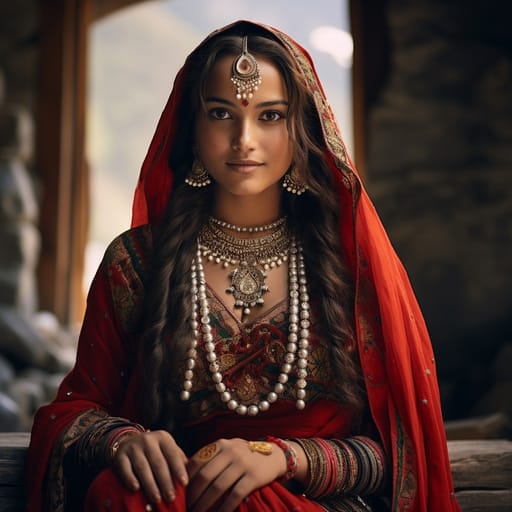
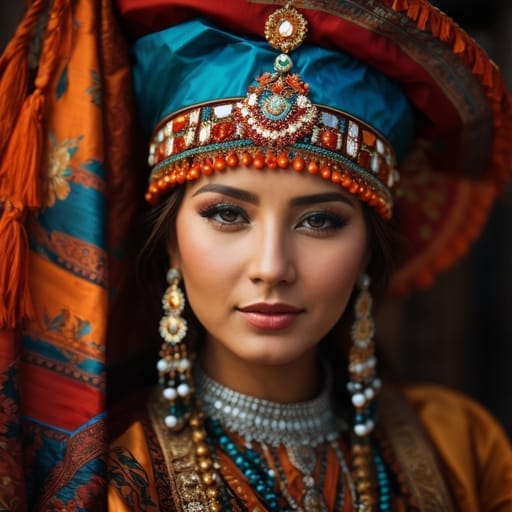
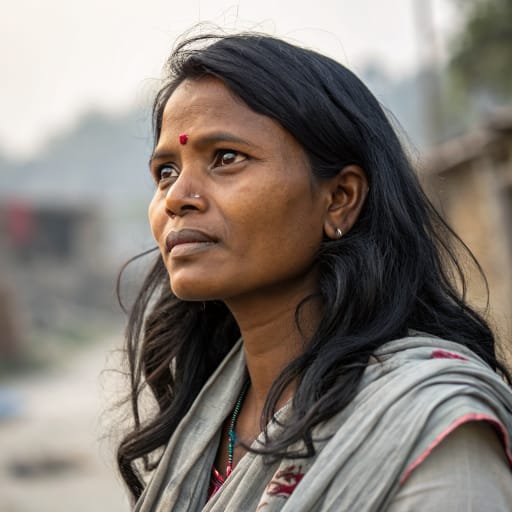
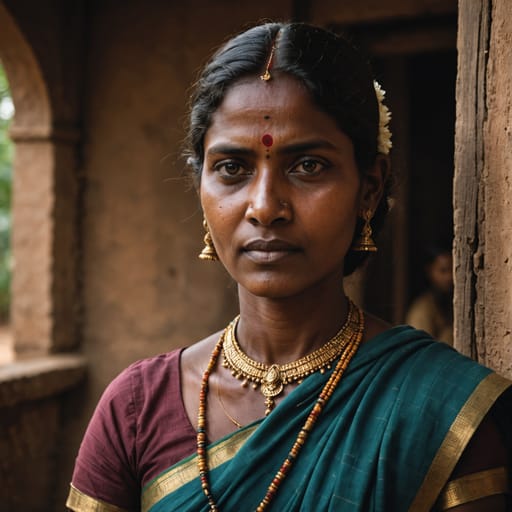
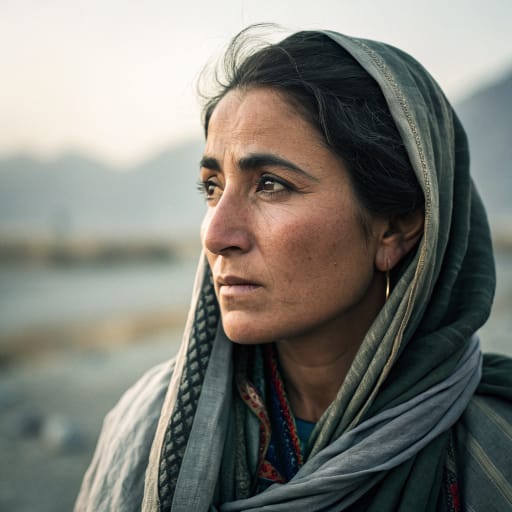
Typical Bengali Hindus Phenotypes
Reference for AI generation: hair, eyes, skin, facial structure, build
Bengali Hindus Body & Anatomy Reference
Anatomy by feature, Indo-Aryan / Dravidian South Asian phenotype
Bengali Hindus Boobs & Breasts
The typical Bengali Hindus bust is medium-to-large cup, moderate-to-full projection, in line with the wider Indo-Aryan / Dravidian South Asian pattern. Areolas usually fall in the 32-46mm range, with medium-brown to dark-brown areolar pigmentation against the wheatish-to-brown skin tone. Compared with the smaller East Asian bust profile, Bengali Hindus breasts sit forward and are generally full and soft, generally fuller than the East Asian norm. A faithful AI render of Bengali Hindus tits keeps that shape and areola size.
Bengali Hindus Ass & Hips
Butt shape among Bengali Hindus women: medium-to-full, moderate-to-high projection, classic curvy hip profile, over medium-to-wide iliac crests, full gluteal-femoral fat distribution. This follows Indo-Aryan / Dravidian South Asian ancestry and looks quite unlike the slim hip profile of East Asian women. An accurate Bengali Hindus ass in adult AI imagery keeps both the silhouette and the overall build (endomorph-to-mesomorph with fuller hip deposition) instead of a generic average.
Bengali Hindus Vagina & Pussy
Vulvar anatomy among Bengali Hindus women: medium-brown to dark-brown labial pigmentation, fuller labia minora projection. Pubic hair tends to be straight-to-wavy coarse texture, dense distribution, in the usual inverted-triangle pattern. Both follow Indo-Aryan / Dravidian South Asian pigmentation, which is why Bengali Hindus pussy renders should not fall back on a pale, sparse Western template.
Bengali Hindus Dicks & Penis
The Bengali Hindus cock profile, from Indo-Aryan / Dravidian South Asian anthropometric data: regional mean ~13cm erect; moderate girth; medium-brown shaft pigmentation. Pubic hair has a straight-to-wavy coarse texture and forms the usual inverted-V pattern. Whether Bengali Hindus men are circumcised follows religious and cultural practice rather than phenotype.
Bengali Hindus Body, Curves & Build
Build and curves among Bengali Hindus women follow the Indo-Aryan / Dravidian South Asian pattern: endomorph-to-mesomorph with fuller hip deposition, mean adult female BMI 22-25. Proportions matter as much as skin tone, so Bengali Hindus figures should keep their regional height and limb ratios.
Bengali Hindus Skin Tone & Hair Texture
The Bengali Hindus skin range is wheatish to brown (Fitzpatrick III-V), and hair tends to be straight-to-wavy 1A-2B, dense, dark-brown to black. That combination marks the Indo-Aryan / Dravidian South Asian phenotype, and skin tone is the trait AI generators most often get wrong for Bengali Hindus women.
Explore phenotype categories
Structured taxonomy with peer-reviewed scales · 22 anatomical categories
Erotic Poses & Sex Positions
From the pose catalog: 219 named positions with reference skeletons
Frequently asked questions about Bengali Hindus people
Where is the Bengali Hindus homeland?
The Bengali Hindus homeland is West Bengal, Tripura, Assam's Barak Valley and the Andaman and Nicobar Islands in India, plus Bangladesh, with sizable communities elsewhere in India in Southern Asia.
What language do Bengali Hindus people speak?
Bengali Hindus people primarily speak Bengali (Indo-Aryan, Indo-European).
What religion do Bengali Hindus people practice?
The predominant religion among Bengali Hindus people is Hinduism: mainly Shakta (Durga, Kali) and Gaudiya Vaishnava traditions, plus regional deities such as Manasa and Shitala; smaller Matua and Brahmo communities.






Make your own Bengali Hindus images
Five a day, free, no credits to buy. The studio starts from this group's phenotype data, so you can set body type, pose and style and keep the traits accurate.
Start with Bengali Hindus