Help us get this right
Does this portrait look right for Julaha?
Nobody has judged this one yet. You would be the first.
Julaha Erotic
Northern and eastern India (Uttar Pradesh, Bihar, West Bengal, Maharashtra), Pakistan, Bangladesh and the Nepal Terai
Urdu, Hindi, Bhojpuri, Maithili, Bengali and Punjabi depending on region (Indo-Aryan, Indo-European)
Predominantly Sunni Islam; a Hindu weaving community of the same name in Punjab and Haryana follows the Kabirpanthi tradition
Momin Ansari and regional weaver biradaris; part of the wider Pasmanda Muslim communities of South Asia
About Julaha People
The Julaha are defined by the loom. The name comes from a Persian word for weaver. For centuries it marked a Muslim community of weavers spread across the Gangetic plain and beyond: families who wove cotton, silk and brocade at home and sold the cloth through merchants. Many now reject the old label, which took on a sneering edge over time, and call themselves Ansari or Momin. Ansari refers to a claimed descent from the Ansar, the people of Medina who took in the Prophet. Momin means believer. People chose both names on purpose, to claim dignity.
The heartland runs through Uttar Pradesh, Bihar and West Bengal. There are large settlements in the powerloom towns of Maharashtra, such as Bhiwandi and Malegaon, and more communities in Pakistan, Bangladesh and the Nepal Terai. There is no single Julaha language. People speak what their neighbors speak, whether Hindi, Bhojpuri, Maithili, Bengali or Punjabi. All of these are Indo-Aryan languages, and Urdu carries religious and community weight in many homes. Most are Sunni Muslims, and Friday prayers and the neighborhood mosque shape the week in weaving districts. Marriage has traditionally stayed inside the biradari, the caste brotherhood. Its councils once settled disputes and still hold social authority in some places.
Varanasi is where the craft is most famous. The Banarasi silk sari, a fixture of North Indian weddings, is largely woven by Ansari families: men work the pit looms while women wind thread and prepare bobbins. Machine weaving, cheap synthetics and debt to traders have battered that way of working, and many families have drifted into other jobs.
Two turning points stand out. The fifteenth century poet Kabir, honored by Hindus, Sikhs and Muslims, is remembered as the son of a Julaha household in Benares. His verses keep coming back to weaving, most famously in a song about a finely woven sheet the soul must hand back as clean as it was received. In the twentieth century, the community organized politically through the Momin Conference, which opposed the demand for Pakistan and saw the Muslim League as a party of the Muslim upper classes. Today's Pasmanda movement grows out of that tradition and pushes for recognition of caste inequality within South Asian Islam. In Punjab and Haryana, a Hindu weaving community with the same name follows Kabir's path and is listed among the Scheduled Castes.
Related ethnic groups
Groups that share Julaha's homeland, region, language, or religious tradition. These are likely candidates for comparative phenotype reference.
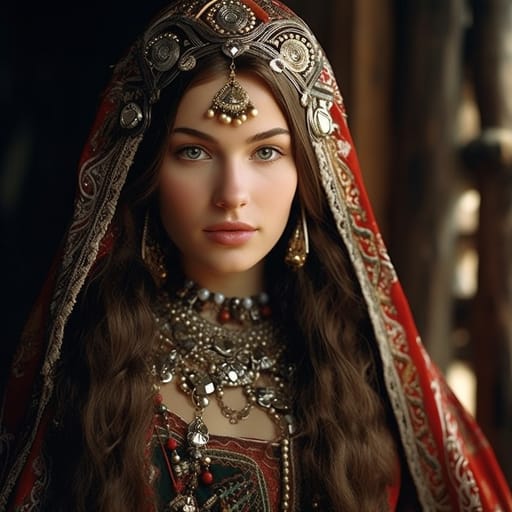
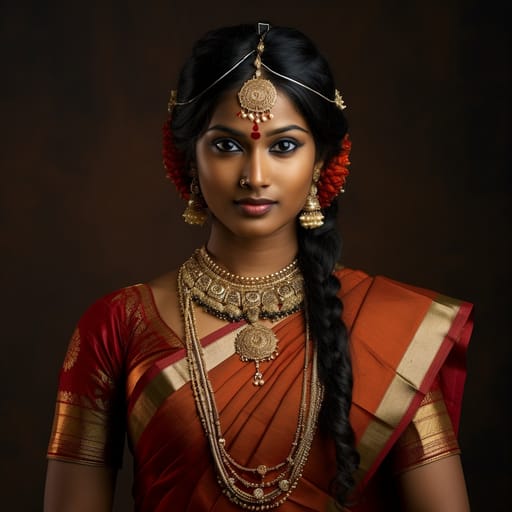
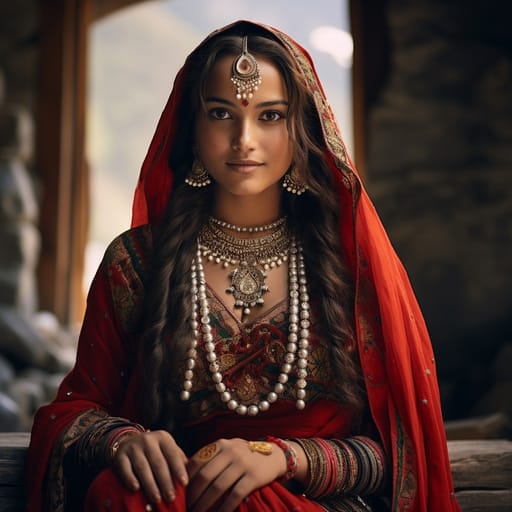
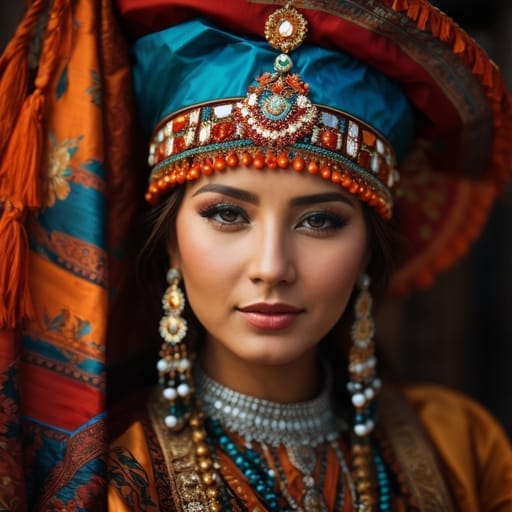
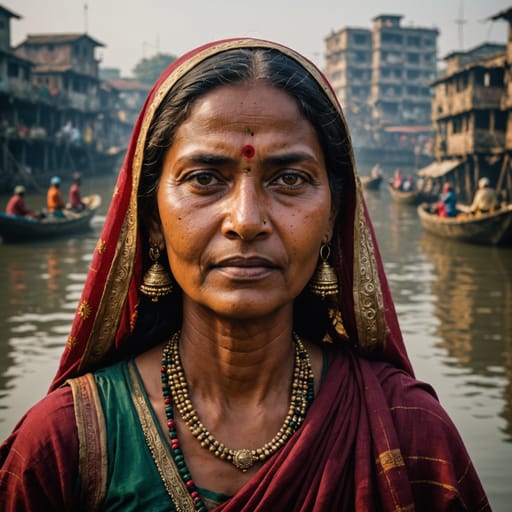
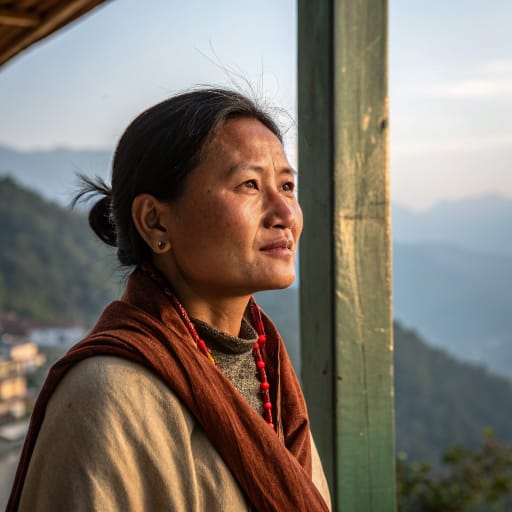
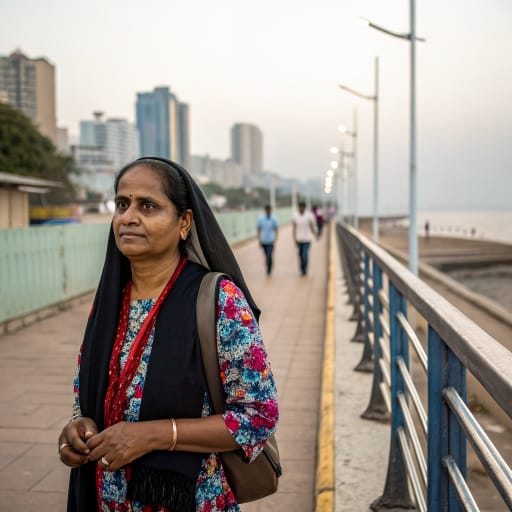
Typical Julaha Phenotypes
Reference for AI generation: hair, eyes, skin, facial structure, build
Julaha Body & Anatomy Reference
Indo-Aryan / Dravidian South Asian phenotype: anatomy reference for AI nude generation
Julaha Boobs & Breasts
Bust reference for Julaha women: medium-to-large cup, moderate-to-full projection, which is typical of Indo-Aryan / Dravidian South Asian ancestry. Areolas measure about 32-46mm across, with medium-brown to dark-brown pigmentation. Body type (endomorph-to-mesomorph with fuller hip deposition) shapes the bust as well, so Julaha tits are usually full and soft, generally fuller than the East Asian norm. In AI imagery, keep the forward-set shape rather than drifting toward the smaller East Asian bust profile.
Julaha Ass & Hips
The Julaha ass is typically medium-to-full, moderate-to-high projection, classic curvy hip profile, which sets it apart from the slim hip profile of East Asian women. Underneath, the pelvis shows medium-to-wide iliac crests, full gluteal-femoral fat distribution, part of the Indo-Aryan / Dravidian South Asian skeletal pattern. For Julaha butt pics and AI renders, match that silhouette and the overall build (endomorph-to-mesomorph with fuller hip deposition).
Julaha Vagina & Pussy
Julaha pussy and vulvar anatomy presents medium-brown to dark-brown labial pigmentation, fuller labia minora projection, consistent with the Indo-Aryan / Dravidian South Asian phenotype's pigmentation pattern. Julaha pubic hair is typically straight-to-wavy coarse texture, dense distribution, in the inverted-triangle pattern. For anatomically accurate Julaha pussy renders the labial coloration should match the surrounding wheatish to brown skin tone with a continuous gradient, and the hair should keep its straight-to-wavy coarse texture.
Julaha Dicks & Penis
Julaha dicks follow the Indo-Aryan / Dravidian South Asian reference data: regional mean ~13cm erect; moderate girth; medium-brown shaft pigmentation. Shaft color should track the wheatish to brown skin tone with a smooth change toward the glans, and Julaha pubic hair keeps its straight-to-wavy coarse texture.
Julaha Body, Curves & Build
Julaha body type and overall build presents as endomorph-to-mesomorph with fuller hip deposition, with mean adult female BMI 22-25: the characteristic Indo-Aryan / Dravidian South Asian habitus. Julaha curves and proportions should keep the regional skeletal frame (height, shoulder-to-hip ratio, limb proportions) rather than a generic mesomorph default.
Julaha Skin Tone & Hair Texture
Julaha skin sits in the wheatish to brown (Fitzpatrick III-V) band. Hair is typically straight-to-wavy 1A-2B, dense, dark-brown to black, in keeping with the Indo-Aryan / Dravidian South Asian phenotype. In nude renders the skin should stay one even tone from face to body, and body, pubic and head hair should match.
Explore phenotype categories
Structured taxonomy with peer-reviewed scales · 22 anatomical categories
Erotic Poses & Sex Positions
From the pose catalog: 219 named positions with reference skeletons
Frequently asked questions about Julaha people
Where is the Julaha homeland?
The Julaha homeland is Northern and eastern India (Uttar Pradesh, Bihar, West Bengal, Maharashtra), Pakistan, Bangladesh and the Nepal Terai in Southern Asia.
What language do Julaha people speak?
Julaha people primarily speak Urdu, Hindi, Bhojpuri, Maithili, Bengali and Punjabi depending on region (Indo-Aryan, Indo-European).
What religion do Julaha people practice?
The predominant religion among Julaha people is Predominantly Sunni Islam; a Hindu weaving community of the same name in Punjab and Haryana follows the Kabirpanthi tradition.






Make your own Julaha images
Five a day, free, no credits to buy. The studio starts from this group's phenotype data, so you can set body type, pose and style and keep the traits accurate.
Start with Julaha