No portrait yet
Thoti Erotic
Northern Telangana, India, chiefly the former Adilabad district and neighboring districts, with smaller numbers in adjoining Maharashtra
Gondi (Dravidian); Telugu (Dravidian) and Marathi (Indo-European) as second languages
Gond folk religion of clan and village deities and ancestor rites, with strong Hindu influence
A bardic section of the wider Gond people, attached to Gond clans as genealogists and reciters, comparable to the Pardhan
About Thoti People
The Thoti are a small Adivasi community of the Deccan whose identity is bound up with other people's memory. They are hereditary bards to the Gonds, the largest tribal people of central India. For generations a Thoti's job was to know who a Gond family was: its clan, the gods it served and the ancestors it came from. The Thoti count as a section of the wider Gond people, but that role sets them apart, much as it does the better-known Pardhans.
Their homeland is the forested upland of northern Telangana, above all the old Adilabad district, with families in neighboring districts and across the state line in Maharashtra. At home most speak Gondi, a Dravidian language from the same branch as Telugu that Telugu speakers can't understand. Nearly everyone also speaks Telugu or Marathi, the languages of the markets and government offices around them. The recitations that made the Thoti necessary are in Gondi, so for them keeping the language alive is a matter of livelihood, not only sentiment.
Religion follows Gond practice: clan deities, village gods, rites for the ancestors and seasonal festivals, with centuries of Hindu forms layered on top. For the Thoti this is working knowledge. A Gond household calls on them when its lineage needs to be spoken aloud, and patrons traditionally paid them in grain, livestock, cloth or cash. Each side depended on the other. The Gond needed the bard, and the bard lived on what the patron could spare.
Thoti women traditionally had a second hereditary skill: tattooing Gond women's arms and legs. Across much of central India a woman's tattoos have long been described as the one ornament she keeps after death, so this was never just a cosmetic trade.
The twentieth century wore much of this away. The Gond kingdoms that had once supported a bardic class were long gone. In Adilabad, Gond farmers lost land to settlers and to forest law, and the surplus that paid for bards shrank with it. Most Thoti today farm small plots or work for wages, and the Indian government lists them as a Scheduled Tribe. Recitation goes on at festivals and family rites, but it no longer makes a living on its own. A note for anyone searching older records: the same word also names an unrelated village servant post elsewhere in the Deccan, and the two are easy to confuse.
Related ethnic groups
Groups that share Thoti's homeland, region, language, or religious tradition. These are likely candidates for comparative phenotype reference.
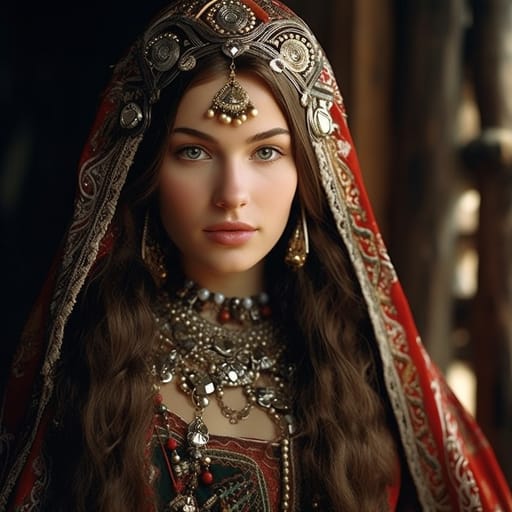
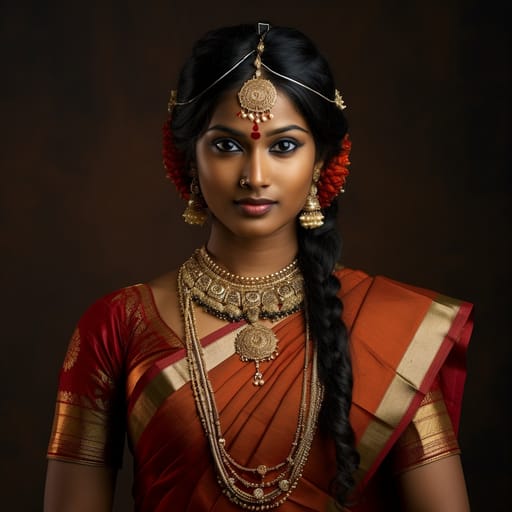
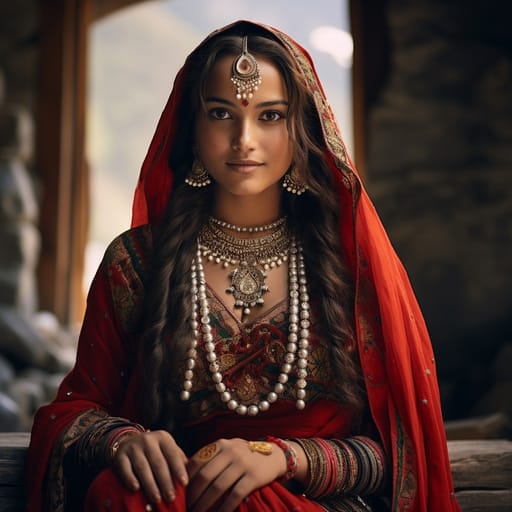
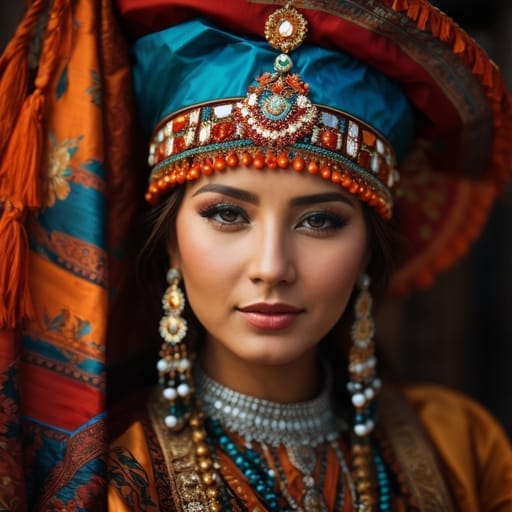
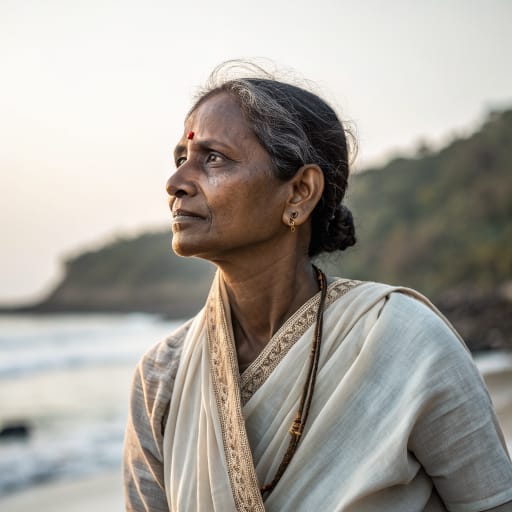
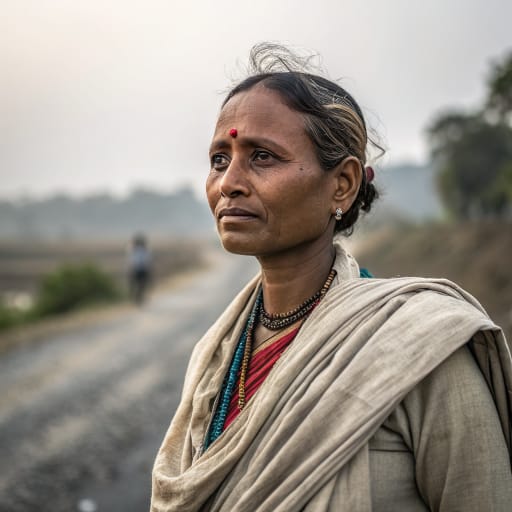
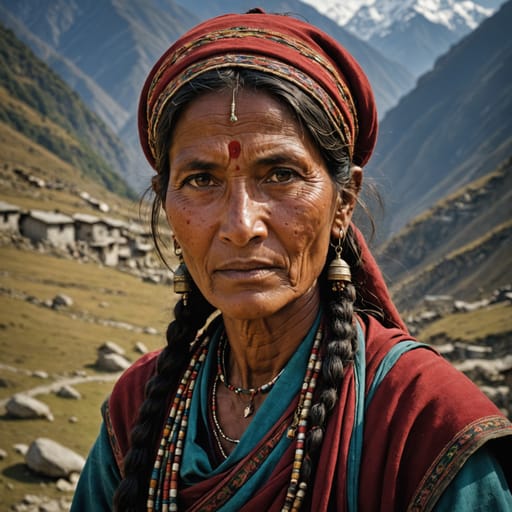
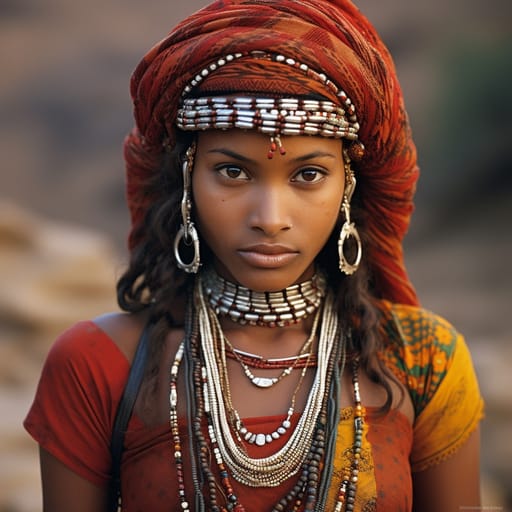
Typical Thoti Phenotypes
Reference for AI generation: hair, eyes, skin, facial structure, build
Thoti Body & Anatomy Reference
Anatomy by feature, Indo-Aryan / Dravidian South Asian phenotype
Thoti Boobs & Breasts
Thoti boobs follow the Indo-Aryan / Dravidian South Asian profile: medium-to-large cup, moderate-to-full projection. Areolar diameter is usually 32-46mm, and the coloring is medium-brown to dark-brown areolar pigmentation against the wheatish-to-brown skin tone. Breast shape tracks body composition (endomorph-to-mesomorph with fuller hip deposition, mean adult female BMI 22-25), so Thoti breasts tend to be full and soft, generally fuller than the East Asian norm. Expect a forward-set shape, not the smaller East Asian bust profile.
Thoti Ass & Hips
Thoti ass and hip morphology presents as medium-to-full, moderate-to-high projection, classic curvy hip profile, distinctly different from the slim hip profile of East Asian women. The Thoti pelvic profile shows medium-to-wide iliac crests, full gluteal-femoral fat distribution, anchored in the Indo-Aryan / Dravidian South Asian skeletal pattern. Thoti butt shots in adult AI imagery should render the medium-to-full, moderate-to-high projection, classic curvy hip profile silhouette with the overall build (endomorph-to-mesomorph with fuller hip deposition) and the fat distribution typical of the Indo-Aryan / Dravidian South Asian phenotype.
Thoti Vagina & Pussy
Thoti pussy anatomy typically shows medium-brown to dark-brown labial pigmentation, fuller labia minora projection. Pubic hair is usually straight-to-wavy coarse texture, dense distribution. In AI-generated Thoti nudes, labial color should blend into the wheatish to brown skin with a gradual transition, and the hair should keep its straight-to-wavy coarse texture.
Thoti Dicks & Penis
Penis reference for Thoti men: regional mean ~13cm erect, moderate girth. Coloring: medium-brown shaft pigmentation. An accurate Thoti cock in AI imagery matches the surrounding wheatish to brown skin rather than a generic porn default. Circumcision depends on religion and custom, not ancestry.
Thoti Body, Curves & Build
The Thoti figure is generally endomorph-to-mesomorph with fuller hip deposition, with mean adult female BMI 22-25, characteristic of Indo-Aryan / Dravidian South Asian ancestry. AI image tools tend to flatten regional body types into a few stock shapes; here the Thoti build is kept as its own reference.
Thoti Skin Tone & Hair Texture
Skin: wheatish to brown (Fitzpatrick III-V). Hair: straight-to-wavy 1A-2B, dense, dark-brown to black. Both are typical of Indo-Aryan / Dravidian South Asian ancestry. The most common mistake in AI nudes of Thoti women is a body rendered lighter than the face.
Explore phenotype categories
Structured taxonomy with peer-reviewed scales · 22 anatomical categories
Erotic Poses & Sex Positions
From the pose catalog: 219 named positions with reference skeletons
Frequently asked questions about Thoti people
Where is the Thoti homeland?
The Thoti homeland is Northern Telangana, India, chiefly the former Adilabad district and neighboring districts, with smaller numbers in adjoining Maharashtra in Southern Asia.
What language do Thoti people speak?
Thoti people primarily speak Gondi (Dravidian); Telugu (Dravidian) and Marathi (Indo-European) as second languages.
What religion do Thoti people practice?
The predominant religion among Thoti people is Gond folk religion of clan and village deities and ancestor rites, with strong Hindu influence.






Make your own Thoti images
Five a day, free, no credits to buy. The studio starts from this group's phenotype data, so you can set body type, pose and style and keep the traits accurate.
Start with Thoti