Help us get this right
Does this portrait look right for Gandharis?
Nobody has judged this one yet. You would be the first.
Gandharis Erotic
Ancient Gandhara: the Peshawar valley, Swat and the Taxila region of northern Pakistan, reaching into eastern Afghanistan along the Kabul River.
Gandhari (Indo-European, Indo-Aryan; a Middle Indo-Aryan Prakrit written in Kharosthi script), with Sanskrit in learned use.
Vedic religion in the early period; later predominantly Buddhism alongside Brahmanical Hinduism, with Iranian and Greek cults present under foreign rule.
An Indo-Aryan people of the northwest, counted among the sixteen Mahajanapadas and often paired in ancient sources with the neighboring Kambojas.
About Gandharis People
The Gandharis were an Indo-Aryan people of the ancient northwest of the Indian subcontinent, attested from the Vedic period, roughly the late second millennium BCE, in the Peshawar valley, Swat and the country around Taxila, in what is now northern Pakistan and the eastern edge of Afghanistan. They did not vanish so much as dissolve into the peoples who came after. By the time Mahmud of Ghazni broke the Hindu Shahi kings in the early eleventh century CE, the name Gandhara was falling out of use, and the Pashtuns, Hindko speakers and Dardic-speaking hill communities who live there today stand where the Gandharis stood.
They enter the record early and at an angle. The Rigveda knows them for the wool of their sheep, and the Atharvaveda wishes fever away onto them, the way one curses distant neighbors. Buddhist texts count Gandhara among the sixteen great states of the Buddha's era. What set the Gandharis apart was position: they held the door between India, Iran and Central Asia, and everyone came through it. Darius I listed Gandara among his provinces, and Herodotus put Gandarian troops in the army Xerxes marched against Greece. Alexander arrived in 327 BCE, followed by the Mauryas, Indo-Greek kings, Scythians, Parthians and the Kushans, who made Purushapura, modern Peshawar, an imperial capital.
The Gandharis absorbed all of it and made something of their own. Their language, Gandhari, was a Middle Indo-Aryan Prakrit written in Kharosthi, a right-to-left script derived from Aramaic, the chancery script of the Persian empire. Ashoka's rock edicts at Shahbazgarhi are cut in it, and Gandhari birch bark scrolls from around the first century CE are the oldest Buddhist manuscripts known. The language traveled with merchants and monks along the Silk Road and served as an administrative tongue in oasis kingdoms of the Tarim Basin. Buddhism dominated Gandharan life for centuries, alongside Brahmanical, Iranian and Greek cults. Its workshops carved gray schist Buddhas with wavy hair and heavy draped robes that owe a plain debt to Mediterranean sculpture, among the earliest images of the Buddha in human form. Taxila drew students from across the north, and the grammarian Panini, whose analysis of Sanskrit remains a founding work of linguistics, was a Gandharan from Shalatura.
Hun invasions in the fifth and sixth centuries broke the monasteries and their patrons, and the Chinese pilgrim Xuanzang found most of them deserted in the seventh. The legacy outlasted the people. The Buddha image that reached China, Korea and Japan descends from Gandharan models. The Mahabharata's queen Gandhari, mother of the Kauravas, carries the country's name. Some linguists regard Torwali and neighboring Dardic languages of the Swat hills as Gandhari's closest living relatives.
Related ethnic groups
Groups that share Gandharis's homeland, region, language, or religious tradition. These are likely candidates for comparative phenotype reference.
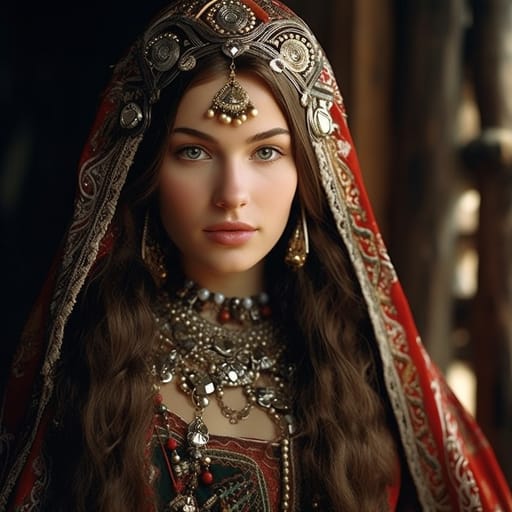
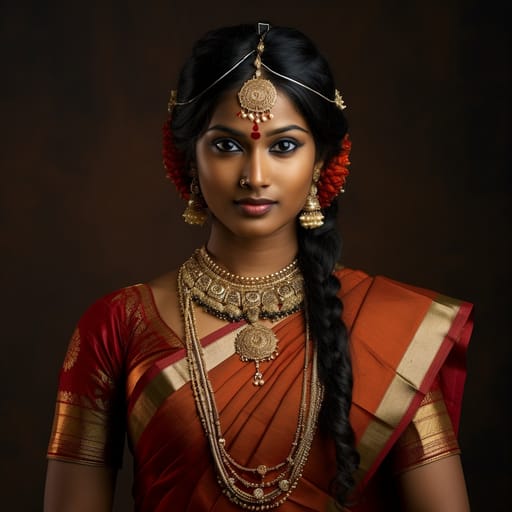
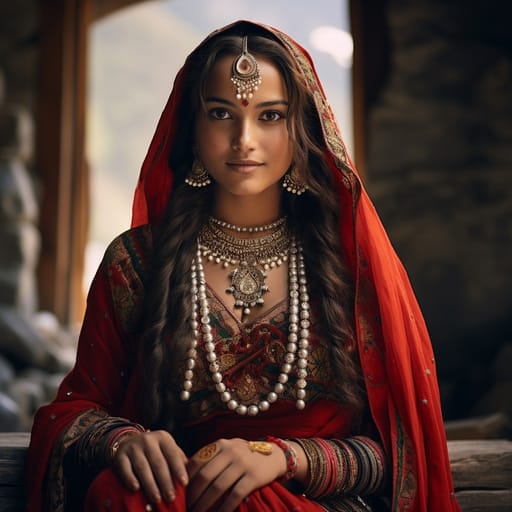
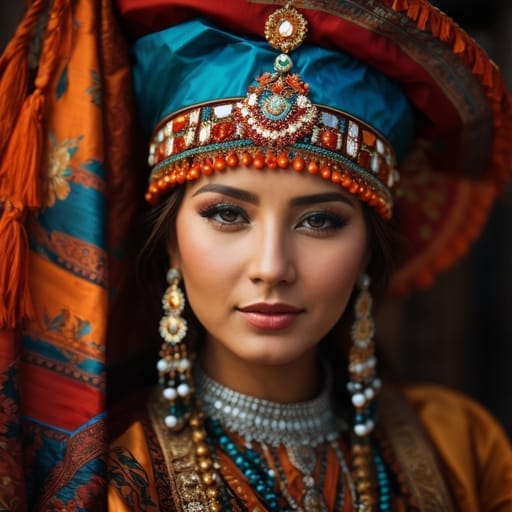
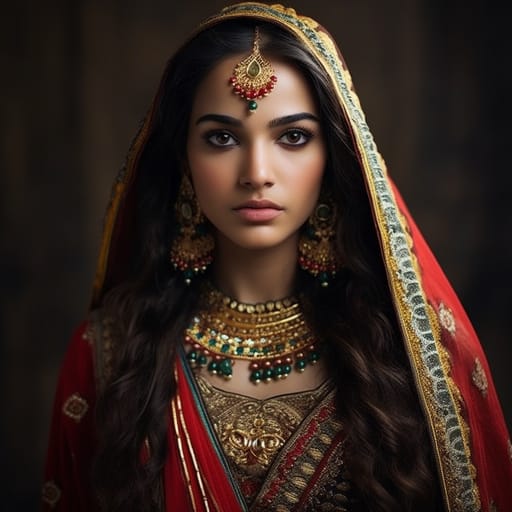
Typical Gandharis Phenotypes
Reference for AI generation: hair, eyes, skin, facial structure, build
Gandharis Body & Anatomy Reference
Indo-Aryan / Dravidian South Asian phenotype: anatomy reference for AI nude generation
Gandharis Boobs & Breasts
The typical Gandharis bust is medium-to-large cup, moderate-to-full projection, in line with the wider Indo-Aryan / Dravidian South Asian pattern. Areolas usually fall in the 32-46mm range, with medium-brown to dark-brown areolar pigmentation against the wheatish-to-brown skin tone. Compared with the smaller East Asian bust profile, Gandharis breasts sit forward and are generally full and soft, generally fuller than the East Asian norm. A faithful AI render of Gandharis tits keeps that shape and areola size.
Gandharis Ass & Hips
Butt shape among Gandharis women: medium-to-full, moderate-to-high projection, classic curvy hip profile, over medium-to-wide iliac crests, full gluteal-femoral fat distribution. This follows Indo-Aryan / Dravidian South Asian ancestry and looks quite unlike the slim hip profile of East Asian women. An accurate Gandharis ass in adult AI imagery keeps both the silhouette and the overall build (endomorph-to-mesomorph with fuller hip deposition) instead of a generic average.
Gandharis Vagina & Pussy
Vulvar anatomy among Gandharis women: medium-brown to dark-brown labial pigmentation, fuller labia minora projection. Pubic hair tends to be straight-to-wavy coarse texture, dense distribution, in the usual inverted-triangle pattern. Both follow Indo-Aryan / Dravidian South Asian pigmentation, which is why Gandharis pussy renders should not fall back on a pale, sparse Western template.
Gandharis Dicks & Penis
The Gandharis cock profile, from Indo-Aryan / Dravidian South Asian anthropometric data: regional mean ~13cm erect; moderate girth; medium-brown shaft pigmentation. Pubic hair has a straight-to-wavy coarse texture and forms the usual inverted-V pattern. Whether Gandharis men are circumcised follows religious and cultural practice rather than phenotype.
Gandharis Body, Curves & Build
Build and curves among Gandharis women follow the Indo-Aryan / Dravidian South Asian pattern: endomorph-to-mesomorph with fuller hip deposition, mean adult female BMI 22-25. Proportions matter as much as skin tone, so Gandharis figures should keep their regional height and limb ratios.
Gandharis Skin Tone & Hair Texture
The Gandharis skin range is wheatish to brown (Fitzpatrick III-V), and hair tends to be straight-to-wavy 1A-2B, dense, dark-brown to black. That combination marks the Indo-Aryan / Dravidian South Asian phenotype, and skin tone is the trait AI generators most often get wrong for Gandharis women.
Explore phenotype categories
Structured taxonomy with peer-reviewed scales · 22 anatomical categories
Erotic Poses & Sex Positions
From the pose catalog: 219 named positions with reference skeletons
Frequently asked questions about Gandharis people
Where is the Gandharis homeland?
The Gandharis homeland is Ancient Gandhara: the Peshawar valley, Swat and the Taxila region of northern Pakistan, reaching into eastern Afghanistan along the Kabul River. in Southern Asia.
What language do Gandharis people speak?
Gandharis people primarily speak Gandhari (Indo-European, Indo-Aryan; a Middle Indo-Aryan Prakrit written in Kharosthi script), with Sanskrit in learned use..
What religion do Gandharis people practice?
The predominant religion among Gandharis people is Vedic religion in the early period; later predominantly Buddhism alongside Brahmanical Hinduism, with Iranian and Greek cults present under foreign rule..






Make your own Gandharis images
Five a day, free, no credits to buy. The studio starts from this group's phenotype data, so you can set body type, pose and style and keep the traits accurate.
Start with Gandharis