No portrait yet
Raute Erotic
Forests of mid-western and far-western Nepal, especially Surkhet, Dailekh and neighboring districts; a settled community in Dadeldhura
Raute, also called Khamci (Sino-Tibetan, Raji-Raute branch); Nepali for trade
Forest-centered traditional religion with Hindu influences
Nomadic Raute and settled Raute of Dadeldhura; related by language to the Raji and Rawat
About Raute People
The Raute are among the last people in Nepal who still refuse to farm. One band of a few dozen families moves through the forested hills of the country's mid and far west. They set up camp in a stretch of woodland for weeks or months, then walk on. They call themselves kings of the forest, and they mean it as a claim of independence, not romance. Land is not something to own, fields are not something to plow, and the village is a place you visit to trade, not a place to live.
Their living rests on two skills. The men hunt monkeys, mainly langurs and rhesus macaques, using nets, and the meat is shared across the camp. The Raute also carve wooden bowls, boxes and other household vessels from forest timber, and they trade these with hill farmers for grain and other staples. This exchange has tied the Raute to their settled neighbors for generations, even though each side keeps its distance.
The Raute language, which speakers also call Khamci, belongs to the Sino-Tibetan family. Its closest relatives are Raji and Rawat, the languages of other small forest peoples on both sides of the border between Nepal and India. In a region where Nepali dominates, it is a tiny and isolated branch, and most Raute use Nepali when dealing with outsiders. Their religion is centered on the forest, with Hindu elements picked up from neighbors. A death in camp is a signal to leave: the band buries its dead and moves on.
Not every Raute still travels. A settled community lives in Dadeldhura district and farms much like the villages around it. The difference between the two groups raises a real question about what being Raute requires. The nomadic band numbers only around 150 people. The Nepali state recognizes the Raute as an indigenous nationality and pays them an allowance. Repeated offers to settle them, give them land and put their children in school have mostly been turned down. Camps are wary of outsiders, and the band's headman, the mukhiya, deals with officials and journalists. The Raute ask for little from the state beyond access to the forest, and that forest keeps shrinking as roads and farms push into it.
Related ethnic groups
Groups that share Raute's homeland, region, language, or religious tradition. These are likely candidates for comparative phenotype reference.

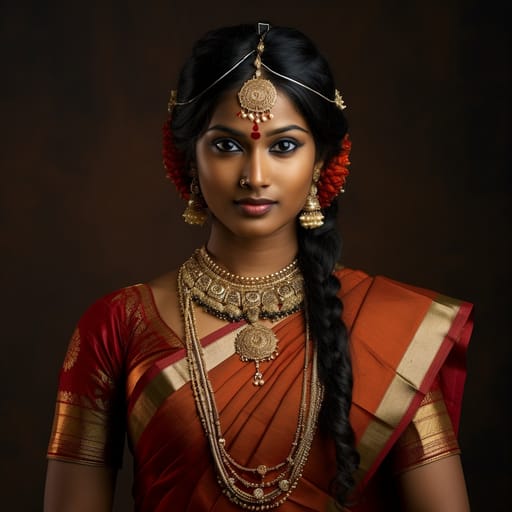
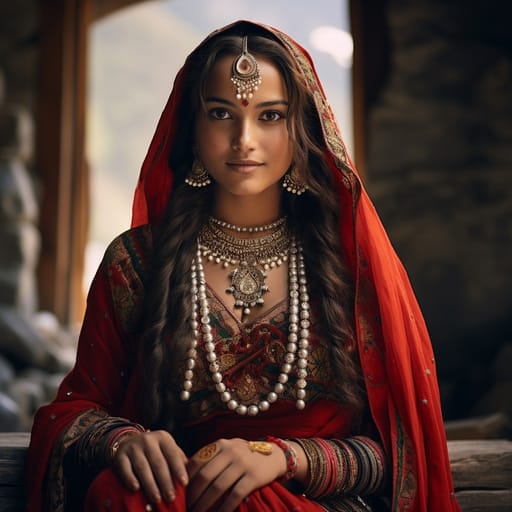
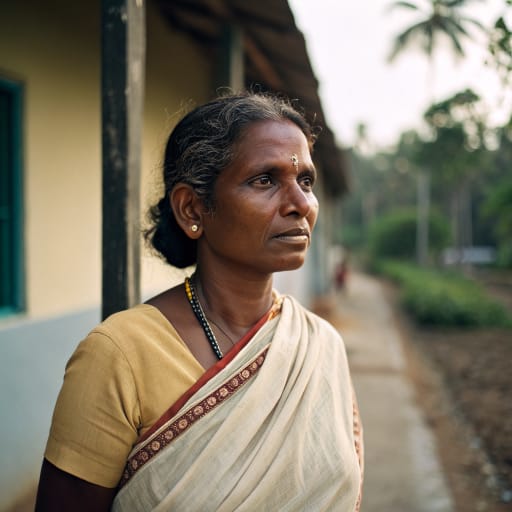
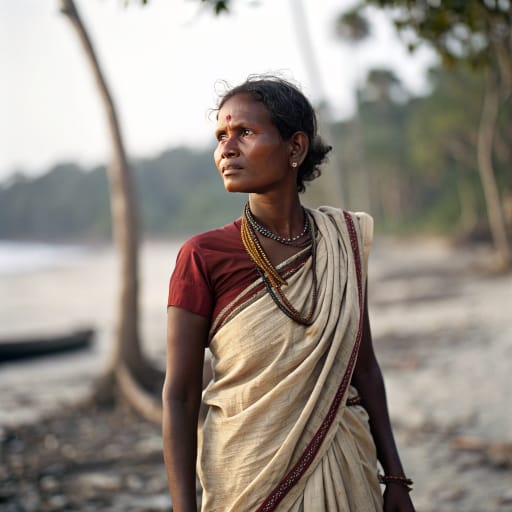
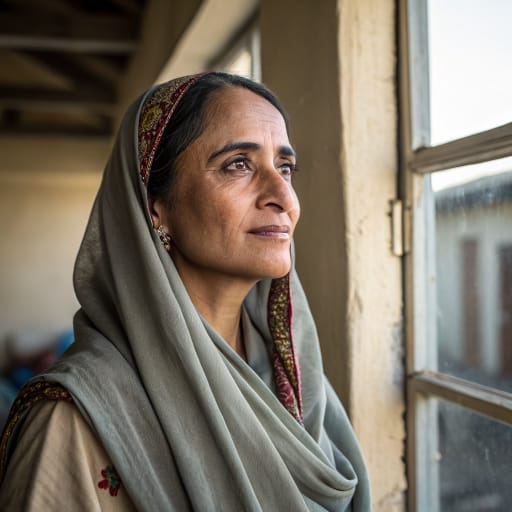
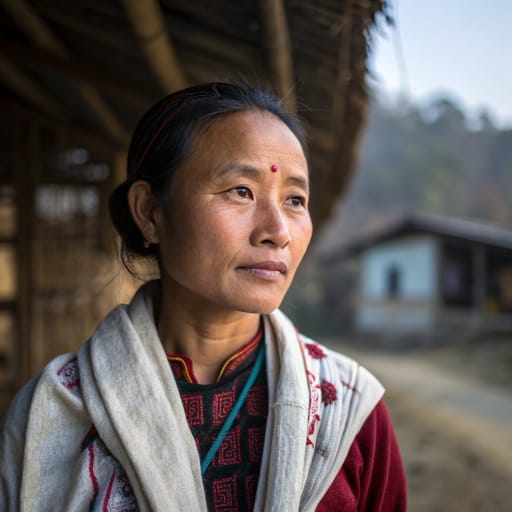
Typical Raute Phenotypes
Reference for AI generation: hair, eyes, skin, facial structure, build
Raute Body & Anatomy Reference
Indo-Aryan / Dravidian South Asian phenotype: anatomy reference for AI nude generation
Raute Boobs & Breasts
Bust reference for Raute women: medium-to-large cup, moderate-to-full projection, which is typical of Indo-Aryan / Dravidian South Asian ancestry. Areolas measure about 32-46mm across, with medium-brown to dark-brown pigmentation. Body type (endomorph-to-mesomorph with fuller hip deposition) shapes the bust as well, so Raute tits are usually full and soft, generally fuller than the East Asian norm. In AI imagery, keep the forward-set shape rather than drifting toward the smaller East Asian bust profile.
Raute Ass & Hips
The Raute ass is typically medium-to-full, moderate-to-high projection, classic curvy hip profile, which sets it apart from the slim hip profile of East Asian women. Underneath, the pelvis shows medium-to-wide iliac crests, full gluteal-femoral fat distribution, part of the Indo-Aryan / Dravidian South Asian skeletal pattern. For Raute butt pics and AI renders, match that silhouette and the overall build (endomorph-to-mesomorph with fuller hip deposition).
Raute Vagina & Pussy
Raute pussy and vulvar anatomy presents medium-brown to dark-brown labial pigmentation, fuller labia minora projection, consistent with the Indo-Aryan / Dravidian South Asian phenotype's pigmentation pattern. Raute pubic hair is typically straight-to-wavy coarse texture, dense distribution, in the inverted-triangle pattern. For anatomically accurate Raute pussy renders the labial coloration should match the surrounding wheatish to brown skin tone with a continuous gradient, and the hair should keep its straight-to-wavy coarse texture.
Raute Dicks & Penis
Raute dicks follow the Indo-Aryan / Dravidian South Asian reference data: regional mean ~13cm erect; moderate girth; medium-brown shaft pigmentation. Shaft color should track the wheatish to brown skin tone with a smooth change toward the glans, and Raute pubic hair keeps its straight-to-wavy coarse texture.
Raute Body, Curves & Build
Raute body type and overall build presents as endomorph-to-mesomorph with fuller hip deposition, with mean adult female BMI 22-25: the characteristic Indo-Aryan / Dravidian South Asian habitus. Raute curves and proportions should keep the regional skeletal frame (height, shoulder-to-hip ratio, limb proportions) rather than a generic mesomorph default.
Raute Skin Tone & Hair Texture
Raute skin sits in the wheatish to brown (Fitzpatrick III-V) band. Hair is typically straight-to-wavy 1A-2B, dense, dark-brown to black, in keeping with the Indo-Aryan / Dravidian South Asian phenotype. In nude renders the skin should stay one even tone from face to body, and body, pubic and head hair should match.
Explore phenotype categories
Structured taxonomy with peer-reviewed scales · 22 anatomical categories
Erotic Poses & Sex Positions
From the pose catalog: 219 named positions with reference skeletons
Frequently asked questions about Raute people
Where is the Raute homeland?
The Raute homeland is Forests of mid-western and far-western Nepal, especially Surkhet, Dailekh and neighboring districts; a settled community in Dadeldhura in Southern Asia.
What language do Raute people speak?
Raute people primarily speak Raute, also called Khamci (Sino-Tibetan, Raji-Raute branch); Nepali for trade.
What religion do Raute people practice?
The predominant religion among Raute people is Forest-centered traditional religion with Hindu influences.






Make your own Raute images
Five a day, free, no credits to buy. The studio starts from this group's phenotype data, so you can set body type, pose and style and keep the traits accurate.
Start with Raute