Help us get this right
Does this portrait look right for Bnei Menashe?
Nobody has judged this one yet. You would be the first.
Bnei Menashe Erotic
Hill districts of Manipur and Mizoram in northeast India, near the Myanmar border; a large share of the community now lives in Israel.
Mizo, Hmar, Thadou-Kuki, Paite and related Kuki-Chin languages (Sino-Tibetan); Hebrew for liturgy and, in Israel, for daily life
Judaism, mostly Orthodox and by formal conversion; the wider Kuki-Chin population they come from is Baptist and Presbyterian
Drawn from the Kuki-Chin-Mizo (Zo) peoples: Mizo, Hmar, Kuki, Paite, Vaiphei, Zou. Counted among the Jewish communities of India alongside the Bene Israel, Cochin Jews and Baghdadi Jews.
About Bnei Menashe People
The Bnei Menashe are not an ethnic group in the sense the rest of this catalog uses the word. They are a religious community drawn out of one: several thousand Mizo, Hmar, Kuki, Paite and Vaiphei families in the hill districts of Manipur and Mizoram, on India's border with Myanmar, who keep Shabbat, read Torah in Hebrew, and understand themselves as descendants of the tribe of Manasseh. Their neighbors speak the same Kuki-Chin languages, work the same hillsides, and share the same great-grandparents, and they are overwhelmingly Baptist and Presbyterian. That is the fact worth sitting with: a Jewish community that came into being within living memory, out of a Christian one, in hill country about as far from Jerusalem as Asia allows.
The story they tell runs backward from a chant. Kuki-Chin ritual song preserves an ancestral figure called Manmasi, and the Hmar harvest festival Sikpui Ruoi carries a verse about a sea that divided so the people could cross. Welsh and Baptist missionaries reached the Lushai Hills in the 1890s and converted the region inside two generations, handing the community an Old Testament in which those fragments suddenly seemed to have a home. In 1951 a Mizo man's dream that the people should return to Israel set the movement going. Congregations shifted their Sabbath to Saturday, and by the 1970s some had moved toward normative Jewish practice. The name itself was supplied in the 1980s by the Israeli rabbi Eliyahu Avichail, who read Manmasi as Manasseh.
Israel's rabbinate has never treated them as Jews by descent. In 2005 the Sephardic chief rabbi recognized them as plausible descendants of the lost tribes, which was enough to open a path to formal conversion but not enough to let anyone skip it, and genetic testing has produced nothing that supports the claim. Indian authorities objected to conversions on Indian soil, so most now happen after arrival. More than four thousand have made the move, in batches that stall and restart with Israeli politics, settling mostly in the northern towns and in West Bank communities, working in factories and food plants, speaking Hebrew to their children and Mizo to their parents. Several thousand remain in Manipur and Mizoram, studying, waiting on a flight, and living through the Meitei and Kuki violence that has torn Manipur apart since 2023.
Related ethnic groups
Groups that share Bnei Menashe's homeland, region, language, or religious tradition. These are likely candidates for comparative phenotype reference.
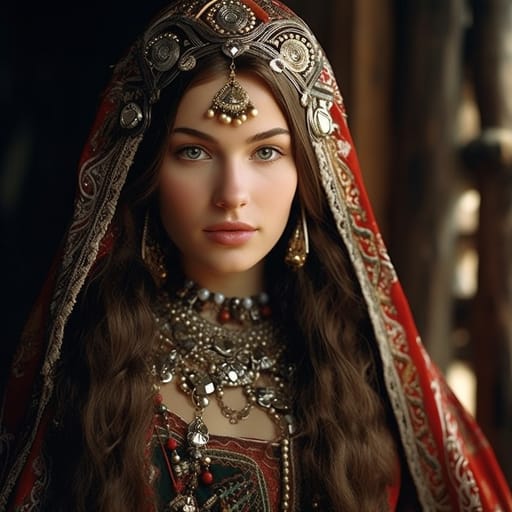
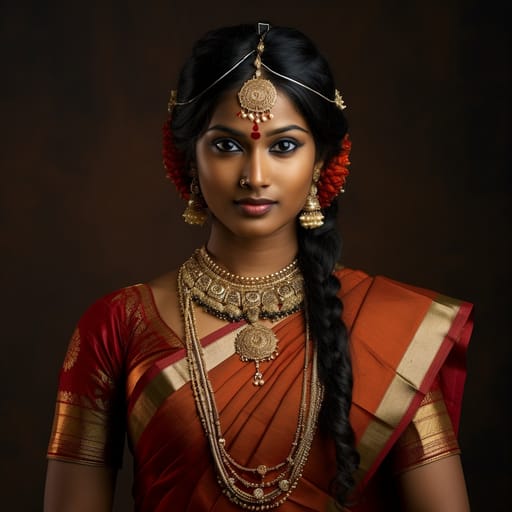
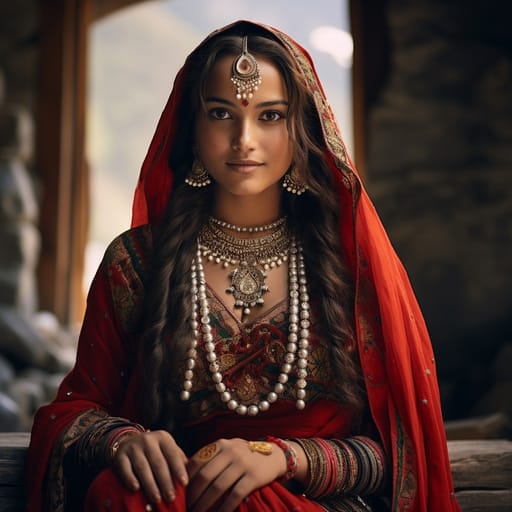
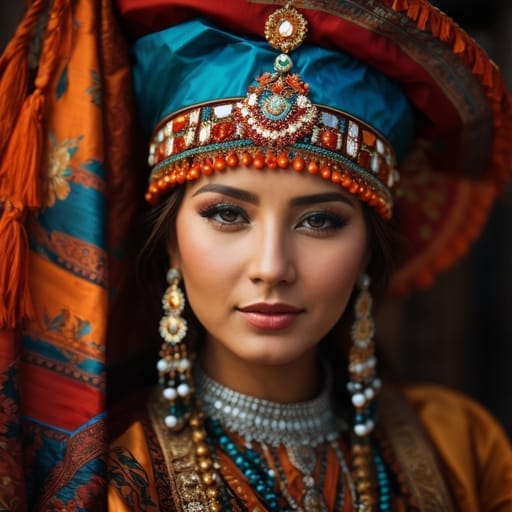
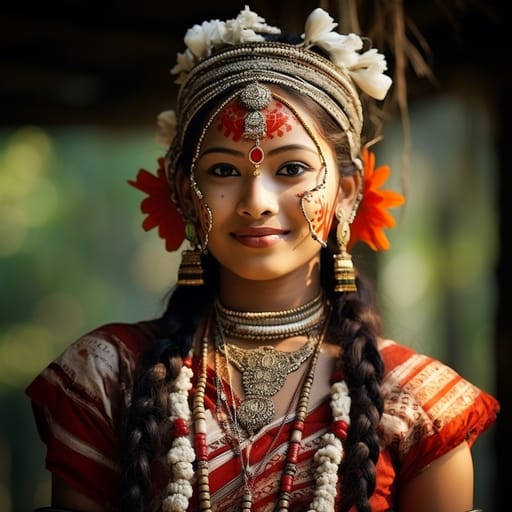
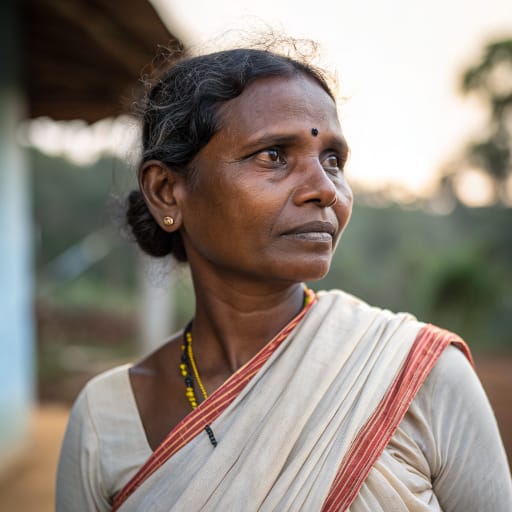
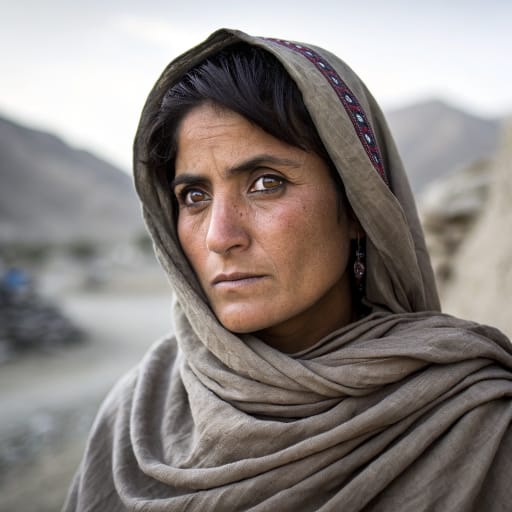
Typical Bnei Menashe Phenotypes
Reference for AI generation: hair, eyes, skin, facial structure, build
Bnei Menashe Body & Anatomy Reference
Indo-Aryan / Dravidian South Asian phenotype: anatomy reference for AI nude generation
Bnei Menashe Boobs & Breasts
Bust reference for Bnei Menashe women: medium-to-large cup, moderate-to-full projection, which is typical of Indo-Aryan / Dravidian South Asian ancestry. Areolas measure about 32-46mm across, with medium-brown to dark-brown pigmentation. Body type (endomorph-to-mesomorph with fuller hip deposition) shapes the bust as well, so Bnei Menashe tits are usually full and soft, generally fuller than the East Asian norm. In AI imagery, keep the forward-set shape rather than drifting toward the smaller East Asian bust profile.
Bnei Menashe Ass & Hips
The Bnei Menashe ass is typically medium-to-full, moderate-to-high projection, classic curvy hip profile, which sets it apart from the slim hip profile of East Asian women. Underneath, the pelvis shows medium-to-wide iliac crests, full gluteal-femoral fat distribution, part of the Indo-Aryan / Dravidian South Asian skeletal pattern. For Bnei Menashe butt pics and AI renders, match that silhouette and the overall build (endomorph-to-mesomorph with fuller hip deposition).
Bnei Menashe Vagina & Pussy
Bnei Menashe pussy and vulvar anatomy presents medium-brown to dark-brown labial pigmentation, fuller labia minora projection, consistent with the Indo-Aryan / Dravidian South Asian phenotype's pigmentation pattern. Bnei Menashe pubic hair is typically straight-to-wavy coarse texture, dense distribution, in the inverted-triangle pattern. For anatomically accurate Bnei Menashe pussy renders the labial coloration should match the surrounding wheatish to brown skin tone with a continuous gradient, and the hair should keep its straight-to-wavy coarse texture.
Bnei Menashe Dicks & Penis
Bnei Menashe dicks follow the Indo-Aryan / Dravidian South Asian reference data: regional mean ~13cm erect; moderate girth; medium-brown shaft pigmentation. Shaft color should track the wheatish to brown skin tone with a smooth change toward the glans, and Bnei Menashe pubic hair keeps its straight-to-wavy coarse texture.
Bnei Menashe Body, Curves & Build
Bnei Menashe body type and overall build presents as endomorph-to-mesomorph with fuller hip deposition, with mean adult female BMI 22-25: the characteristic Indo-Aryan / Dravidian South Asian habitus. Bnei Menashe curves and proportions should keep the regional skeletal frame (height, shoulder-to-hip ratio, limb proportions) rather than a generic mesomorph default.
Bnei Menashe Skin Tone & Hair Texture
Bnei Menashe skin sits in the wheatish to brown (Fitzpatrick III-V) band. Hair is typically straight-to-wavy 1A-2B, dense, dark-brown to black, in keeping with the Indo-Aryan / Dravidian South Asian phenotype. In nude renders the skin should stay one even tone from face to body, and body, pubic and head hair should match.
Explore phenotype categories
Structured taxonomy with peer-reviewed scales · 22 anatomical categories
Erotic Poses & Sex Positions
From the pose catalog: 219 named positions with reference skeletons
Frequently asked questions about Bnei Menashe people
Where is the Bnei Menashe homeland?
The Bnei Menashe homeland is Hill districts of Manipur and Mizoram in northeast India, near the Myanmar border; a large share of the community now lives in Israel. in Southern Asia.
What language do Bnei Menashe people speak?
Bnei Menashe people primarily speak Mizo, Hmar, Thadou-Kuki, Paite and related Kuki-Chin languages (Sino-Tibetan); Hebrew for liturgy and, in Israel, for daily life.
What religion do Bnei Menashe people practice?
The predominant religion among Bnei Menashe people is Judaism, mostly Orthodox and by formal conversion; the wider Kuki-Chin population they come from is Baptist and Presbyterian.






Make your own Bnei Menashe images
Five a day, free, no credits to buy. The studio starts from this group's phenotype data, so you can set body type, pose and style and keep the traits accurate.
Start with Bnei Menashe