Help us get this right
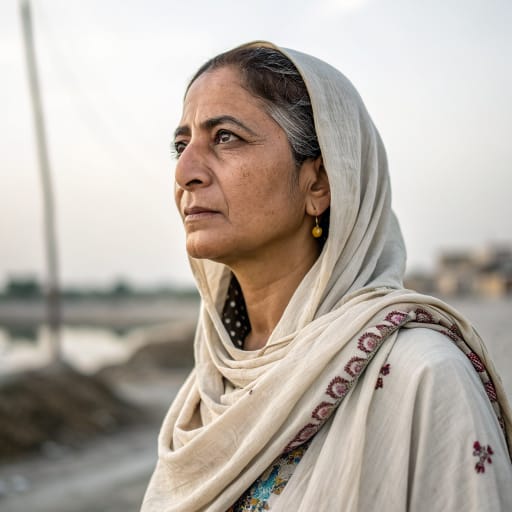
Does this portrait look right for Koraga?
Nobody has judged this one yet. You would be the first.
Koraga Erotic
Coastal Karnataka (Udupi and Dakshina Kannada districts) and Kasaragod district of Kerala, India
Koraga (Dravidian, close to Tulu); most also speak Tulu and Kannada
Ancestor and Tulu spirit worship blended with Hindu practice
Ande, Sappu and Vastra Koraga sections in colonial records; Onti and Mudu Koraga dialect groups; one of the Scheduled Tribes of Tulu Nadu
About Koraga People
The Koraga are among the smallest and most marginalized peoples of Tulu Nadu, the coastal strip of southwestern India where the Western Ghats drop toward the Arabian Sea. The 2011 census counted about sixteen thousand of them, mostly in the Udupi and Dakshina Kannada districts of Karnataka and in Kasaragod district, just across the border in Kerala. For centuries other people decided who they were: the basket makers, the drummers, the people other castes would not touch. India now lists them as a Particularly Vulnerable Tribal Group, a label that shows how much of that history they still carry.
Their own language, also called Koraga, is Dravidian and sits close to Tulu, the main language of the coast. It has no script of its own and has several distinct dialects. Most speakers also use Tulu or Kannada with neighbors, officials and teachers. It is considered endangered.
Basketry is the craft most tied to the name. Koraga households have long woven forest creepers, cane and bamboo into winnowing trays, storage baskets and carriers for local markets, a living now squeezed by plastics and limits on forest access. Drumming at local festivals was another inherited role. Colonial ethnographers recorded sections of the community named for the humiliations forced on them. Among them were the Ande Koraga, made to hang a pot from the neck so they would not spit on the road. Under a practice called ajalu, Koragas were fed food mixed with hair or nail clippings to draw bad luck away from a higher-caste household. Karnataka outlawed it only in 2000.
Religious life follows the spirit worship of the Tulu coast more than temple Hinduism, with ancestors and local spirits honored alongside Hindu festivals. The sharpest irony concerns Koragajja, a spirit said to have been a Koraga youth. Households of many castes across Tulu Nadu now make offerings to Koragajja, often liquor and betel. Koraga oral tradition traces the community to Hubashika, a chief remembered for once ruling the region before he was overthrown. Families belong to clans that must marry outside themselves, and descent is traced through the mother.
The present is a story of slow, hard gains: first-generation graduates, community federations pushing for land and schooling, and a population small enough that each census count reads like a verdict on its survival.
Related ethnic groups
Groups that share Koraga's homeland, region, language, or religious tradition. These are likely candidates for comparative phenotype reference.
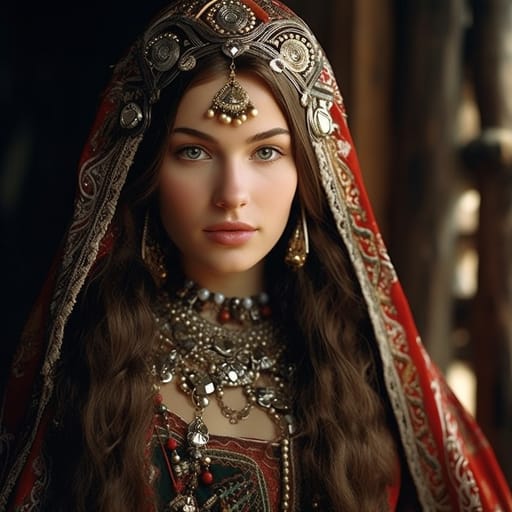
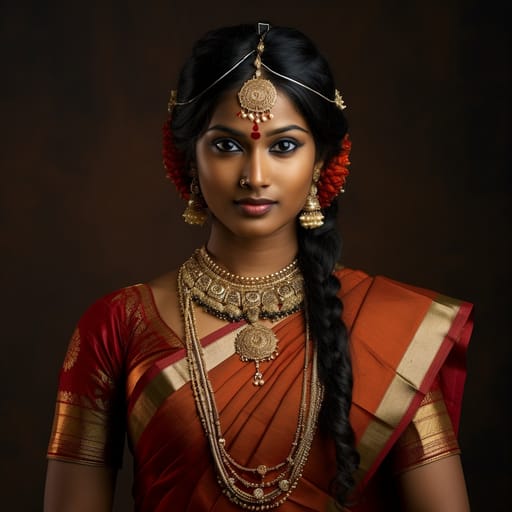
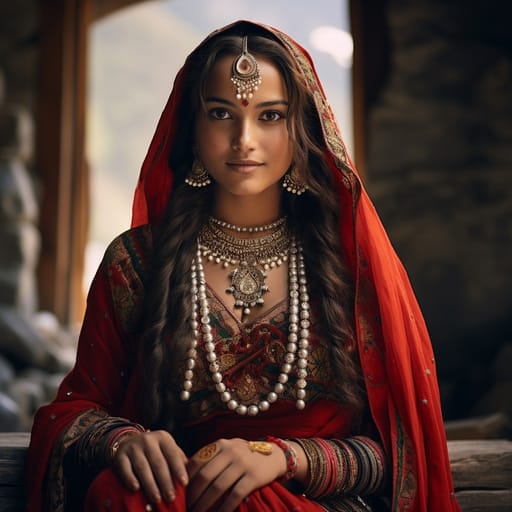
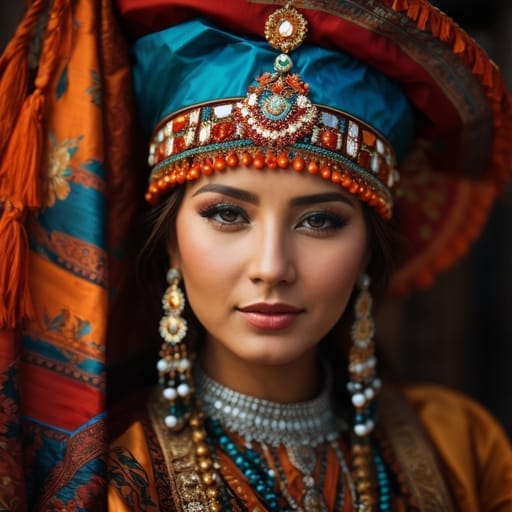
Typical Koraga Phenotypes
Reference for AI generation: hair, eyes, skin, facial structure, build
Koraga Body & Anatomy Reference
Per-feature anatomical profile for AI nude generation: Indo-Aryan / Dravidian South Asian phenotype
Koraga Boobs & Breasts
The typical Koraga bust is medium-to-large cup, moderate-to-full projection, in line with the wider Indo-Aryan / Dravidian South Asian pattern. Areolas usually fall in the 32-46mm range, with medium-brown to dark-brown areolar pigmentation against the wheatish-to-brown skin tone. Compared with the smaller East Asian bust profile, Koraga breasts sit forward and are generally full and soft, generally fuller than the East Asian norm. A faithful AI render of Koraga tits keeps that shape and areola size.
Koraga Ass & Hips
Butt shape among Koraga women: medium-to-full, moderate-to-high projection, classic curvy hip profile, over medium-to-wide iliac crests, full gluteal-femoral fat distribution. This follows Indo-Aryan / Dravidian South Asian ancestry and looks quite unlike the slim hip profile of East Asian women. An accurate Koraga ass in adult AI imagery keeps both the silhouette and the overall build (endomorph-to-mesomorph with fuller hip deposition) instead of a generic average.
Koraga Vagina & Pussy
Vulvar anatomy among Koraga women: medium-brown to dark-brown labial pigmentation, fuller labia minora projection. Pubic hair tends to be straight-to-wavy coarse texture, dense distribution, in the usual inverted-triangle pattern. Both follow Indo-Aryan / Dravidian South Asian pigmentation, which is why Koraga pussy renders should not fall back on a pale, sparse Western template.
Koraga Dicks & Penis
The Koraga cock profile, from Indo-Aryan / Dravidian South Asian anthropometric data: regional mean ~13cm erect; moderate girth; medium-brown shaft pigmentation. Pubic hair has a straight-to-wavy coarse texture and forms the usual inverted-V pattern. Whether Koraga men are circumcised follows religious and cultural practice rather than phenotype.
Koraga Body, Curves & Build
Build and curves among Koraga women follow the Indo-Aryan / Dravidian South Asian pattern: endomorph-to-mesomorph with fuller hip deposition, mean adult female BMI 22-25. Proportions matter as much as skin tone, so Koraga figures should keep their regional height and limb ratios.
Koraga Skin Tone & Hair Texture
The Koraga skin range is wheatish to brown (Fitzpatrick III-V), and hair tends to be straight-to-wavy 1A-2B, dense, dark-brown to black. That combination marks the Indo-Aryan / Dravidian South Asian phenotype, and skin tone is the trait AI generators most often get wrong for Koraga women.
Explore phenotype categories
Structured taxonomy with peer-reviewed scales · 22 anatomical categories
Erotic Poses & Sex Positions
From the pose catalog: 219 named positions with reference skeletons
Frequently asked questions about Koraga people
Where is the Koraga homeland?
The Koraga homeland is Coastal Karnataka (Udupi and Dakshina Kannada districts) and Kasaragod district of Kerala, India in Southern Asia.
What language do Koraga people speak?
Koraga people primarily speak Koraga (Dravidian, close to Tulu); most also speak Tulu and Kannada.
What religion do Koraga people practice?
The predominant religion among Koraga people is Ancestor and Tulu spirit worship blended with Hindu practice.






Make your own Koraga images
Five a day, free, no credits to buy. The studio starts from this group's phenotype data, so you can set body type, pose and style and keep the traits accurate.
Start with Koraga