Help us get this right
Does this portrait look right for Bhadala?
Nobody has judged this one yet. You would be the first.
Bhadala Erotic
Coastal Kutch and Saurashtra in Gujarat, India, especially the ports of Mandvi, Mundra and Salaya; a smaller community in Sindh, Pakistan, mainly around Karachi.
Kutchi (Indo-Aryan, close to Sindhi); Gujarati widely used in India, Sindhi and Urdu in Pakistan.
Sunni Islam, with a long tradition of saint shrines along the coast and a growing reformist current.
One of the seafaring communities of the Gujarat coast, alongside the Hindu Kharwa and Muslim Wagher; endogamous, organized port by port under local jamat councils; Indian and Pakistani branches.
About Bhadala People
The Bhadala are a people of the sea. Along the coast of Kutch and Saurashtra in the Indian state of Gujarat, the name is shorthand for Muslim sailor: the men who crew, captain and sometimes own the big wooden cargo vessels that still leave ports like Mandvi, Mundra and Salaya for the Gulf and the Horn of Africa. A smaller branch lives in Sindh, mostly around Karachi, a separation made permanent by Partition in 1947. Community tradition places their origins in Sindh, and their speech fits the story. The Bhadala speak Kutchi, an Indo-Aryan language closer to Sindhi than to the Gujarati of the state around them, though most also use Gujarati for school, paperwork and business.
They are Sunni Muslims, and faith is tangled up with the working calendar. The southwest monsoon closes the Arabian Sea to wooden ships for roughly a third of the year, so the boats are laid up, the men come home, and weddings, repairs and community business get packed into the rainy months. When the sea opens again, the port quarters empty of working-age men for long stretches, and households are run by women and elders. The coast is dotted with shrines to saints credited with protecting sailors, and a visit before a voyage was long routine. That habit is now contested. Ethnographers working in Mandvi have described how shipowning families who prospered in the Gulf trade took up a stricter, reformist Islam and used it to challenge both shrine culture and the inherited rank of families claiming descent from the Prophet.
The Bhadala marry within the community and settle disputes through a jamat, a caste council that also handles welfare and religious affairs in each port. On neighboring waterfronts work the Hindu Kharwa and the Muslim Wagher, seafaring castes with their own councils and their own quarters. Within the Bhadala the sharper line is economic. A few owner families hold the ships and the contracts, most men sign on as crew or go fishing, and boys have traditionally learned the trade young, in the shipyards or as deckhands. The Indian Ocean dhow trade is often written about as something that ended. For the Bhadala it did not. The vessels have engines now, and the holds carry foodstuffs, vehicles and general goods instead of dates and ivory, but the crews come from the same families.
Related ethnic groups
Groups that share Bhadala's homeland, region, language, or religious tradition. These are likely candidates for comparative phenotype reference.
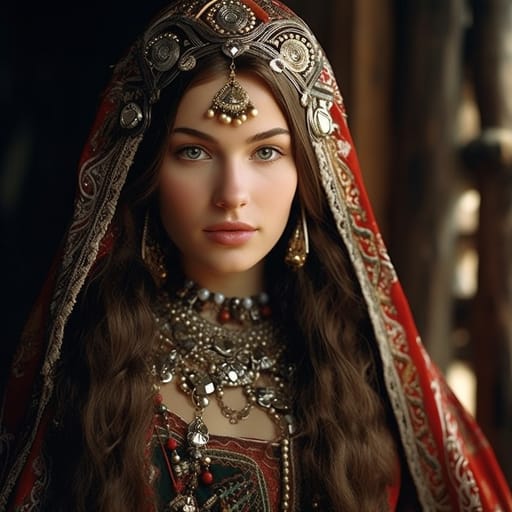
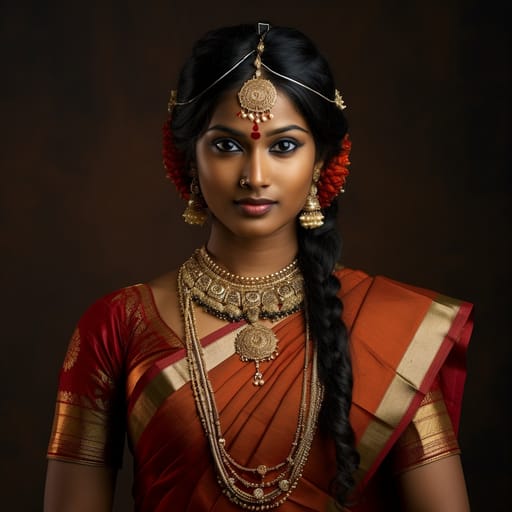
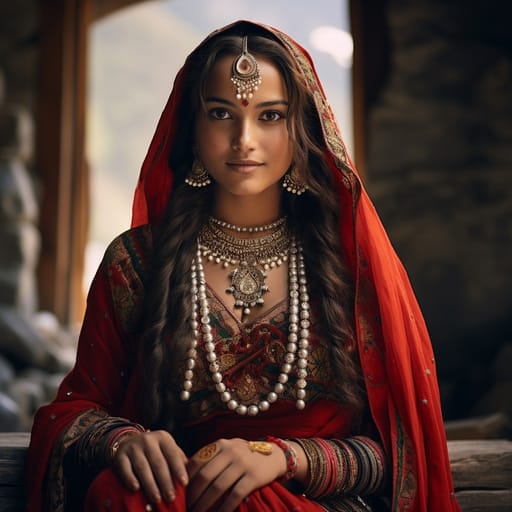
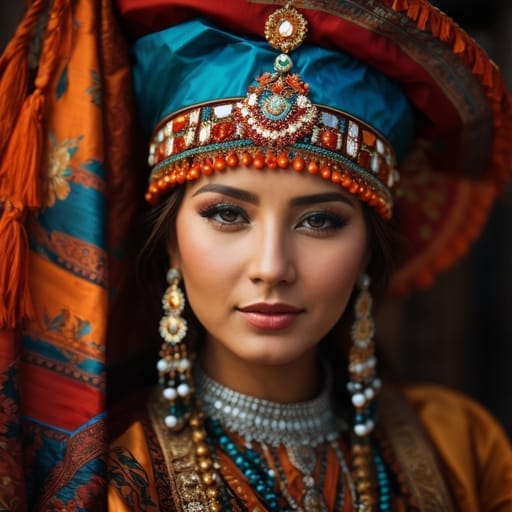
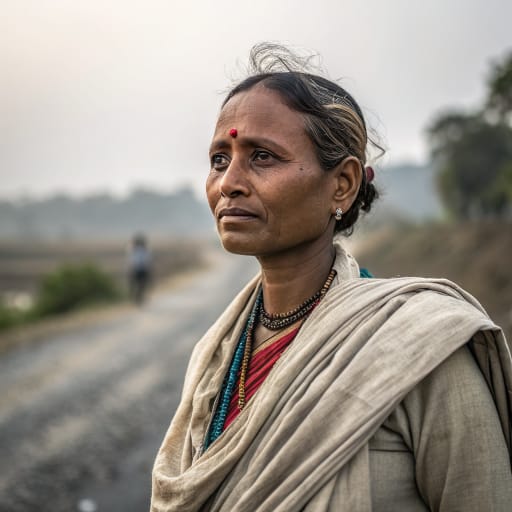
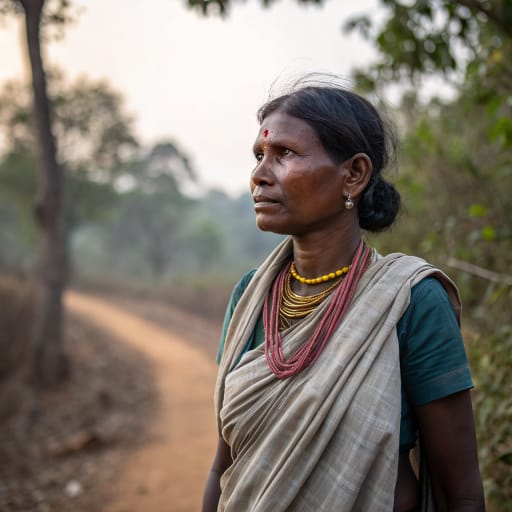
Typical Bhadala Phenotypes
Reference for AI generation: hair, eyes, skin, facial structure, build
Bhadala Body & Anatomy Reference
Indo-Aryan / Dravidian South Asian phenotype: anatomy reference for AI nude generation
Bhadala Boobs & Breasts
The typical Bhadala bust is medium-to-large cup, moderate-to-full projection, in line with the wider Indo-Aryan / Dravidian South Asian pattern. Areolas usually fall in the 32-46mm range, with medium-brown to dark-brown areolar pigmentation against the wheatish-to-brown skin tone. Compared with the smaller East Asian bust profile, Bhadala breasts sit forward and are generally full and soft, generally fuller than the East Asian norm. A faithful AI render of Bhadala tits keeps that shape and areola size.
Bhadala Ass & Hips
Butt shape among Bhadala women: medium-to-full, moderate-to-high projection, classic curvy hip profile, over medium-to-wide iliac crests, full gluteal-femoral fat distribution. This follows Indo-Aryan / Dravidian South Asian ancestry and looks quite unlike the slim hip profile of East Asian women. An accurate Bhadala ass in adult AI imagery keeps both the silhouette and the overall build (endomorph-to-mesomorph with fuller hip deposition) instead of a generic average.
Bhadala Vagina & Pussy
Vulvar anatomy among Bhadala women: medium-brown to dark-brown labial pigmentation, fuller labia minora projection. Pubic hair tends to be straight-to-wavy coarse texture, dense distribution, in the usual inverted-triangle pattern. Both follow Indo-Aryan / Dravidian South Asian pigmentation, which is why Bhadala pussy renders should not fall back on a pale, sparse Western template.
Bhadala Dicks & Penis
The Bhadala cock profile, from Indo-Aryan / Dravidian South Asian anthropometric data: regional mean ~13cm erect; moderate girth; medium-brown shaft pigmentation. Pubic hair has a straight-to-wavy coarse texture and forms the usual inverted-V pattern. Whether Bhadala men are circumcised follows religious and cultural practice rather than phenotype.
Bhadala Body, Curves & Build
Build and curves among Bhadala women follow the Indo-Aryan / Dravidian South Asian pattern: endomorph-to-mesomorph with fuller hip deposition, mean adult female BMI 22-25. Proportions matter as much as skin tone, so Bhadala figures should keep their regional height and limb ratios.
Bhadala Skin Tone & Hair Texture
The Bhadala skin range is wheatish to brown (Fitzpatrick III-V), and hair tends to be straight-to-wavy 1A-2B, dense, dark-brown to black. That combination marks the Indo-Aryan / Dravidian South Asian phenotype, and skin tone is the trait AI generators most often get wrong for Bhadala women.
Explore phenotype categories
Structured taxonomy with peer-reviewed scales · 22 anatomical categories
Erotic Poses & Sex Positions
From the pose catalog: 219 named positions with reference skeletons
Frequently asked questions about Bhadala people
Where is the Bhadala homeland?
The Bhadala homeland is Coastal Kutch and Saurashtra in Gujarat, India, especially the ports of Mandvi, Mundra and Salaya; a smaller community in Sindh, Pakistan, mainly around Karachi. in Southern Asia.
What language do Bhadala people speak?
Bhadala people primarily speak Kutchi (Indo-Aryan, close to Sindhi); Gujarati widely used in India, Sindhi and Urdu in Pakistan..
What religion do Bhadala people practice?
The predominant religion among Bhadala people is Sunni Islam, with a long tradition of saint shrines along the coast and a growing reformist current..






Make your own Bhadala images
Five a day, free, no credits to buy. The studio starts from this group's phenotype data, so you can set body type, pose and style and keep the traits accurate.
Start with Bhadala