No portrait yet
Muhajirs Erotic
Urban Sindh, Pakistan, above all Karachi, with Hyderabad, Sukkur, and Mirpurkhas; ancestral origins across northern and central India
Urdu (Indo-Aryan, Indo-European); Gujarati, Memoni, and Kutchi among some trading communities
Islam, mostly Sunni Hanafi, with a significant Shia minority; Ismaili Khoja and Dawoodi Bohra communities among Gujarati-origin groups
Defined by origin rather than lineage: families from Uttar Pradesh (United Provinces), Bihar, Delhi, Hyderabad Deccan, Gujarat, and central India; Memon, Khoja, and Bohra trading communities often included
About Muhajirs People
Muhajirs are the one major community in Pakistan defined not by ancestral soil but by a journey. The name is Arabic for migrant, and it deliberately echoes the hijra, the Prophet's move from Mecca to Medina, which is how the first generation understood what they were doing when they crossed the new border in 1947. They came from the United Provinces, Bihar, Delhi, Hyderabad Deccan, Gujarat, and the Central Provinces, and most of them got off the trains and ships in Sindh. Karachi, Hyderabad, Sukkur, and Mirpurkhas absorbed them, and Karachi became a Muhajir city almost overnight. Their descendants are still there, and that is where the story mostly plays out.
What binds a Bihari railway clerk's grandson to a Hyderabadi nawab's granddaughter is Urdu. It is an Indo-Aryan language, close kin to Hindi in grammar but written in a Persian-derived script and drawing its literary vocabulary from Persian and Arabic. Pakistan made it the national language, which put Muhajirs in the odd position of being native speakers of a tongue their neighbors learned at school, while Sindhi, Punjabi, and Pashto stayed the languages of home elsewhere. That fluency, plus a head start in education and administration under the British, gave the first generation an outsized share of the civil service, banking, and the professions. Islam is near-universal, mostly Sunni of the Hanafi school, with a visible Shia minority whose Muharram processions in Karachi owe much to Lucknow. Gujarati-origin trading communities, the Memons, Khojas, and Bohras, are often counted as Muhajir by migration even where they keep their own languages and sects.
The inflection point came in 1973, when Sindh introduced a quota for government jobs and university seats that split urban from rural applicants. Muhajirs read it as a ceiling, and the resentment produced the Muhajir Qaumi Movement in 1984, which turned Karachi into a one-party city and then into a battlefield for much of two decades. The identity hardened in those years. Before them, many families would simply have called themselves Urdu-speaking.
The culture the migrants carried is that of the old Mughal successor cities. The mushaira, or poetry gathering, still fills halls in Karachi. The courtesy code of Lucknow, tehzeeb, survives in how elders are addressed. The kitchen is the most durable archive of all: Karachi biryani, nihari, haleem, and paan after dinner are Muhajir contributions the rest of Pakistan has adopted without always crediting the source. Weddings bring the older dress back out, the wide-legged gharara for brides and the sherwani for grooms, garments that point to Delhi and Awadh even in a family that has been Karachi-born for three generations.
Related ethnic groups
Groups that share Muhajirs's homeland, region, language, or religious tradition. These are likely candidates for comparative phenotype reference.
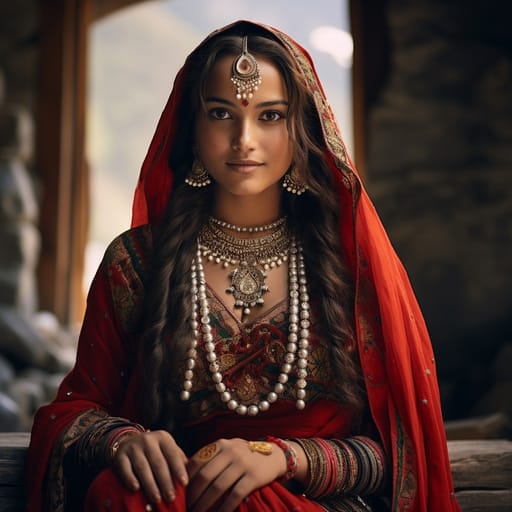
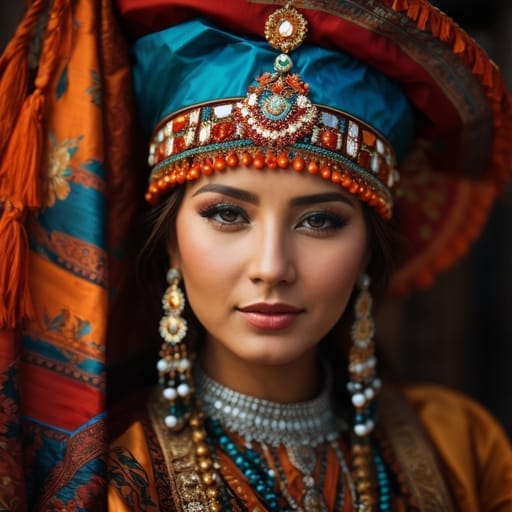
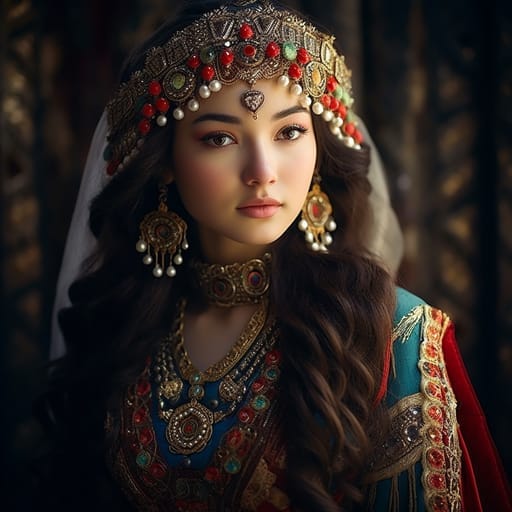
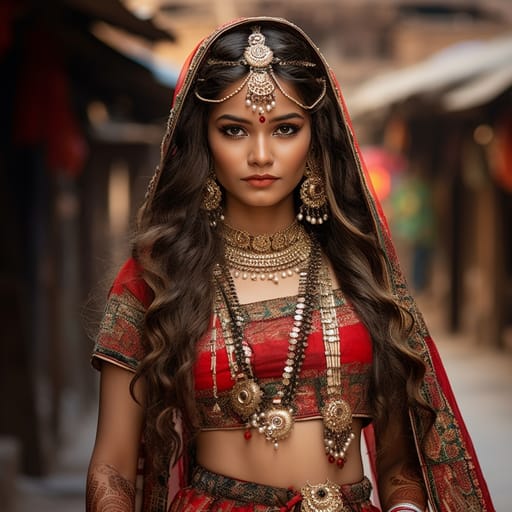
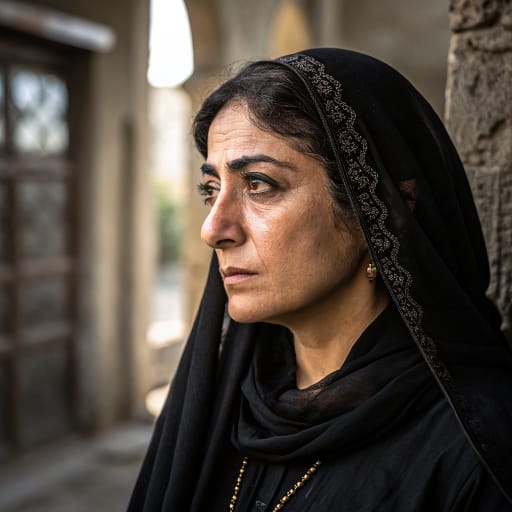
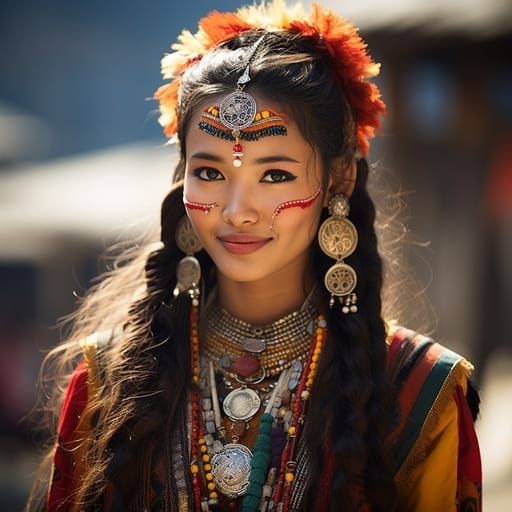
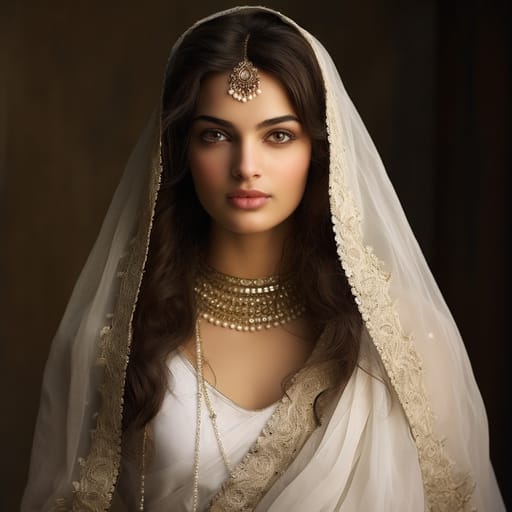
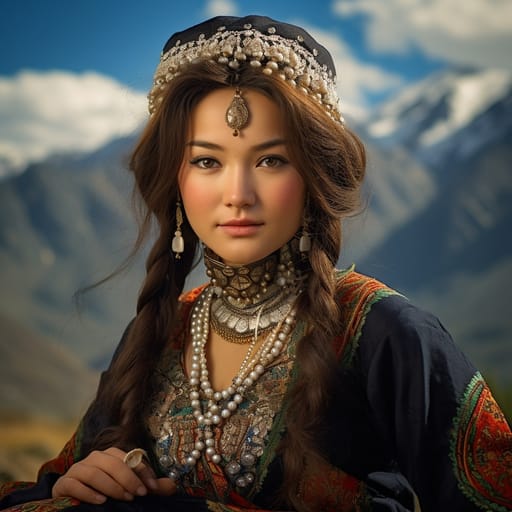
Typical Muhajirs Phenotypes
Reference for AI generation: hair, eyes, skin, facial structure, build
Muhajirs Body & Anatomy Reference
Anatomy by feature, Indo-Aryan / Dravidian South Asian phenotype
Muhajirs Boobs & Breasts
The typical Muhajirs bust is medium-to-large cup, moderate-to-full projection, in line with the wider Indo-Aryan / Dravidian South Asian pattern. Areolas usually fall in the 32-46mm range, with medium-brown to dark-brown areolar pigmentation against the wheatish-to-brown skin tone. Compared with the smaller East Asian bust profile, Muhajirs breasts sit forward and are generally full and soft, generally fuller than the East Asian norm. A faithful AI render of Muhajirs tits keeps that shape and areola size.
Muhajirs Ass & Hips
Butt shape among Muhajirs women: medium-to-full, moderate-to-high projection, classic curvy hip profile, over medium-to-wide iliac crests, full gluteal-femoral fat distribution. This follows Indo-Aryan / Dravidian South Asian ancestry and looks quite unlike the slim hip profile of East Asian women. An accurate Muhajirs ass in adult AI imagery keeps both the silhouette and the overall build (endomorph-to-mesomorph with fuller hip deposition) instead of a generic average.
Muhajirs Vagina & Pussy
Vulvar anatomy among Muhajirs women: medium-brown to dark-brown labial pigmentation, fuller labia minora projection. Pubic hair tends to be straight-to-wavy coarse texture, dense distribution, in the usual inverted-triangle pattern. Both follow Indo-Aryan / Dravidian South Asian pigmentation, which is why Muhajirs pussy renders should not fall back on a pale, sparse Western template.
Muhajirs Dicks & Penis
The Muhajirs cock profile, from Indo-Aryan / Dravidian South Asian anthropometric data: regional mean ~13cm erect; moderate girth; medium-brown shaft pigmentation. Pubic hair has a straight-to-wavy coarse texture and forms the usual inverted-V pattern. Whether Muhajirs men are circumcised follows religious and cultural practice rather than phenotype.
Muhajirs Body, Curves & Build
Build and curves among Muhajirs women follow the Indo-Aryan / Dravidian South Asian pattern: endomorph-to-mesomorph with fuller hip deposition, mean adult female BMI 22-25. Proportions matter as much as skin tone, so Muhajirs figures should keep their regional height and limb ratios.
Muhajirs Skin Tone & Hair Texture
The Muhajirs skin range is wheatish to brown (Fitzpatrick III-V), and hair tends to be straight-to-wavy 1A-2B, dense, dark-brown to black. That combination marks the Indo-Aryan / Dravidian South Asian phenotype, and skin tone is the trait AI generators most often get wrong for Muhajirs women.
Explore phenotype categories
Structured taxonomy with peer-reviewed scales · 22 anatomical categories
Erotic Poses & Sex Positions
From the pose catalog: 219 named positions with reference skeletons
Frequently asked questions about Muhajirs people
Where is the Muhajirs homeland?
The Muhajirs homeland is Urban Sindh, Pakistan, above all Karachi, with Hyderabad, Sukkur, and Mirpurkhas; ancestral origins across northern and central India in Southern Asia.
What language do Muhajirs people speak?
Muhajirs people primarily speak Urdu (Indo-Aryan, Indo-European); Gujarati, Memoni, and Kutchi among some trading communities.
What religion do Muhajirs people practice?
The predominant religion among Muhajirs people is Islam, mostly Sunni Hanafi, with a significant Shia minority; Ismaili Khoja and Dawoodi Bohra communities among Gujarati-origin groups.






Make your own Muhajirs images
Five a day, free, no credits to buy. The studio starts from this group's phenotype data, so you can set body type, pose and style and keep the traits accurate.
Start with Muhajirs