No portrait yet
Mogaveera Erotic
Coastal Karnataka, India, chiefly Udupi, Dakshina Kannada and Uttara Kannada districts, with communities in Kasaragod, Kerala, and a long established population in Mumbai
Tulu (Dravidian) along most of the coast; Kannada (Dravidian) around Kundapur and farther north
Hinduism, with Tulu daiva (spirit) worship and serpent worship
Tulu speaking and Kannada speaking branches, organized into exogamous matrilineal clans (bari); one of the Tuluva communities of coastal Karnataka
About Mogaveera People
Along the Karnataka coast, the Mogaveera are the people of the boats. Fishing has always set them apart: hauling shore seines by hand, launching country craft from the beaches of Udupi and Dakshina Kannada, and, since mechanization arrived, crewing the trawlers that pack harbors like Malpe and Mangalore. The men have traditionally gone to sea. The women have run the other half of the trade, buying at the landing and selling in town markets. A Mogaveera fisherwoman haggling over a basket of mackerel is as much a picture of the community as any boatman.
Most Mogaveera speak Tulu, the Dravidian language of the coastal belt called Tulu Nadu, which they share with neighbors such as the Bunts and Billavas. Farther north, around Kundapur and into Uttara Kannada, the community speaks Kannada, which is also the language of school and government across the state. Like other Tulu communities, Mogaveera families traditionally traced inheritance and descent through the mother under the aliyasantana system, and every family belongs to an exogamous clan, or bari. Those clan names live on as surnames that are common along the coast: Suvarna, Salian, Karkera, Bangera, Kotian, Puthran, Kunder. Marrying inside your own bari is still widely treated as off limits.
The community is Hindu, and its religion stays close to the ground. The Mahalakshmi temple at Uchila, managed by the Mogaveera Mahajana Sangha, serves as both a spiritual and an organizational center for the community. Next to the temple gods stand the daivas, the spirit guardians of Tulu tradition, honored in overnight rituals where a performer takes on the spirit and speaks for it. Bobbarya, a daiva that local tradition links with seafarers, has a strong following among fishing families, and serpent shrines are kept as well. When the monsoon ban on fishing lifts, crews make offerings to the sea before the boats go out, because nobody on this coast takes the water for granted.
In the twentieth century many Mogaveera men went to Bombay for work and sent money home. The migrants built their own institutions there. Among them are the Mogaveera Vyavasthapaka Mandali, which runs schools, and a cooperative bank that carries the community name. The Mumbai branch is still closely tied to the home villages. Education and local politics have since widened what a Mogaveera life can look like, but the harbor at dawn, with its auctions, ice trucks and bargaining, is still recognizably theirs.
Related ethnic groups
Groups that share Mogaveera's homeland, region, language, or religious tradition. These are likely candidates for comparative phenotype reference.
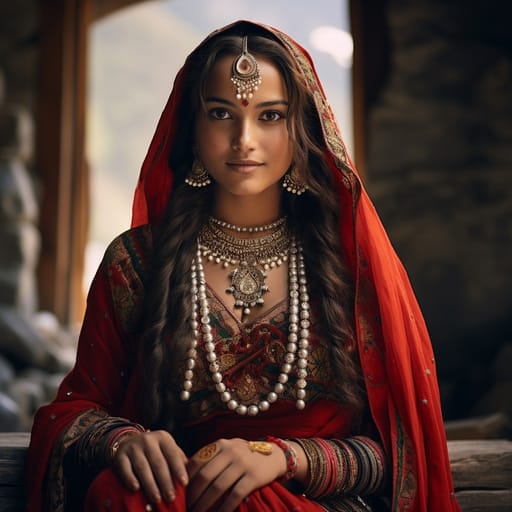
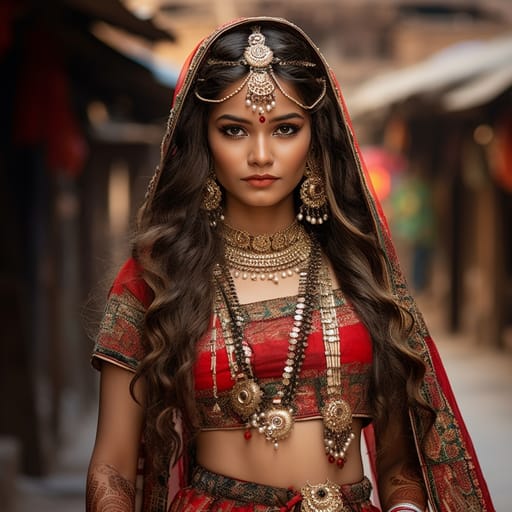
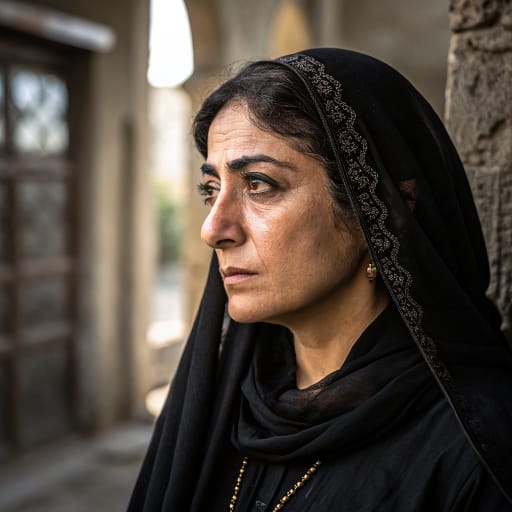
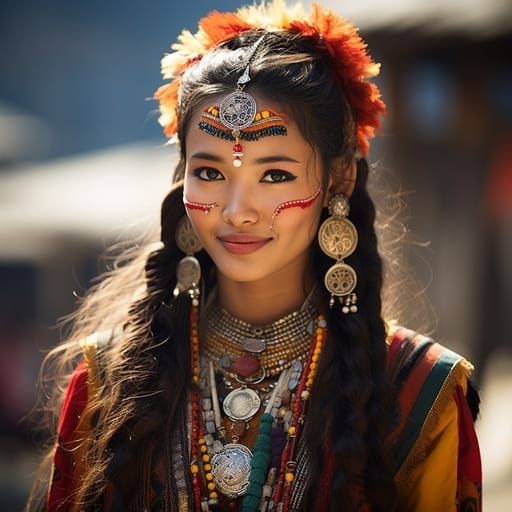
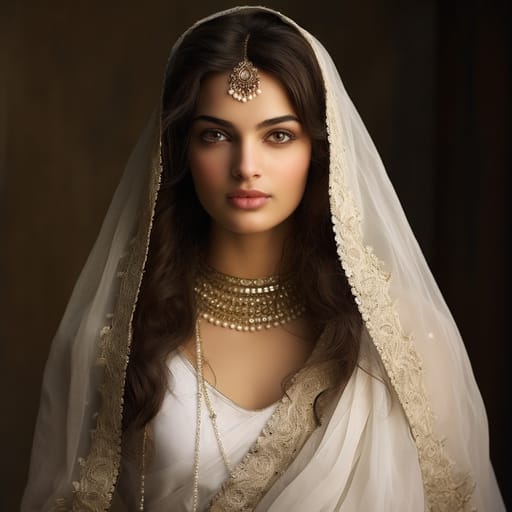
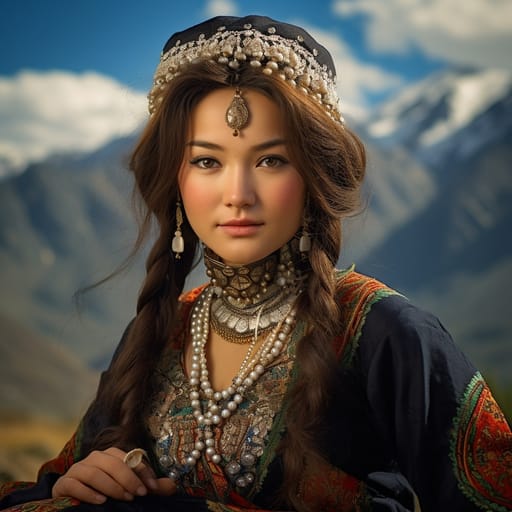
Typical Mogaveera Phenotypes
Reference for AI generation: hair, eyes, skin, facial structure, build
Mogaveera Body & Anatomy Reference
Per-feature anatomical profile for AI nude generation: Indo-Aryan / Dravidian South Asian phenotype
Mogaveera Boobs & Breasts
The typical Mogaveera bust is medium-to-large cup, moderate-to-full projection, in line with the wider Indo-Aryan / Dravidian South Asian pattern. Areolas usually fall in the 32-46mm range, with medium-brown to dark-brown areolar pigmentation against the wheatish-to-brown skin tone. Compared with the smaller East Asian bust profile, Mogaveera breasts sit forward and are generally full and soft, generally fuller than the East Asian norm. A faithful AI render of Mogaveera tits keeps that shape and areola size.
Mogaveera Ass & Hips
Butt shape among Mogaveera women: medium-to-full, moderate-to-high projection, classic curvy hip profile, over medium-to-wide iliac crests, full gluteal-femoral fat distribution. This follows Indo-Aryan / Dravidian South Asian ancestry and looks quite unlike the slim hip profile of East Asian women. An accurate Mogaveera ass in adult AI imagery keeps both the silhouette and the overall build (endomorph-to-mesomorph with fuller hip deposition) instead of a generic average.
Mogaveera Vagina & Pussy
Vulvar anatomy among Mogaveera women: medium-brown to dark-brown labial pigmentation, fuller labia minora projection. Pubic hair tends to be straight-to-wavy coarse texture, dense distribution, in the usual inverted-triangle pattern. Both follow Indo-Aryan / Dravidian South Asian pigmentation, which is why Mogaveera pussy renders should not fall back on a pale, sparse Western template.
Mogaveera Dicks & Penis
The Mogaveera cock profile, from Indo-Aryan / Dravidian South Asian anthropometric data: regional mean ~13cm erect; moderate girth; medium-brown shaft pigmentation. Pubic hair has a straight-to-wavy coarse texture and forms the usual inverted-V pattern. Whether Mogaveera men are circumcised follows religious and cultural practice rather than phenotype.
Mogaveera Body, Curves & Build
Build and curves among Mogaveera women follow the Indo-Aryan / Dravidian South Asian pattern: endomorph-to-mesomorph with fuller hip deposition, mean adult female BMI 22-25. Proportions matter as much as skin tone, so Mogaveera figures should keep their regional height and limb ratios.
Mogaveera Skin Tone & Hair Texture
The Mogaveera skin range is wheatish to brown (Fitzpatrick III-V), and hair tends to be straight-to-wavy 1A-2B, dense, dark-brown to black. That combination marks the Indo-Aryan / Dravidian South Asian phenotype, and skin tone is the trait AI generators most often get wrong for Mogaveera women.
Explore phenotype categories
Structured taxonomy with peer-reviewed scales · 22 anatomical categories
Erotic Poses & Sex Positions
From the pose catalog: 219 named positions with reference skeletons
Frequently asked questions about Mogaveera people
Where is the Mogaveera homeland?
The Mogaveera homeland is Coastal Karnataka, India, chiefly Udupi, Dakshina Kannada and Uttara Kannada districts, with communities in Kasaragod, Kerala, and a long established population in Mumbai in Southern Asia.
What language do Mogaveera people speak?
Mogaveera people primarily speak Tulu (Dravidian) along most of the coast; Kannada (Dravidian) around Kundapur and farther north.
What religion do Mogaveera people practice?
The predominant religion among Mogaveera people is Hinduism, with Tulu daiva (spirit) worship and serpent worship.






Make your own Mogaveera images
Five a day, free, no credits to buy. The studio starts from this group's phenotype data, so you can set body type, pose and style and keep the traits accurate.
Start with Mogaveera