Help us get this right
Does this portrait look right for Gaud Saraswat Brahmins?
Nobody has judged this one yet. You would be the first.
Gaud Saraswat Brahmins Erotic
The Konkan coast of western India: Goa, coastal Karnataka, coastal Maharashtra including Mumbai, and parts of coastal Kerala.
Konkani (Indo-Aryan, Indo-European), written variously in Devanagari, Kannada or Roman script; Marathi, Kannada, Malayalam and English are widely used alongside it.
Hinduism. Smarta households follow the Kavale Math, Vaishnava households the Kashi Math and the Gokarna Partagali Jeevottam Math.
Part of the wider Saraswat Brahmin category, counted among the Pancha Gauda divisions. Internal branches include Shenvi, Bardeskar, Sashtikar, Kudaldeshkar and Pednekar. Distinct from the Chitrapur Saraswats, who follow their own math.
About Gaud Saraswat Brahmins People
You can place a Gaud Saraswat family by three things: the language they argue in, the temple they answer to, and the fish on the table. The language is Konkani, an Indo-Aryan tongue on a coast whose other languages are mostly Dravidian, and Saraswat Konkani has picked up Kannada, Malayalam, Marathi or Portuguese vocabulary depending on where a family came to rest. The temple is the kuladevata, almost always back in Goa: Mangeshi, Shantadurga, Mahalasa, Ramnath, Damodar. Families settled for three centuries in Mangaluru or Kochi still identify themselves by which of those deities is theirs, and still make the trip. The fish is the surprise. Brahmin communities elsewhere are vegetarian as a matter of course. Saraswats eat seafood and have a long-standing internal explanation for it involving famine and permission. Coconut, kokum and teppal do most of the seasoning work.
The name carries a claim: descent from Brahmins who lived along the Saraswati river and moved on when it dried, with Gaud placing them among the northern Brahmin divisions rather than the southern ones. Treat that as the community's account of itself. What is documented is what came after 1510. Portuguese rule and the Inquisition ended temple worship in the Old Conquests, and families carried their deities east across the river into Ponda, where Bijapur and later Maratha authority held. That is why so many of Goa's major temples now stand in one taluka. Others went further, down to Uttara Kannada, Udupi, Dakshina Kannada and the Kerala coast. A great many stayed and converted, which is why the Catholic Bamonns of Goa share surnames, villages and sometimes gotra with their Hindu relations. Unusually for Brahmins, the community moved into ledgers and trade rather than priesthood alone: Shenoy, Kamat, Prabhu, Nadkarni and Naik come from revenue and clerical offices or from village names, and by the early twentieth century Saraswat families in Mangalore and Udupi were founding banks that outgrew the region entirely. The community divides by monastery, Smarta households under Kavale, Vaishnava households under Kashi and Partagali, a split you can read off the forehead marks at a wedding. The year turns on Chavath, the Ganesh festival, with the matoli of forest fruit and leaf hung above the idol.
Related ethnic groups
Groups that share Gaud Saraswat Brahmins's homeland, region, language, or religious tradition. These are likely candidates for comparative phenotype reference.
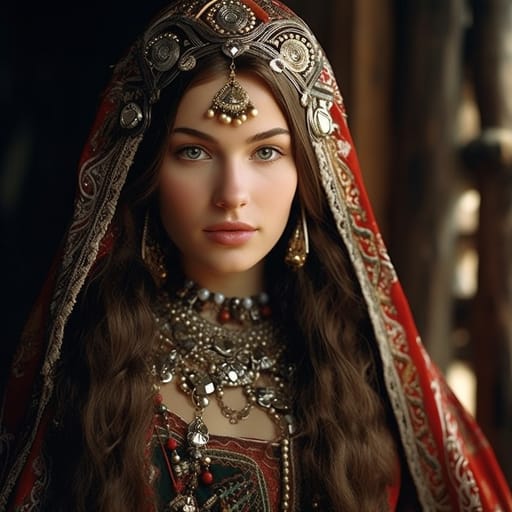
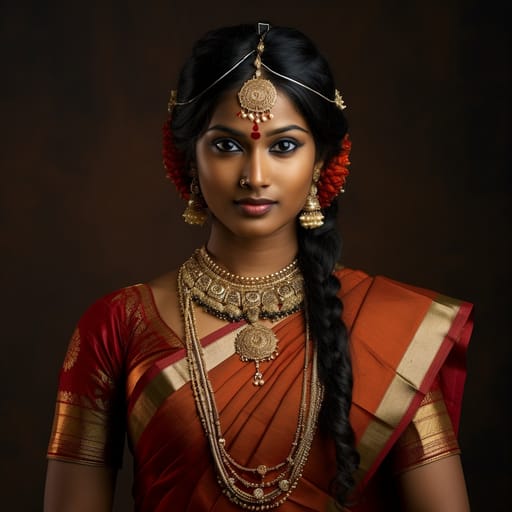
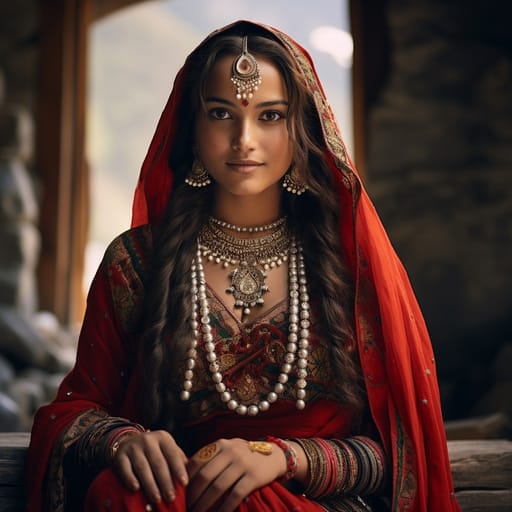
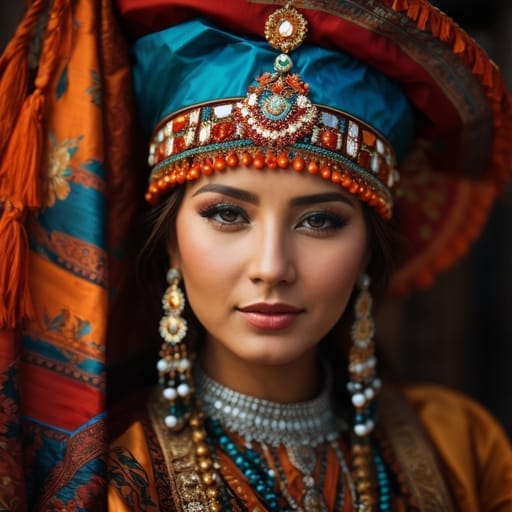
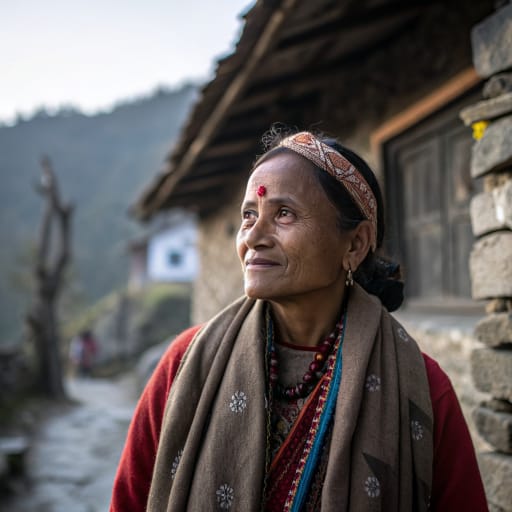
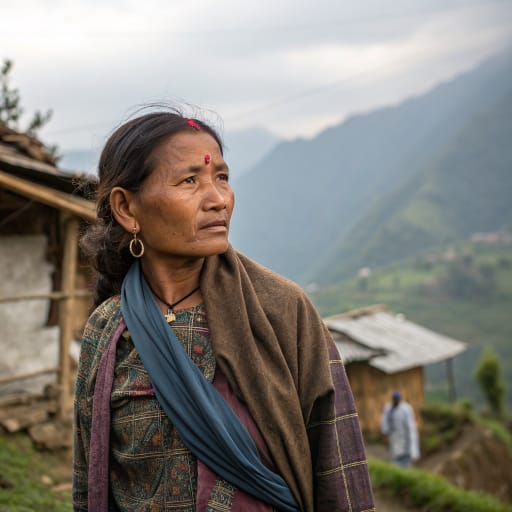
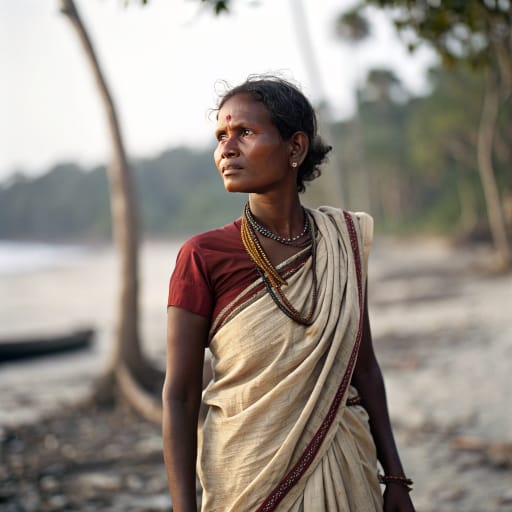
Typical Gaud Saraswat Brahmins Phenotypes
Reference for AI generation: hair, eyes, skin, facial structure, build
Gaud Saraswat Brahmins Body & Anatomy Reference
Indo-Aryan / Dravidian South Asian phenotype: anatomy reference for AI nude generation
Gaud Saraswat Brahmins Boobs & Breasts
The typical Gaud Saraswat Brahmins bust is medium-to-large cup, moderate-to-full projection, in line with the wider Indo-Aryan / Dravidian South Asian pattern. Areolas usually fall in the 32-46mm range, with medium-brown to dark-brown areolar pigmentation against the wheatish-to-brown skin tone. Compared with the smaller East Asian bust profile, Gaud Saraswat Brahmins breasts sit forward and are generally full and soft, generally fuller than the East Asian norm. A faithful AI render of Gaud Saraswat Brahmins tits keeps that shape and areola size.
Gaud Saraswat Brahmins Ass & Hips
Butt shape among Gaud Saraswat Brahmins women: medium-to-full, moderate-to-high projection, classic curvy hip profile, over medium-to-wide iliac crests, full gluteal-femoral fat distribution. This follows Indo-Aryan / Dravidian South Asian ancestry and looks quite unlike the slim hip profile of East Asian women. An accurate Gaud Saraswat Brahmins ass in adult AI imagery keeps both the silhouette and the overall build (endomorph-to-mesomorph with fuller hip deposition) instead of a generic average.
Gaud Saraswat Brahmins Vagina & Pussy
Vulvar anatomy among Gaud Saraswat Brahmins women: medium-brown to dark-brown labial pigmentation, fuller labia minora projection. Pubic hair tends to be straight-to-wavy coarse texture, dense distribution, in the usual inverted-triangle pattern. Both follow Indo-Aryan / Dravidian South Asian pigmentation, which is why Gaud Saraswat Brahmins pussy renders should not fall back on a pale, sparse Western template.
Gaud Saraswat Brahmins Dicks & Penis
The Gaud Saraswat Brahmins cock profile, from Indo-Aryan / Dravidian South Asian anthropometric data: regional mean ~13cm erect; moderate girth; medium-brown shaft pigmentation. Pubic hair has a straight-to-wavy coarse texture and forms the usual inverted-V pattern. Whether Gaud Saraswat Brahmins men are circumcised follows religious and cultural practice rather than phenotype.
Gaud Saraswat Brahmins Body, Curves & Build
Build and curves among Gaud Saraswat Brahmins women follow the Indo-Aryan / Dravidian South Asian pattern: endomorph-to-mesomorph with fuller hip deposition, mean adult female BMI 22-25. Proportions matter as much as skin tone, so Gaud Saraswat Brahmins figures should keep their regional height and limb ratios.
Gaud Saraswat Brahmins Skin Tone & Hair Texture
The Gaud Saraswat Brahmins skin range is wheatish to brown (Fitzpatrick III-V), and hair tends to be straight-to-wavy 1A-2B, dense, dark-brown to black. That combination marks the Indo-Aryan / Dravidian South Asian phenotype, and skin tone is the trait AI generators most often get wrong for Gaud Saraswat Brahmins women.
Explore phenotype categories
Structured taxonomy with peer-reviewed scales · 22 anatomical categories
Erotic Poses & Sex Positions
From the pose catalog: 219 named positions with reference skeletons
Frequently asked questions about Gaud Saraswat Brahmins people
Where is the Gaud Saraswat Brahmins homeland?
The Gaud Saraswat Brahmins homeland is The Konkan coast of western India: Goa, coastal Karnataka, coastal Maharashtra including Mumbai, and parts of coastal Kerala. in Southern Asia.
What language do Gaud Saraswat Brahmins people speak?
Gaud Saraswat Brahmins people primarily speak Konkani (Indo-Aryan, Indo-European), written variously in Devanagari, Kannada or Roman script; Marathi, Kannada, Malayalam and English are widely used alongside it..
What religion do Gaud Saraswat Brahmins people practice?
The predominant religion among Gaud Saraswat Brahmins people is Hinduism. Smarta households follow the Kavale Math, Vaishnava households the Kashi Math and the Gokarna Partagali Jeevottam Math..






Make your own Gaud Saraswat Brahmins images
Five a day, free, no credits to buy. The studio starts from this group's phenotype data, so you can set body type, pose and style and keep the traits accurate.
Start with Gaud Saraswat Brahmins