Help us get this right
Does this portrait look right for Parsis?
Nobody has judged this one yet. You would be the first.
Parsis Erotic
Indian subcontinent
Indo-European / Indo-Iranian / Indo-Aryan / Western / Gujarati languages / Gujarati
Zoroastrianism
India and Pakistan
About Parsis People
The Parsis are the descendants of Zoroastrian refugees who fled Sasanian Persia after the Arab conquest of the seventh century and settled along the coast of Gujarat. The community's founding legend has them arriving by sea at Sanjan and being granted asylum by a local Hindu king on conditions that became a kind of cultural contract: adopt the local language, dress the women in saris, lay down their weapons, hold weddings after dark. Whether the story is literal history or stylized memory, it captures something true about how the community settled in — Persian in faith and ritual, Gujarati in tongue and table. They speak Gujarati at home, write it in their own slightly distinctive register, and have done so for so many centuries that the older Persian liturgical vocabulary now sits inside the religion rather than the everyday.
Zoroastrianism shapes Parsi life in ways that are unusually concrete for a modern faith. The fire temple — the agiary — houses a consecrated flame that is, in the higher-grade temples, never allowed to go out, and only initiated Zoroastrians enter the inner sanctum. The navjote, performed in childhood, is the rite at which a person formally becomes Zoroastrian and begins wearing the sudreh and kusti, the white undershirt and woven cord that are tied and retied at prayer. Funerary practice is the custom outsiders most often hear about: the dead were traditionally exposed on the dakhmas, the towers of silence, to be consumed by vultures, on the principle that earth, water, and fire must not be polluted by a corpse. The collapse of South Asian vulture populations in recent decades has put that practice under genuine strain, and the community has been quietly negotiating with itself about alternatives.
The Parsis split historically into two liturgical calendars — Shahenshahi and Kadmi — and a later reform calendar, Fasli, which still divides observance in subtle ways. Under the British they became disproportionately prominent in Bombay's commercial and industrial life; the Tata family is the most famous example, but the pattern of mercantile and philanthropic activity ran much wider. Demographically the community is now small and shrinking, concentrated in Mumbai with a smaller branch in Karachi, and the question of who counts as Parsi — particularly the children of women who marry outside — is a live and unresolved internal debate.
Related ethnic groups
Groups that share Parsis's homeland, region, language, or religious tradition. These are likely candidates for comparative phenotype reference.
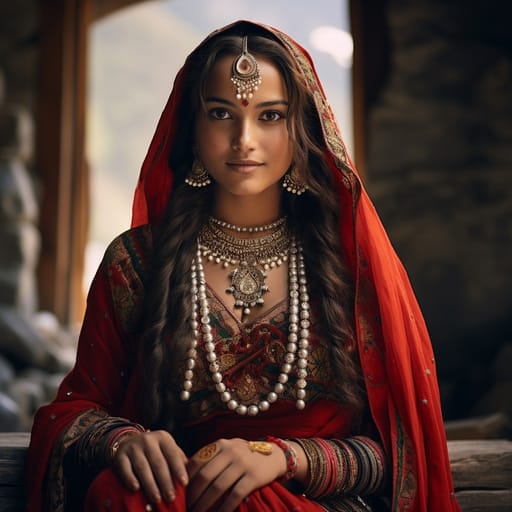
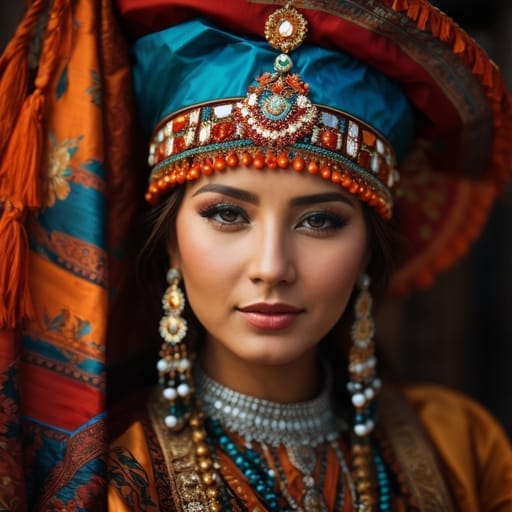
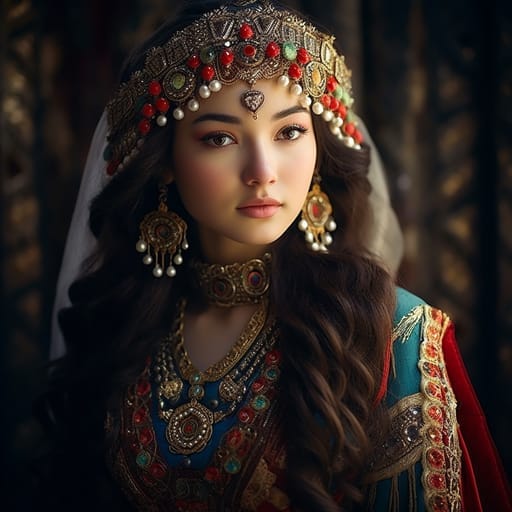
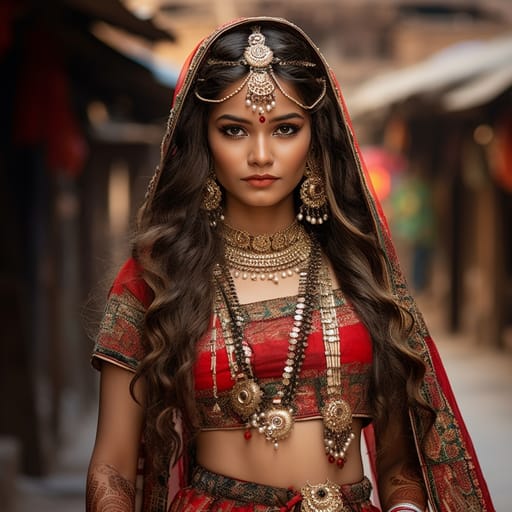
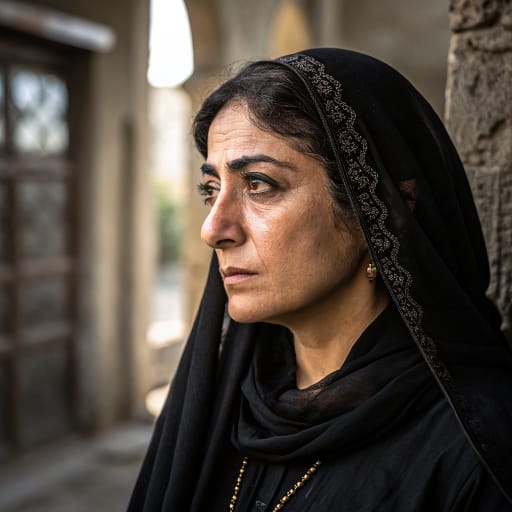
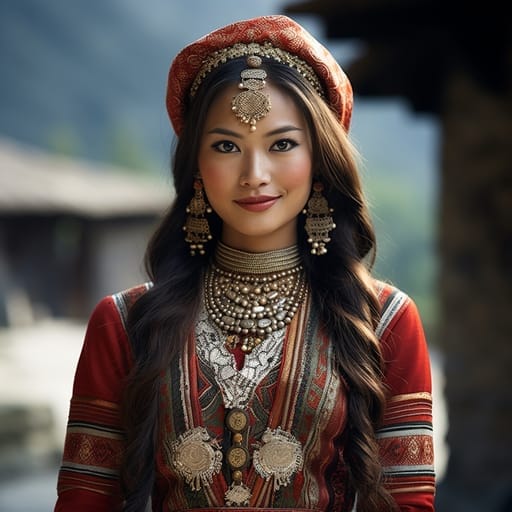
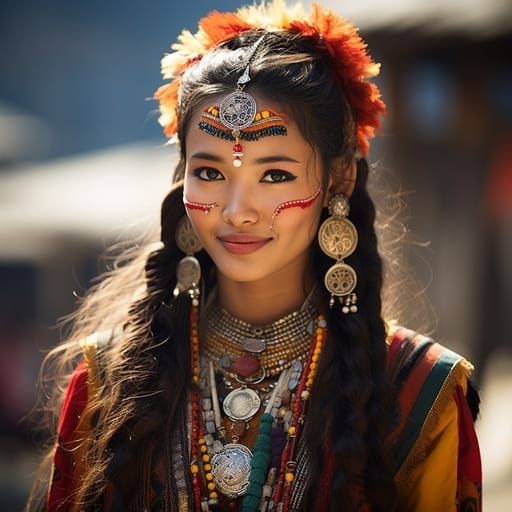
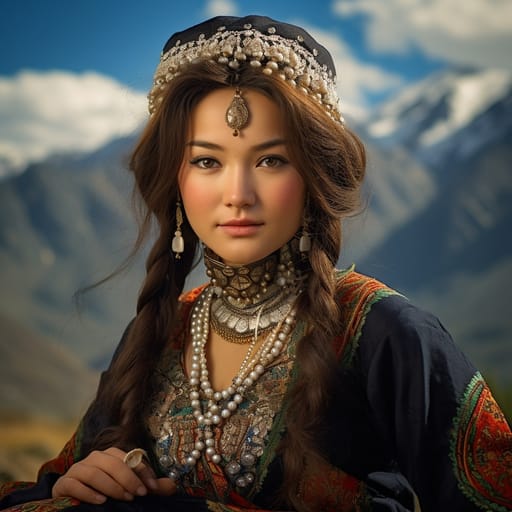
Typical Parsis Phenotypes
Reference for AI generation: hair, eyes, skin, facial structure, build
The Parsis are a small endogamous community descended from Persian Zoroastrians who fled to Gujarat between the 8th and 10th centuries, and roughly twelve centuries of marrying within the community has preserved a phenotype that reads visibly Iranian against the surrounding South Asian population. They look like what they are: West Asians transplanted into India.
Hair is typically dark brown to near-black, occasionally shading toward chestnut, with texture running straight to loosely wavy — tighter curl patterns are uncommon. Premature greying and early male-pattern recession are noted within the community, often visible by the late thirties. Facial and body hair is moderate to heavy by South Asian standards, and brows tend to be thick and well-defined, sometimes meeting at the bridge.
Eyes are usually dark brown, though hazel and grey-green appear at frequencies higher than in surrounding Gujarati or Marathi populations — a Persian inheritance. The lid is typically open and almond-shaped with no epicanthic fold, and the orbital ridge is more pronounced than in most Indian populations.
Skin tone clusters in Fitzpatrick III–IV — wheat to light olive with warm undertones — paler on average than neighbouring Gujaratis, and with a tendency to tan rather than burn. Darker IV–V complexions occur but are the minority. The face tends toward a long oval with a high forehead, prominent and often aquiline nose with a defined bridge and narrow alar base, deep-set eyes, and a clearly modeled chin. Lips are medium in fullness rather than thin or heavy. Cheekbones are present but not flat-planed in the East Asian sense; the overall facial geometry is angular and Iranian rather than rounded Indo-Aryan.
Build is usually medium-framed and lean to mesomorphic, with adult male stature commonly in the 170–180 cm range. The Indian and Pakistani branches are phenotypically near-identical — the community was geographically split by Partition rather than by descent, and figures like Zubin Mehta and the Wadia line carry the same template across both sides of the border.
Parsis Body & Anatomy Reference
Per-feature anatomical profile for AI nude generation: Indo-Aryan / Dravidian South Asian phenotype
Parsis Boobs & Breasts
Parsis boobs follow the Indo-Aryan / Dravidian South Asian profile: medium-to-large cup, moderate-to-full projection. Areolar diameter is usually 32-46mm, and the coloring is medium-brown to dark-brown areolar pigmentation against the wheatish-to-brown skin tone. Breast shape tracks body composition (endomorph-to-mesomorph with fuller hip deposition, mean adult female BMI 22-25), so Parsis breasts tend to be full and soft, generally fuller than the East Asian norm. Expect a forward-set shape, not the smaller East Asian bust profile.
Parsis Ass & Hips
Parsis ass and hip morphology presents as medium-to-full, moderate-to-high projection, classic curvy hip profile, distinctly different from the slim hip profile of East Asian women. The Parsis pelvic profile shows medium-to-wide iliac crests, full gluteal-femoral fat distribution, anchored in the Indo-Aryan / Dravidian South Asian skeletal pattern. Parsis butt shots in adult AI imagery should render the medium-to-full, moderate-to-high projection, classic curvy hip profile silhouette with the overall build (endomorph-to-mesomorph with fuller hip deposition) and the fat distribution typical of the Indo-Aryan / Dravidian South Asian phenotype.
Parsis Vagina & Pussy
Parsis pussy anatomy typically shows medium-brown to dark-brown labial pigmentation, fuller labia minora projection. Pubic hair is usually straight-to-wavy coarse texture, dense distribution. In AI-generated Parsis nudes, labial color should blend into the wheatish to brown skin with a gradual transition, and the hair should keep its straight-to-wavy coarse texture.
Parsis Dicks & Penis
Penis reference for Parsis men: regional mean ~13cm erect, moderate girth. Coloring: medium-brown shaft pigmentation. An accurate Parsis cock in AI imagery matches the surrounding wheatish to brown skin rather than a generic porn default. Circumcision depends on religion and custom, not ancestry.
Parsis Body, Curves & Build
The Parsis figure is generally endomorph-to-mesomorph with fuller hip deposition, with mean adult female BMI 22-25, characteristic of Indo-Aryan / Dravidian South Asian ancestry. AI image tools tend to flatten regional body types into a few stock shapes; here the Parsis build is kept as its own reference.
Parsis Skin Tone & Hair Texture
Skin: wheatish to brown (Fitzpatrick III-V). Hair: straight-to-wavy 1A-2B, dense, dark-brown to black. Both are typical of Indo-Aryan / Dravidian South Asian ancestry. The most common mistake in AI nudes of Parsis women is a body rendered lighter than the face.
Data depth
65/100Coverage of image-grounded phenotype observations · drives AI generation diversity
- Sample size
- 40/40· 51 images
- Image quality
- 15/30· 29% high
- Confidence
- 10/20· mean 0.67
- Source diversity
- 0/10· wikipedia
- ·Mostly low-quality source images
- ·Wikipedia-only source, not population-representative
Observed Distribution: Image Sample
Empirical observations from analyzed photographs · supplementary signal, not population truth
Sample: 51 images analyzed (51 wikipedia). Quality: 15 high, 21 medium, 13 low, 2 very_low. Avg analyzer confidence: 0.67.
Skin tone (Fitzpatrick): II (20%), III (27%), IV (51%), unclear (2%)
Hair color: gray/white (47%), black (37%), light/medium brown (6%), dark brown (4%), other (2%), unclear (4%)
Hair texture: straight (53%), wavy (25%), curly (2%), bald (2%), shaved (2%), covered (16%)
Eye color: dark brown (65%), brown (10%), blue (2%), unclear (24%)
Epicanthic fold: 0% present, 84% absent, 16% unclear
Caveats: Quality skews toward older or low-resolution photos; phenotype detail may be lossy. Sample is 100% Wikipedia notable people, which skews toward male, public-life, and modern figures, not population-representative.
Last aggregated: May 7, 2026
Explore phenotype categories
Structured taxonomy with peer-reviewed scales · 22 anatomical categories
- SkinFitzpatrick I to VI, undertone, pigmentation
- EyesColor, shape, eyelid, epicanthic fold
- Head hairColor, Andre Walker texture, hairline
- Body shapeHeath-Carter somatotype, WHR, frame
- NoseBridge, tip, nostril, alar width
- Lips & mouthVolume, Cupid’s bow, philtrum
Measured in Parsis portraits
Notable Parsis People
100 reference figures, sourced from Wikipedia
- Aban Pestonjee, Sri Lankan entrepreneur
- Adi Bulsara, physicist
- Adi Kanga, Indian Civil engineer, planned city of Navi Mumbai and Vashi bridge
- Ardaseer Cursetjee, of the Wadia shipbuilding family: first Indian elected Fellow of the Royal So…
- Ardeshir Darabshaw Shroff, Indian economist; delegate at the 1944 Bretton Woods Conference; co-author of…
- Ardeshir Godrej, Indian inventor; co-founder (with his brother Piroj) of the Godrej industries…
- Avabai Jamsetjee Jeejeebhoy, Lady: continued her husband Sir Jamsetji Jeejeebhoy philanthropic work; build…
- Ardeshir Cowasjee, Pakistani newspaper columnist, social activist, and philanthropist
- Byram Dinshawji Avari, Pakistan hotelier; founder and chairman of the Avari Group of companies
- Dinshaw Patel, Professor at Memorial Sloan Kettering; member of the National Academy of Scie…
- Zubin Damania, physician, comedian, internet personality, musician, and founder of Turntable…
- Byramjee Jeejeebhoy, Esq., CSI: Indian philanthropist and founder of B.J. Medical College, Pune
- Cowasjee Jehangir, Sir, Indian civil engineer; master constructor of Bombay
- Cowasji Shavaksha Dinshaw (Adenwalla), Indian entrepreneur
- Cowasji Jehangir Readymoney, Sir, (1812-1878): 1st Baronet, philanthropist, including various academic bui…
- Cyrus Chothia, molecular biologist
- Cyrus Pallonji Mistry, former chairman of Tata Group; Irish businessman
- Cyrus Poonawalla, Indian Industrialist, pharmacologist; co-founder of the Serum Institute of India
- Dhunjibhoy Bomanji, Sir (1862-1937): Indian Shipping Magnate, philanthropist
- Dinshaw Maneckji Petit, Sir, founded the first textile factories in India
- Dorabji Tata, Sir, Indian industrialist and philanthropist, Sir Dorab Tata Trust
- Fardunjee Marzban, publisher, founded the first vernacular newspaper on the Indian subcontinent …
- Feroze Gandhi, publisher of The National Herald and The Navjivan newspapers and husband of I…
- Framji Cowasji Banaji, Esq (1767 to 12 February 1851): merchant, philanthropist, lease holder of Powai
- Homi Jehangir Bhabha, nuclear scientist and first chairman of the Indian Atomic Energy Commission
- Homi Maneck Mehta, Sir, industrialist in textiles, insurance, banking, chemicals & sugar. Represented…
- Homi Nusserwanji Sethna, Padma Vibhushan awardee, chemical engineer; guided the development of India's…
- Jehangir Ratanji Dadabhoy (J. R. D.) Tata, industrialist; founder of Air India, India's first commercial airline
- Jamsetji Jeejeebhoy, Sir, opened sea trade with China; philanthropist, J J Hospital
- Jamsetji Tata, industrialist; founder of the Tata Group of companies, titled a "One-Man Plan…
- Jehangir Ghandy, Sir (1896-1972): built Tata Steel in Jamshedpur
- Jehangir Hormusjee Ruttonjee, industrialist; founded Hong Kong's first brewery; established the first anti-…
- Lovji Nusserwanjee Wadia, shipwright and naval architect; builder of the first dry-dock in Asia
- Nadirshaw Edulji Dinshaw, industrialist and philanthropist; NED Engineering College
- Nariman Mehta, organic chemist and inventor of bupropion, the most commonly used antidepress…
- Nergis Mavalvala, astrophysicist and professor at MIT
- Neville Wadia, businessman and son-in-law of Muhammad Ali Jinnah
- Nusli Wadia, chairman of the Wadia Group
- Ness Wadia, joint-managing director of Bombay Dyeing
- Noshir Gowadia, aircraft engineer and convicted spy
- Nowroji Saklatwala, Chairman of Tata group of companies from 1932 until his death by heart attack…
- Pallonji Mistry, construction tycoon
- Pirojsha Burjorji Godrej, entrepreneur; co-founder (with his brother Ardeshir) of the Godrej industrial…
- Ratan Tata, chairman emeritus of Tata Sons; former chairman of the Tata Group of companie…
- Russi Mody, former Chairman and Managing Director of Tata Steel Limited; son of Sir Homi …
- Rustom Jal Vakil, cardiologist
- Ratanji Dadabhoy Tata, a noted chairperson of Tata Group and Tata Sons; father of J. R. D. Tata
- Shenaz Treasury, actress and vlogger
- Shiraz Minwalla, theoretical physicist, string theorist
- Spenta R. Wadia, theoretical physicist
- Ratanji Tata, Sir: younger son of Jamsetji Tata; industrialist and philanthropist; Sir Rata…
- Villoo Morawala-Patell, MD of Avesthagen, Officer of the National Order of Merit holder
- Homi K. Bhabha, cultural-studies theorist; Professor, Harvard University
- Jamshed Bharucha, President, Cooper Union. Formerly, Dean of the Faculty of Arts & Sciences at …
- Mahzarin Banaji, Professor of Psychology, Harvard University
- Noshir Contractor, Award-winning Professor of Behavioral Sciences, Communication and Management …
- Rusi Taleyarkhan, Professor of Nuclear Engineering at Purdue University
- Rohinton Kamakaka, Professor of Molecular Cell Developmental biology at University of California…
- J.K. Mehta, Jamshed Kaikhusroo Mehta, known professionally as J.K. Mehta, was a well-rega…
- Thrity Umrigar, Armitage Professor of English at Case Western Reserve University
- N. H. Wadia, Prominent neurologist; Director of Neurology at Grant Medical College and Sir…
- Vistasp Karbhari, President, University of Texas at Arlington
- Homi Kharas, deputy director for the global economy and development program at the Brookin…
- Ness B. Shroff, Ohio Eminent Scholar of Networking and Communications, and Chaired Professor …
- Field Marshal, Sam Manekshaw (1914-2008): Former Indian Chief of Army Staff and the first In…
- Lieutenant General, FN Billimoria (1933-2005): Former Indian Army officer and head of Wellington …
- Admiral, Jal Cursetji (1919-1991): Former Chief of the Naval Staff, Indian Navy
- Air Marshal, Aspy Engineer (1912-2002): Former Chief of the Air Staff, Indian Air Force
- Vice Admiral, Rustom K. S. Ghandhi (1924-2014): Indian Navy Commander-in-Chief, Western Nav…
- Kavasji Jamshedji Petigara, First Indian Deputy Commissioner of the Mumbai Police
- J. P. B. Jeejeebhoy, first Indian pilot in the Royal Flying Corps
- Lieutenant Colonel, Ardeshir Tarapore (1923-1965):, Indian Army officer and commanding officer of…
- Air Chief Marshal, Fali Homi Major (born 1947): Former Chief of the Air Staff of the Indian Air …
- Major General, Cyrus Addie Pithawalla (born 1957): Recipient of the Ashoka Chakra
- Aban Marker Kabraji, Pakistani ecologist, Asian regional director of IUCN
- Amyra Dastur, model, film actress, television presenter
- Anaita Shroff Adajania, fashion stylist and film actress
- Alaya Furniturewala, model and film actress
- Aneela Mirza, or Anila Mirza (born 8 October 1974), Danish singer who has found success as …
- Ayesha Madon, Australian actress and singer
- Bapsi Sidhwa, author and screenwriter; vocal proponent of women's rights
- Behram "Busybee" Contractor, journalist and columnist
- Behramji Malabari, poet, publicist, author, and social reformer
- Bejan Daruwalla, astrologer
- Burjor Khurshedji Karanjia, Indian film journalist and editor, chairman NFDC
- Cyrus Broacha, MTV India VJ and stand-up comedian
- Cyrus Poncha, Asian Squash Federation Junior Coach of the Year 2003-04
- Deena M. Mistri, author and educationalist; recipient of Pakistan's "Pride of Performance" medal
- Diana Eduljee, first captain of the Indian women's Cricket team, from 1978 till 1993
- Diana Penty, actress and model
- Dinyar Contractor, Parsi stage actor, Comedian and Bollywood actor
- Dolly Nazir, swimmer
- Erick Avari, Hollywood actor.
- Farokh Engineer, cricketer.
- Farrukh Dhondy, novelist, short story writer, screenwriter, journalist.
- Li Gotami Govinda, Indian painter, photographer, writer and composer. (Converted to Tibetan Budd…
- Firdaus Kanga, author, actor and screenwriter.
- Freddie Mercury, rock musician and lead singer of Queen.
- Fredoon Kabraji, poet, writer, journalist, and artist writing in English.
- Gary Lawyer, singer-songwriter
Erotic Poses & Sex Positions
From the pose catalog: 219 named positions with reference skeletons
Frequently asked questions about Parsis people
Where is the Parsis homeland?
The Parsis homeland is Indian subcontinent in Southern Asia.
What language do Parsis people speak?
Parsis people primarily speak Indo-European / Indo-Iranian / Indo-Aryan / Western / Gujarati languages / Gujarati.
What religion do Parsis people practice?
The predominant religion among Parsis people is Zoroastrianism.






Make your own Parsis images
Five a day, free, no credits to buy. The studio starts from this group's phenotype data, so you can set body type, pose and style and keep the traits accurate.
Start with Parsis