Help us get this right
Does this portrait look right for Chuvash?
One tap. It takes a second and it is recorded.
0 say it looks right, 1 says it looks off.
Chuvash Erotic
Chuvashia (Russia)
Christianity / Eastern Orthodoxy
Virjal, Anatri
About Chuvash People
The Chuvash are the only living speakers of the Oghur branch of Turkic — the older, divergent wing of the family, separated from the Common Turkic of Tatar, Bashkir, Kazakh and Turkish by sound shifts so deep that a Chuvash speaker and a Tatar neighbour, despite living a few hundred kilometres apart along the Volga, cannot understand each other. Linguists treat the language as the last surviving relative of the speech of the medieval Volga Bulgars and, before them, the Hunnic-era steppe confederations whose other tongues vanished entirely. That single fact does most of the work of placing the Chuvash: a Turkic-speaking people who are not part of the Turkic-speaking world as it is usually drawn.
Their homeland sits on the right bank of the middle Volga, in the wooded steppe between Tatarstan and the Mari and Mordvin lands — a corridor that has changed hands repeatedly between Bulgar khans, the Golden Horde, the Khanate of Kazan, and Muscovy after Ivan IV took Kazan in 1552. The two main branches reflect this geography rather than any tribal split: the Virjal ("upper") in the forested north toward Nizhny Novgorod, the Anatri ("lower") in the more open south, with measurable differences in dialect, dress and, historically, household economy. A smaller transitional group, the Anat Enchi, sits between them.
Religiously the Chuvash are an oddity in their region. While the Tatars and Bashkirs adopted Islam from the Volga Bulgar period onward, the Chuvash were never thoroughly Islamised, and from the eighteenth century the Russian state pushed Orthodox Christianity through them with unusual energy. Most are nominally Orthodox today, but the older layer is unusually intact: a pre-Christian system built around Tură, a sky-deity, with a calendar of agrarian festivals — Çăvarni at winter's end, Akatuy at the start of ploughing, Şimĕk for the dead — that survived collectivisation and now structure village life again. Many households keep both traditions without seeing a contradiction.
The written language is comparatively young; it was systematised in the 1870s by the educator Ivan Yakovlev, who built a Cyrillic-based alphabet and a school network that still anchors Chuvash literary culture. Embroidery is the other portable tradition — dense red-and-black geometric work on women's shirts and headdresses, pattern grammars that until recently could be read for clan and district.
Related ethnic groups
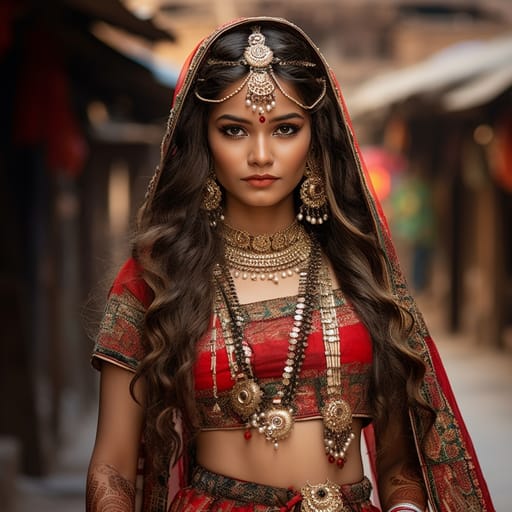
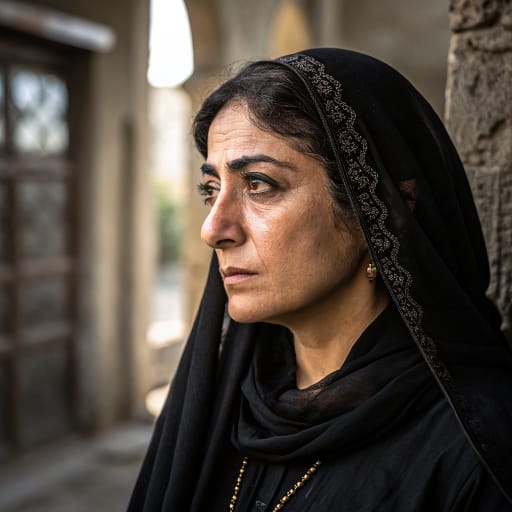
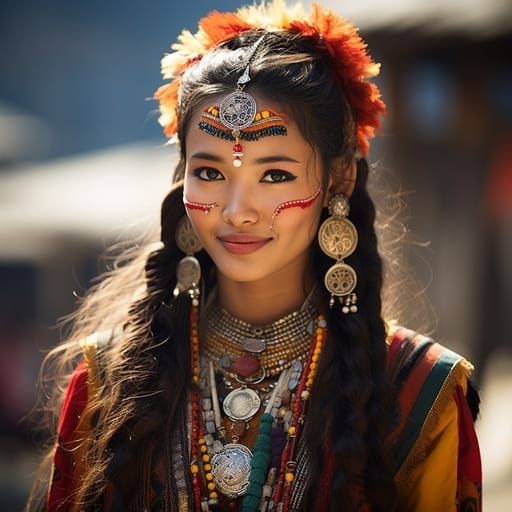
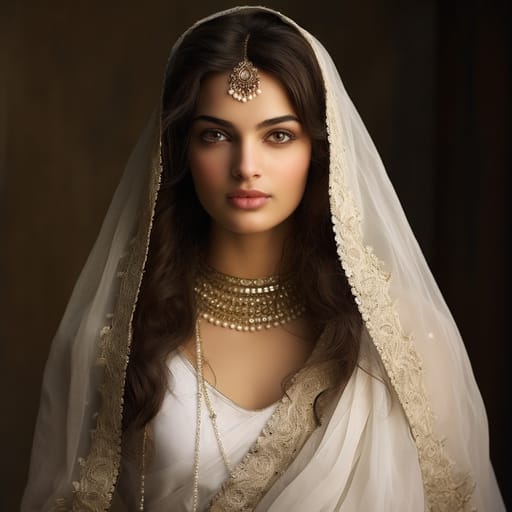
Groups that share Chuvash's homeland, region, language, or religious tradition. These are likely candidates for comparative phenotype reference.
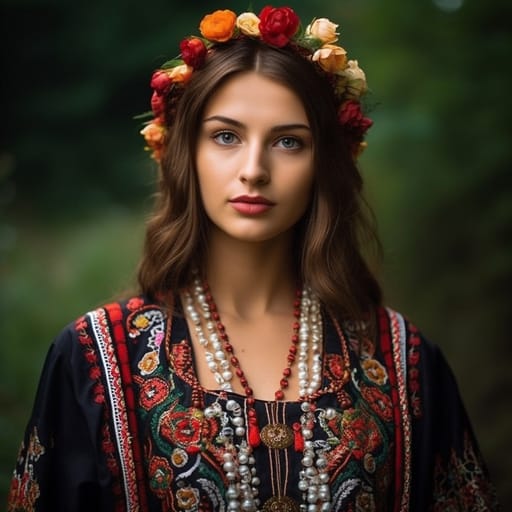
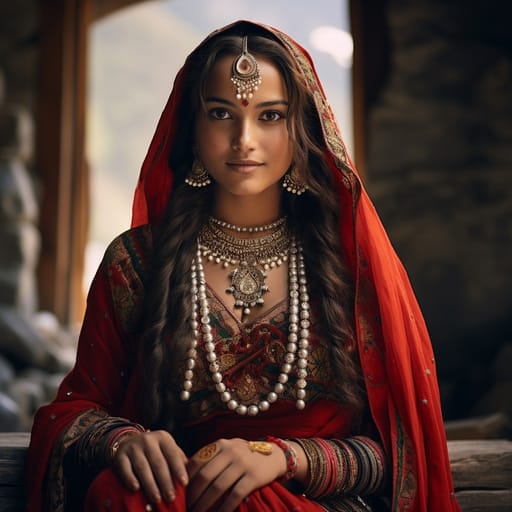
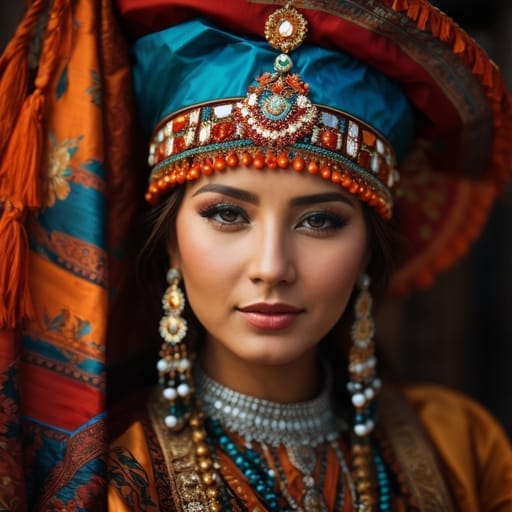
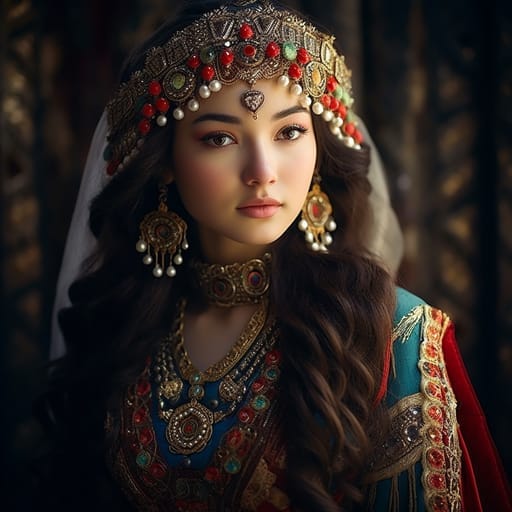
Typical Chuvash Phenotypes
Reference for AI generation: hair, eyes, skin, facial structure, build
The Chuvash sit at a phenotypic crossroads that reflects their unusual history: a Turkic-speaking population descended from the Volga Bulgars, layered onto Finno-Ugric substrate, with later Slavic admixture. The result is a population that looks neither classically Turkic nor classically East Slavic — most observers read them as a distinct middle Volga type, often lighter than expected for a Turkic group and broader-faced than expected for a Russian one.
Hair runs predominantly medium-to-dark brown, with a meaningful minority of dark blond and ash-brown shades — lighter than neighboring Tatars, darker than ethnic Russians of the same latitude. True black hair is uncommon. Texture is straight to gently wavy; tight curl is rare. Eye color is where the Finno-Ugric substrate shows clearly: gray, gray-blue, and gray-green dominate, with hazel and light brown filling out the range. Pure dark brown eyes occur but are not the default. Epicanthic folds appear at low but non-trivial frequency, usually as a subtle inner-corner fold rather than the full Mongoloid form — a quiet trace of the eastern ancestry rather than a defining feature.
Skin is typically Fitzpatrick II–III, fair with neutral-to-cool undertones, freckling on a noticeable share of redheads and lighter-haired individuals. Faces tend to be broad and somewhat flat in the midface, with moderately high but not sharp cheekbones, a straight nose of medium bridge height and modest alar width, and lips of average fullness — neither thin Northern European nor full Central Asian. The jaw is usually rounded rather than angular. Build runs short-to-medium by European standards, with men averaging roughly 170–172 cm; bodies trend stocky and compact rather than long-limbed, with a tendency toward solid musculature in working-age adults.
Between the two branches, the northern Virjal ("uplanders") tend to read slightly lighter in hair and eye color, while the southern Anatri ("lowlanders") show somewhat stronger Turkic and Tatar influence — a touch darker, with marginally higher epicanthic-fold frequency.
Data depth
0/100Coverage of image-grounded phenotype observations · drives AI generation diversity
- Sample size
- 0/40· 0 images
- Image quality
- 0/30· 0% high
- Confidence
- 0/20
- Source diversity
- 0/10
- ·No image observations yet
Explore phenotype categories
Structured taxonomy with peer-reviewed scales · 22 anatomical categories
Erotic Poses & Sex Positions
From the pose catalog: 219 named positions with reference skeletons
Frequently asked questions about Chuvash people
Where is the Chuvash homeland?
The Chuvash homeland is Chuvashia (Russia) in Southern Asia.
What language do Chuvash people speak?
Chuvash people primarily speak Turkic / Oghur / Chuvash.
What religion do Chuvash people practice?
The predominant religion among Chuvash people is Christianity / Eastern Orthodoxy.






Make your own Chuvash images
Five a day, free, no credits to buy. The studio starts from this group's phenotype data, so you can set body type, pose and style and keep the traits accurate.
Start with Chuvash