Help us get this right
Does this portrait look right for Angami Naga?
Nobody has judged this one yet. You would be the first.
Angami Naga Erotic
Kohima area, Nagaland, India
Christianity (Baptist); traditional rites
Southern, Western, Northern and Chakhroma Angami divisions
About Angami Naga People
The Angami are a Naga people of the hills around Kohima, the capital of Nagaland in northeast India. They speak Tenyidie (Angami), a Sino-Tibetan language of the Angami-Pochuri group, and number in the low hundreds of thousands. They are known for elaborate terraced wet-rice agriculture and for the Sekrenyi festival.
Society and subsistence
Unusually among the Naga, the Angami practise permanent terraced wet-rice cultivation on hillsides, alongside shifting cultivation, an intensive system that supported large, fortified villages such as Khonoma. Society was organised into clans and khels (village wards), with decision-making by consensus among elders. Their stone-lined rice terraces, watered by long channels led from hill streams, are among the most sophisticated indigenous engineering in the region. The ethnographer J.H. Hutton documented Angami life in detail in 1921. During the Second World War the Angami hills saw the fierce Battle of Kohima in 1944, a turning point in the wider Burma campaign fought around the town. Sekrenyi, a purification festival held early in the year, remains the principal ceremony. Christianity, again largely Baptist, predominates today, though ritual and communal traditions persist, and Khonoma is noted for community-led forest and wildlife conservation.
Appearance and adornment
Angami ceremonial dress is bold and martial. Men wore black cotton kilts studded with rows of cowrie shells, the number and pattern signalling war honours, together with red and black shawls and headgear of woven cane crowned with hornbill feathers, boar tusks and tufts of dyed hair. Conch-shell discs or brass ornaments were worn on the chest, with ivory armlets and strings of carnelian and glass beads. Spears with tassels of dyed goat hair completed the outfit. Rich carnelian bead necklaces and conch ornaments were treasured heirlooms passed down within families. Modern Western dress is now standard for daily life, with regalia worn at Sekrenyi and other festivals.
Related ethnic groups
Groups that share Angami Naga's homeland, region, language, or religious tradition. These are likely candidates for comparative phenotype reference.
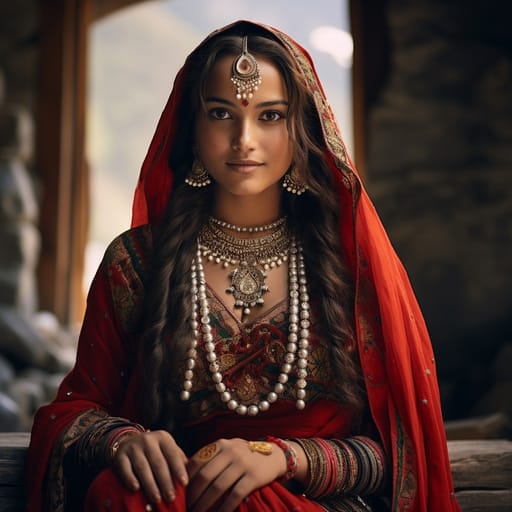
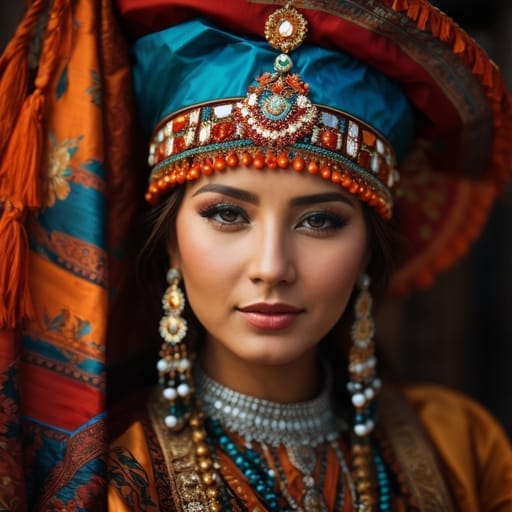
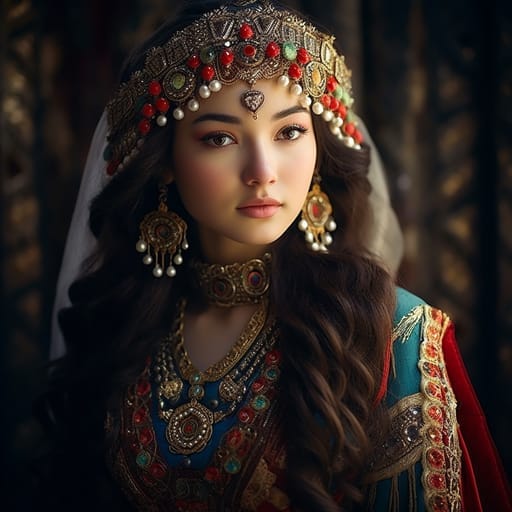

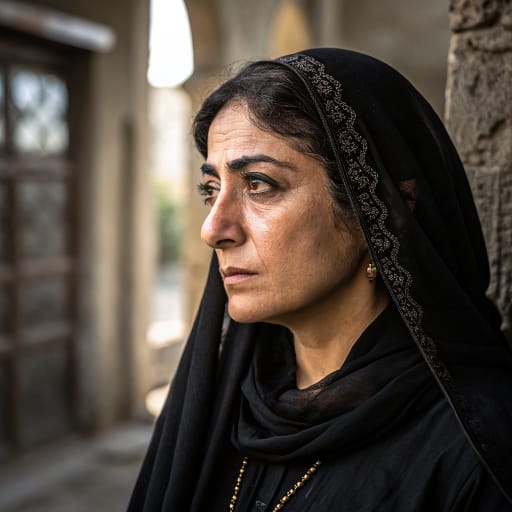
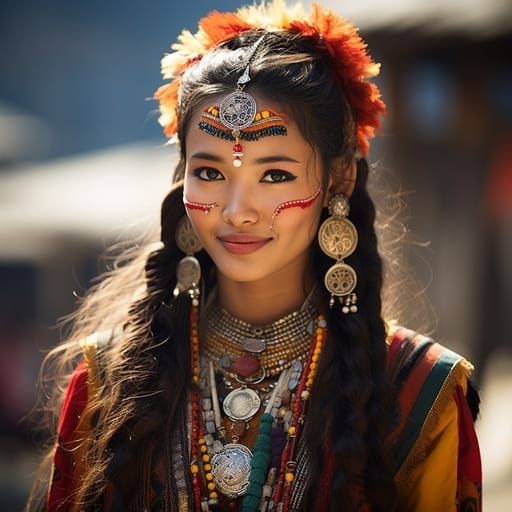
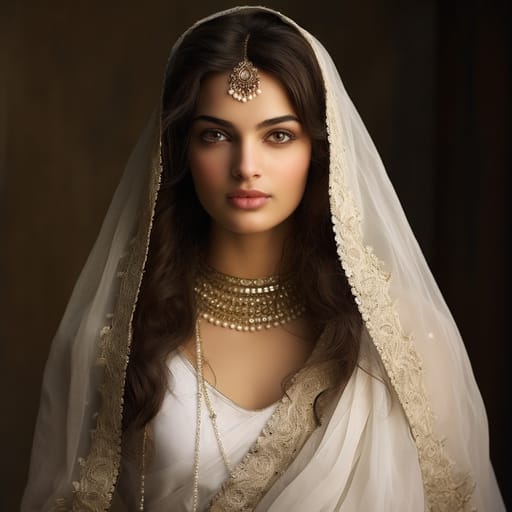
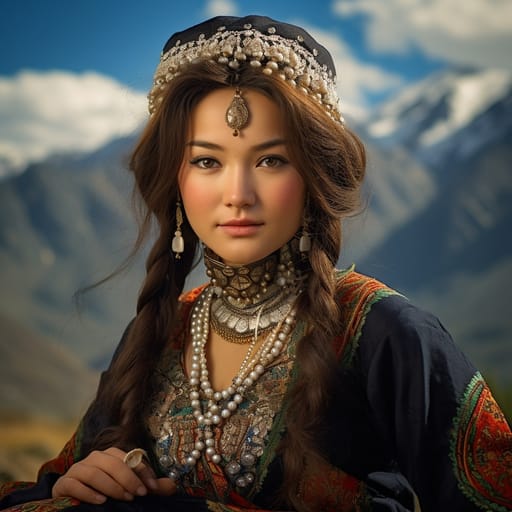
Typical Angami Naga Phenotypes
Reference for AI generation: hair, eyes, skin, facial structure, build
Explore phenotype categories
Structured taxonomy with peer-reviewed scales · 22 anatomical categories
Erotic Poses & Sex Positions
From the pose catalog: 219 named positions with reference skeletons
Frequently asked questions about Angami Naga people
Where is the Angami Naga homeland?
The Angami Naga homeland is Kohima area, Nagaland, India in Southern Asia.
What language do Angami Naga people speak?
Angami Naga people primarily speak Tenyidie / Angami (Sino-Tibetan, Angami-Pochuri).
What religion do Angami Naga people practice?
The predominant religion among Angami Naga people is Christianity (Baptist); traditional rites.






Make your own Angami Naga images
Five a day, free, no credits to buy. The studio starts from this group's phenotype data, so you can set body type, pose and style and keep the traits accurate.
Start with Angami Naga