Help us get this right
Does this portrait look right for Bethenici?
Nobody has judged this one yet. You would be the first.
Bethenici Erotic
The middle Elbe in what is now northeastern Germany, probably between the Prignitz and the Havel mouth, in today's Brandenburg and Saxony-Anhalt
Polabian dialect (West Slavic, Lechitic branch, Indo-European)
Slavic paganism; the region was Christianized by force between the 10th and 12th centuries, long after the tribe vanished from record
Elbe Slavs (Polabian Slavs); listed with the Smeldingi and Morizani; neighbors of the Linones and of the Obotrite and Wilzi confederations
About Bethenici People
The Bethenici were a small West Slavic people of the early ninth century, living somewhere on the middle Elbe in what is now northeastern Germany, and they survive today only as a name in two Frankish documents. No community claims descent from them. They dissolved into the wider Slavic population of the Elbe lands, which in turn was absorbed, over the following centuries, into the German-speaking population of Brandenburg, Saxony-Anhalt and Mecklenburg.
The whole written record fits in two lines. The annals of Charlemagne's court report that in 811 the emperor sent an army across the Elbe against the Linones and the Bethenici, at a moment when the tribes along the river were being pulled between Frankish power, the Danish king Godfred and the Slavic Wilzi confederation. A generation later the anonymous list known as the Bavarian Geographer groups them with the Smeldingi and the Morizani as holders of eleven civitates, the word Frankish clerks used for the timber-and-earth ring forts that anchored Slavic settlement east of the river. After that the name drops out of history. Their exact territory is still argued over. The pairing with the Linones, whose center was near Lenzen in the Prignitz, and with the Morizani near the Havel mouth, puts them somewhere along that stretch of the Elbe, but nobody has pinned them to a single site.
They spoke a Polabian dialect of the Lechitic branch of West Slavic, the same broad family as Polish, and close kin to the Polabian tongue that hung on in the Hanoverian Wendland until the eighteenth century, which is the best surviving hint of how they sounded. They were pagans. Christianity reached the Elbe Slavs by force and by stages: the Ottonian marches of the tenth century, the Slav uprising of 983 that threw the new bishoprics back across the river, and finally the Wendish Crusade of 1147 and the founding of the Margraviate of Brandenburg a decade later. By then the Bethenici had long since ceased to be a distinct group, and the people on their ground answered to other names, or simply to Wends, the catch-all Germans used for their Slavic neighbors.
Their legacy is diffuse but real. The village names of the region, thick with endings in -ow, -itz and -in, are Slavic, and the rural population of the Elbe borderlands carries a mixed Slavic and German ancestry that was never sorted out. The Bethenici stand for the many peoples of early medieval Europe who left nothing behind but a name copied by a monk who never met them.
Related ethnic groups
Groups that share Bethenici's homeland, region, language, or religious tradition. These are likely candidates for comparative phenotype reference.
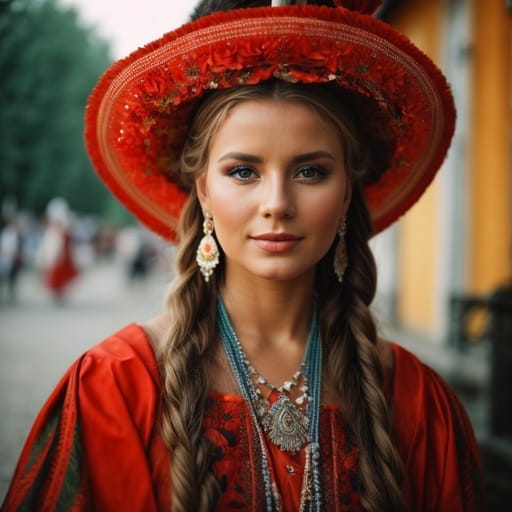
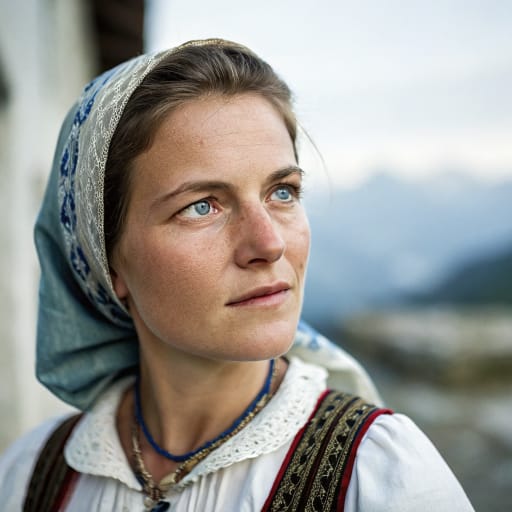
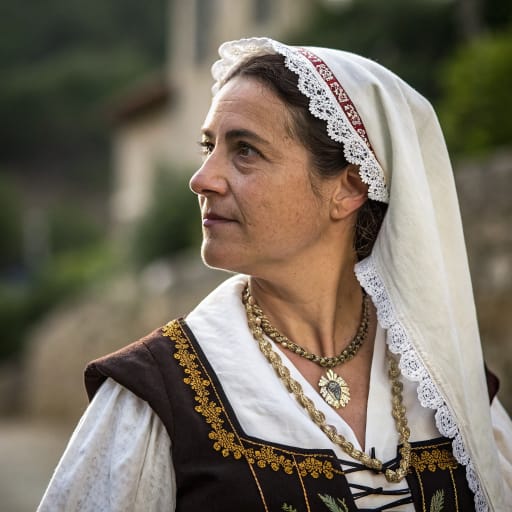
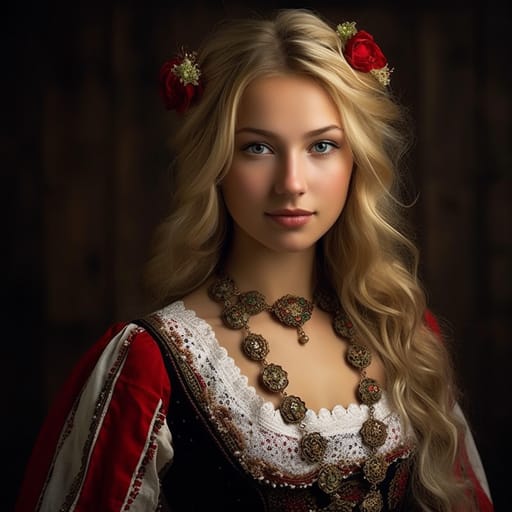
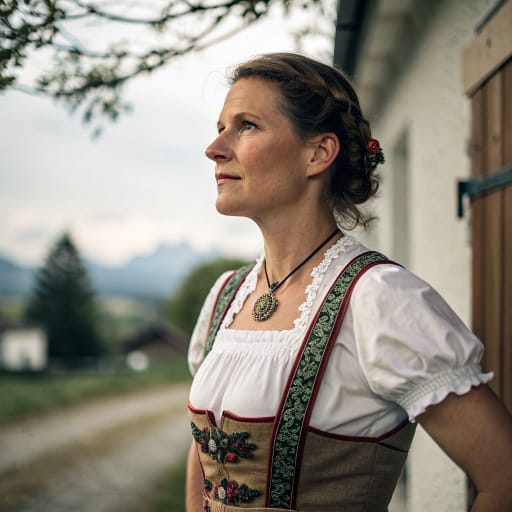

Typical Bethenici Phenotypes
Reference for AI generation: hair, eyes, skin, facial structure, build
Bethenici Body & Anatomy Reference
Per-feature anatomical profile for AI nude generation: Western European / Celtic-Germanic phenotype
Bethenici Boobs & Breasts
The typical Bethenici bust is medium-to-large cup, full, moderate-to-high projection, in line with the wider Western European / Celtic-Germanic pattern. Areolas usually fall in the 30-46mm range, with light-pink to medium-pink areolar pigmentation against the fair-to-light skin tone. Compared with the smaller East Asian bust, Bethenici breasts sit forward and are generally full and projecting. A faithful AI render of Bethenici tits keeps that shape and areola size.
Bethenici Ass & Hips
Butt shape among Bethenici women: medium, moderate projection, over medium iliac crests. This follows Western European / Celtic-Germanic ancestry and looks quite unlike the broader hip profile of Mediterranean phenotypes. An accurate Bethenici ass in adult AI imagery keeps both the silhouette and the overall build (ectomorph-to-mesomorph) instead of a generic average.
Bethenici Vagina & Pussy
Vulvar anatomy among Bethenici women: light-pink labial pigmentation, varied labia minora. Pubic hair tends to be wavy fine-to-medium texture, blond to dark-brown, in the usual inverted-triangle pattern. Both follow Western European / Celtic-Germanic pigmentation, which is why Bethenici pussy renders should not fall back on a pale, sparse Western template.
Bethenici Dicks & Penis
The Bethenici cock profile, from Western European / Celtic-Germanic anthropometric data: regional mean ~13-14cm erect; moderate girth; light-pink to light-brown shaft pigmentation. Pubic hair has a wavy fine-to-medium texture and forms the usual inverted-V pattern. Whether Bethenici men are circumcised follows religious and cultural practice rather than phenotype.
Bethenici Body, Curves & Build
Build and curves among Bethenici women follow the Western European / Celtic-Germanic pattern: ectomorph-to-mesomorph, mean adult female BMI 24-27. Proportions matter as much as skin tone, so Bethenici figures should keep their regional height and limb ratios.
Bethenici Skin Tone & Hair Texture
The Bethenici skin range is fair to light (Fitzpatrick I-III), and hair tends to be straight-to-wavy 1A-2B, blond to dark-brown. That combination marks the Western European / Celtic-Germanic phenotype, and skin tone is the trait AI generators most often get wrong for Bethenici women.
Explore phenotype categories
Structured taxonomy with peer-reviewed scales · 22 anatomical categories
Erotic Poses & Sex Positions
From the pose catalog: 219 named positions with reference skeletons
Frequently asked questions about Bethenici people
Where is the Bethenici homeland?
The Bethenici homeland is The middle Elbe in what is now northeastern Germany, probably between the Prignitz and the Havel mouth, in today's Brandenburg and Saxony-Anhalt in Western Europe.
What language do Bethenici people speak?
Bethenici people primarily speak Polabian dialect (West Slavic, Lechitic branch, Indo-European).
What religion do Bethenici people practice?
The predominant religion among Bethenici people is Slavic paganism; the region was Christianized by force between the 10th and 12th centuries, long after the tribe vanished from record.






Make your own Bethenici images
Five a day, free, no credits to buy. The studio starts from this group's phenotype data, so you can set body type, pose and style and keep the traits accurate.
Start with Bethenici