No portrait yet
Yenish Erotic
Switzerland, Germany, Austria and eastern France, with smaller communities in Belgium, Luxembourg and the Netherlands
Yenish (a German-based cant, Indo-European, Germanic, with Rotwelsch, Yiddish, Hebrew and Romani loanwords); also German, Swiss German or French
Predominantly Roman Catholic, with Protestant minorities in Germany; pilgrimage traditions remain strong
A distinct non-Romani itinerant group, counted among Europe's Travellers (Swiss Fahrende) alongside Sinti and Roma; national communities in Switzerland, Germany and Austria (Jenische) and in France and Belgium (Yéniche)
About Yenish People
The Yenish are Western Europe's homegrown travelers: an itinerant people who are not Roma and not Sinti, but the descendants of Central Europeans who dropped out of settled society and built a living on the road. They live mostly in Switzerland, Germany, Austria and eastern France, with smaller communities in Belgium, Luxembourg and the Netherlands. Most are now settled, in towns and in a scattering of villages that have been Yenish strongholds for generations, while a minority still move with trailers between stopping places through the warmer months and winter on fixed sites when the trade season ends.
What holds them together is trade, family and speech. The classic Yenish occupations were the jobs a village needed a few times a year and nobody wanted full time: grinding scissors and knives, mending pots, weaving baskets, repairing umbrellas, peddling, dealing in scrap and second-hand goods, and later showmanship and music. Many of those trades survive in updated form, and they pass down through families that have historically married among themselves. The speech is Yenish itself, a German-based cant rather than a separate language, built on the local dialect and salted with words from Rotwelsch, Yiddish, Hebrew and Romani. It was meant to be opaque to outsiders and largely still is. Every speaker is also fluent in the surrounding language, which is why the Yenish are invisible to most of their neighbors until they choose not to be.
The name appears in eighteenth-century records, and the group seems to have formed earlier, in the wake of the Thirty Years' War, from discharged soldiers, displaced peasants and the working poor who took to the road. Religion is mostly Roman Catholic, with Protestant pockets in Germany, and pilgrimages remain a fixture of the traveling calendar. The defining modern wound is Swiss. From 1926 to 1973 the charity Pro Juventute, with official backing, ran a program called Kinder der Landstrasse, "Children of the Country Road," that took hundreds of Yenish children from their parents and placed them in homes and institutions in order to end the traveling way of life. The Swiss government apologized in 1986, and the Yenish were later recognized there as a national minority. Under the Nazis, Yenish in Germany and Austria were labeled "asocial," and some were sterilized or sent to camps. Today the Radgenossenschaft der Landstrasse speaks for the Swiss community, and the Feckerchilbi, a Yenish fair revived in the 1980s, is the one occasion when the scattered families gather in public as a people.
Related ethnic groups
Groups that share Yenish's homeland, region, language, or religious tradition. These are likely candidates for comparative phenotype reference.
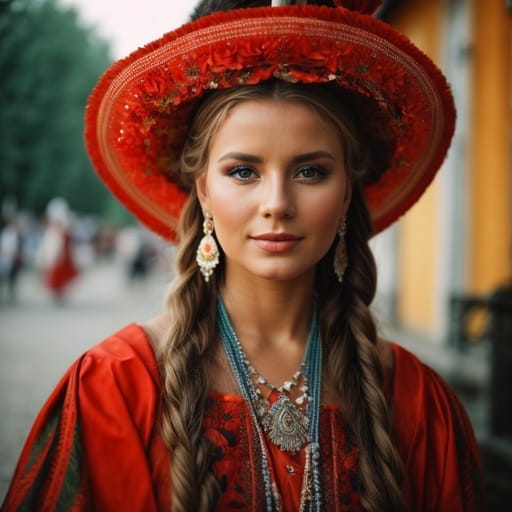
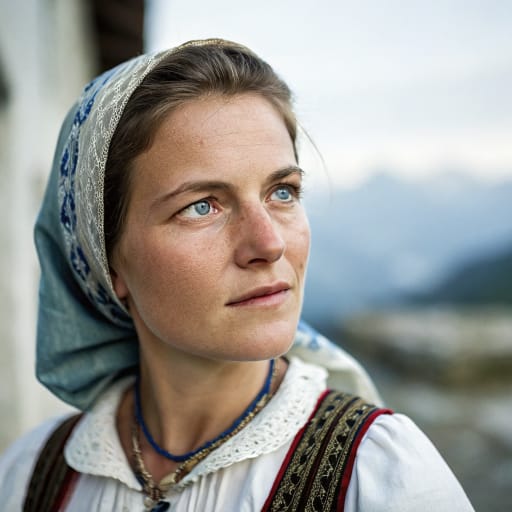
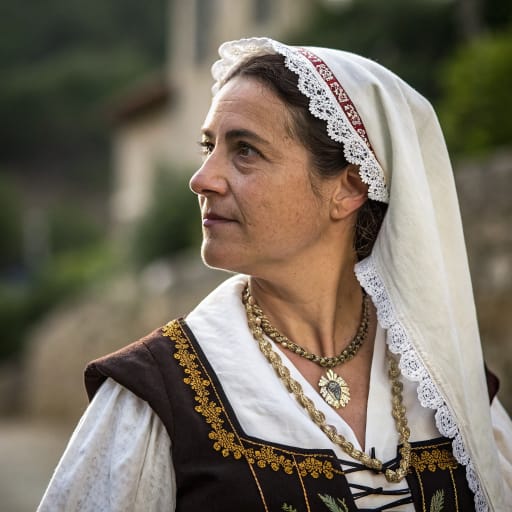
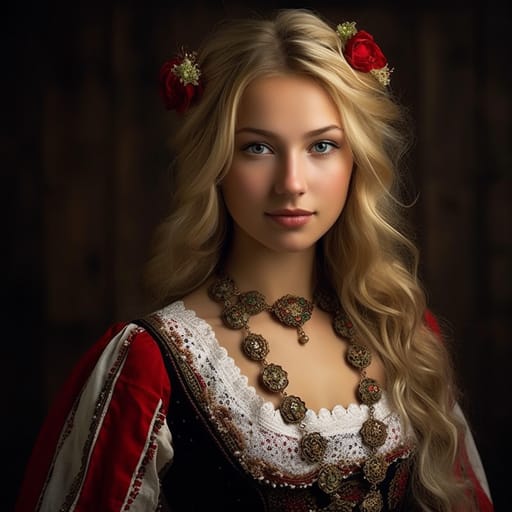
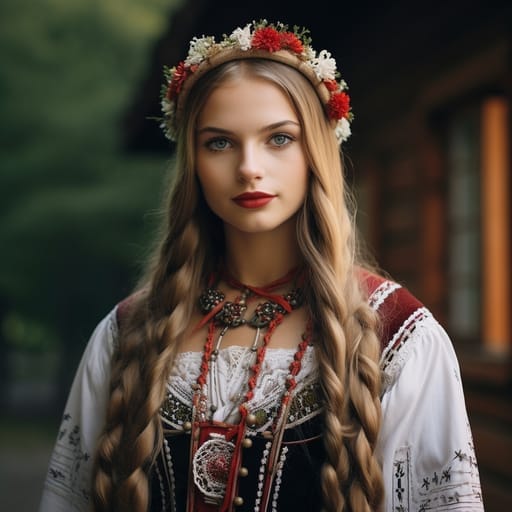
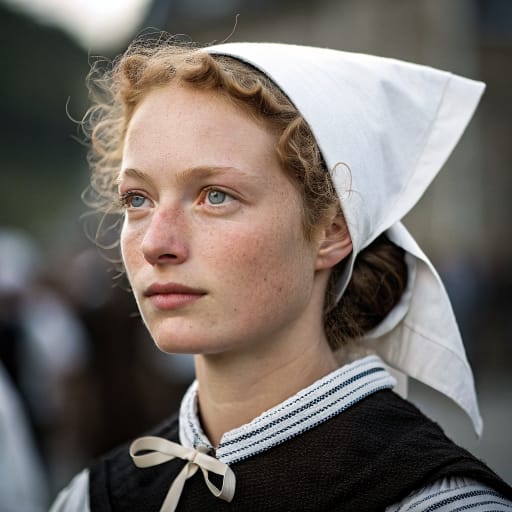
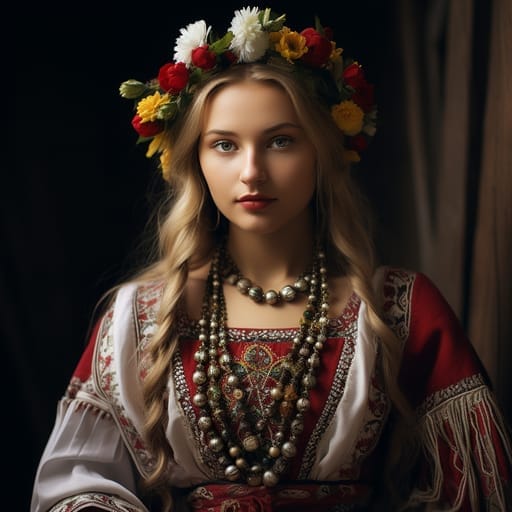
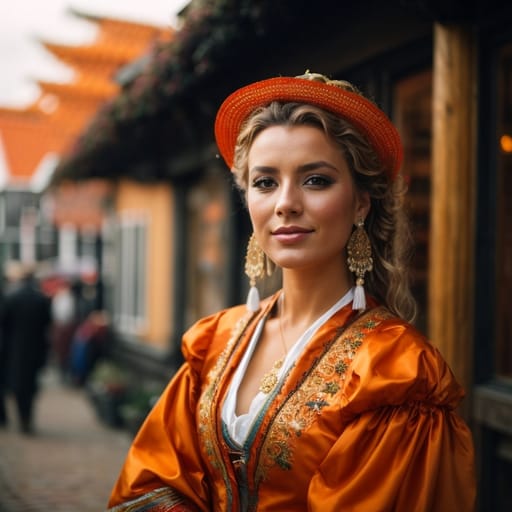
Typical Yenish Phenotypes
Reference for AI generation: hair, eyes, skin, facial structure, build
Yenish Body & Anatomy Reference
Western European / Celtic-Germanic phenotype: anatomy reference for AI nude generation
Yenish Boobs & Breasts
Yenish boobs follow the Western European / Celtic-Germanic profile: medium-to-large cup, full, moderate-to-high projection. Areolar diameter is usually 30-46mm, and the coloring is light-pink to medium-pink areolar pigmentation against the fair-to-light skin tone. Breast shape tracks body composition (ectomorph-to-mesomorph, mean adult female BMI 24-27), so Yenish breasts tend to be full and projecting. Expect a forward-set shape, not the smaller East Asian bust.
Yenish Ass & Hips
Yenish ass and hip morphology presents as medium, moderate projection, distinctly different from the broader hip profile of Mediterranean phenotypes. The Yenish pelvic profile shows medium iliac crests, anchored in the Western European / Celtic-Germanic skeletal pattern. Yenish butt shots in adult AI imagery should render the medium, moderate projection silhouette with the overall build (ectomorph-to-mesomorph) and the fat distribution typical of the Western European / Celtic-Germanic phenotype.
Yenish Vagina & Pussy
Yenish pussy anatomy typically shows light-pink labial pigmentation, varied labia minora. Pubic hair is usually wavy fine-to-medium texture, blond to dark-brown. In AI-generated Yenish nudes, labial color should blend into the fair to light skin with a gradual transition, and the hair should keep its wavy fine-to-medium texture.
Yenish Dicks & Penis
Penis reference for Yenish men: regional mean ~13-14cm erect, moderate girth. Coloring: light-pink to light-brown shaft pigmentation. An accurate Yenish cock in AI imagery matches the surrounding fair to light skin rather than a generic porn default. Circumcision depends on religion and custom, not ancestry.
Yenish Body, Curves & Build
The Yenish figure is generally ectomorph-to-mesomorph, with mean adult female BMI 24-27, characteristic of Western European / Celtic-Germanic ancestry. AI image tools tend to flatten regional body types into a few stock shapes; here the Yenish build is kept as its own reference.
Yenish Skin Tone & Hair Texture
Skin: fair to light (Fitzpatrick I-III). Hair: straight-to-wavy 1A-2B, blond to dark-brown. Both are typical of Western European / Celtic-Germanic ancestry. The most common mistake in AI nudes of Yenish women is a body rendered lighter than the face.
Explore phenotype categories
Structured taxonomy with peer-reviewed scales · 22 anatomical categories
Erotic Poses & Sex Positions
From the pose catalog: 219 named positions with reference skeletons
Frequently asked questions about Yenish people
Where is the Yenish homeland?
The Yenish homeland is Switzerland, Germany, Austria and eastern France, with smaller communities in Belgium, Luxembourg and the Netherlands in Western Europe.
What language do Yenish people speak?
Yenish people primarily speak Yenish (a German-based cant, Indo-European, Germanic, with Rotwelsch, Yiddish, Hebrew and Romani loanwords); also German, Swiss German or French.
What religion do Yenish people practice?
The predominant religion among Yenish people is Predominantly Roman Catholic, with Protestant minorities in Germany; pilgrimage traditions remain strong.






Make your own Yenish images
Five a day, free, no credits to buy. The studio starts from this group's phenotype data, so you can set body type, pose and style and keep the traits accurate.
Start with Yenish