No portrait yet
Rani Erotic
The island of Rügen and the facing Baltic mainland, in present-day Mecklenburg-Western Pomerania, Germany
Rani dialect of Polabian-Pomeranian Slavic (Indo-European, West Slavic, Lechitic), extinct by the early 15th century
Slavic polytheism centered on the cult of Svantevit at Arkona; converted to Catholic Christianity after the Danish conquest of 1168
Polabian Slavs (Wends) of the southern Baltic coast, within the Lechitic West Slavic peoples; distinct from the earlier Germanic Rugii
About Rani People
The Rani were a Slavic people who lived on Rügen, Germany's largest island, and on a strip of the facing Baltic mainland from the early Middle Ages until the Danish conquest of 1168. Afterward they were slowly absorbed into the German-speaking population of Pomerania, and their language was gone from the island by the early fifteenth century. What marked them out among the Wendish tribes of that coast was a temple. At Arkona, on the chalk cliffs of Rügen's northern tip, they kept the sanctuary of Svantevit, a four-headed god whose cult drew offerings from Slavs far beyond the island. After the Lutician shrine at Rethra was destroyed in the late eleventh century, Arkona became the last great pagan center of the Baltic Slavs, and the Rani who guarded it carried weight well beyond their numbers.
They spoke a dialect of the Lechitic branch of West Slavic, close to the speech of their Pomeranian and Polabian neighbors and more distantly related to Polish. They were sailors and raiders, and the Danish coasts felt it. Much of what is known about them comes from the Danish chronicler Saxo Grammaticus, a hostile but detailed witness. He describes a religion in which the high priest outranked the king. Svantevit had a white horse that only the priest could ride, and the way it stepped over rows of spears laid on the ground was read as an omen before a war. Each year at harvest the priest checked whether the mead in the horn held by the idol had sunk since the year before, and used that to forecast the next crop. Then he stood behind an enormous honey cake and asked the crowd whether they could see him, wishing aloud that next year they would not. The temple kept its own guard of three hundred horsemen. At Charenza, usually identified with modern Garz, more temples housed the many-faced gods Rugievit, Porevit and Porenut.
In 1168 King Valdemar I of Denmark and Bishop Absalon took Arkona, hacked the wooden idol apart and burned it. The Rani princes accepted baptism and Danish overlordship. Their dynasty ruled the Principality of Rügen for another century and a half and granted town rights to Stralsund in 1234. The last of the line, Wizlaw III, died in 1325. He wrote love songs in Middle Low German, which shows how far the court had turned from its Slavic roots. What remains of the Rani is mostly in the ground and on the map: place names across Rügen, Putbus and Garz among them, and the ramparts at Arkona, which the sea is steadily eating away.
Related ethnic groups
Groups that share Rani's homeland, region, language, or religious tradition. These are likely candidates for comparative phenotype reference.
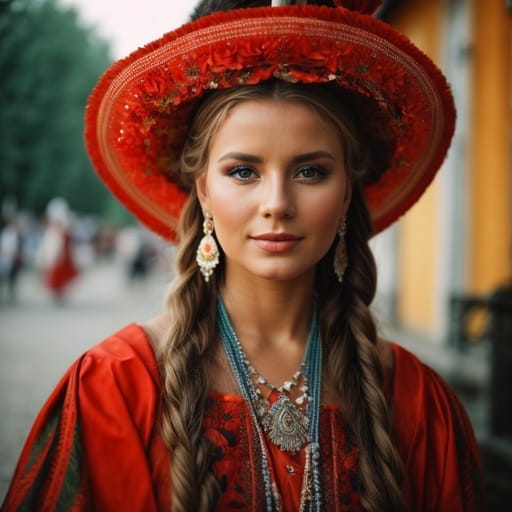
Estonians
same region (Western Europe)
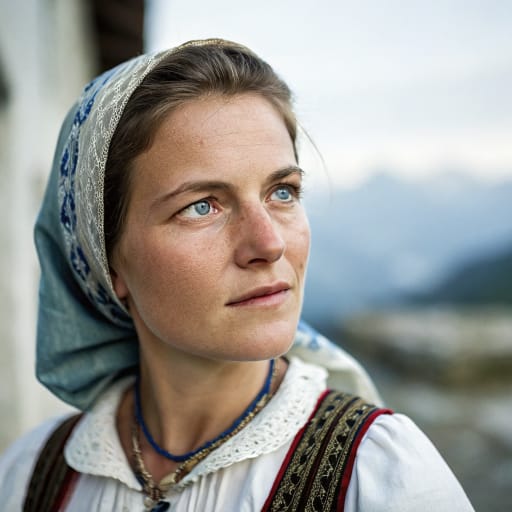
Austrians
same region (Western Europe)
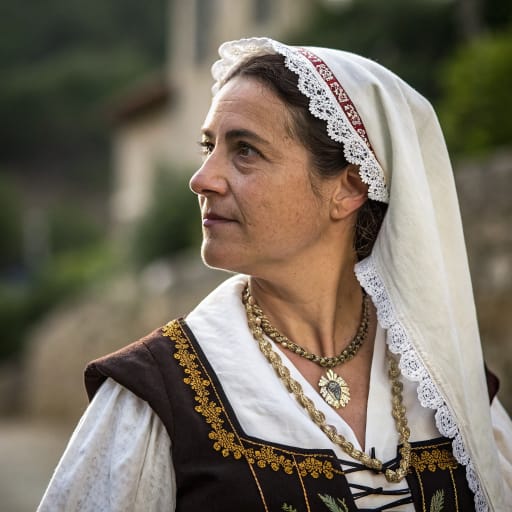
Corsicans
same region (Western Europe)
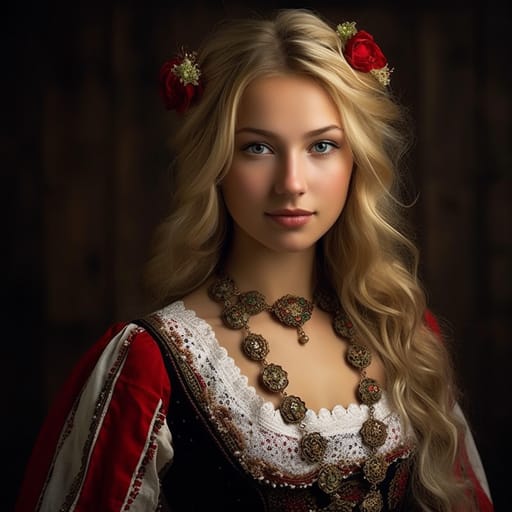
Frisians
same region (Western Europe)
German Syrian
same region (Western Europe)
Linones
same region (Western Europe)
Ukrani
same region (Western Europe)
French Maghrebi
same region (Western Europe)
Typical Rani Phenotypes
Reference for AI generation: hair, eyes, skin, facial structure, build
Rani Body & Anatomy Reference
Western European / Celtic-Germanic phenotype: anatomy reference for AI nude generation
Rani Boobs & Breasts
Rani boobs follow the Western European / Celtic-Germanic profile: medium-to-large cup, full, moderate-to-high projection. Areolar diameter is usually 30-46mm, and the coloring is light-pink to medium-pink areolar pigmentation against the fair-to-light skin tone. Breast shape tracks body composition (ectomorph-to-mesomorph, mean adult female BMI 24-27), so Rani breasts tend to be full and projecting. Expect a forward-set shape, not the smaller East Asian bust.
Rani Ass & Hips
Rani ass and hip morphology presents as medium, moderate projection, distinctly different from the broader hip profile of Mediterranean phenotypes. The Rani pelvic profile shows medium iliac crests, anchored in the Western European / Celtic-Germanic skeletal pattern. Rani butt shots in adult AI imagery should render the medium, moderate projection silhouette with the overall build (ectomorph-to-mesomorph) and the fat distribution typical of the Western European / Celtic-Germanic phenotype.
Rani Vagina & Pussy
Rani pussy anatomy typically shows light-pink labial pigmentation, varied labia minora. Pubic hair is usually wavy fine-to-medium texture, blond to dark-brown. In AI-generated Rani nudes, labial color should blend into the fair to light skin with a gradual transition, and the hair should keep its wavy fine-to-medium texture.
Rani Dicks & Penis
Penis reference for Rani men: regional mean ~13-14cm erect, moderate girth. Coloring: light-pink to light-brown shaft pigmentation. An accurate Rani cock in AI imagery matches the surrounding fair to light skin rather than a generic porn default. Circumcision depends on religion and custom, not ancestry.
Rani Body, Curves & Build
The Rani figure is generally ectomorph-to-mesomorph, with mean adult female BMI 24-27, characteristic of Western European / Celtic-Germanic ancestry. AI image tools tend to flatten regional body types into a few stock shapes; here the Rani build is kept as its own reference.
Rani Skin Tone & Hair Texture
Skin: fair to light (Fitzpatrick I-III). Hair: straight-to-wavy 1A-2B, blond to dark-brown. Both are typical of Western European / Celtic-Germanic ancestry. The most common mistake in AI nudes of Rani women is a body rendered lighter than the face.
Explore phenotype categories
Structured taxonomy with peer-reviewed scales · 22 anatomical categories
Erotic Poses & Sex Positions
From the pose catalog: 219 named positions with reference skeletons
Frequently asked questions about Rani people
Where is the Rani homeland?
The Rani homeland is The island of Rügen and the facing Baltic mainland, in present-day Mecklenburg-Western Pomerania, Germany in Western Europe.
What language do Rani people speak?
Rani people primarily speak Rani dialect of Polabian-Pomeranian Slavic (Indo-European, West Slavic, Lechitic), extinct by the early 15th century.
What religion do Rani people practice?
The predominant religion among Rani people is Slavic polytheism centered on the cult of Svantevit at Arkona; converted to Catholic Christianity after the Danish conquest of 1168.






Make your own Rani images
Five a day, free, no credits to buy. The studio starts from this group's phenotype data, so you can set body type, pose and style and keep the traits accurate.
Start with Rani