Help us get this right
Does this portrait look right for Bretons?
Nobody has judged this one yet. You would be the first.
Bretons Erotic
Brittany (France)
Christianity / Catholicism
About Bretons People
The Bretons are the Celtic remnant of France — descendants of Brythonic-speaking migrants who crossed the Channel from southwest Britain between the fifth and seventh centuries, fleeing Anglo-Saxon expansion and settling the peninsula the Romans called Armorica. That migration gave Brittany a Celtic culture rooted not in survival from antiquity but in transplantation: Breton, the language they brought with them, is closer kin to Welsh and Cornish than to anything spoken on the European mainland. It belongs to the Brythonic branch, sharply distinct from the Goidelic Celtic of Ireland and Scotland, and sits as a linguistic island surrounded on every side by Romance speech.
Brittany itself is a granite peninsula thrust into the Atlantic, all weathered coastline, inland heath, and small bocage farms — geography that long held the region at arm's length from Paris and shaped a population that thought of itself as Breton first and French second well into the twentieth century. The duchy was independent or semi-independent through the medieval period and was only formally absorbed into France in 1532. State pressure on the language followed: through the Third Republic and after, schoolchildren caught speaking Breton were punished, and the language collapsed across two generations from a majority tongue in Lower Brittany to a minoritized one. It survives now mostly among older speakers and a determined revival movement built around Diwan immersion schools and bilingual signage.
Catholicism in Brittany has its own texture. The region is dense with parish closes, calvaries, and the cult of local saints — many of them figures imported from the British migration, the so-called Seven Founder Saints, who are recognized in Brittany but absent from the broader Roman calendar. The pardons, processional feast days centered on these saints, are the most visible expression: working pilgrimages with banners, relics, and music rather than tourist pageantry, though they have become both. Underneath the Catholic surface sits a folk substrate of stories about the Ankou, the personification of death, and an unusually persistent set of beliefs about sacred springs and standing stones — many of them genuinely megalithic, since Brittany holds some of the densest concentrations of Neolithic monuments in Europe.
Within the population, the older fault line is between Breizh-Izel (Lower Brittany), the western half where Breton was historically spoken, and Breizh-Uhel (Upper Brittany) to the east, where the regional vernacular is Gallo, a Romance language descended from Latin rather than a Celtic one.
Related ethnic groups
Groups that share Bretons's homeland, region, language, or religious tradition. These are likely candidates for comparative phenotype reference.
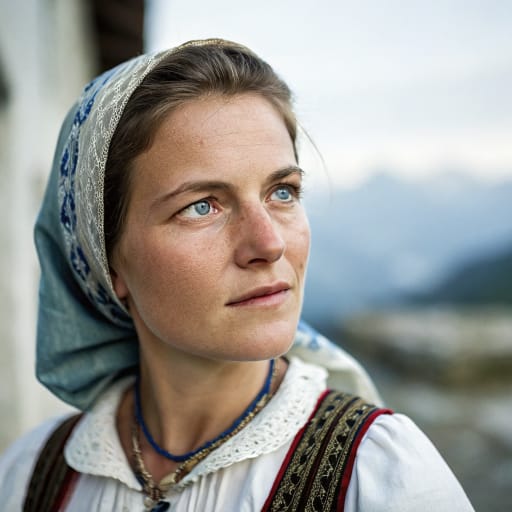
Austrians
same region (Western Europe)
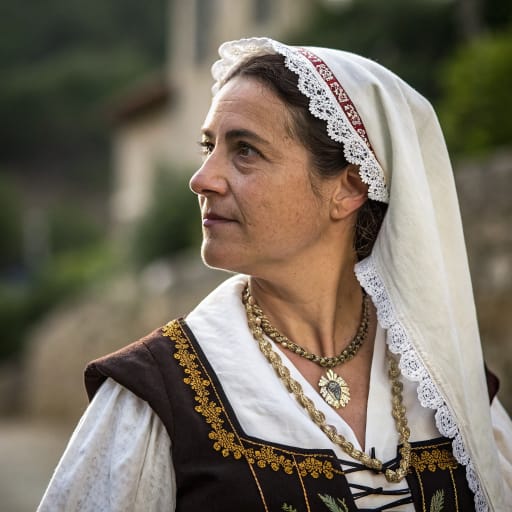
Corsicans
same region (Western Europe)
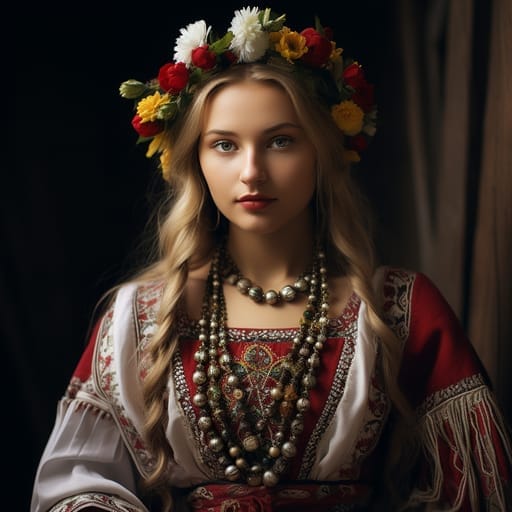
Lithuanians
same region (Western Europe)
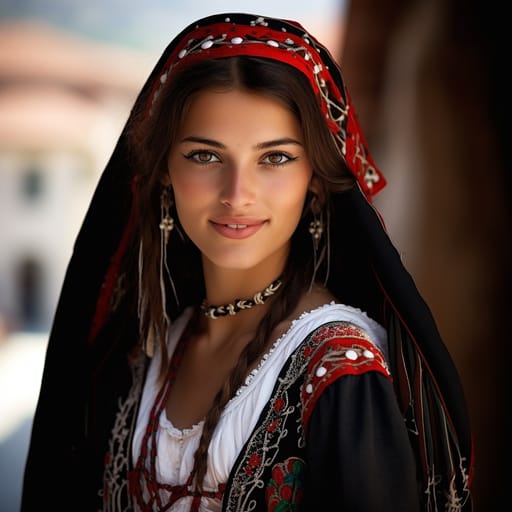
Sardinians
same region (Western Europe)
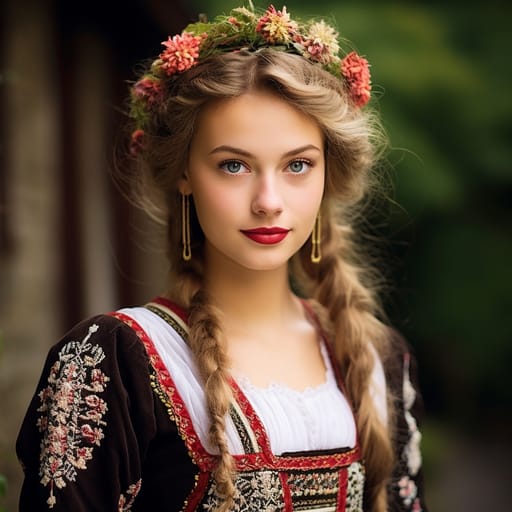
Luxembourgers
same region (Western Europe)
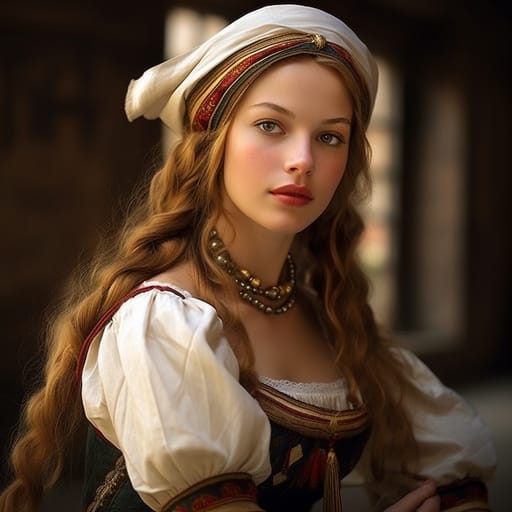
Flemings
same region (Western Europe)
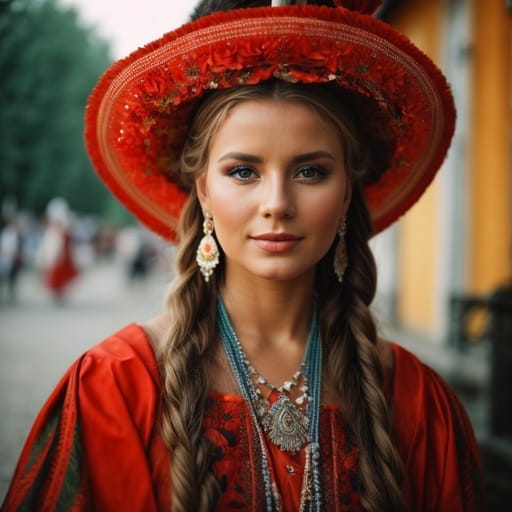
Estonians
same region (Western Europe)
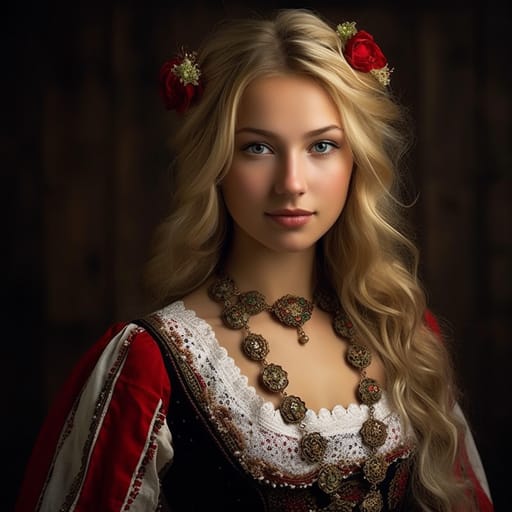
Frisians
same region (Western Europe)
Typical Bretons Phenotypes
Reference for AI generation: hair, eyes, skin, facial structure, build
Bretons are the Celtic population of the Armorican peninsula in northwestern France, descended from a mix of indigenous Gauls and Brittonic Celts who migrated from southwestern Britain in the 5th–7th centuries. Their phenotype sits at a genuine crossroads: Atlantic Celtic features layered onto a broader Northwestern European base, with measurable distinctions from the surrounding French populations of Normandy, Anjou, and Maine.
Hair runs the cool end of the European spectrum. Dark brown and chestnut dominate, often with ash or olive undertones rather than warm gold. True black is uncommon but present, especially in the western Bretagne bretonnante (Lower Brittany). Wavy hair is typical; tight curl is rare. Brittany carries one of the higher concentrations of red and auburn hair on the European continent — not Scottish levels, but visibly elevated above the French average, often paired with freckling. Yann Tiersen is a representative Breton coloring: dark hair, pale skin, light eyes.
Eye color skews light. Blue, blue-grey, and green are common; hazel and light brown appear more often inland and toward the Gallo-speaking east. Eyelids are uniformly Western European — no epicanthic fold, defined upper lid crease, often slightly deep-set under a pronounced brow ridge in men.
Skin is Fitzpatrick I–III, with Type II most typical: pale, cool or neutral undertones, freckles common, tans poorly. Many Bretons retain visible flush at the cheeks and a translucent quality to the skin around the eyes.
Facial structure tends toward a long, narrow head with a straight or slightly aquiline nose, narrow alar base, and a defined jaw. Cheekbones are moderate, not flat; lips are thin to medium. Builds are wiry and lean rather than heavy — Bretons average slightly shorter than northern French populations, with a sturdy, weatherworn look that reflects centuries of maritime and farming life.
Sub-regional variation is real: western Lower Brittany shows the strongest Celtic phenotype concentration — paler, lighter-eyed, more red and auburn — while Haute-Bretagne grades visibly toward the broader French Atlantic type.
Bretons Body & Anatomy Reference
Western European / Celtic-Germanic phenotype: anatomy reference for AI nude generation
Bretons Boobs & Breasts
The typical Bretons bust is medium-to-large cup, full, moderate-to-high projection, in line with the wider Western European / Celtic-Germanic pattern. Areolas usually fall in the 30-46mm range, with light-pink to medium-pink areolar pigmentation against the fair-to-light skin tone. Compared with the smaller East Asian bust, Bretons breasts sit forward and are generally full and projecting. A faithful AI render of Bretons tits keeps that shape and areola size.
Bretons Ass & Hips
Butt shape among Bretons women: medium, moderate projection, over medium iliac crests. This follows Western European / Celtic-Germanic ancestry and looks quite unlike the broader hip profile of Mediterranean phenotypes. An accurate Bretons ass in adult AI imagery keeps both the silhouette and the overall build (ectomorph-to-mesomorph) instead of a generic average.
Bretons Vagina & Pussy
Vulvar anatomy among Bretons women: light-pink labial pigmentation, varied labia minora. Pubic hair tends to be wavy fine-to-medium texture, blond to dark-brown, in the usual inverted-triangle pattern. Both follow Western European / Celtic-Germanic pigmentation, which is why Bretons pussy renders should not fall back on a pale, sparse Western template.
Bretons Dicks & Penis
The Bretons cock profile, from Western European / Celtic-Germanic anthropometric data: regional mean ~13-14cm erect; moderate girth; light-pink to light-brown shaft pigmentation. Pubic hair has a wavy fine-to-medium texture and forms the usual inverted-V pattern. Whether Bretons men are circumcised follows religious and cultural practice rather than phenotype.
Bretons Body, Curves & Build
Build and curves among Bretons women follow the Western European / Celtic-Germanic pattern: ectomorph-to-mesomorph, mean adult female BMI 24-27. Proportions matter as much as skin tone, so Bretons figures should keep their regional height and limb ratios.
Bretons Skin Tone & Hair Texture
The Bretons skin range is fair to light (Fitzpatrick I-III), and hair tends to be straight-to-wavy 1A-2B, blond to dark-brown. That combination marks the Western European / Celtic-Germanic phenotype, and skin tone is the trait AI generators most often get wrong for Bretons women.
Data depth
63/100Coverage of image-grounded phenotype observations · drives AI generation diversity
- Sample size
- 40/40· 55 images
- Image quality
- 18/30· 36% high
- Confidence
- 5/20· mean 0.54
- Source diversity
- 0/10· wikipedia
- ·Low overall confidence
- ·Wikipedia-only source, not population-representative
Observed Distribution: Image Sample
Empirical observations from analyzed photographs · supplementary signal, not population truth
Sample: 55 images analyzed (55 wikipedia). Quality: 20 high, 17 medium, 16 low, 2 very_low. Avg analyzer confidence: 0.54.
Skin tone (Fitzpatrick): I (2%), II (65%), III (9%), unclear (24%)
Hair color: gray/white (25%), black (24%), light/medium brown (13%), dark brown (9%), blonde (4%), brown (4%), other (4%), unclear (18%)
Hair texture: straight (35%), wavy (38%), curly (4%), bald (2%), covered (16%), unclear (5%)
Eye color: blue (20%), dark brown (20%), hazel (11%), other (2%), brown (2%), unclear (45%)
Epicanthic fold: 2% present, 80% absent, 18% unclear
Caveats: Low average analyzer confidence: many photos partially obscured or historical. Sample is 100% Wikipedia notable people, which skews toward male, public-life, and modern figures, not population-representative.
Last aggregated: May 7, 2026
Explore phenotype categories
Structured taxonomy with peer-reviewed scales · 22 anatomical categories
- SkinFitzpatrick I to VI, undertone, pigmentation
- EyesColor, shape, eyelid, epicanthic fold
- Head hairColor, Andre Walker texture, hairline
- Body shapeHeath-Carter somatotype, WHR, frame
- NoseBridge, tip, nostril, alar width
- Lips & mouthVolume, Cupid’s bow, philtrum
Measured in Bretons portraits
Notable Bretons People
69 reference figures, sourced from Wikipedia
- Mylène Jampanoï, half Breton from her mother.
- Solenn Heussaff, host, model, internet celebrity, actress, singer, half-Filipina, half-Breton
- Malik Zidi, actor, half Breton from his mother.
- Dan Ar Braz, guitarist
- Brigitte Fontaine, singer, actress and writer
- Alain Stivell, musician
- Yann Tiersen, composer notable for the score to the Jean-Pierre Jeunet movie Amélie.
- Tri Yann, folk rock group
- Anne of Brittany, Duchess of Brittany and twice Queen of France
- Claude of France, elder daughter of Anne of Brittany; also a Queen of France
- Robert Surcouf, famous corsair
- Jeanne de Clisson, ‘Lioness of Brittany’, who conducted naval action against French ships and po…
- Riothamus, ‘King of the Britons’, an ally of the Roman emperor Anthemius and a correspon…
- Alan I, King of Brittany, ‘Alan the Great’, Count of Vannes and ruler of Brittany at the peak of its ex…
- Conan I, Duke of Brittany, ancestor of Odo, Count of Penthièvre and William the Conqueror; brother-in-la…
- Judith of Brittany, daughter of Conan I and Duchess of Normandy, grandmother of Judith of Flander…
- Odo, Count of Penthièvre, older maternal first cousin of Edward the Confessor and sometime Duke Regent …
- Alan Rufus, commander of William the Conqueror’s household knights; second of seven legit…
- Brian of Brittany, first Earl of Cornwall, brother of Alan Rufus
- Stephen, Count of Tréguier, opened England’s first Parliament, a brother of Alan Rufus and ancestor of th…
- Alan III, Duke of Brittany, childhood guardian of William the Conqueror and eldest brother of Odo of Pent…
- Conan II, Duke of Brittany, son of Alan III, powerful rival to both Odo of Penthièvre and William the Con…
- Hoël II, Duke of Brittany, technically Duke Consort and then Regent for his son Alan IV; also known as H…
- Alan IV, Duke of Brittany, son-in-law of William the Conqueror, a crusader, an important ally of Henry I…
- Arthur I, Duke of Brittany, his suspected murder by his uncle King John of England accelerated the destru…
- Arthur II, Duke of Brittany, gave peasants seats in the Breton parliament
- Arthur III, Duke of Brittany, Constable of France and architect of French victory in the Hundred Years' War…
- Ralph the Staller, Anglo-Breton from Norfolk who served English kings from Cnut the Great to Wil…
- Robert fitz Wymarc, a Staller for Edward the Confessor and present at Edward's death bed; related…
- Cardinal de Rohan, accidentally precipitated the French Revolution
- Jean Cras, naval officer and composer, inventor of the Cras navigational plotter
- René Laennec, physician and inventor of the stethoscope who pioneered modern auscultation
- Yann LeCun, Breton-American computer scientist and one of the three 'Godfathers of AI'
- René Cardaliaguet, priest and writer
- J. M. G. Le Clézio, winner of the 2008 Nobel Prize in Literature
- François-René de Chateaubriand, romantic writer and politician
- Tristan Corbière, symbolist poet
- Ernest Renan, philosopher and writer
- Muriel the Poetess, nun at Wilton Abbey who composed verse and corresponded with notable contempo…
- Peter Abelard, scholastic philosopher and professor at Paris
- Jules Verne, highly influential novelist, poet, and playwright
- Jacques Cartier, explorer who claimed what is now Canada for France, and the first European to…
- Olivier de Kersauson, notable yachtsman
- Eric Tabarly, notable yachtsman
- Thibault Tricole, darts player
- Pierre-Ambroise Bosse, 800m runner, 2017 world champion
- Maryvonne Dupureur, 800m runner, 1964 Olympic silver medallist
- Warren Barguil
- Aude Biannic
- Louison Bobet, 3-time winner of the Tour de France
- Anthony Charteau
- Bryan Coquard
- Audrey Cordon
- Jean Dotto, winner of the 1955 Vuelta a España
- René Le Grevès
- Bernard Hinault, 5-time winner of the Tour de France, 3-time winner of the Giro d'Italia, 2-ti…
- Pascal Lino
- Jean Malléjac
- Lucien Petit-Breton, 2-time winner of the Tour de France
- Jean Robic, winner of the 1947 Tour de France
- Yoann Gourcuff, French international
- Stéphane Guivarc'h, former French international, 1998 World Cup winner
- Paul Le Guen, former French international
- Yvon Le Roux, former French international, 1984 European Championship winner
- Alex Thépot, former French international
- Jérémy Toulalan, former French international
- Armella Nicolas, serving-maid venerated by some lay Catholics
- Robert of Arbrissel, founder of Fontevraud Abbey
- Albinus of Angers, late antique Abbot of Angers, born in Vannes, commemorated in numerous placen…
Erotic Poses & Sex Positions
From the pose catalog: 219 named positions with reference skeletons
Frequently asked questions about Bretons people
Where is the Bretons homeland?
The Bretons homeland is Brittany (France) in Western Europe.
What language do Bretons people speak?
Bretons people primarily speak Indo-European / Celtic / Breton.
What religion do Bretons people practice?
The predominant religion among Bretons people is Christianity / Catholicism.






Make your own Bretons images
Five a day, free, no credits to buy. The studio starts from this group's phenotype data, so you can set body type, pose and style and keep the traits accurate.
Start with Bretons