Help us get this right
Does this portrait look right for Sardinians?
One tap. It takes a second and it is recorded.
2 say it looks right, 0 say it looks off.
Sardinians Erotic
Sardinia (Italy)
Christianity / Catholicism
About Sardinians People
Sardinians are the people of an island that has spent most of its history watching ships arrive — Phoenicians, Romans, Vandals, Byzantines, Arabs, Pisans, Genoese, Aragonese, Spaniards, Piedmontese — and has absorbed each wave without quite becoming any of them. The result is a population that thinks of itself first as Sardinian and only secondarily as Italian, a distinction the islanders will make politely but firmly if asked. The interior, especially the rugged Barbagia region around the Gennargentu massif, was never fully subdued by any of those occupiers, and that stubborn upland pastoralism — sheep, cheese, long memories — is still the cultural reference point even for Sardinians who have never herded anything.
Sardinian, or sardu, is not a dialect of Italian. It is a separate Romance language, and linguists generally regard it as the most conservative living descendant of Latin — a speaker of classical Latin would recognize more of it than of any modern tongue. It splits internally into Logudorese in the center-north and Campidanese in the south, with Gallurese and Sassarese in the north showing heavy Corsican and Tuscan influence, and the Catalan-speaking enclave of Alghero on the west coast a leftover of the Aragonese centuries. Catholicism is the dominant religion and shapes the calendar — the festivals of Sant'Efisio in Cagliari and the Mamuthones masked processions of Mamoiada draw on it heavily — but the older substrate keeps surfacing, particularly in the funerary and protective rites that priests have spent centuries either tolerating or trying to stamp out.
Two threads run through the social fabric and are worth knowing. One is the nuraghe, the conical stone tower built by the island's Bronze Age inhabitants; roughly seven thousand still stand, and they are not background scenery but a continuously referenced ancestral presence. The other is longevity. The mountainous Ogliastra and Barbagia zones constitute one of the few demographically verified Blue Zones on earth, with an unusual concentration of centenarians — usually attributed to some combination of walking terrain, a diet built around legumes, sheep's-milk cheese and modest red wine, and tightly woven kin networks that keep the elderly inside daily life rather than parked at its edge. Sardinians tend to talk about all this with a shrug. The island has been here a long time. So have they.
Related ethnic groups
Groups that share Sardinians's homeland, region, language, or religious tradition. These are likely candidates for comparative phenotype reference.
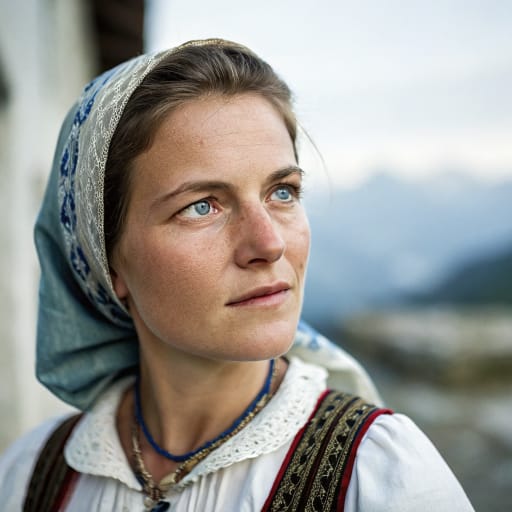
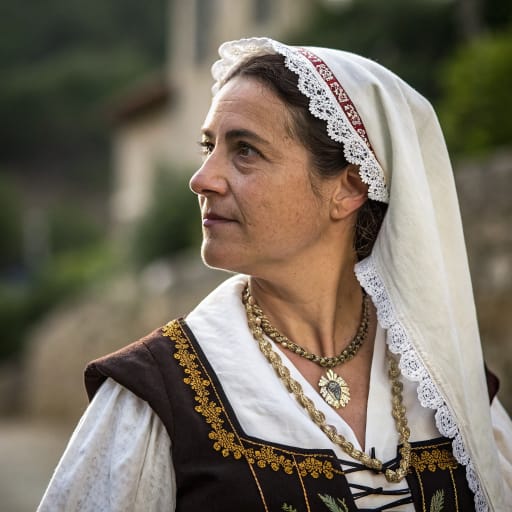
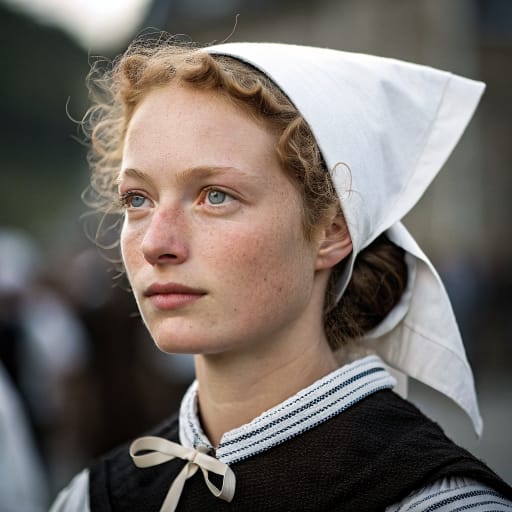
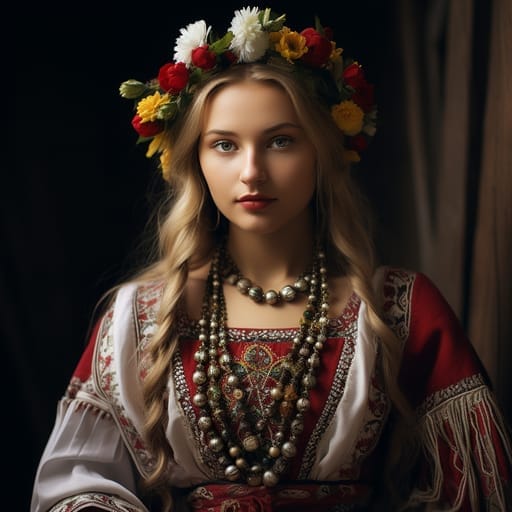
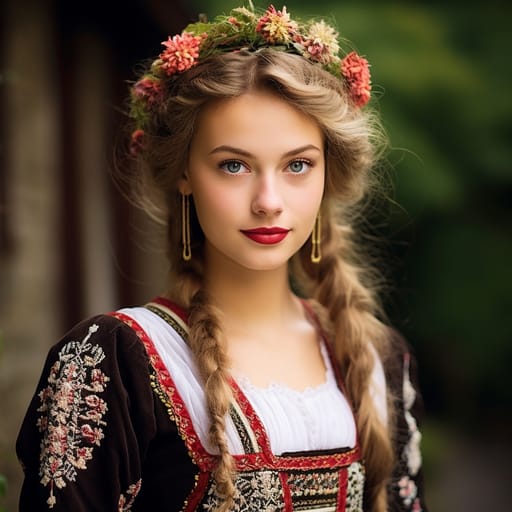
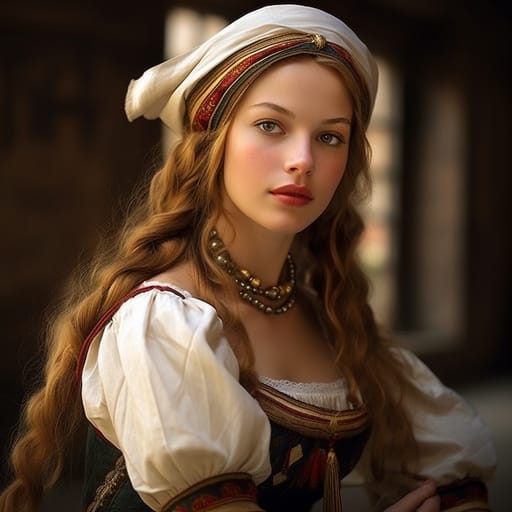
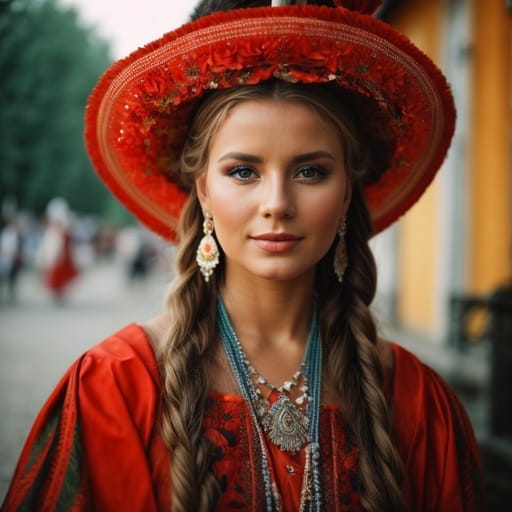
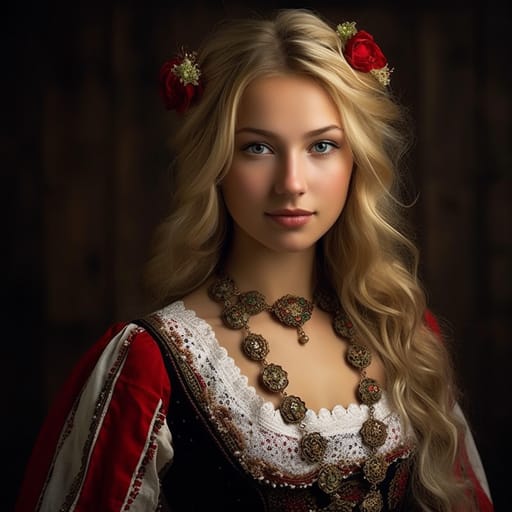
Typical Sardinians Phenotypes
Reference for AI generation: hair, eyes, skin, facial structure, build
Sardinians are one of Europe's most genetically distinct populations — an island isolate carrying a high proportion of Early Neolithic farmer ancestry, which shows up phenotypically as a Mediterranean look slightly off-axis from mainland Italians. Hair runs predominantly dark brown to near-black, typically straight to softly wavy, with coarse to medium texture. A noticeable minority — concentrated in interior Barbagia and around Nuoro — carries lighter brown or chestnut hair, and red or auburn appears at low but real frequency, a remnant of older European pigmentation alleles preserved by the island's isolation. Facial and body hair tends to be dense and dark in men.
Eyes are usually brown, ranging from very dark to warm hazel; green and grey-blue eyes turn up often enough in the mountainous interior to be unremarkable there. The eye shape is almond, set on a horizontal axis, with no epicanthic fold and generally well-defined upper lids.
Skin sits in Fitzpatrick III–IV — light olive to medium olive with a yellow-green undertone rather than the pinkish base common further north. It tans deeply and rarely burns. Coastal Sardinians read a touch darker than interior populations, who can be surprisingly fair before sun exposure.
Facial structure is compact and angular: a straight or faintly aquiline nose with a narrow to medium bridge and moderate alar width, a short-to-medium midface, defined cheekbones, and a strong jaw. Lips are typically medium in fullness, the lower slightly fuller than the upper. Brows are full and dark, often joining lightly above the bridge.
Build is the most documented distinctive trait — Sardinians are among the shortest populations in Europe, with men averaging around 168–170 cm and women around 156–158 cm, alongside one of the world's highest concentrations of centenarians in the Ogliastra–Barbagia highlands. Frames are short-limbed, wiry, and proportionally broad-shouldered; women tend toward an hourglass distribution with moderate hip width. Interior highlanders read leaner and slightly fairer than the stockier, more sun-darkened coastal Campidanese of the south.
Sardinians Body & Anatomy Reference
Anatomy by feature, Western European / Celtic-Germanic phenotype
Sardinians Boobs & Breasts
Sardinians boobs follow the Western European / Celtic-Germanic profile: medium-to-large cup, full, moderate-to-high projection. Areolar diameter is usually 30-46mm, and the coloring is light-pink to medium-pink areolar pigmentation against the fair-to-light skin tone. Breast shape tracks body composition (ectomorph-to-mesomorph, mean adult female BMI 24-27), so Sardinians breasts tend to be full and projecting. Expect a forward-set shape, not the smaller East Asian bust.
Sardinians Ass & Hips
Sardinians ass and hip morphology presents as medium, moderate projection, distinctly different from the broader hip profile of Mediterranean phenotypes. The Sardinians pelvic profile shows medium iliac crests, anchored in the Western European / Celtic-Germanic skeletal pattern. Sardinians butt shots in adult AI imagery should render the medium, moderate projection silhouette with the overall build (ectomorph-to-mesomorph) and the fat distribution typical of the Western European / Celtic-Germanic phenotype.
Sardinians Vagina & Pussy
Sardinians pussy anatomy typically shows light-pink labial pigmentation, varied labia minora. Pubic hair is usually wavy fine-to-medium texture, blond to dark-brown. In AI-generated Sardinians nudes, labial color should blend into the fair to light skin with a gradual transition, and the hair should keep its wavy fine-to-medium texture.
Sardinians Dicks & Penis
Penis reference for Sardinians men: regional mean ~13-14cm erect, moderate girth. Coloring: light-pink to light-brown shaft pigmentation. An accurate Sardinians cock in AI imagery matches the surrounding fair to light skin rather than a generic porn default. Circumcision depends on religion and custom, not ancestry.
Sardinians Body, Curves & Build
The Sardinians figure is generally ectomorph-to-mesomorph, with mean adult female BMI 24-27, characteristic of Western European / Celtic-Germanic ancestry. AI image tools tend to flatten regional body types into a few stock shapes; here the Sardinians build is kept as its own reference.
Sardinians Skin Tone & Hair Texture
Skin: fair to light (Fitzpatrick I-III). Hair: straight-to-wavy 1A-2B, blond to dark-brown. Both are typical of Western European / Celtic-Germanic ancestry. The most common mistake in AI nudes of Sardinians women is a body rendered lighter than the face.
Data depth
39/100Coverage of image-grounded phenotype observations · drives AI generation diversity
- Sample size
- 21/40· 12 images
- Image quality
- 8/30· 17% high
- Confidence
- 10/20· mean 0.62
- Source diversity
- 0/10· wikipedia
- ·Modest sample (n<25)
- ·Mostly low-quality source images
- ·Wikipedia-only source, not population-representative
Observed Distribution: Image Sample
Empirical observations from analyzed photographs · supplementary signal, not population truth
Sample: 12 images analyzed (12 wikipedia). Quality: 2 high, 5 medium, 5 low, 0 very_low. Avg analyzer confidence: 0.62.
Skin tone (Fitzpatrick): II (75%), III (17%), unclear (8%)
Hair color: gray/white (67%), black (33%)
Hair texture: straight (75%), wavy (25%)
Eye color: dark brown (25%), light brown / amber (8%), blue (8%), unclear (58%)
Epicanthic fold: 0% present, 83% absent, 17% unclear
Caveats: Sample size 12 is modest, so secondary patterns may not be reliable. Quality skews toward older or low-resolution photos; phenotype detail may be lossy. Sample is 100% Wikipedia notable people, which skews toward male, public-life, and modern figures, not population-representative.
Last aggregated: May 7, 2026
Explore phenotype categories
Structured taxonomy with peer-reviewed scales · 22 anatomical categories
Notable Sardinians People
100 reference figures, sourced from Wikipedia
- Pietro Amat di San Filippo, 1826-1895), geographer, historian and bibliographer
- Giulio Angioni, 1939-2016), writer and anthropologist
- Efisio Arru, 1927-2000), parasitologist
- Domenico Alberto Azuni, 1749-1827), jurist
- Ludovico Baille, 1764-1869), historian
- Augusto Bissiri, 1879-1968), inventor, credited as one of the first developers of television, …
- Remo Bodei, born in Cagliari, 1938), philosopher
- Francesco Antonio Boi, 1767-1850), physician and anatomist
- Francesco Antonio Broccu, 1797-1882), inventor, born in Gadoni, regarded as the first developer of the …
- Giuseppe Brotzu, 1895-1976), pharmacologist, discoverer of cephalosporin based antibiotics, an…
- Carlo Cercignani, 1939-2010), physicist and mathematician
- Fausto Cercignani, born 1941), scholar in linguistics
- Enrico Costa, born 1944), astrophysicist, known for studies on the gamma-ray bursts
- Erminio Costa, Cagliari 1924, Washington 2009), neuroscientist
- Joan de Girgio Vitelli, Alghero 1870, Rome 1916), lawyer and writer
- Carlo Fadda, 1853-1931), jurist and politician
- Antonio Fais, 1841-1925), mathematician and engineer
- Giovanni Francesco Fara, 1543-1591), geographer and historian
- Walter Ferreri, astronomer
- Gian Luigi Gessa, born 1932), pharmacologist and neuropsychiatrist
- Pier Michele Giagaraccio, 16th century AD), jurist, lawyer, and poet
- Paola Leone, neurologist, leader researcher of Canavan disease
- Giovanni Lilliu, 1914-2012), archeologist, academician, publicist and politician
- Eva Mameli, 1886-1978), botanist, naturalist and mathematician
- Lidia Mannuzzu, 1958-2016), biologist, physiologist and academic
- Antonio Pigliaru, 1922-1969), philosopher
- Salvatore Satta, 1902-1975), jurist and writer
- Sebastiano Satta, 1867-1914), poet, writer, lawyer and journalist
- Paolo Savona, born 1936), economist
- Giovanni Soro, died 1544), the Western world first great cryptanalyst; Soro was employed in …
- Giovanni Spano, 1803-1878), linguist and archaeologist
- Nicola Tanda, born 1928) philologist and literary critic
- Pasquale Tola, 1800-1874), historian, magistrate and politician
- Aurelio Chessa, 1913-1996) anarchist, journalist and historian
- Paola Antonelli, born 1963), architect, senior Curator in the Department of Architecture and D…
- Carlo Battaglia, 1933-2005), designer
- Ambra Medda, born 1982) designer, Sardinian mother and Austrian father
- Gaetano Cima, 1805-1878), Neoclassical architect
- Fernando Clemente, 1917-1998), architect and urbanist
- Francesco Boffo, 1796-1867), Neoclassical architect
- Davis Ducart, architect of the 18th-century
- Renzo Frau, Cagliari 1880 to 1926), designer
- Flavio Manzoni, born 1965), architect and car designer
- Alessandro Melis, born 1969), architect and writer
- Vico Mossa, 1914-2003), Architect
- Enzo Satta, urbanist and architect
- Eugenio Tavolara, 1901-1963), sculptor and designer
- Milena Agus, born 1955)
- Francesco Alziator, 1909-1977), writer and journalist
- Antonella Anedda, born 1955), half-Sardinian
- Gerolamo Araolla, 1542-1615)
- Sergio Atzeni, 1952-1995)
- Vicente Bacallar Sanna, 1669-1726)
- Alberto Capitta, born 1954)
- Fausta Cialente, 1898-1994)
- Antoni Cossu, 1927-2002)
- Grazia Deledda, 1871-1936), winner of the Nobel prize for literature
- Pietro Delitala, middle 16th century to 1613), poet
- Salvatore Farina, 1846-1918), novelist
- Maria Chessa Lai, 1922-2012), poet
- Gavino Ledda, born 1938)
- Emilio Lussu, 1890-1975)
- Francesco Manunta i Baldino, 1928-1995), poet
- Melchiorre Murenu, 1803-1854)
- Salvatore Niffoi, born 1950), writer
- Rafael Sari, 1904-1978), poet and writer
- Flavio Soriga, born 1975) writer
- Pasqual Scanu, 1908-1978)
- Tigellius, 1st century BC to 40 BC), lyric poet during the time of Julius Caesar
- Dolores Turchi, born 1935)
- Massimo Cellino, born 1956), entrepreneur and football club owner
- Giovanni Antonio Sanna, 1819-1875), entrepreneur and politician
- Renato Soru, born 1957), entrepreneur founder of Tiscali and former governor of Sardinia
- Salvatore Dau, 1839-1914), tanner https://commons.wikimedia.org/wiki/File:Salvatore_Dau_1885…
- Gianni Agus, 1917-1994)
- Andrea Arru, born 2007)
- Mavie Bardanzellu, 1938-2022)
- Vittorio Congia, 1930-2019)
- Rubi Dalma, 1906-1994)
- Giancarlo Dettori, born 1932)
- Maria Frau, born 1930)
- Rossana Ghessa, born 1943)
- Rita Livesi, 1915-1989)
- Mario Majeroni, 1870-1931)
- Gloria Milland, 1940-1989)
- Anna Maria Pierangeli, also known as Pier Angeli
- Piero Livi, 1925-2015), director and screenwriter
- Sebastian Piras, photographer and filmmaker
- Fiorenzo Serra, 1921-2005), documentarist
- Franco Solinas, 1927-1982), screenwriter
- Franca Dall'Olio, born 1945), Miss Italia 1963
- Alessandra Meloni, born 1972), Miss Italia 1994
- Er Canaro, born 1956)
- Giovanni Corbeddu Salis, 1844-1898), outlaw
- Pasquale Chessa, born 1947), historian and journalist
- Attilio Deffenu, 1890-1918) journalist, syndicalist and patriot
- Annalisa Piras, born 1971), journalist and film maker
- Cristiano Ruiu, born 1979)
- Aminata Aidara, born 1984) Sardinian mother and Senegalese father
- Mario Aramu, 1900-1940), aviator
Erotic Poses & Sex Positions
From the pose catalog: 219 named positions with reference skeletons
Frequently asked questions about Sardinians people
Where is the Sardinians homeland?
The Sardinians homeland is Sardinia (Italy) in Western Europe.
What language do Sardinians people speak?
Sardinians people primarily speak Indo-European / Romance / Sardinian.
What religion do Sardinians people practice?
The predominant religion among Sardinians people is Christianity / Catholicism.
What does a typical Sardinians woman look like?
Sardinian women typically have dark brown to near-black hair, straight to softly wavy, with lighter brown, chestnut and occasional auburn shades in the interior. Eyes are usually brown to warm hazel, and skin is Fitzpatrick III to IV, light to medium olive. Faces are compact, with a straight or faintly aquiline nose and defined cheekbones, and women average around 156 to 158 cm, often with an hourglass figure.






Make your own Sardinians images
Five a day, free, no credits to buy. The studio starts from this group's phenotype data, so you can set body type, pose and style and keep the traits accurate.
Start with Sardinians