No portrait yet
Vediantii Erotic
Maritime Alps around Cemenelum (modern Cimiez, Nice), in what is now the Alpes-Maritimes department of southeastern France
Ancient Ligurian (unclassified, poorly attested, possibly Indo-European); later Latin (Indo-European, Italic)
Local pre-Roman polytheism, then Roman religion; Christian by late antiquity
One of the Ligurian peoples of the Maritime Alps, alongside neighboring groups such as the Nerusii and Vesubiani
About Vediantii People
The Vediantii were a Ligurian people who lived in the Maritime Alps above present-day Nice, in southeastern France, during the late Iron Age and the Roman period, and who gradually merged into the Latin-speaking population of the region. Their identity is tied to a single hilltop. Pliny the Elder names Cemenelum, today the Cimiez district of Nice, as their town. That line, together with the ruins and Latin inscriptions recovered on the site, accounts for most of what is known about them. They were one of many small Ligurian communities in the ridges and valleys of this coast. Greek and Roman writers tended to lump these groups together as hardy, independent hill people and rarely described them one by one.
Their independence ended under Augustus. Around 14 BC Roman forces subdued the free peoples of the Maritime Alps, and the great victory monument at La Turbie, a short distance east along the coast, still marks the campaign. For the Vediantii the result was absorption rather than erasure. Cemenelum became the seat of the new province of Alpes Maritimae, a small frontier district run by an equestrian governor, and the tribal town gained public baths, an amphitheater and the business of Roman administration. That left the area with odd neighbors. Down on the shore sat Nikaia, a Greek trading post founded from Massalia, which answered to a different province altogether. For centuries the Ligurian hill town and the Greek harbor stood only a few kilometers apart under separate jurisdictions, the first looking to the mountains and the second to the sea.
Their own voice is almost entirely lost. Ancient Ligurian survives mostly in place names and personal names, and linguists still debate how it related to the Celtic languages spoken by neighboring Gauls. By the imperial period the inscriptions at Cemenelum are in Latin. Belief followed the same path. Local cults left little behind, Roman gods took their place in public life, and by late antiquity the town had its own Christian bishop, until the see was merged into that of Nice. The people did not vanish in a single event. Over time, sources simply stopped naming them. What remains is the place. The excavated streets, baths and small oval arena at Cimiez now sit in a public park above the city, next to a museum of archaeology, and the district that grew over Cemenelum still carries a version of its name.
Related ethnic groups
Groups that share Vediantii's homeland, region, language, or religious tradition. These are likely candidates for comparative phenotype reference.
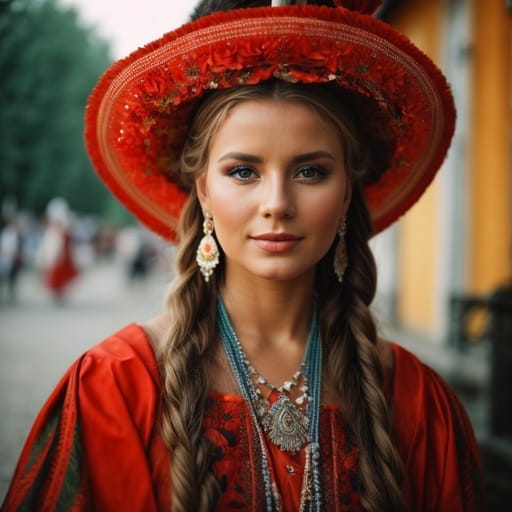
Estonians
same region (Western Europe)
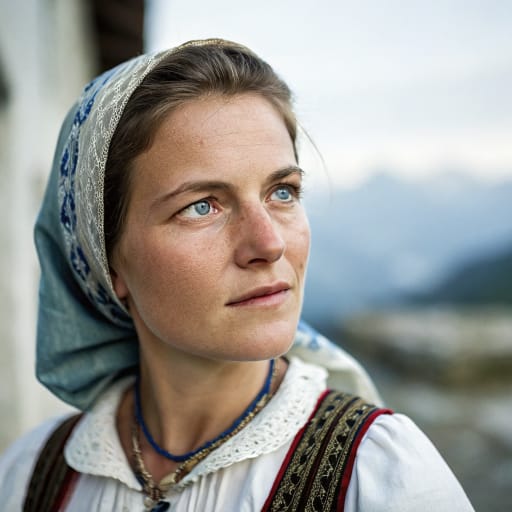
Austrians
same region (Western Europe)
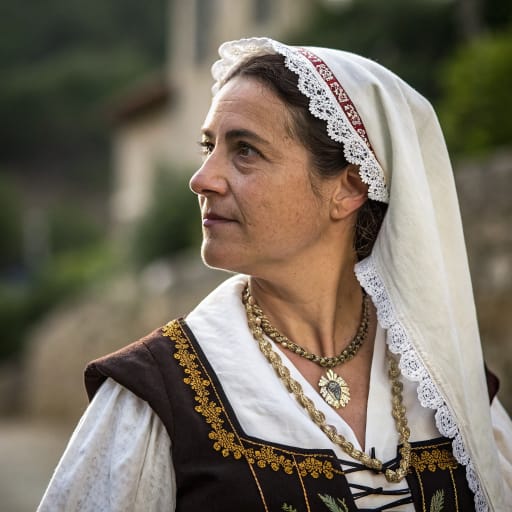
Corsicans
same region (Western Europe)
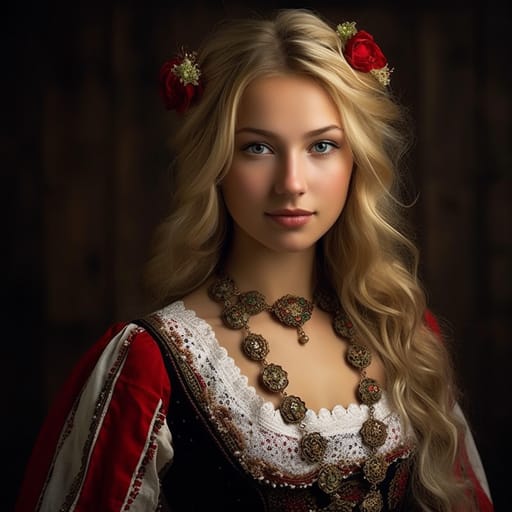
Frisians
same region (Western Europe)
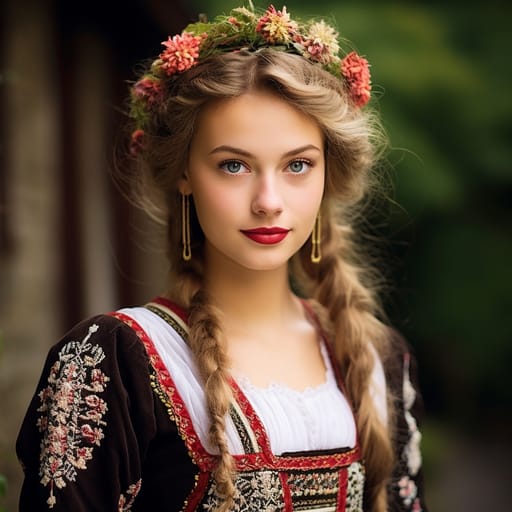
Luxembourgers
same region (Western Europe)
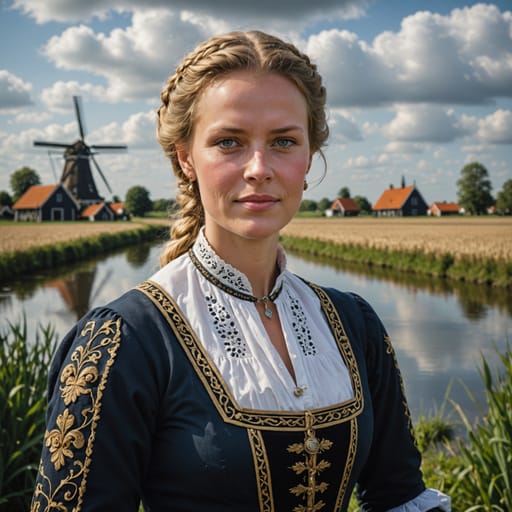
Dutch Frisian
same region (Western Europe)

Cenomani
same region (Western Europe)
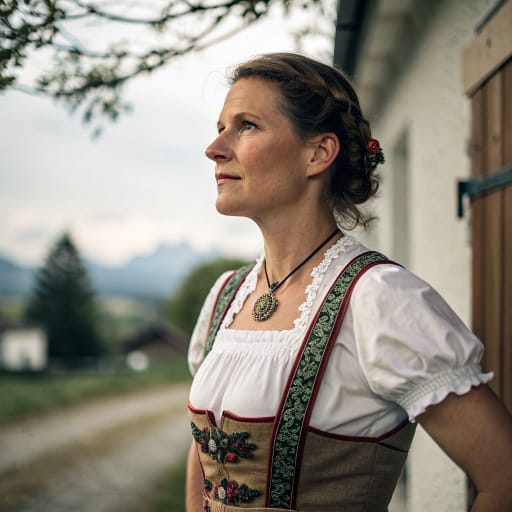
Bavarians
same region (Western Europe)
Typical Vediantii Phenotypes
Reference for AI generation: hair, eyes, skin, facial structure, build
Vediantii Body & Anatomy Reference
Anatomy by feature, Western European / Celtic-Germanic phenotype
Vediantii Boobs & Breasts
The typical Vediantii bust is medium-to-large cup, full, moderate-to-high projection, in line with the wider Western European / Celtic-Germanic pattern. Areolas usually fall in the 30-46mm range, with light-pink to medium-pink areolar pigmentation against the fair-to-light skin tone. Compared with the smaller East Asian bust, Vediantii breasts sit forward and are generally full and projecting. A faithful AI render of Vediantii tits keeps that shape and areola size.
Vediantii Ass & Hips
Butt shape among Vediantii women: medium, moderate projection, over medium iliac crests. This follows Western European / Celtic-Germanic ancestry and looks quite unlike the broader hip profile of Mediterranean phenotypes. An accurate Vediantii ass in adult AI imagery keeps both the silhouette and the overall build (ectomorph-to-mesomorph) instead of a generic average.
Vediantii Vagina & Pussy
Vulvar anatomy among Vediantii women: light-pink labial pigmentation, varied labia minora. Pubic hair tends to be wavy fine-to-medium texture, blond to dark-brown, in the usual inverted-triangle pattern. Both follow Western European / Celtic-Germanic pigmentation, which is why Vediantii pussy renders should not fall back on a pale, sparse Western template.
Vediantii Dicks & Penis
The Vediantii cock profile, from Western European / Celtic-Germanic anthropometric data: regional mean ~13-14cm erect; moderate girth; light-pink to light-brown shaft pigmentation. Pubic hair has a wavy fine-to-medium texture and forms the usual inverted-V pattern. Whether Vediantii men are circumcised follows religious and cultural practice rather than phenotype.
Vediantii Body, Curves & Build
Build and curves among Vediantii women follow the Western European / Celtic-Germanic pattern: ectomorph-to-mesomorph, mean adult female BMI 24-27. Proportions matter as much as skin tone, so Vediantii figures should keep their regional height and limb ratios.
Vediantii Skin Tone & Hair Texture
The Vediantii skin range is fair to light (Fitzpatrick I-III), and hair tends to be straight-to-wavy 1A-2B, blond to dark-brown. That combination marks the Western European / Celtic-Germanic phenotype, and skin tone is the trait AI generators most often get wrong for Vediantii women.
Explore phenotype categories
Structured taxonomy with peer-reviewed scales · 22 anatomical categories
Erotic Poses & Sex Positions
From the pose catalog: 219 named positions with reference skeletons
Frequently asked questions about Vediantii people
Where is the Vediantii homeland?
The Vediantii homeland is Maritime Alps around Cemenelum (modern Cimiez, Nice), in what is now the Alpes-Maritimes department of southeastern France in Western Europe.
What language do Vediantii people speak?
Vediantii people primarily speak Ancient Ligurian (unclassified, poorly attested, possibly Indo-European); later Latin (Indo-European, Italic).
What religion do Vediantii people practice?
The predominant religion among Vediantii people is Local pre-Roman polytheism, then Roman religion; Christian by late antiquity.






Make your own Vediantii images
Five a day, free, no credits to buy. The studio starts from this group's phenotype data, so you can set body type, pose and style and keep the traits accurate.
Start with Vediantii