Help us get this right
Does this portrait look right for Cenomani?
Nobody has judged this one yet. You would be the first.
Cenomani Erotic
The valleys of the Sarthe and Huisne rivers around modern Le Mans, in the historic region of Maine, western France
Gaulish polytheism, later blended with Roman cults such as that of Mars Mullo; Christianity by late antiquity
One branch of the Aulerci, alongside the Aulerci Eburovices and Aulerci Diablintes; Livy places a group of Cenomani in northern Italy around Brescia and Verona
About Cenomani People
The Cenomani were a Gaulish people of the late Iron Age who held the valleys of the Sarthe and the Huisne in western France. They came under Roman rule after Caesar's campaigns and merged into the Gallo-Roman population of a region that still carries their name. Le Mans takes its name from them, and so, through the medieval county built on their old territory, does Maine. Roman writers usually called them the Aulerci Cenomani, marking them as one branch of a larger Aulerci grouping. The other branches were the Eburovices, centered on Évreux, and the Diablintes, centered on Jublains. The sources never say what tied those branches together, whether blood, alliance or simply an old shared name.
They spoke Gaulish, the Continental Celtic language they shared with their neighbors: the Carnutes to the east, the Turones to the south and the Andecavi to the southwest. Very little of their own speech survives beyond names that other people wrote down. Their chief settlement, Vindinum, became the Roman capital of the civitas and grew into Le Mans. The city's late Roman walls still stand in long stretches above the Sarthe, with patterns set in stone and brick, and they are among the best preserved in France.
The Cenomani enter written history late and only briefly. In 52 BC they joined the revolt led by Vercingetorix and sent men to the relief army that failed to break Caesar's siege of Alesia. After that defeat their territory became a Roman civitas in Gallia Lugdunensis. Their religion changed in layers, not in clean breaks. At Allonnes, just outside Le Mans, a large sanctuary honored a local god under the Roman name Mars Mullo. By late antiquity the city was also the seat of a bishop.
The name also turns up south of the Alps. Livy tells of a band of Cenomani who crossed into northern Italy and settled where Brescia and Verona now stand, and those Italian Cenomani at times fought alongside Rome against other Gauls. Historians still argue over whether they were a true offshoot of the people on the Sarthe or a separate group with a matching name. In France the line of descent is clearer. The people of Le Mans are still called Manceaux, a word that comes from the tribal name by way of the city's name.
Related ethnic groups
Groups that share Cenomani's homeland, region, language, or religious tradition. These are likely candidates for comparative phenotype reference.
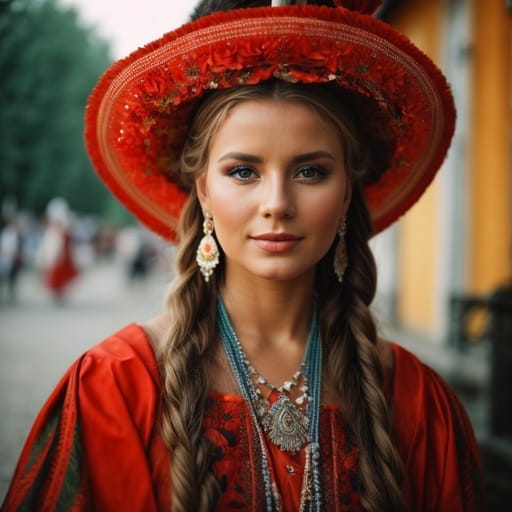
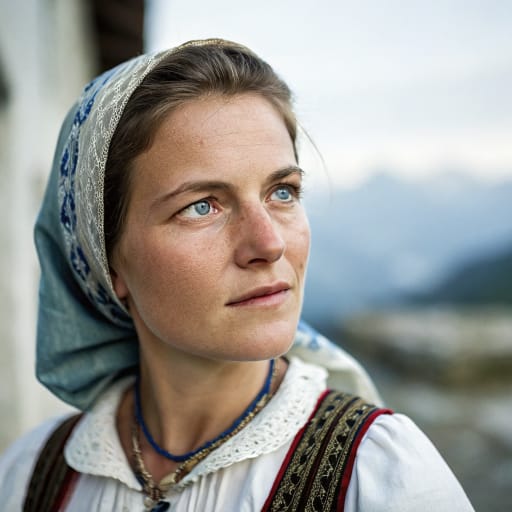
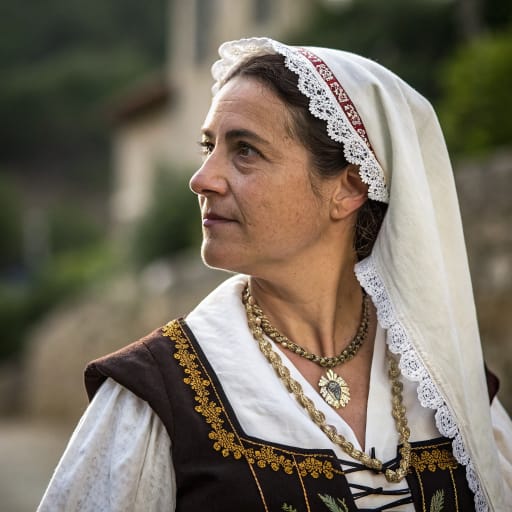
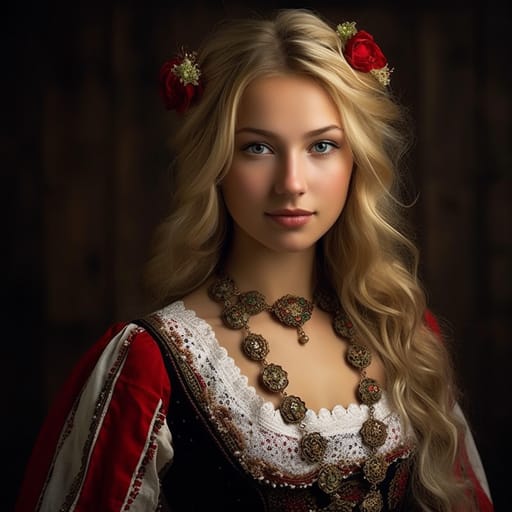
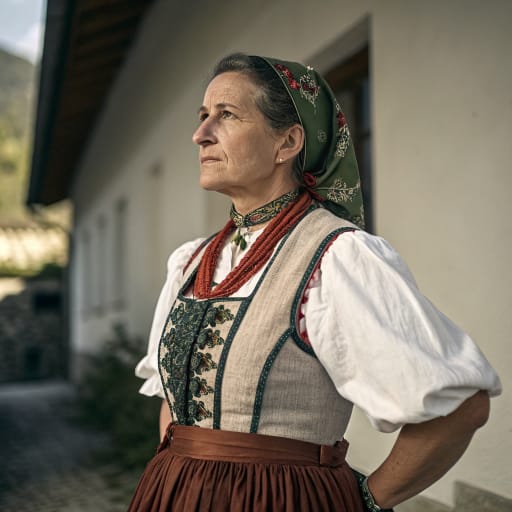
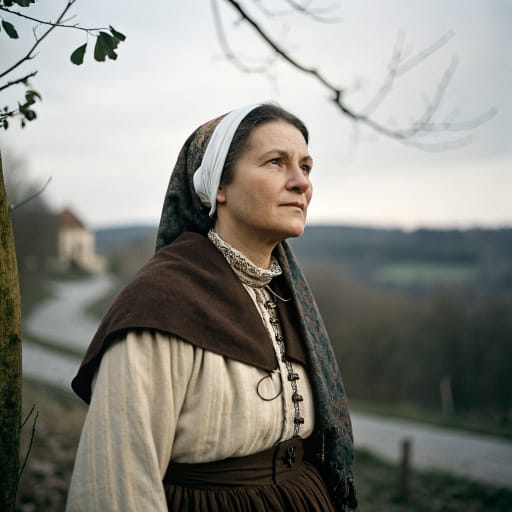
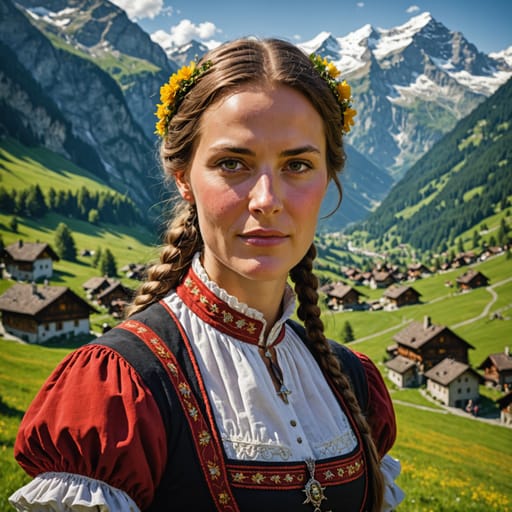
Typical Cenomani Phenotypes
Reference for AI generation: hair, eyes, skin, facial structure, build
Cenomani Body & Anatomy Reference
Western European / Celtic-Germanic phenotype: anatomy reference for AI nude generation
Cenomani Boobs & Breasts
Cenomani boobs follow the Western European / Celtic-Germanic profile: medium-to-large cup, full, moderate-to-high projection. Areolar diameter is usually 30-46mm, and the coloring is light-pink to medium-pink areolar pigmentation against the fair-to-light skin tone. Breast shape tracks body composition (ectomorph-to-mesomorph, mean adult female BMI 24-27), so Cenomani breasts tend to be full and projecting. Expect a forward-set shape, not the smaller East Asian bust.
Cenomani Ass & Hips
Cenomani ass and hip morphology presents as medium, moderate projection, distinctly different from the broader hip profile of Mediterranean phenotypes. The Cenomani pelvic profile shows medium iliac crests, anchored in the Western European / Celtic-Germanic skeletal pattern. Cenomani butt shots in adult AI imagery should render the medium, moderate projection silhouette with the overall build (ectomorph-to-mesomorph) and the fat distribution typical of the Western European / Celtic-Germanic phenotype.
Cenomani Vagina & Pussy
Cenomani pussy anatomy typically shows light-pink labial pigmentation, varied labia minora. Pubic hair is usually wavy fine-to-medium texture, blond to dark-brown. In AI-generated Cenomani nudes, labial color should blend into the fair to light skin with a gradual transition, and the hair should keep its wavy fine-to-medium texture.
Cenomani Dicks & Penis
Penis reference for Cenomani men: regional mean ~13-14cm erect, moderate girth. Coloring: light-pink to light-brown shaft pigmentation. An accurate Cenomani cock in AI imagery matches the surrounding fair to light skin rather than a generic porn default. Circumcision depends on religion and custom, not ancestry.
Cenomani Body, Curves & Build
The Cenomani figure is generally ectomorph-to-mesomorph, with mean adult female BMI 24-27, characteristic of Western European / Celtic-Germanic ancestry. AI image tools tend to flatten regional body types into a few stock shapes; here the Cenomani build is kept as its own reference.
Cenomani Skin Tone & Hair Texture
Skin: fair to light (Fitzpatrick I-III). Hair: straight-to-wavy 1A-2B, blond to dark-brown. Both are typical of Western European / Celtic-Germanic ancestry. The most common mistake in AI nudes of Cenomani women is a body rendered lighter than the face.
Explore phenotype categories
Structured taxonomy with peer-reviewed scales · 22 anatomical categories
Erotic Poses & Sex Positions
From the pose catalog: 219 named positions with reference skeletons
Frequently asked questions about Cenomani people
Where is the Cenomani homeland?
The Cenomani homeland is The valleys of the Sarthe and Huisne rivers around modern Le Mans, in the historic region of Maine, western France in Western Europe.
What language do Cenomani people speak?
Cenomani people primarily speak Gaulish (Indo-European, Continental Celtic).
What religion do Cenomani people practice?
The predominant religion among Cenomani people is Gaulish polytheism, later blended with Roman cults such as that of Mars Mullo; Christianity by late antiquity.






Make your own Cenomani images
Five a day, free, no credits to buy. The studio starts from this group's phenotype data, so you can set body type, pose and style and keep the traits accurate.
Start with Cenomani