No portrait yet
Raetovari Erotic
The Nördlinger Ries and nearby lands of former Roman Raetia north of the Danube, in present-day Bavaria and Baden-Württemberg, Germany
Early Alemannic, unwritten (West Germanic, Indo-European)
Traditional Germanic religion; gradually Christianized under Frankish rule from around 500
A regional group of the Alemanni, alongside the Lentienses, Brisigavi and Bucinobantes; later absorbed into the Swabians
About Raetovari People
The Raetovari were a Germanic people of late antiquity. They were a regional branch of the Alemanni who lived around the fourth and fifth centuries in the northern part of the old Roman province of Raetia, in what is now southern Germany. Over time they merged into the Alemannic population that later became the Swabians. No chronicle tells their story. What survives is a name, a likely homeland and a Roman army unit, and each of those says more than you might expect.
Start with the name. It joins Raetia, Rome's province between the Alps and the upper Danube, to the Germanic ending -vari, roughly "dwellers" or "men of" a place. The same ending appears in Baiuvarii, the name that became Bavarians. The Raetovari were simply the people of Raetia. They took their identity from Roman land they had moved into, not from an ancestral founder. That was typical of the Alemanni, who were less a single tribe than a loose federation. Their groups settled the territory Rome gave up after its frontier north of the Danube collapsed in the third century. Their neighbors had the same kind of place names: the Lentienses near Lake Constance, the Brisigavi of the Breisgau, the Bucinobantes across the Rhine from Mainz.
Their home is usually placed in and around the Nördlinger Ries, the broad, nearly round basin left by a meteorite impact some fifteen million years ago. It sits on today's border between Bavaria and Baden-Württemberg. The basin is fertile and has clear natural edges, which made it an obvious territory for a settled farming community. The name Ries, and the medieval Riesgau district, are generally read as a worn-down form of Raetia, so the landscape still carries the same word the Raetovari did.
Their ties to Rome did not end with settlement. The Notitia Dignitatum, a register of late Roman military commands, lists a unit called the Raetobarii among the elite palace auxiliaries of the western field army, next to units named for the Brisigavi. The frontier peoples Rome fought along the Danube were also filling its ranks.
Like other Alemanni, they spoke an early, unwritten form of Alemannic and followed traditional Germanic religion. Christianity spread gradually after the Franks brought the Alemanni under their rule from around 500. After that the name fades from view. The people themselves did not vanish. They became part of Alemannic and then Swabian society, and the Swabian dialects spoken across much of the Ries today descend in part from their speech.
Related ethnic groups
Groups that share Raetovari's homeland, region, language, or religious tradition. These are likely candidates for comparative phenotype reference.
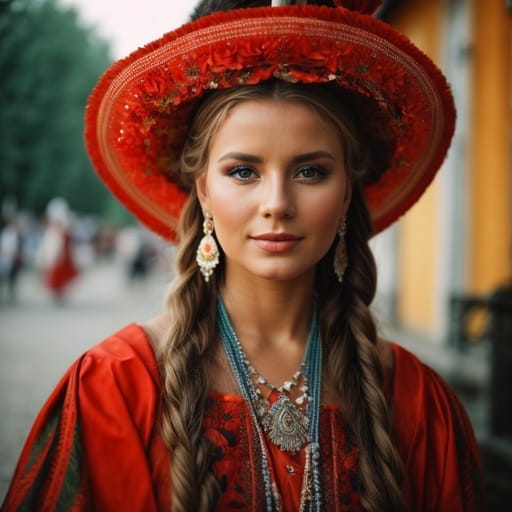
Estonians
same region (Western Europe)
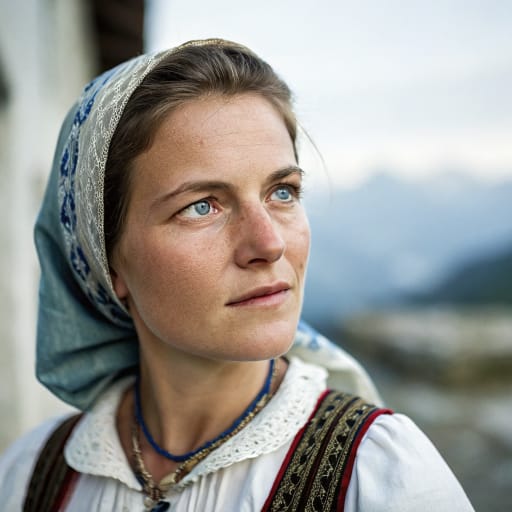
Austrians
same region (Western Europe)

Corsicans
same region (Western Europe)
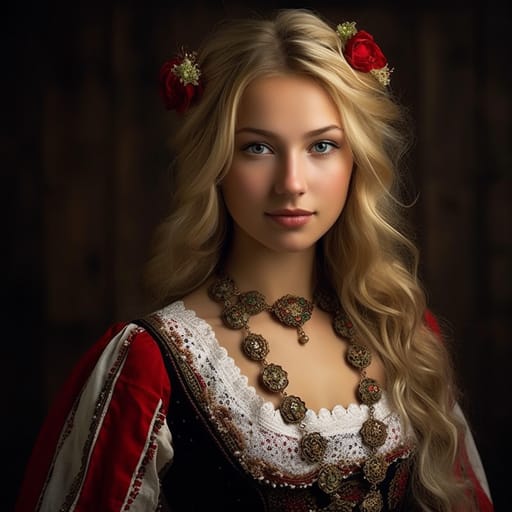
Frisians
same region (Western Europe)
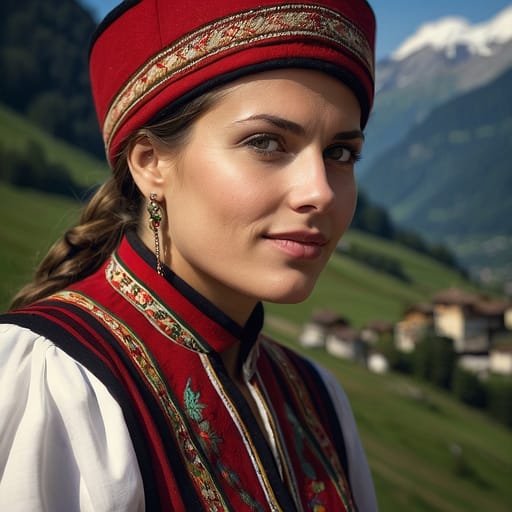
Swiss Italian
same region (Western Europe)
Ukrani
same region (Western Europe)
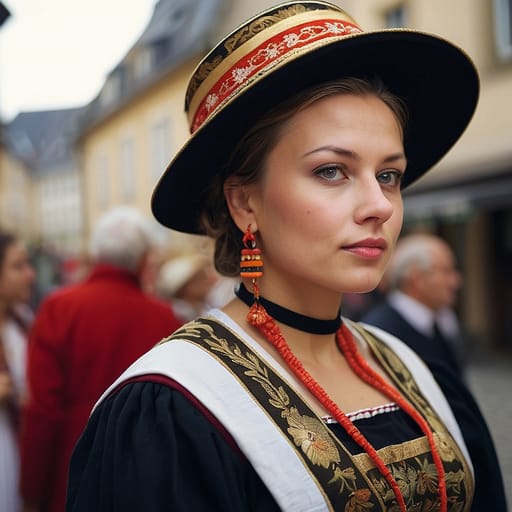
Luxembourgish
same region (Western Europe)
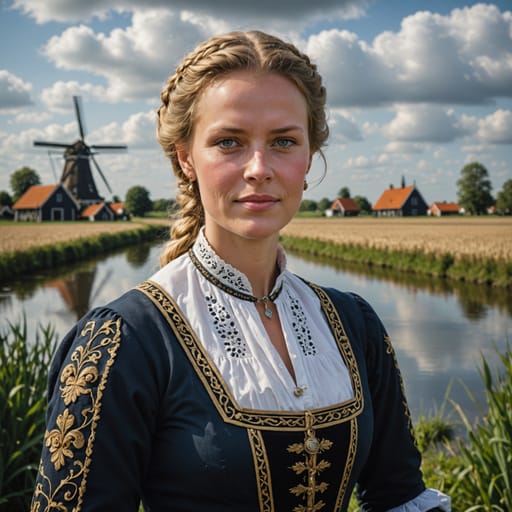
Dutch Frisian
same region (Western Europe)
Typical Raetovari Phenotypes
Reference for AI generation: hair, eyes, skin, facial structure, build
Raetovari Body & Anatomy Reference
Anatomy by feature, Western European / Celtic-Germanic phenotype
Raetovari Boobs & Breasts
The typical Raetovari bust is medium-to-large cup, full, moderate-to-high projection, in line with the wider Western European / Celtic-Germanic pattern. Areolas usually fall in the 30-46mm range, with light-pink to medium-pink areolar pigmentation against the fair-to-light skin tone. Compared with the smaller East Asian bust, Raetovari breasts sit forward and are generally full and projecting. A faithful AI render of Raetovari tits keeps that shape and areola size.
Raetovari Ass & Hips
Butt shape among Raetovari women: medium, moderate projection, over medium iliac crests. This follows Western European / Celtic-Germanic ancestry and looks quite unlike the broader hip profile of Mediterranean phenotypes. An accurate Raetovari ass in adult AI imagery keeps both the silhouette and the overall build (ectomorph-to-mesomorph) instead of a generic average.
Raetovari Vagina & Pussy
Vulvar anatomy among Raetovari women: light-pink labial pigmentation, varied labia minora. Pubic hair tends to be wavy fine-to-medium texture, blond to dark-brown, in the usual inverted-triangle pattern. Both follow Western European / Celtic-Germanic pigmentation, which is why Raetovari pussy renders should not fall back on a pale, sparse Western template.
Raetovari Dicks & Penis
The Raetovari cock profile, from Western European / Celtic-Germanic anthropometric data: regional mean ~13-14cm erect; moderate girth; light-pink to light-brown shaft pigmentation. Pubic hair has a wavy fine-to-medium texture and forms the usual inverted-V pattern. Whether Raetovari men are circumcised follows religious and cultural practice rather than phenotype.
Raetovari Body, Curves & Build
Build and curves among Raetovari women follow the Western European / Celtic-Germanic pattern: ectomorph-to-mesomorph, mean adult female BMI 24-27. Proportions matter as much as skin tone, so Raetovari figures should keep their regional height and limb ratios.
Raetovari Skin Tone & Hair Texture
The Raetovari skin range is fair to light (Fitzpatrick I-III), and hair tends to be straight-to-wavy 1A-2B, blond to dark-brown. That combination marks the Western European / Celtic-Germanic phenotype, and skin tone is the trait AI generators most often get wrong for Raetovari women.
Explore phenotype categories
Structured taxonomy with peer-reviewed scales · 22 anatomical categories
Erotic Poses & Sex Positions
From the pose catalog: 219 named positions with reference skeletons
Frequently asked questions about Raetovari people
Where is the Raetovari homeland?
The Raetovari homeland is The Nördlinger Ries and nearby lands of former Roman Raetia north of the Danube, in present-day Bavaria and Baden-Württemberg, Germany in Western Europe.
What language do Raetovari people speak?
Raetovari people primarily speak Early Alemannic, unwritten (West Germanic, Indo-European).
What religion do Raetovari people practice?
The predominant religion among Raetovari people is Traditional Germanic religion; gradually Christianized under Frankish rule from around 500.






Make your own Raetovari images
Five a day, free, no credits to buy. The studio starts from this group's phenotype data, so you can set body type, pose and style and keep the traits accurate.
Start with Raetovari