Help us get this right
Does this portrait look right for Sinhalese?
One tap. It takes a second and it is recorded.
2 say it looks right, 2 say it looks off.
Sinhalese Erotic
Buddhism / Theravada Buddhism
Dewa, British Sri Lankans, Burghers (including Portuguese Burghers and Dutch Burghers)
About Sinhalese People
The Sinhalese are the majority people of Sri Lanka, an island that has spent two and a half millennia as a node on the Indian Ocean trade circuit while developing its own distinct character. They make up roughly three-quarters of the country's population, concentrated in the wet southwestern lowlands, the central highlands around Kandy, and the dry zone running north toward the old capitals of Anuradhapura and Polonnaruwa. The historical narrative most Sinhalese grow up with traces their origins to migrants from northern India who arrived around the 5th century BCE — a story preserved in the Mahavamsa, a chronicle that remains one of South Asia's most continuously maintained historical texts and which still shapes how the community understands itself.
Sinhala, their language, is Indo-Aryan but geographically isolated from its relatives. Centuries of contact with Tamil-speaking neighbors and Pali, the liturgical language of Theravada Buddhism, have left it with a distinctive vocabulary and a script that looks nothing like Devanagari — the rounded characters evolved from Brahmi via local scribal habits and the practical demand of writing on palm leaves, where straight lines tend to split the surface. Spoken and written registers diverge sharply: literary Sinhala retains grammatical features that everyday speech dropped generations ago, and competent users move between them as the situation demands.
Theravada Buddhism is the thread running through ordinary life. Sri Lanka is one of the few places where the older, more austere southern school of Buddhism has been the establishment religion essentially without interruption since the 3rd century BCE, and the Sinhalese sangha has periodically re-seeded the tradition in Southeast Asia when it faltered there. This shows up in small things — the lay practice of observing poya days at each lunar phase, the prominence of monasteries in village social life, the fact that the Temple of the Tooth in Kandy is treated as a national institution rather than a tourist site. A minority of Sinhalese are Christian, mostly Catholic, a legacy of Portuguese contact in the 16th century.
The community has internal stratification that outsiders often miss. Caste exists in a Sinhalese form distinct from the Indian system, with the Govigama agriculturalists historically dominant and coastal groups like the Karava and Salagama having risen through colonial-era trade. The Kandyan highlanders, sheltered by terrain from Portuguese and Dutch coastal rule until 1815, retain a self-image as custodians of an older, less cosmopolitan Sinhalese identity than their lowland counterparts.
Related ethnic groups
Groups that share Sinhalese's homeland, region, language, or religious tradition. These are likely candidates for comparative phenotype reference.
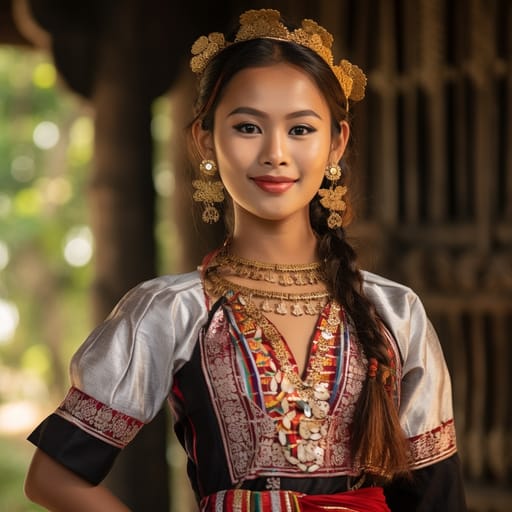
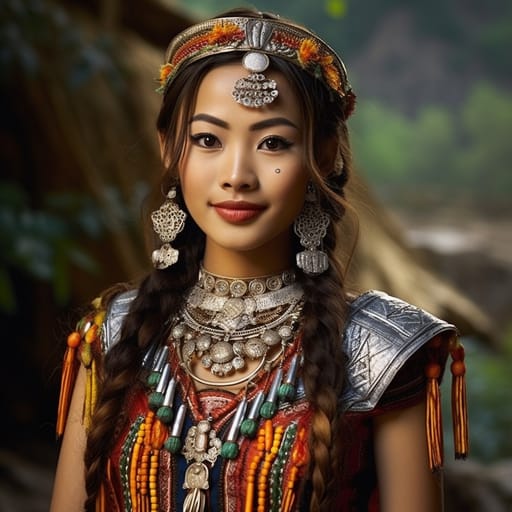
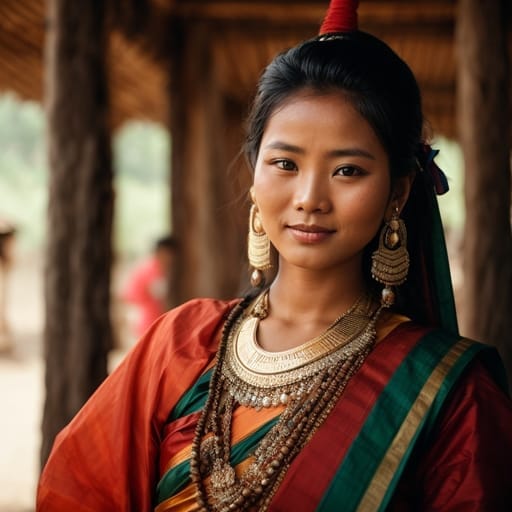
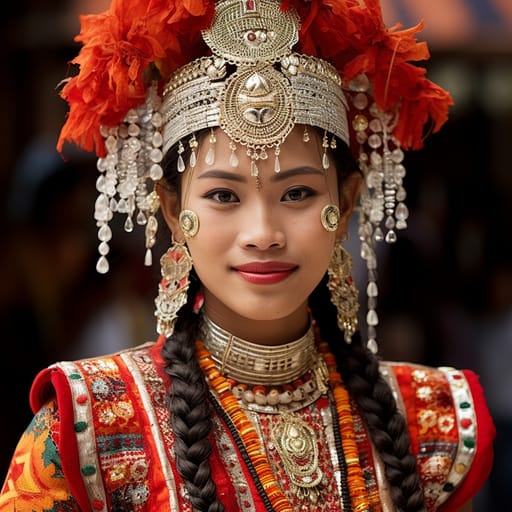
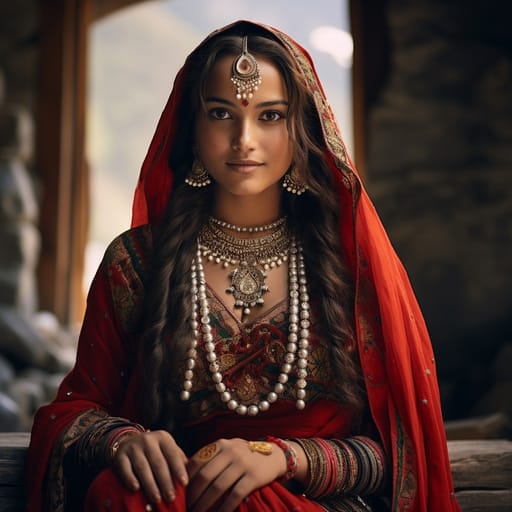
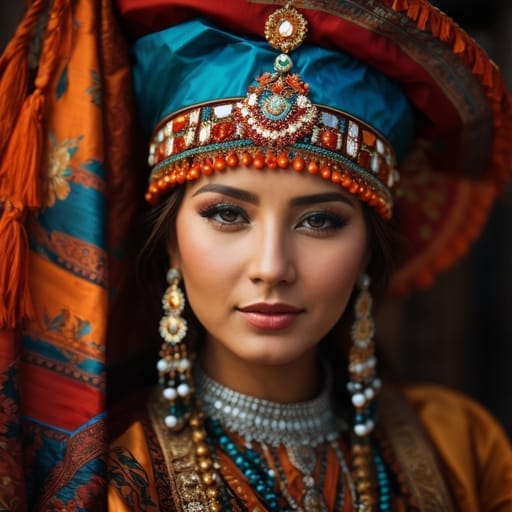
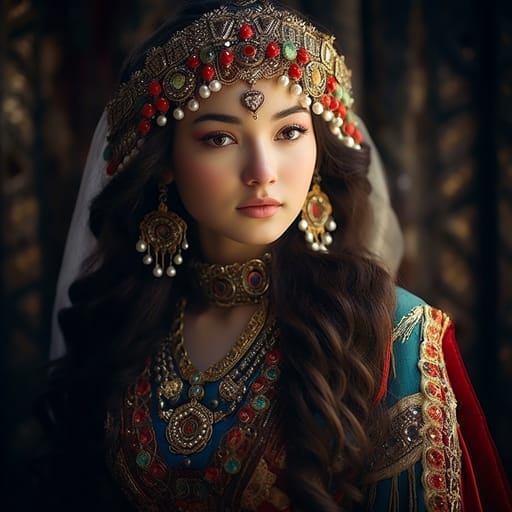
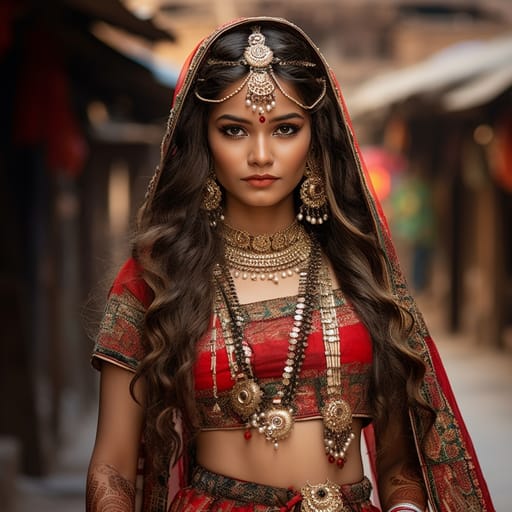
Geographic Distribution: Sinhalese populations across 1 country
Each row is ranked by the group's share of that country's population, with the source citation drawn from published census and demographic surveys. Click through for the full per-country phenotype profile.
| Country | Share | Source |
|---|---|---|
| Sri Lanka | 74.9% | Department of Census and Statistics Sri Lanka 2012 Population and Housing Census, self-identified Sinhalese (~74.9%, ~15.2M); the dominant ethnic group, predominantly Theravada Buddhist (~70%) with smaller Catholic Sinhalese (~3%) and Protestant Sinhalese sub-populations. The Sinhalese language is part of the Indo-Aryan family — extraordinary as the southernmost surviving Indo-Aryan language, suggesting an ancient migration from northern India to Sri Lanka approximately 5th c. BCE per the Mahavamsa chronicle |
Typical Sinhalese Phenotypes
Reference for AI generation: hair, eyes, skin, facial structure, build
Sinhalese phenotype sits at the south end of the South Asian cline, shaped by long isolation on Sri Lanka and centuries of contact with Tamil, Arab, Malay, Portuguese, Dutch, and British populations. The dominant signature is dark, glossy hair on warm-brown skin, with facial features that are softer and rounder than the more angular profiles common further north on the subcontinent.
Hair is near-uniformly black or very dark brown, thick, and most often straight to gently wavy. Loose curls occur but tight coils are rare. Greying tends to come in late and stays sparse for decades. Eyebrows are full and dark; body hair is moderate, lighter than on West or North Indian phenotypes. Eyes range from medium brown to near-black, almond-shaped, set under a single straight or slightly arched lid — no epicanthic fold, in contrast to the island's small Malay-descended communities. Lashes are long and dark.
Skin spans Fitzpatrick IV to V across most of the population, with warm golden-to-olive undertones rather than the cooler reddish-brown seen in some Dravidian groups. Coastal and rural Sinhalese trend deeper, into V–VI; the urban Kandyan and Colombo middle classes often sit at a lighter IV. Burghers — particularly Portuguese and Dutch Burghers — break the pattern visibly, carrying European admixture that produces lighter skin (II–III), occasional light eyes, and sometimes lighter brown or auburn hair.
Facial structure leans round-to-oval with full cheeks and a soft jaw rather than a sharp one. Noses are typically medium-bridged with moderate alar width — neither the high narrow nose of North India nor the broader shapes of South Indian Dravidian phenotypes. Lips run medium-full and well-defined. Teeth are usually straight and bright against the skin tone.
Build is compact. Adult men typically fall around 165–170 cm and women 152–157 cm, with naturally lean-to-slim frames in youth that fill out in the midsection with age. Shoulders are moderate, hips modest, limbs proportionate to torso. The defining read is warm-brown skin, glossy black straight hair, and a softer rounder face than the South Asian average.
Sinhalese Body & Anatomy Reference
Indo-Aryan / Dravidian South Asian phenotype: anatomy reference for AI nude generation
Sinhalese Boobs & Breasts
Sinhalese boobs follow the Indo-Aryan / Dravidian South Asian profile: medium-to-large cup, moderate-to-full projection. Areolar diameter is usually 32-46mm, and the coloring is medium-brown to dark-brown areolar pigmentation against the wheatish-to-brown skin tone. Breast shape tracks body composition (endomorph-to-mesomorph with fuller hip deposition, mean adult female BMI 22-25), so Sinhalese breasts tend to be full and soft, generally fuller than the East Asian norm. Expect a forward-set shape, not the smaller East Asian bust profile.
Sinhalese Ass & Hips
Sinhalese ass and hip morphology presents as medium-to-full, moderate-to-high projection, classic curvy hip profile, distinctly different from the slim hip profile of East Asian women. The Sinhalese pelvic profile shows medium-to-wide iliac crests, full gluteal-femoral fat distribution, anchored in the Indo-Aryan / Dravidian South Asian skeletal pattern. Sinhalese butt shots in adult AI imagery should render the medium-to-full, moderate-to-high projection, classic curvy hip profile silhouette with the overall build (endomorph-to-mesomorph with fuller hip deposition) and the fat distribution typical of the Indo-Aryan / Dravidian South Asian phenotype.
Sinhalese Vagina & Pussy
Sinhalese pussy anatomy typically shows medium-brown to dark-brown labial pigmentation, fuller labia minora projection. Pubic hair is usually straight-to-wavy coarse texture, dense distribution. In AI-generated Sinhalese nudes, labial color should blend into the wheatish to brown skin with a gradual transition, and the hair should keep its straight-to-wavy coarse texture.
Sinhalese Dicks & Penis
Penis reference for Sinhalese men: regional mean ~13cm erect, moderate girth. Coloring: medium-brown shaft pigmentation. An accurate Sinhalese cock in AI imagery matches the surrounding wheatish to brown skin rather than a generic porn default. Circumcision depends on religion and custom, not ancestry.
Sinhalese Body, Curves & Build
The Sinhalese figure is generally endomorph-to-mesomorph with fuller hip deposition, with mean adult female BMI 22-25, characteristic of Indo-Aryan / Dravidian South Asian ancestry. AI image tools tend to flatten regional body types into a few stock shapes; here the Sinhalese build is kept as its own reference.
Sinhalese Skin Tone & Hair Texture
Skin: wheatish to brown (Fitzpatrick III-V). Hair: straight-to-wavy 1A-2B, dense, dark-brown to black. Both are typical of Indo-Aryan / Dravidian South Asian ancestry. The most common mistake in AI nudes of Sinhalese women is a body rendered lighter than the face.
Data depth
0/100Coverage of image-grounded phenotype observations · drives AI generation diversity
- Sample size
- 0/40· 0 images
- Image quality
- 0/30· 0% high
- Confidence
- 0/20
- Source diversity
- 0/10
- ·No image observations yet
Explore phenotype categories
Structured taxonomy with peer-reviewed scales · 22 anatomical categories
Notable Sinhalese People
55 reference figures, sourced from Wikipedia
- Professor, Rohan Abeyaratne
- Rohan Gunaratna, Professor Rohan Gunaratna
- Sir, Professor Sir Nicholas Attygalle
- Nirmal Ranjith Dewasiri, Professor Nirmal Ranjith Dewasiri
- Kapila Gunasekara, Professor Kapila Gunasekara
- K. N. Jayatilleke, Professor K. N. Jayatilleke
- Sam Karunaratne, Professor Sam Karunaratne
- W.S. Karunaratne, Professor W.S. Karunaratne
- G. L. Peiris, Professor G. L. Peiris
- Walpola Rahula, Professor Walpola Rahula
- V. K. Samaranayake, Professor V. K. Samaranayake
- Ajith Kumar Siriwardena, Professor Ajith Kumar Siriwardena
- Cyril Abeynaike, 10th bishop of Colombo (Anglican)
- Tissa Balasuriya, Catholic)
- Thomas Cooray, Cardinal Thomas Cooray, 8th archbishop of Colombo
- Ivan Corea, Anglican)
- Duleep de Chickera, 14th bishop of Colombo (Anglican)
- Lakdasa De Mel, 1st bishop of Kurunegala (Anglican)
- Lynn de Silva, Methodist)
- Harold de Soysa, 9th bishop of Colombo (Anglican)
- Frank Marcus Fernando, 3rd bishop of the Roman Catholic Diocese of Chilaw
- Nicholas Marcus Fernando, 1932-2020), Roman Catholic Archbishop of Colombo from 1977 to 2002
- Kenneth Fernando, 13th bishop of Colombo (Anglican)
- Swithin Fernando, 11th bishop of Colombo (Anglican)
- Oswald Gomis, 10th archbishop of Roman Catholic Archdiocese of Colombo
- Kumara Illangasinghe, 4th bishop of Kurunegala (Anglican)
- Marcelline Jayakody, Catholic)
- Andrew Kumarage, 3rd bishop of Colombo (Anglican)
- Valence Mendis, current bishop of the Roman Catholic Diocese of Chilaw
- Edmund Peiris, 1897-1989), Bishop of Chilaw from 1940 to 1972, President of the Royal Asiati…
- Elmo Noel Joseph Perera, 5th bishop of the Roman Catholic Diocese of Galle
- Aloysius Pieris, Jesuit Catholic priest
- Ernest Poruthota, 1931-2020), Roman Catholic priest and author
- Malcolm Ranjith, Cardinal Malcolm Ranjith, current archbishop of Colombo (Catholic)
- Lakshman Wickremasinghe, 2nd bishop of Kurunegala (Anglican)
- Captain, D.E. Henry Pedris
- A. W. H. Abeyesundere, 1906-1988)
- K. M. M. B. Kulatunga, died 2010)
- Christopher Weeramantry, 1926-2017)
- Marshal of the air force, Roshan Goonatilake
- Air Chief Marshal, Harry Goonatilake
- Air Vice Marshal, E. R. Amarasekara
- Air Commodore, Shirantha Goonatilake
- General, D. S. Attygalle
- Lieutenant General, Shavendra Silva
- Major General, Janaka Perera
- Colonel, Fredrick C. de Saram
- Admiral of the fleet, Wasantha Karannagoda
- Admiral, Clancy Fernando
- Vice Admiral, Asoka de Silva
- Rear Admiral, Rohan Amarasinghe
- King, Devanampiyatissa
- Dr, Colvin R de Silva
- Mohan Munasinghe, Professor Mohan Munasinghe
- Chandra Wickramasinghe, Professor Chandra Wickramasinghe
Erotic Poses & Sex Positions
From the pose catalog: 219 named positions with reference skeletons
Frequently asked questions about Sinhalese people
Where is the Sinhalese homeland?
The Sinhalese homeland is Sri Lanka in Southern Asia.
What countries do Sinhalese people live in?
Sinhalese populations are documented across 1 country: Sri Lanka.
What language do Sinhalese people speak?
Sinhalese people primarily speak Indo-European / Indo-Aryan / Sinhala.
What religion do Sinhalese people practice?
The predominant religion among Sinhalese people is Buddhism / Theravada Buddhism.






Make your own Sinhalese images
Five a day, free, no credits to buy. The studio starts from this group's phenotype data, so you can set body type, pose and style and keep the traits accurate.
Start with Sinhalese