Help us get this right
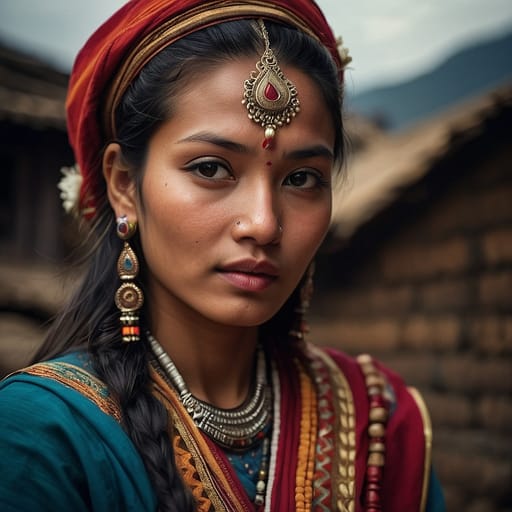
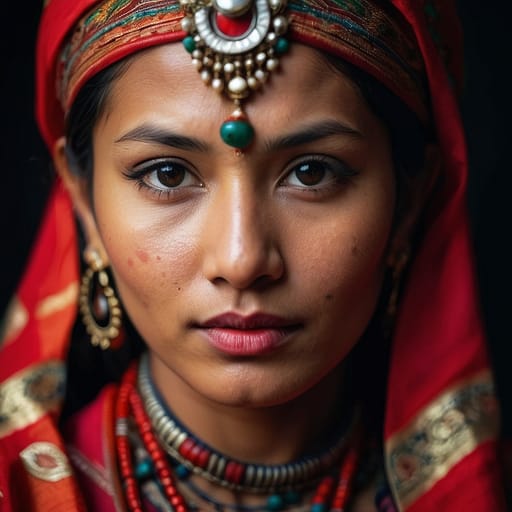
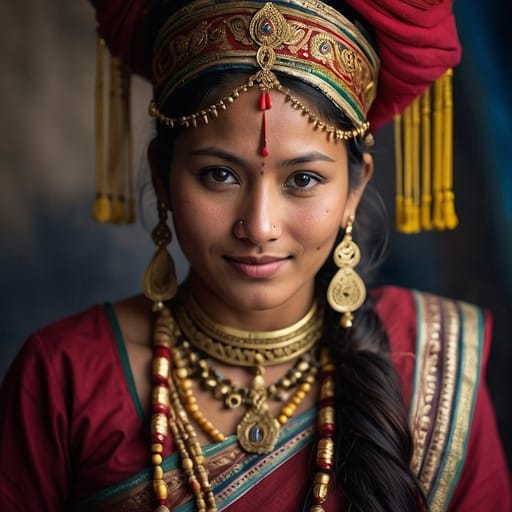
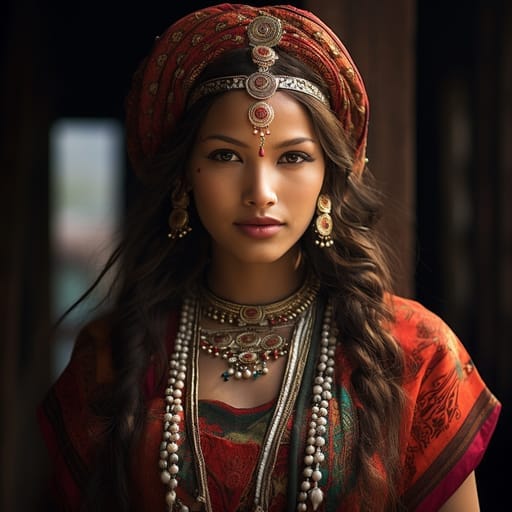
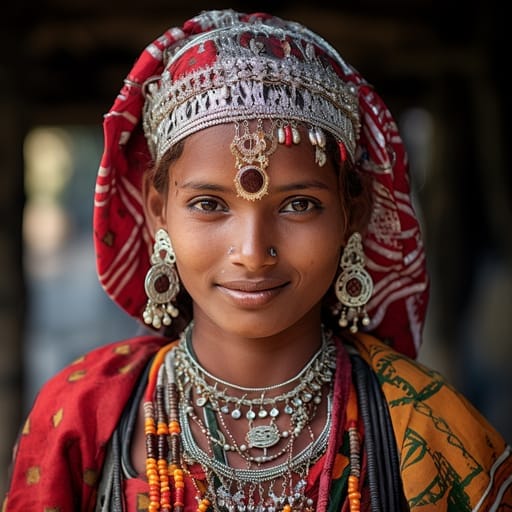
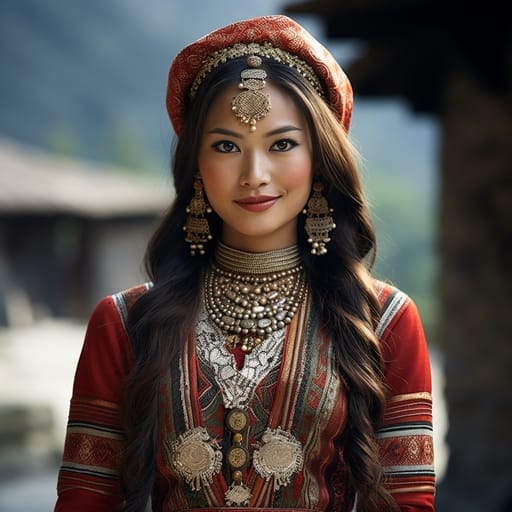
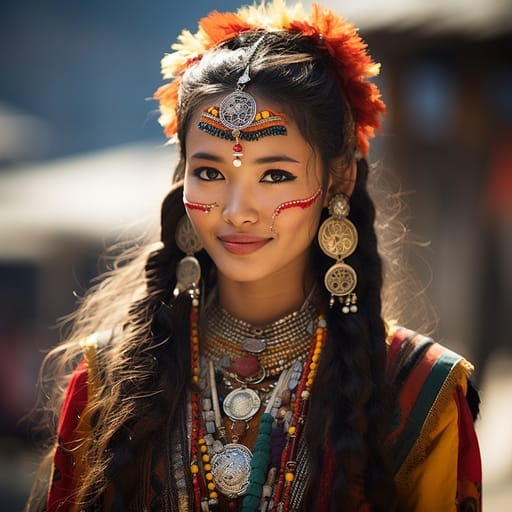
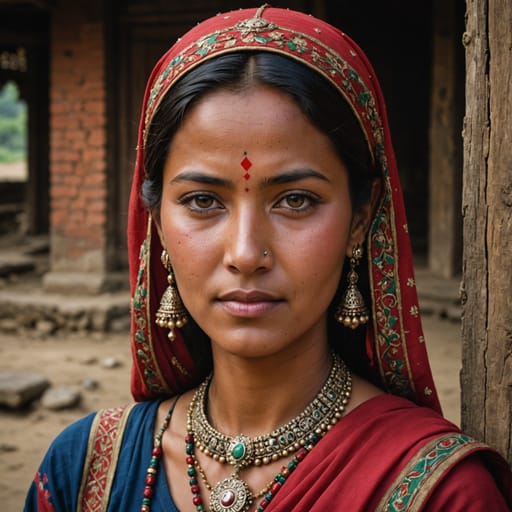
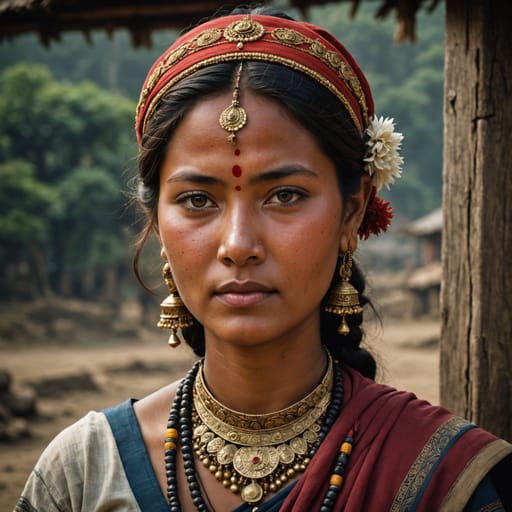
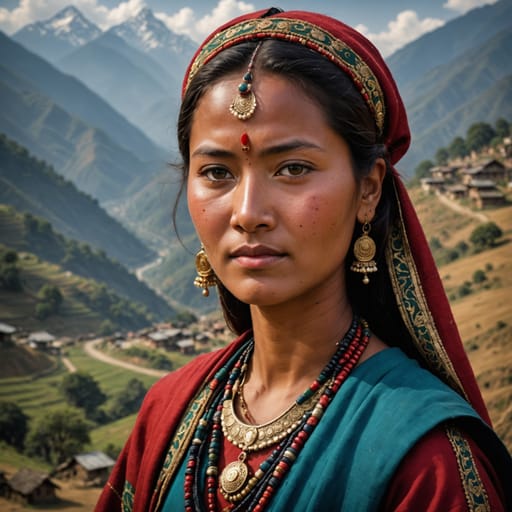
Does this portrait look right for Khas Arya?
One tap. It takes a second and it is recorded.
1 says it looks right, 1 says it looks off.
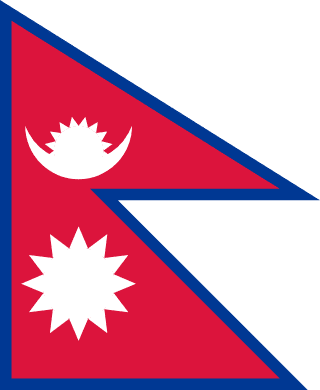

Nepal
NPSouth Asia
Nepal is home to 14 documented ethnic groups in South Asia, led by Khas Arya (~31%), Indian Origin Nepalese (~15%), Nepalese Other (~14%), Magar (~7%). This page blends their phenotype and demographic data into one weighted reference: skin tone, facial features, hair texture and build, drawn from published census and ancestry sources.
Demographic Composition
Composition weights are derived from self-identification in published census and demographic surveys. Each row links to the source ethnic-group atlas page.
| Ethnic group | Weight | Source |
|---|---|---|
 Khas Arya Khas Arya | 31.4% | Central Bureau of Statistics Nepal 2021 Census; Khas Arya populations (Chhetri ~16.5% + Bahun/Hill Brahmin ~11.3% + Thakuri ~1.0% + Sanyasi/Dasnami ~0.9% + Khas-related sub-castes) comprise approximately 31.4% of the Nepalese population. The Khas Arya are the dominant Hindu Indo-Aryan-language-speaking population of the Nepalese hills, historically the politically dominant group through the unification of Nepal under Prithvi Narayan Shah in the 18th c. and the post-1990 democratic period |
 Indian Origin Nepalese Indian Origin Nepalese | 15.0% | Nepal 2021 Census, residual including the substantial Indo-Aryan caste populations of the Terai (Madhesi communities including Brahman-Hill, Yadav, Mushar, Chamar, Dusadh, Tatma, Khatwe, Dhanuk, Kewat, Lohar, Bhumihar, Rajput, Kayasth, Halwai, Kurmi-Awadhi, plus smaller groups; the Madhesi vs hill / pahadi political distinction has been politically salient since 2007) |
 Nepalese Other Nepalese Other | 14.5% | Nepal 2021 Census, residual including approximately 100+ smaller ethnic and caste groups not enumerated above — the Janajati Indigenous communities (Sunuwar, Yakkha, Sherpa-related groups, etc.), various Madhesi and hill caste communities, plus the Dalit communities (Damai, Kami, Sarki, Sunar, Badi, Gaine, Halkhor, Doom, etc., predominantly hill-Dalit and Terai-Dalit sub-populations facing substantial caste-based marginalization) |
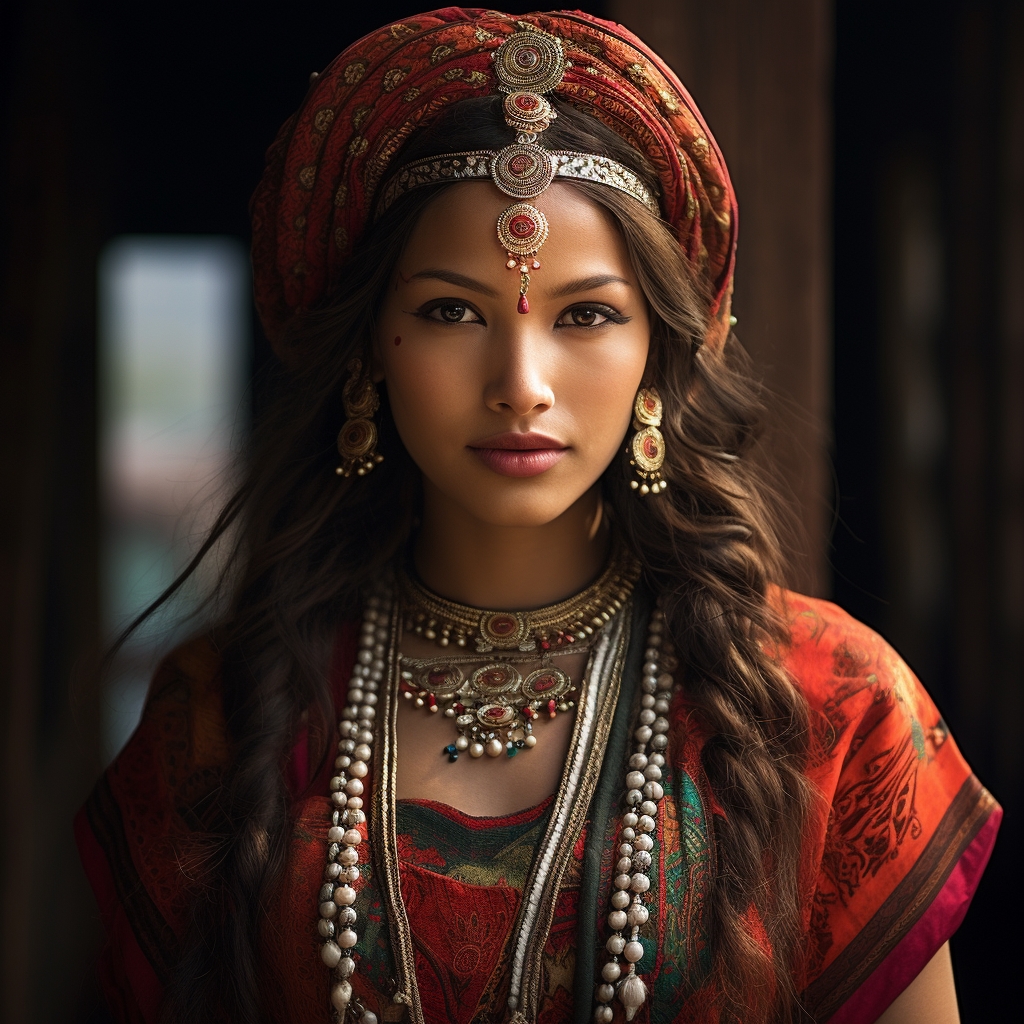 Magar Magar | 7.3% | Nepal 2021 Census, self-identified Magar (~7.3%, ~2.1M); the largest Tibeto-Burman ethnic group in Nepal, concentrated in central and western Nepal. Magar communities have been historically prominent in the Gurkha military tradition |
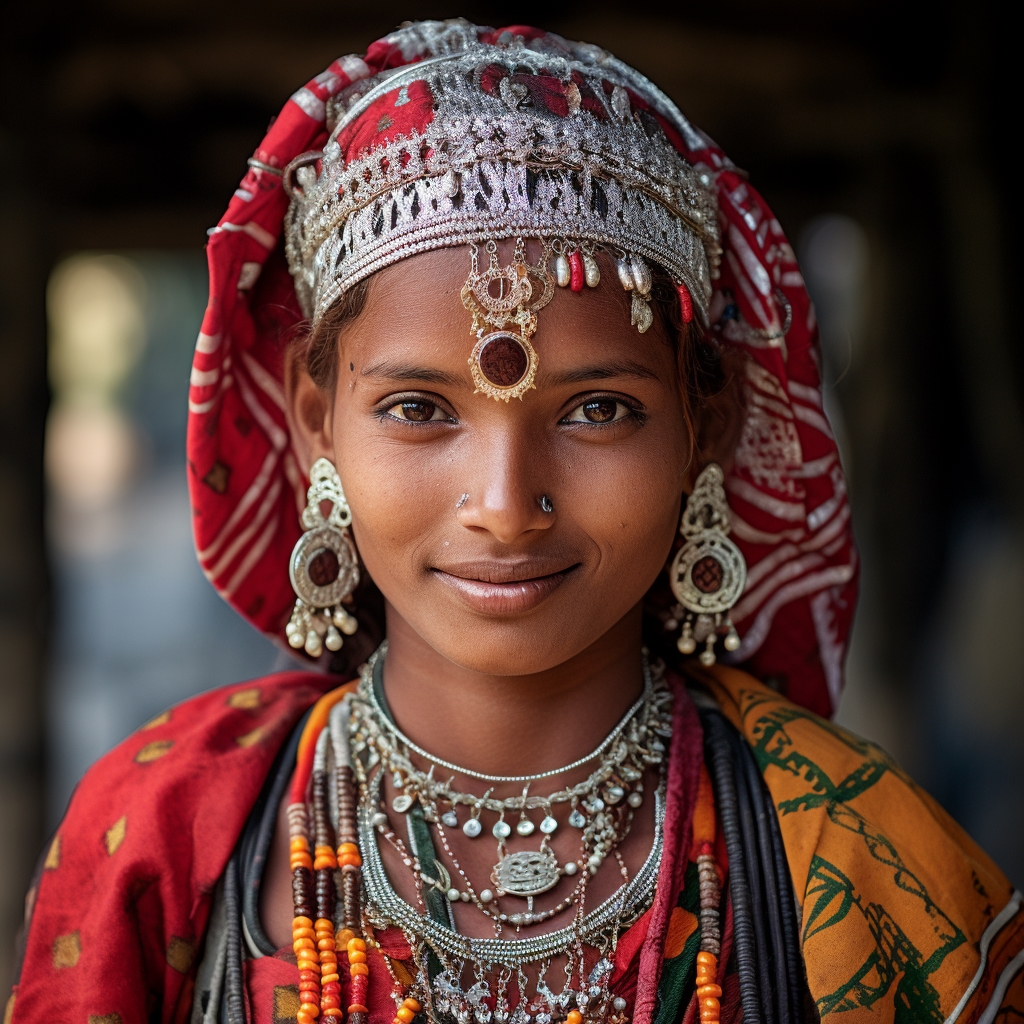 Tharu Tharu | 6.3% | Nepal 2021 Census, self-identified Tharu (~6.3%, ~1.8M); the Indigenous people of the Terai (the lowland plain along the Indian border). Genetic studies document substantial Tharu adaptation to malaria and other Terai-environment challenges. Tibeto-Burman with substantial Indo-Aryan influence; multiple Tharu sub-communities (Rana Tharu, Dangaura Tharu, Chitwania Tharu, Kochila Tharu) |
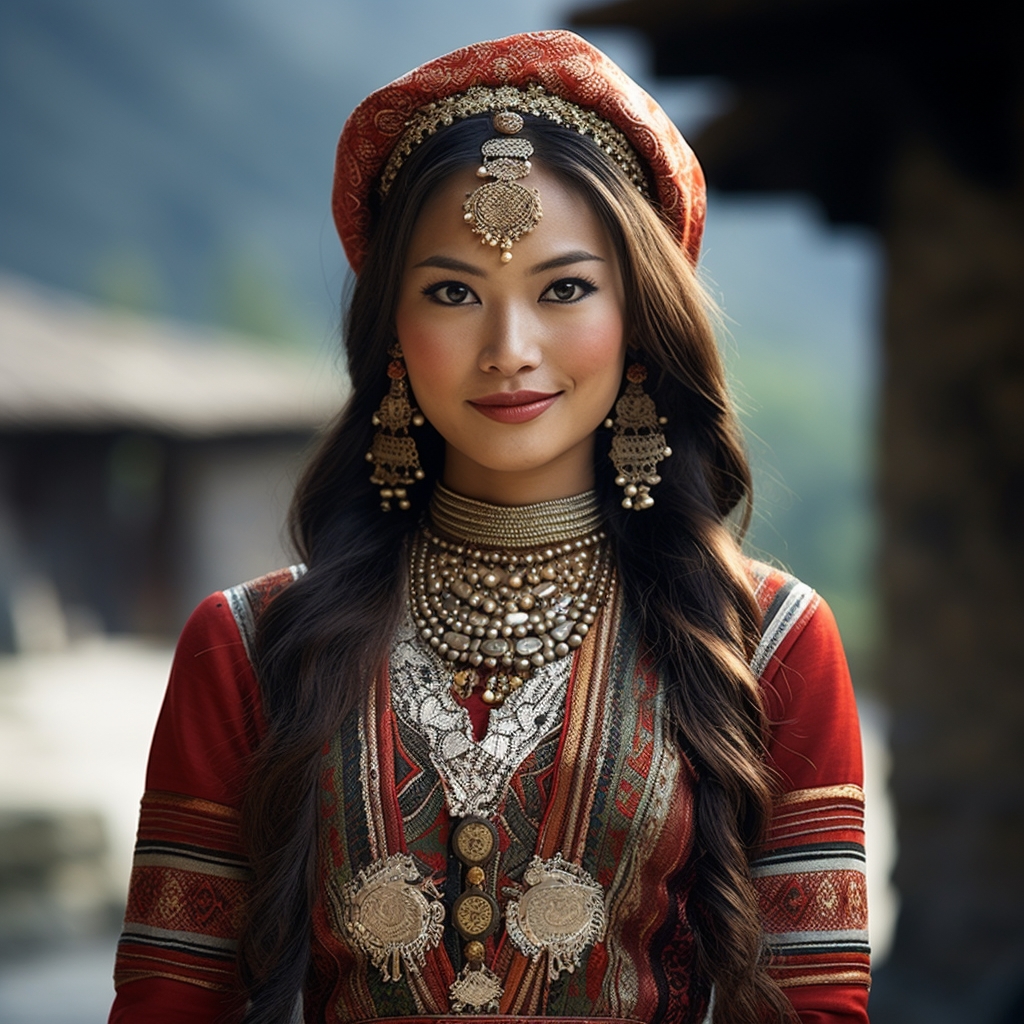 Tamang Tamang | 5.7% | Nepal 2021 Census, self-identified Tamang (~5.7%, ~1.6M); concentrated in the central Nepal hills surrounding Kathmandu Valley. Tibeto-Burman, predominantly Tibetan Buddhist (Nyingma and Kagyu schools) |
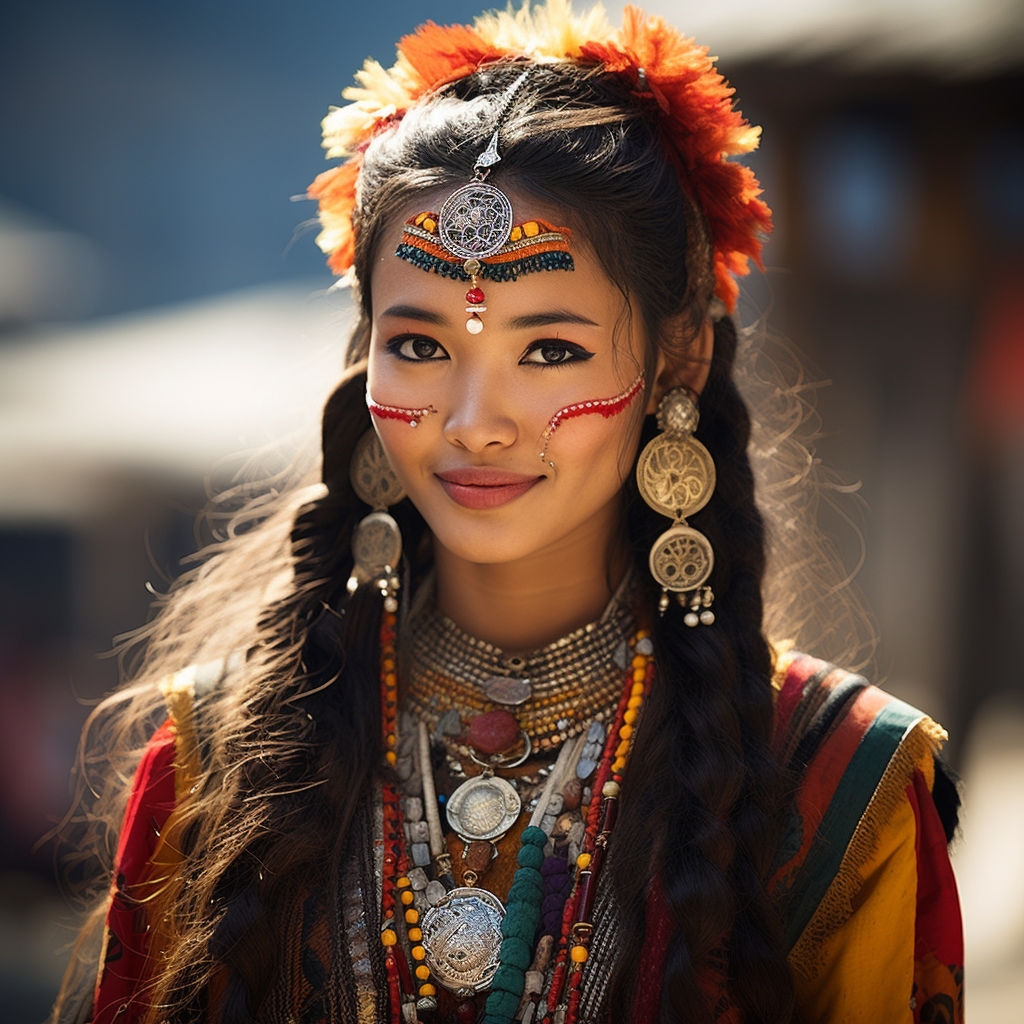 Newar Newar | 5.0% | Nepal 2021 Census, self-identified Newar (~5.0%, ~1.4M); the historically dominant ethnic group of Kathmandu Valley. The Newar speak Nepal Bhasa (a Tibeto-Burman language with substantial Sanskrit and Indo-Aryan influence); the community is religiously diverse including Newar Hindu and Newar Buddhist (Vajrayana / Nepalese Tantric Buddhism) sub-populations. The historically distinguished Newar civilization produced the architectural heritage of Kathmandu Valley (UNESCO World Heritage) |
 Muslim Nepalese Muslim Nepalese | 4.6% | Nepal 2021 Census, self-identified Muslim Nepali (~4.6%, ~1.3M); the Nepalese Muslim community concentrated in the Terai region with substantial cross-border cultural ties to Indian Muslim populations. Predominantly Sunni with smaller Shia communities |
 Yadav Nepalese Yadav Nepalese | 4.0% | Nepal 2021 Census, self-identified Yadav (~4.0%, ~1.1M); the Hindu Indo-Aryan caste-community of the Terai region, traditional cattle-herders. Cross-border population shared with Indian Yadav communities |
 Rai Rai | 2.3% | Nepal 2021 Census, self-identified Rai (~2.3%, ~654,000); umbrella for multiple closely-related Tibeto-Burman ethnic groups (Bantawa, Chamling, Khaling, Kulung, Limbu-related subgroups, etc.) of eastern Nepal hills |
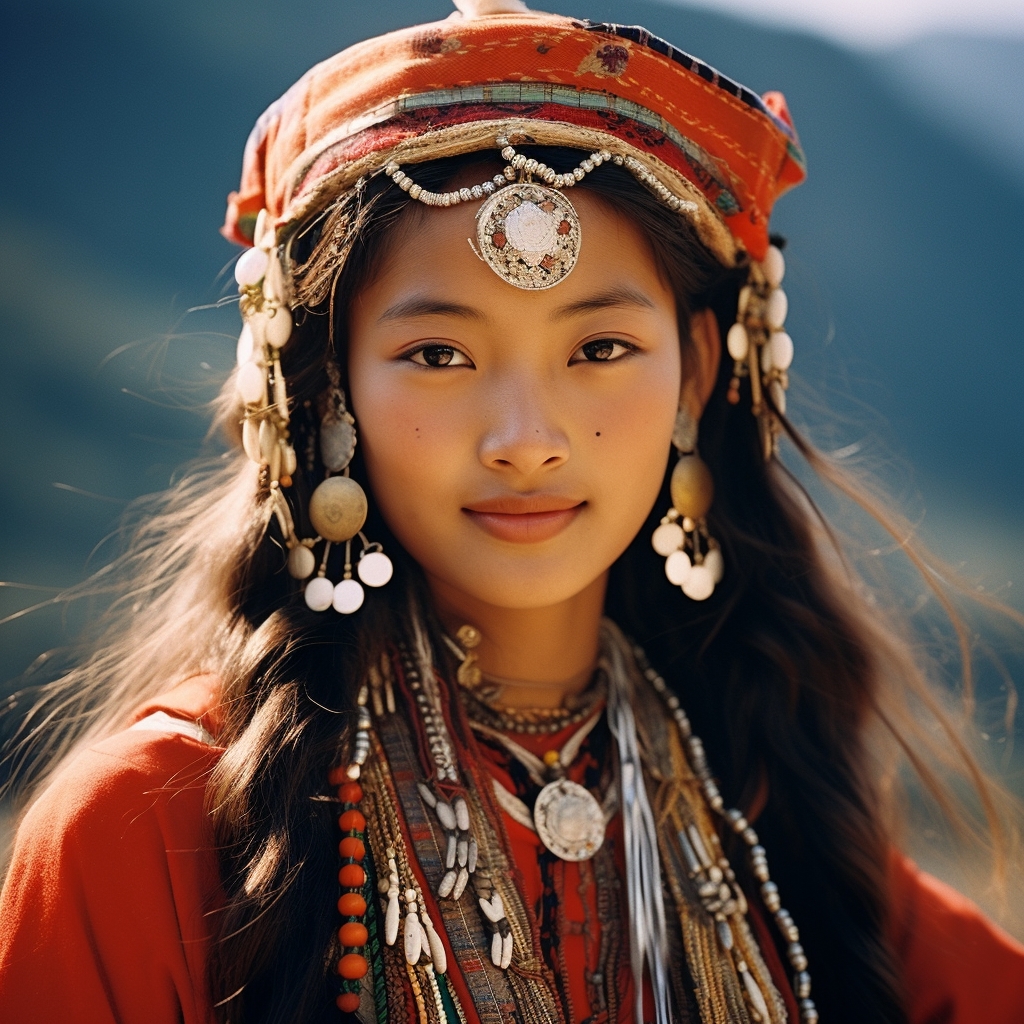 Gurung Gurung | 1.9% | Nepal 2021 Census, self-identified Gurung (~1.9%, ~553,000); concentrated in central Nepal hills (Kaski, Lamjung, Manang). Tibeto-Burman, predominantly Tibetan Buddhist with smaller Hindu communities. Gurung communities have been disproportionately represented in the British Gurkha and Indian Army Gurkha military traditions |
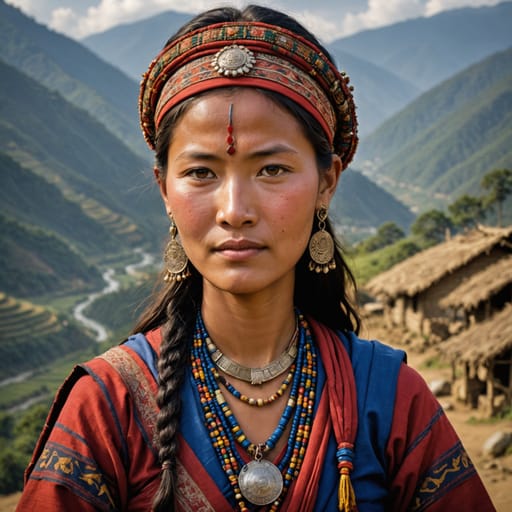 Limbu Limbu | 1.4% | Nepal 2021 Census, self-identified Limbu (~1.4%, ~395,000); concentrated in eastern Nepal hills. Tibeto-Burman, with the distinct Yakthung Mundhum religious tradition plus Hindu and Buddhist sub-populations |
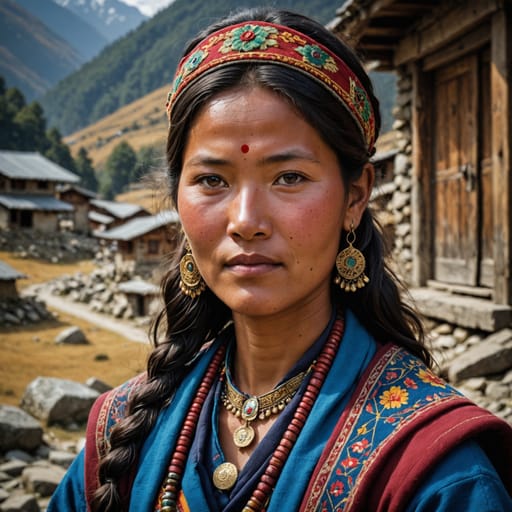 Sherpa Sherpa | 0.5% | Nepal 2021 Census, self-identified Sherpa (~0.5%, ~150,000); concentrated in the high-altitude Solukhumbu region (the Mount Everest area) plus other Himalayan zones. Tibeto-Burman, Tibetan Buddhist (Nyingma school), descended from Tibetan migrants who entered Nepal approximately the 16th c. CE. Sherpa communities have been disproportionately represented in Himalayan mountaineering expeditions |
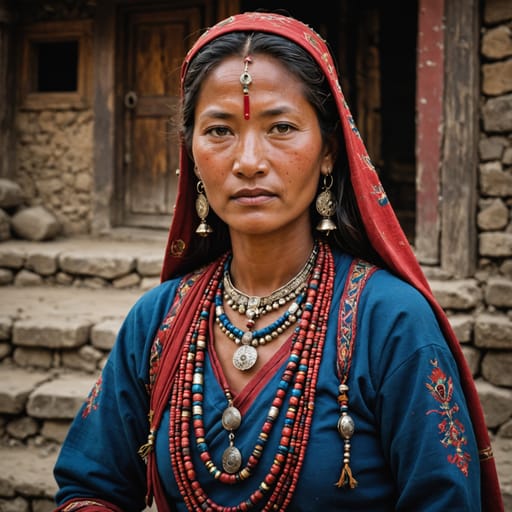 Thakali Thakali | 0.1% | Nepal 2021 Census, self-identified Thakali (~0.1%, ~13,000); concentrated in Mustang and Myagdi districts of central Nepal. Tibeto-Burman, the historic salt-trade community of the trans-Himalayan trade route |
Nepal Phenotype Profile
Nepal's population is structured around a complex multi-ethnic / multi-caste composition reflecting the country's geographic position as the central Himalayan and trans-Himalayan corridor between South Asia and Tibet / East Asia. The 2021 Census enumerates over 125 distinct ethnic / caste groups. The major umbrellas: Khas Arya (~31%, Hindu Indo-Aryan-language hill-caste populations), Indian-origin Madhesi populations (~25-30% combined including Yadav, Muslim Nepali, and various Madhesi caste communities of the Terai), Tibeto-Burman Janajati populations (~30%+ combined including Magar, Tharu, Tamang, Newar, Rai, Gurung, Limbu, Sherpa, Thakali, plus ~50+ smaller groups), and Dalit / marginalized caste populations (~13% across hill-Dalit and Terai-Dalit sub-populations).
Genome-wide patterns reflect the substantial East Asian / Tibeto-Burman vs South Asian Indo-Aryan ancestry gradient — Khas Arya populations carry primarily South Asian Indo-Aryan ancestry; Tibeto-Burman Janajati populations carry substantial East Asian / Tibetan-source ancestry; Madhesi Terai populations carry primarily South Asian Indo-Aryan ancestry similar to neighboring Northern Indian populations.
Skin tone across the population spans Fitzpatrick II-VI with III-IV the modal value nationally. The Khas Arya Hindu-caste populations skew toward Fitzpatrick III-IV; the Tibeto-Burman Janajati populations skew toward Fitzpatrick III-IV with characteristic East Asian features; the Madhesi Terai populations skew toward Fitzpatrick IV-V; the Dalit communities show varied phenotype distributions corresponding to regional source populations. Hair is predominantly straight (Andre Walker 1A-1B) and uniformly black or very dark brown across most populations. Eye color is uniformly brown to dark brown across most populations with elevated lighter-eye frequencies in some Khas Arya families. Facial features show clear regional patterning. Build varies; adult Nepalese male mean stature is approximately 162-167 cm in 2010s-2020s cohorts (somewhat shorter than the broader Indian average, reflecting both genetic ancestry and developmental nutritional factors).
Nepal Body & Anatomy Reference
Per-feature anatomical profile for AI nude generation: Indo-Aryan / Dravidian South Asian phenotype dominant in Nepal
Nepal Women: Boobs & Breasts
Nepal women's tits and boobs reflect the medium-to-large cup, moderate-to-full projection Indo-Aryan / Dravidian South Asian bust profile dominant in the Nepal demographic composition. Nepal nipples and areolas show medium-brown to dark-brown areolar pigmentation against the wheatish-to-brown skin tone, with areolar diameter typically in the 32-46mm range, distinct from the the smaller East Asian bust profile. Nepal breast morphology trends full and soft, generally fuller than the East Asian norm, a function of the endomorph-to-mesomorph with fuller hip deposition body habitus and mean adult female BMI 22-25. For anatomically-accurate AI-generated Nepal nude women the render should preserve: medium-to-large cup, moderate-to-full projection shape, 32-46mm areolas with regional pigmentation, and the torso proportions of the Indo-Aryan / Dravidian South Asian phenotype.
Nepal Women: Ass & Hips
Nepal women's ass and hip morphology presents as medium-to-full, moderate-to-high projection, classic curvy hip profile, distinctly different from the slim hip profile of East Asian women. Nepal pelvic profile shows medium-to-wide iliac crests, full gluteal-femoral fat distribution, anchored in the Indo-Aryan / Dravidian South Asian skeletal pattern that dominates the Nepal ethnic composition. Nepal butt shots in adult AI imagery should render the medium-to-full, moderate-to-high projection, classic curvy hip profile silhouette with the endomorph-to-mesomorph with fuller hip deposition build and the gluteal-femoral fat distribution typical of the Indo-Aryan / Dravidian South Asian phenotype rather than defaulting to a globally-averaged shape that generic AI generators produce.
Nepal Women: Vagina & Pussy
Nepal women's pussy and vulvar anatomy presents medium-brown to dark-brown labial pigmentation, fuller labia minora projection, consistent with the Indo-Aryan / Dravidian South Asian phenotype's pigmentation pattern dominant in Nepal. Nepal pubic hair is typically straight-to-wavy coarse texture, dense distribution, distributed in the inverted-triangle pattern with regional-typical density. AI-generated Nepal nude imagery should preserve the medium-brown to dark-brown labial pigmentation and the straight-to-wavy coarse texture hair texture rather than defaulting to a Western-European pink-and-sparse template. For anatomically-accurate Nepal pussy renders the labial pigmentation should match the surrounding wheatish to brown skin tone of the Indo-Aryan / Dravidian South Asian phenotype.
Nepal Men: Dicks & Penis
Nepal men's dick and penile anatomy in adult AI generation should anchor on the regional reference data: regional mean ~13cm erect, moderate girth, and medium-brown shaft pigmentation. Nepal cock profile reflects the Indo-Aryan / Dravidian South Asian ancestral population's anthropometric measurements rather than a globally-averaged Western-pornography default. For anatomically-accurate Nepal nude male imagery the shaft pigmentation should track the surrounding wheatish to brown skin tone, with continuous glans-to-shaft pigmentation transition and the straight-to-wavy coarse texture pubic-hair texture distributed in the typical inverted-V escutcheon. Circumcision status across Nepal men varies by religious and cultural tradition rather than ancestral phenotype.
Nepal People: Body, Curves & Build
Nepal body type and overall build presents as endomorph-to-mesomorph with fuller hip deposition, with mean adult female BMI 22-25: the characteristic Indo-Aryan / Dravidian South Asian habitus dominant in the Nepal demographic composition. Nepal curves and proportions in adult AI imagery should preserve the regional skeletal frame (height, shoulder-to-hip ratio, limb proportions) rather than scaling to a Western-European mesomorph default. The Nepal nude female form, when rendered with anatomical fidelity, shows the height range, frame width, and adipose distribution pattern typical of the Indo-Aryan / Dravidian South Asian phenotype. Generic AI image generators tend to collapse regional body types into a few default shapes; the Ethnic Erotic phenotype-anchored approach preserves the Nepal build as its own reference category.
Nepal People: Skin Tone & Hair Texture
Nepal skin tone falls in the wheatish to brown (Fitzpatrick III-V) band, the surface signal most often miscalibrated by generic AI nude generators trained on Western-photographic datasets. Nepal hair texture is typically straight-to-wavy 1A-2B, dense, dark-brown to black, characteristic of the Indo-Aryan / Dravidian South Asian phenotype. For anatomically-accurate Nepal nude renders the skin should hold the Fitzpatrick band consistently across body surface rather than showing the lighter-than-face body shading that AI generators default to. Nepal hair pigmentation and texture on body, pubic, and head should match across the figure rather than mixing textures (a common AI artefact).
A descriptive view, not a claim about individuals
This page shows a weighted aggregate of phenotype observations across the Nepal population, based on demographic composition from published census and ancestry sources. Phenotypes within any country are far more varied than the aggregate suggests; this is a descriptive reference, not a deterministic claim about any individual. For source-level detail on individual ethnic groups, see the constituent atlas pages linked below.
Methodology Notes
Composition weights are derived from the Central Bureau of Statistics Nepal 2021 Population and Housing Census, the most recent comprehensive Nepalese census. Nepal enumerates ethnicity / caste as a detailed census variable across 125+ recognized ethnic / caste groups. Caveats: (1) the Khas Arya umbrella aggregates substantial sub-caste hierarchy (Bahun, Chhetri, Thakuri, Sanyasi/Dasnami) with meaningful social-political distinctions; (2) the Tibeto-Burman Janajati umbrellas (Magar, Tharu, Rai, etc.) aggregate sub-groups with substantial linguistic and cultural distinctness; (3) the Madhesi vs hill / pahadi political distinction has been politically salient since 2007 with substantial mobilization around Madhesi rights; (4) the post-2015 Constitution reform has shifted political-administrative structures including the 7-province federal system that has implications for ethnic-political representation; (5) the Dalit communities face documented caste-based discrimination despite legal protections; (6) the substantial Nepalese diaspora (Gulf states, Malaysia, India, the United Kingdom, the United States, Hong Kong) is not captured in source-country composition.
Primary Sources
- 1.Central Bureau of Statistics Nepal. National Population and Housing Census 2021: National Report. Kathmandu: CBS; 2023.
- 2.Bista DB. People of Nepal (8th ed). Kathmandu: Ratna Pustak Bhandar; 2000.
- 3.Gellner DN, Pfaff-Czarnecka J, Whelpton J (eds). Nationalism and Ethnicity in a Hindu Kingdom: The Politics of Culture in Contemporary Nepal. Routledge; 1997.
- 4.Whelpton J. A History of Nepal. Cambridge University Press; 2005.
- 5.Cailmail B. The Madhesi Movement in Nepal. ISAS Working Paper. National University of Singapore; 2008.
Other countries in South Asia
Aggregate phenotype references for neighbouring South Asia nations, weighted by demographic composition.