No portrait yet
Ngwa Erotic
Southern Abia State, southeastern Nigeria, east of the Imo River, including Isiala Ngwa North and South, Osisioma Ngwa, Obingwa and the city of Aba
Ngwa dialect of Igbo (Niger-Congo, Volta-Niger, Igboid)
Predominantly Christian (Catholic, Anglican, Pentecostal), with Igbo traditional observances such as the new yam festival still kept
A major subgroup of the Igbo; closely linked to the neighboring Ukwa, with whom they are often grouped as Ukwa-Ngwa
About Ngwa People
Two landmarks place the Ngwa: the Imo River, which forms the western edge of their country, and the oil palm, which shaped the economy east of it. They are one of the most populous Igbo subgroups. They live across southern Abia State in southeastern Nigeria, in districts that still carry the name: Isiala Ngwa, Osisioma Ngwa, Obingwa. Oral tradition says their ancestors crossed the Imo from the Owerri side and cleared the forest beyond it. The river is still the line between the Ngwa and their Igbo neighbors in Imo State. The closely related Ukwa live to the south, close enough that local politics often speaks of Ukwa-Ngwa as one bloc. Annang and Ibibio communities in Akwa Ibom lie to the east.
Their speech is a southern dialect of Igbo, a Volta-Niger language. It has its own sounds and vocabulary, but other Igbo speakers understand it easily. Social life follows familiar Igbo lines: village groups rather than kingdoms, and the extended patrilineage, or umunna, as the unit that settles disputes and buries its dead. Markets run on a calendar built from four days, Eke, Orie, Afo and Nkwo.
Palm produce made the Ngwa economically important long before colonial rule. Men harvested the fruit and pressed the oil. Women cracked the kernels and kept that income as their own, and the oil moved down the Imo toward the coastal trading houses. In 1929, rumors spread that the British meant to tax women. Women across the region rose in what became known as the Women's War, and Aba, then a young railway and administrative town, became one of its flashpoints. The Nigerian Civil War later cut straight through the area, and Aba fell to federal forces in 1968.
Aba is where the Ngwa present is most visible. It grew into a manufacturing and trading city famous for shoes, bags and garments made in small workshops and sold through Ariaria International Market. Across Nigeria the phrase made in Aba works as both a boast and a joke. Most Ngwa are Christian, and Catholic, Anglican and Pentecostal churches crowd every town. Even so, the new yam festival and duties to ancestors carry on alongside Sunday worship. Outside the city, many families still farm cassava and yams and keep a stand of palms.
Related ethnic groups
Groups that share Ngwa's homeland, region, language, or religious tradition. These are likely candidates for comparative phenotype reference.
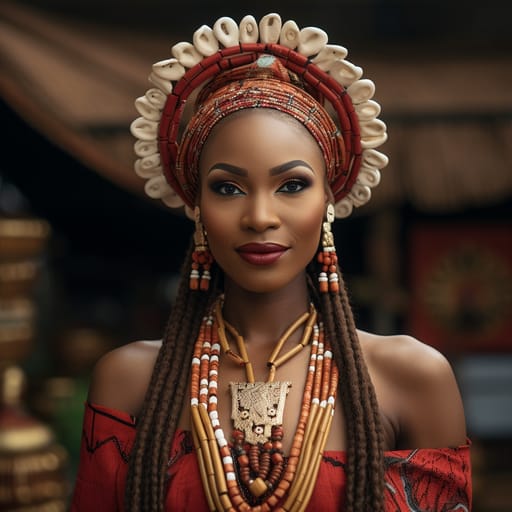
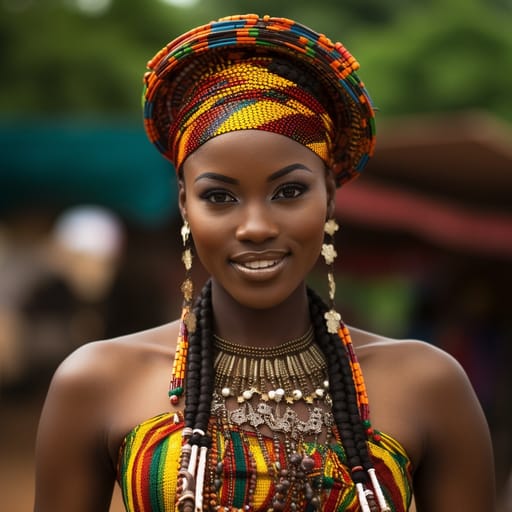
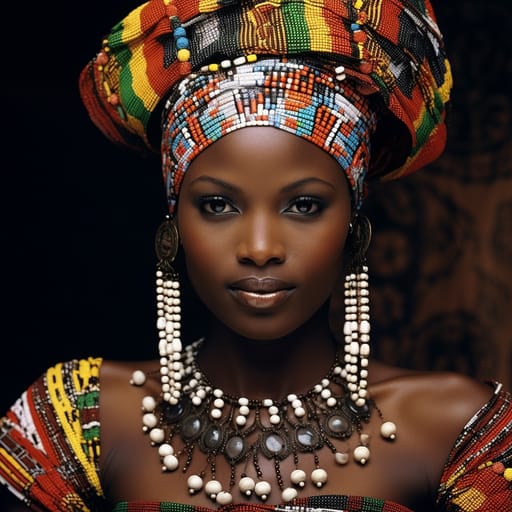
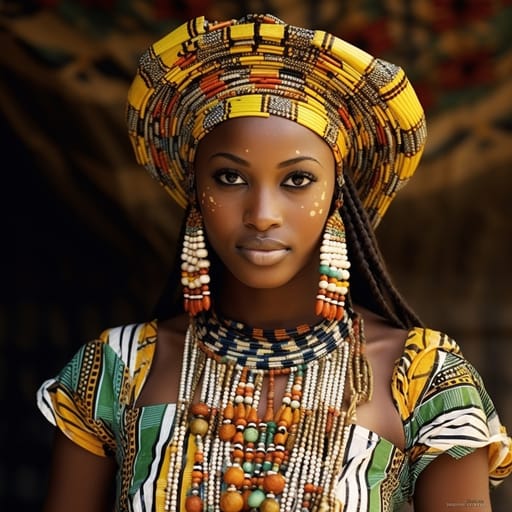
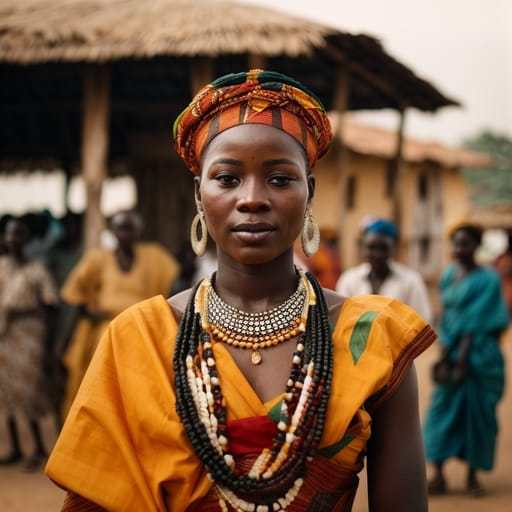
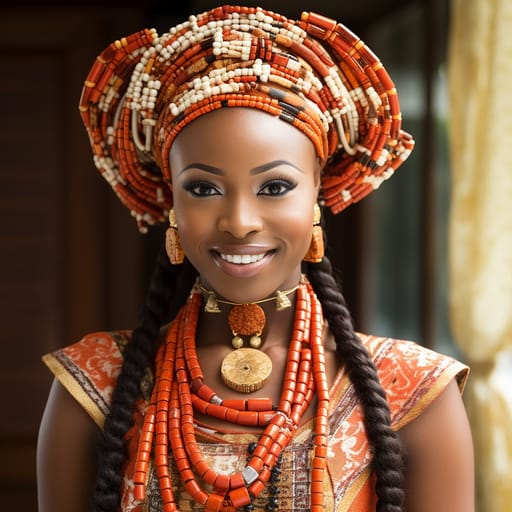
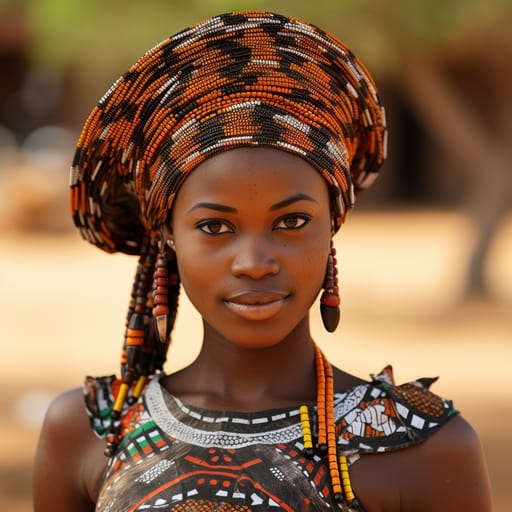
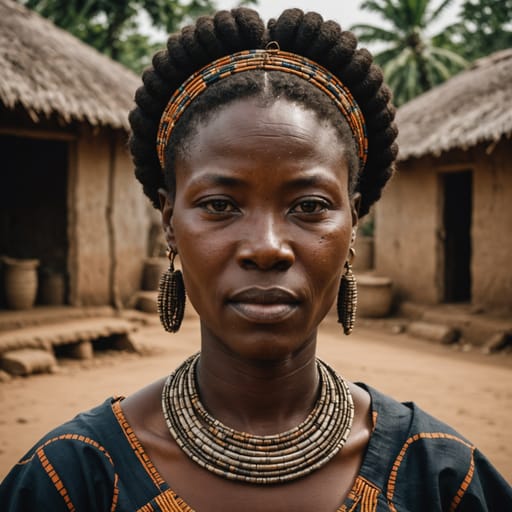
Typical Ngwa Phenotypes
Reference for AI generation: hair, eyes, skin, facial structure, build
Ngwa Body & Anatomy Reference
Per-feature anatomical profile for AI nude generation: West African Niger-Congo phenotype
Ngwa Boobs & Breasts
The typical Ngwa bust is medium-to-large cup, full, projecting, in line with the wider West African Niger-Congo pattern. Areolas usually fall in the 35-50mm range, with deep-brown to near-black areolar pigmentation against the medium-to-deep-brown skin tone. Compared with the smaller conical Cushitic East African profile, Ngwa breasts sit forward and are generally fuller and more projecting than the East African norm. A faithful AI render of Ngwa tits keeps that shape and areola size.
Ngwa Ass & Hips
Butt shape among Ngwa women: wide-set, full, heavily projected glutes, over wide iliac crests, broad gynoid pelvic pattern, high glute-to-waist ratio. This follows West African Niger-Congo ancestry and looks quite unlike the slim narrow-hip Cushitic East African profile. An accurate Ngwa ass in adult AI imagery keeps both the silhouette and the overall build (mesomorph with strong gluteal-femoral fat distribution) instead of a generic average.
Ngwa Vagina & Pussy
Vulvar anatomy among Ngwa women: deep-brown to near-black labial pigmentation, fuller labia minora. Pubic hair tends to be tightly-coiled coarse texture, densely distributed, in the usual inverted-triangle pattern. Both follow West African Niger-Congo pigmentation, which is why Ngwa pussy renders should not fall back on a pale, sparse Western template.
Ngwa Dicks & Penis
The Ngwa cock profile, from West African Niger-Congo anthropometric data: regional mean ~14-15cm erect; above-average girth, ~13cm circumference; deep-brown-to-near-black shaft pigmentation. Pubic hair has a tightly-coiled coarse texture and forms the usual inverted-V pattern. Whether Ngwa men are circumcised follows religious and cultural practice rather than phenotype.
Ngwa Body, Curves & Build
Build and curves among Ngwa women follow the West African Niger-Congo pattern: mesomorph with strong gluteal-femoral fat distribution, mean adult female BMI 24-27. Proportions matter as much as skin tone, so Ngwa figures should keep their regional height and limb ratios.
Ngwa Skin Tone & Hair Texture
The Ngwa skin range is medium-brown to deep-brown (Fitzpatrick V-VI), and hair tends to be tight 4A-4C coil, often worn natural, braided, or relaxed. That combination marks the West African Niger-Congo phenotype, and skin tone is the trait AI generators most often get wrong for Ngwa women.
Explore phenotype categories
Structured taxonomy with peer-reviewed scales · 22 anatomical categories
Erotic Poses & Sex Positions
From the pose catalog: 219 named positions with reference skeletons
Frequently asked questions about Ngwa people
Where is the Ngwa homeland?
The Ngwa homeland is Southern Abia State, southeastern Nigeria, east of the Imo River, including Isiala Ngwa North and South, Osisioma Ngwa, Obingwa and the city of Aba in Western Africa.
What language do Ngwa people speak?
Ngwa people primarily speak Ngwa dialect of Igbo (Niger-Congo, Volta-Niger, Igboid).
What religion do Ngwa people practice?
The predominant religion among Ngwa people is Predominantly Christian (Catholic, Anglican, Pentecostal), with Igbo traditional observances such as the new yam festival still kept.






Make your own Ngwa images
Five a day, free, no credits to buy. The studio starts from this group's phenotype data, so you can set body type, pose and style and keep the traits accurate.
Start with Ngwa