Help us get this right
Does this portrait look right for Saho?
One tap. It takes a second and it is recorded.
1 says it looks right, 0 say it looks off.
Saho Erotic
Islam
About Saho People
The Saho live along the eastern escarpment of the Eritrean highlands and down into the coastal lowlands toward the Red Sea, occupying the seam between the cooler plateau where the Tigrinya farm and the hot Danakil flats where the Afar herd. That position — neither fully highland nor fully coastal — has shaped almost everything about them. Most Saho are transhumant pastoralists who move their cattle, goats, and camels seasonally up and down the escarpment, following the rains; a smaller settled minority farms sorghum and barley on the higher ground. The household revolves around the herd, and disputes over grazing, water, and livestock are still mediated through customary law assemblies whose rulings carry real weight alongside the state courts.
Their language, Saho, sits in the Cushitic branch of Afroasiatic and is closely related to Afar — close enough that speakers on either side of the border generally understand each other, and linguists often pair the two as a single dialect cluster. It has no long literary tradition of its own; Saho who go to school typically read and write in Tigrinya or Arabic, and oral poetry, genealogies, and clan histories carry the weight that written records do elsewhere. The Saho are organized into named clans and lineages — the Asaorta, Hazu, Minifere, Idda, Debrimela and others — and a person's clan affiliation still tells other Saho a great deal about where they graze, whom they may marry, and which feuds and alliances they have inherited.
Almost all Saho are Sunni Muslim, and their conversion was early and gradual rather than imposed; Islam reached the Red Sea coast through trade in the first centuries of the religion and worked its way inland over generations. Day to day, religious practice tends to be unobtrusive and deeply embedded — Friday prayer, Ramadan, life-cycle observances — rather than puritanical. A small Christian Saho community, the Irob, lives on the Ethiopian side of the border in Tigray and follows the Ethiopian Orthodox tradition; they are the same people linguistically but a separate confessional world. The twentieth century treated the Saho roughly: the Italian colonial period, the long Eritrean war of independence, and the border war with Ethiopia all cut across their grazing routes and split families across what became a hard frontier. Many are still rebuilding herds and households on land they have used for centuries but now share with a state.
Related ethnic groups
Groups that share Saho's homeland, region, language, or religious tradition. These are likely candidates for comparative phenotype reference.
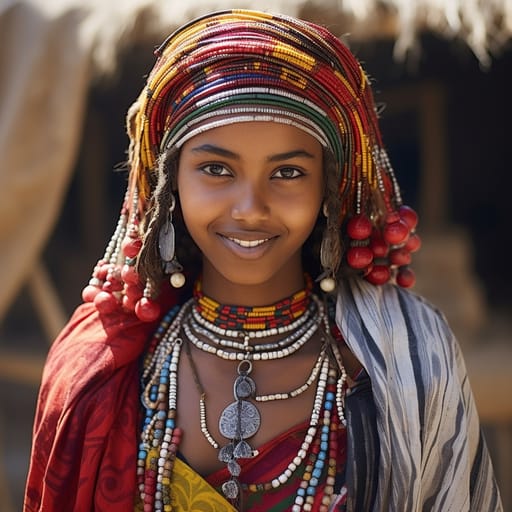
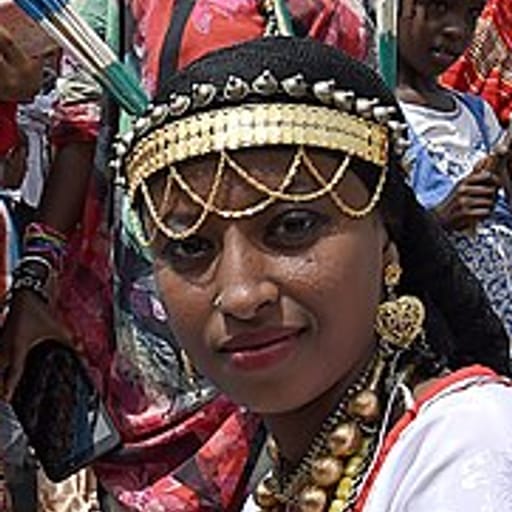
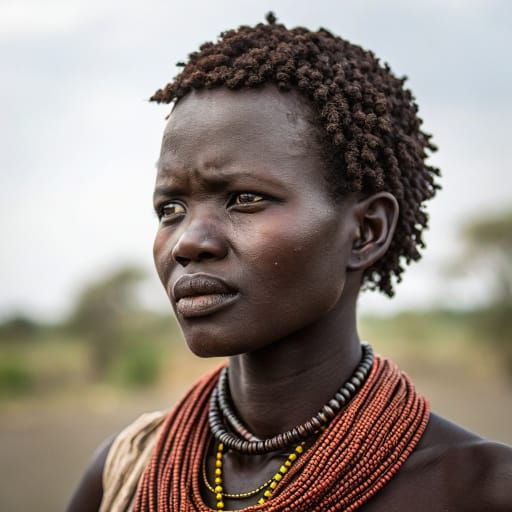
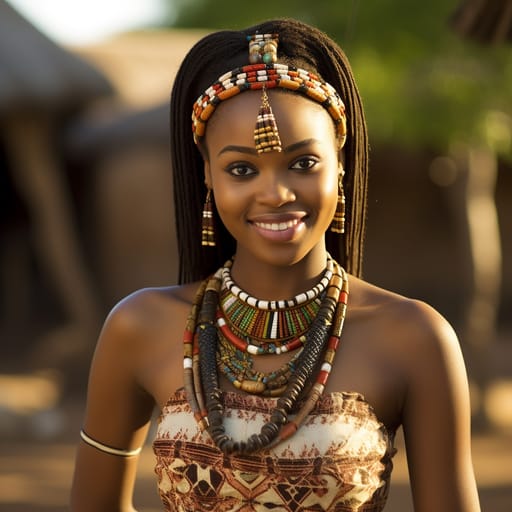
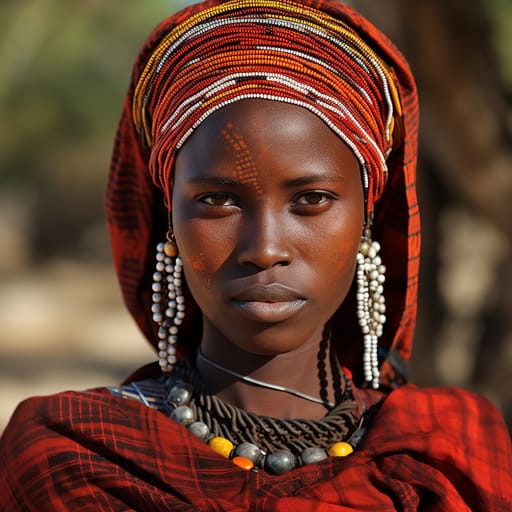
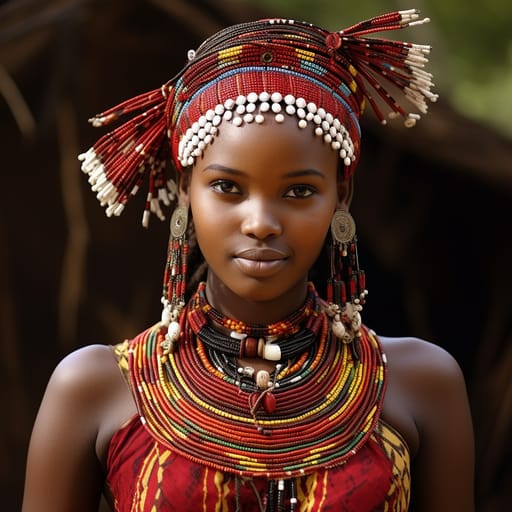
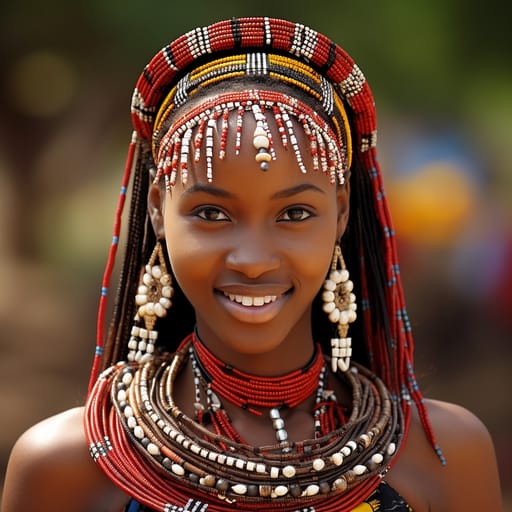
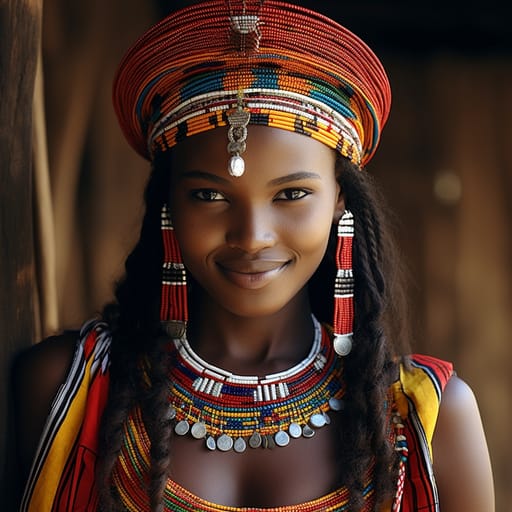
Geographic Distribution: Saho populations across 1 country
Each row is ranked by the group's share of that country's population, with the source citation drawn from published census and demographic surveys. Click through for the full per-country phenotype profile.
| Country | Share | Source |
|---|---|---|
| Eritrea | 4.0% | Eritrea estimates; Saho (~4%); Cushitic source population |
Typical Saho Phenotypes
Reference for AI generation: hair, eyes, skin, facial structure, build
The Saho are a Cushitic-speaking pastoralist people of the Eritrean coastal lowlands and the eastern escarpment running into the Danakil. Their phenotype sits firmly in the Northeast African Cushitic-Horn cluster — narrower-featured than Nilotic East Africans to the south, darker and more angular than the Tigrinya highlanders they live alongside.
Hair is almost universally black, textured between Type 3C and Type 4A — tight coils and springy curls rather than the dense coily mat typical further south or west. A subset, particularly among children and along the coast, shows looser wave patterns and reddish-brown sun-bleached tips from constant exposure. Eyes run dark brown to near-black, occasionally hazel in older individuals; the orbit is deep-set, almond-shaped, with no epicanthic fold and a clean, prominent supraorbital ridge. Lashes tend to be long and dense.
Skin tone ranges from Fitzpatrick IV through deep VI, clustered around mid-to-deep brown with warm reddish or olive undertones — markedly less blue-black than Nilotic populations, and often a shade lighter and warmer than neighbouring Afar. Coastal Saho weathered by sun and salt show leathered, more uniformly dark complexions; inland Asaorta and Tigre-mixed lineages skew lighter.
Facial structure is the giveaway: long, narrow face, high forehead, narrow nasal bridge with a relatively thin alar base — the classic Cushitic nose, a clear departure from the broader West African form. Lips are medium-full rather than thick, well-defined, with a pronounced philtrum. Cheekbones sit high and the jaw is fine, often pointed in women, more squared in men, as visible in figures like Osman Saleh.
Build trends tall and lean — men commonly 175–185 cm, slim-shouldered, long-limbed with low body fat shaped by pastoralist diet and terrain; women are similarly slender, with narrow hips and modest musculature. Subgroup variation runs along a coastal–highland axis: Asaorta and Hazu lineages of the escarpment lean taller and more refined-featured, while Idda and coastal Tarua clans, with deeper Afar admixture, show broader faces, darker skin, and stockier frames.
Data depth
0/100Coverage of image-grounded phenotype observations · drives AI generation diversity
- Sample size
- 0/40· 0 images
- Image quality
- 0/30· 0% high
- Confidence
- 0/20
- Source diversity
- 0/10
- ·No image observations yet
Explore phenotype categories
Structured taxonomy with peer-reviewed scales · 22 anatomical categories
Notable Saho People
6 reference figures, sourced from Wikipedia
- Ibrahim Mukhtar, Grand Mufti of Eritrea
- Osman Saleh Sabbe, Eritrean revolutionary
- Ahmed Mohammed Nasser, Chairman of the Eritrean Liberation Front
- Osman Saleh, Eritrean Foreign Minister
- Mahmoud Ahmed Sherifo, Minister of Foreign Affairs
- Ibrahim Omer, New Zealand MP
Erotic Poses & Sex Positions
From the pose catalog: 219 named positions with reference skeletons
Frequently asked questions about Saho people
Where is the Saho homeland?
The Saho homeland is Eritrea in Eastern Africa.
What countries do Saho people live in?
Saho populations are documented across 1 country: Eritrea.
What language do Saho people speak?
Saho people primarily speak Afroasiatic / Cushitic / Saho.
What religion do Saho people practice?
The predominant religion among Saho people is Islam.






Make your own Saho images
Five a day, free, no credits to buy. The studio starts from this group's phenotype data, so you can set body type, pose and style and keep the traits accurate.
Start with Saho