Help us get this right
Does this portrait look right for Buginese?
Nobody has judged this one yet. You would be the first.
Buginese Erotic
South Sulawesi (Indonesia)
Islam
About Buginese People
The Buginese are a seafaring people of South Sulawesi whose reputation has long preceded them across the Indonesian archipelago and beyond. For centuries their pinisi schooners carried Bugis traders, sailors, and sometimes raiders from the Makassar Strait to the coasts of Borneo, the Malay Peninsula, and northern Australia — far enough that the English word "bogeyman" is sometimes traced, half-seriously, to European fear of Bugis pirates. They remain one of the larger ethnic groups in eastern Indonesia, concentrated around the lowlands and river deltas near Bone, Wajo, Soppeng, and Sidenreng, with sizeable diaspora communities throughout maritime Southeast Asia.
Their language belongs to the South Sulawesi branch of Austronesian, sitting alongside Makassarese and Mandar rather than the Malayic languages most outsiders associate with Indonesia. Buginese is still written, when written traditionally, in Lontara — an Indic-derived script developed for the great epic La Galigo, a creation cycle longer than the Mahabharata and one of the largest literary works produced anywhere in the pre-modern world. The text was preserved largely by bissu, a class of ritual specialists who occupy a position outside the conventional male/female binary and who, in the older Bugis cosmology, mediated between humans and the upper world. Bissu traditions thinned considerably after Islamization and again under twentieth-century state pressure, but they persist in pockets, and the broader Bugis recognition of multiple gender roles — oroané, makkunrai, calalai, calabai, and bissu — is one of the more frequently cited features of the culture in anthropological writing.
Islam arrived in the early seventeenth century, when the rulers of Luwu, Gowa, and the Bugis kingdoms of Bone and Wajo converted in rapid succession. Sunni practice is now near-universal and shapes the rhythm of life, but it sits over older layers — adat law, ancestor reverence, and a strong ethic of siri', a concept of honor and shame so weighty it has historically justified anything from withdrawal of family ties to violence in defense of dignity. Bugis society is also unusually entrepreneurial by Indonesian standards; emigration for trade is treated as a normal life path rather than an exception, which explains the visibility of Bugis communities in Sabah, Johor, Singapore, and the eastern Indonesian outer islands. Among themselves, the four traditional Bugis kingdoms still inflect identity, and a person from Bone will quickly tell you they are not from Wajo.
Related ethnic groups
Groups that share Buginese's homeland, region, language, or religious tradition. These are likely candidates for comparative phenotype reference.
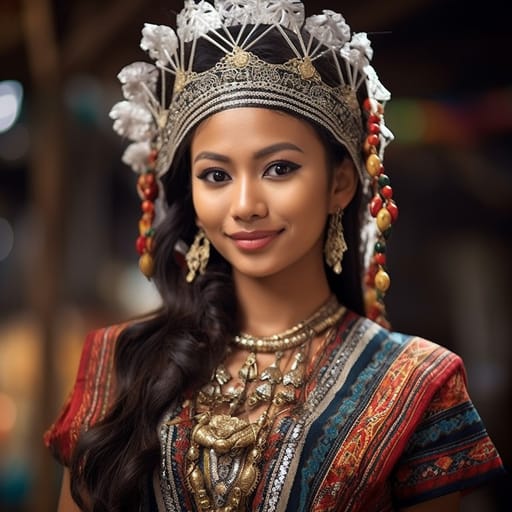
Makassarese
same homeland (South Sulawesi (Indonesia))
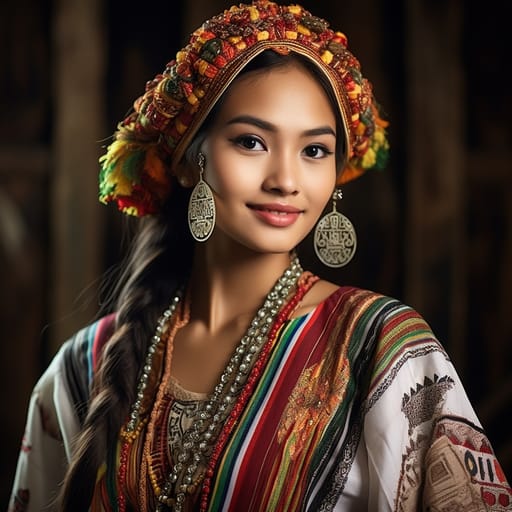
Maguindanao
same region (Southeast Asia)
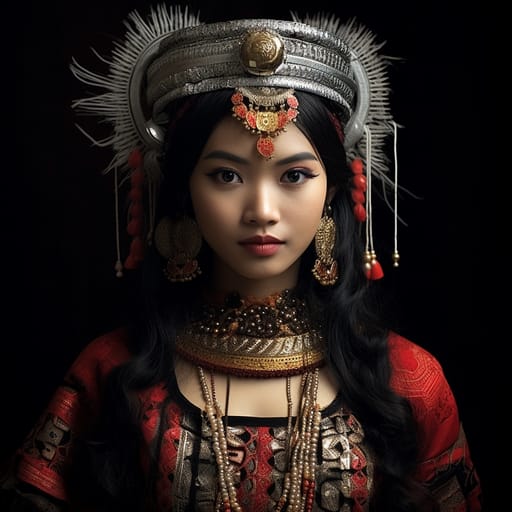
Lampungs
same region (Southeast Asia)
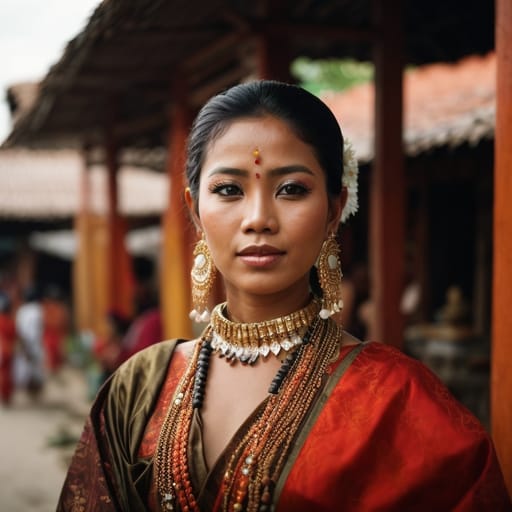
Butonese
same region (Southeast Asia)
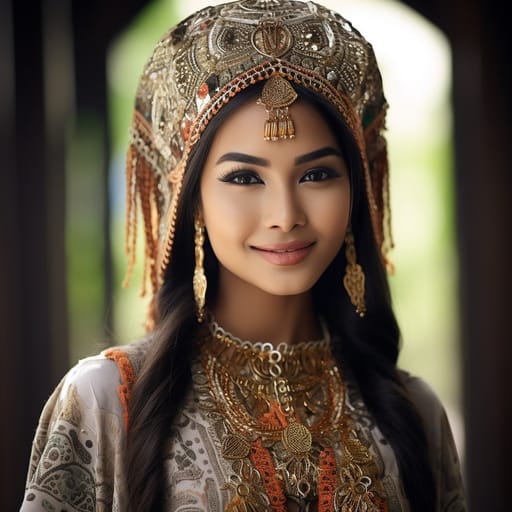
Gayonese
same region (Southeast Asia)
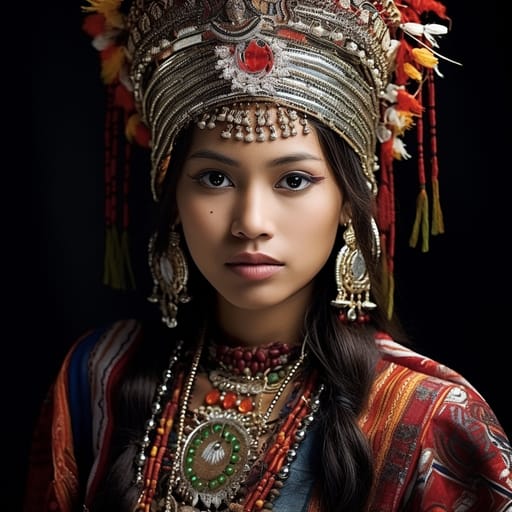
Mandarese
same region (Southeast Asia)
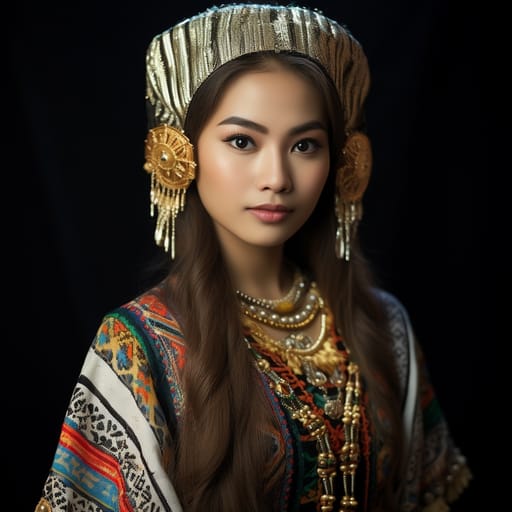
Iranun
same region (Southeast Asia)
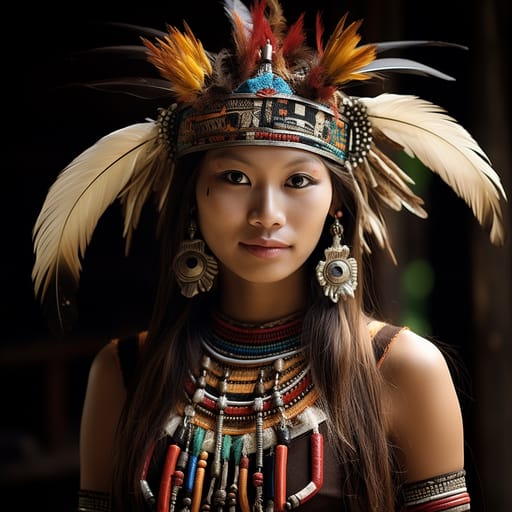
Iban
same region (Southeast Asia)
Geographic Distribution: Buginese populations across 1 country
Each row is ranked by the group's share of that country's population, with the source citation drawn from published census and demographic surveys. Click through for the full per-country phenotype profile.
| Country | Share | Source |
|---|---|---|
| Indonesia | 2.7% | Indonesia 2010-2020 Census, Bugis / Buginese (~2.7%, ~6.4M+); concentrated in South Sulawesi plus the substantial maritime Bugis diaspora throughout the Indonesian archipelago, Malaysia, and the broader Southeast Asian maritime region. The Bugis maritime trading culture has been historically prominent in the Indonesian archipelago |
Typical Buginese Phenotypes
Reference for AI generation: hair, eyes, skin, facial structure, build
The Buginese phenotype sits within the broader Austronesian Southeast Asian range but carries seafaring South Sulawesi distinctives — a lean, often wiry build paired with features that read as somewhat sharper and more angular than typical Javanese or Malay neighbors. Centuries as maritime traders across the archipelago left visible traces, with diaspora communities in Malaysia, Singapore, and eastern Indonesia showing slightly broader phenotype variation than the Sulawesi heartland.
Hair runs uniformly black to very dark brown, predominantly straight to gently wavy, with a smaller share of looser curl patterns appearing in coastal and southern subgroups. Texture tends to be medium to fine rather than coarse. Graying patterns favor late onset. Eye color is overwhelmingly dark brown, occasionally lifting to a warmer mid-brown in sunlight. The epicanthic fold is common but not universal — present in a clear majority but often subtler and less pronounced than in mainland East Asian populations, with many Buginese showing a partial fold or a softer monolid blending into a low double crease. Eye shape leans almond, set fairly level rather than upturned.
Skin tone spans Fitzpatrick III through V, centering on warm light-brown to medium-brown with golden or olive undertones; coastal and fishing-community Buginese trend darker through sun exposure, while inland highland subgroups (around Bone, Wajo, Soppeng) often sit a shade lighter. Reddish or sallow undertones are uncommon.
Facial structure is a notable feature: cheekbones tend to be high and defined, the jaw moderately tapered, and the nose more prominent than the regional average — a medium-to-high bridge with moderate alar width, occasionally aquiline, distinguishing many Buginese from the flatter-bridged Malay norm. Lips are medium-full, well-defined rather than heavy.
Stature is moderate — adult men commonly 162–170 cm, women 150–158 cm — with frames running lean and sinewy. Body composition favors low-to-moderate fat distribution and visible musculature, consistent with the group's historical maritime and agricultural livelihoods.
Buginese Body & Anatomy Reference
Southeast Asian Austronesian / Austroasiatic phenotype: anatomy reference for AI nude generation
Buginese Boobs & Breasts
Buginese boobs follow the Southeast Asian Austronesian / Austroasiatic profile: small-to-medium cup, modest projection. Areolar diameter is usually 26-38mm, and the coloring is medium-brown to dark-brown areolar pigmentation against the tan-to-medium-brown skin tone. Breast shape tracks body composition (ectomorph, petite frame, mean adult female BMI 20-23), so Buginese breasts tend to be firm, modest projection. Expect a forward-set shape, not the fuller South Asian or Polynesian bust.
Buginese Ass & Hips
Buginese ass and hip morphology presents as small-to-medium, modest projection, narrower hip profile, distinctly different from the fuller glutes of the Pacific Islander phenotype. The Buginese pelvic profile shows narrow-to-medium iliac crests, anchored in the Southeast Asian Austronesian / Austroasiatic skeletal pattern. Buginese butt shots in adult AI imagery should render the small-to-medium, modest projection, narrower hip profile silhouette with the overall build (ectomorph, petite frame) and the fat distribution typical of the Southeast Asian Austronesian / Austroasiatic phenotype.
Buginese Vagina & Pussy
Buginese pussy anatomy typically shows medium-brown to dark-brown labial pigmentation. Pubic hair is usually straight-to-wavy fine-to-medium texture. In AI-generated Buginese nudes, labial color should blend into the tan to medium-brown skin with a gradual transition, and the hair should keep its straight-to-wavy fine-to-medium texture.
Buginese Dicks & Penis
Penis reference for Buginese men: regional mean ~11cm erect, moderate girth. Coloring: medium-brown shaft pigmentation. An accurate Buginese cock in AI imagery matches the surrounding tan to medium-brown skin rather than a generic porn default. Circumcision depends on religion and custom, not ancestry.
Buginese Body, Curves & Build
The Buginese figure is generally ectomorph, petite frame, with mean adult female BMI 20-23, characteristic of Southeast Asian Austronesian / Austroasiatic ancestry. AI image tools tend to flatten regional body types into a few stock shapes; here the Buginese build is kept as its own reference.
Buginese Skin Tone & Hair Texture
Skin: tan to medium-brown (Fitzpatrick III-V). Hair: straight-to-wavy 1A-2A, dark-brown to black. Both are typical of Southeast Asian Austronesian / Austroasiatic ancestry. The most common mistake in AI nudes of Buginese women is a body rendered lighter than the face.
Data depth
21/100Coverage of image-grounded phenotype observations · drives AI generation diversity
- Sample size
- 11/40· 4 images
- Image quality
- 0/30· 0% high
- Confidence
- 10/20· mean 0.57
- Source diversity
- 0/10· wikipedia
- ·Small sample (n<10)
- ·Mostly low-quality source images
- ·Wikipedia-only source, not population-representative
Observed Distribution: Image Sample
Empirical observations from analyzed photographs · supplementary signal, not population truth
Sample: 4 images analyzed (4 wikipedia). Quality: 0 high, 3 medium, 1 low, 0 very_low. Avg analyzer confidence: 0.57.
Skin tone (Fitzpatrick): IV (25%), V (50%), unclear (25%)
Hair color: black (100%)
Hair texture: straight (50%), wavy (50%)
Eye color: dark brown (75%), unclear (25%)
Epicanthic fold: 50% present, 25% absent, 25% unclear
Caveats: Sample size 4 is small, so the observed distribution should be treated as suggestive, not definitive. Quality skews toward older or low-resolution photos; phenotype detail may be lossy. Sample is 100% Wikipedia notable people, which skews toward male, public-life, and modern figures, not population-representative.
Last aggregated: May 7, 2026
Explore phenotype categories
Structured taxonomy with peer-reviewed scales · 22 anatomical categories
Notable Buginese People
100 reference figures, sourced from Wikipedia
- Mario Teguh, motivational speaker and consultant
- Nh. Dini, Indonesian novelist and feminist
- Manuel Godinho de Eredia, 16th century explorer and writer, born in Portuguese Malacca (partial Portugu…
- Raja Ali Haji, a 19th-century historian, poet and scholar (Bugis-Malay)
- Rex Shelley, a Singaporean author (of mixed English, Portuguese, Malay and Bugis origin)
- Za'aba, Malaysian writer and language expert
- Ali Joego, stage film actor
- Andi Soraya, actress (Bugis-Arab and Cirebon ancestry)
- Andi Tenri Natassa, model, actress, TV presenter and politician (partial Dutch ancestry)
- Deddy Mizwar, Indonesian actor, film director and politician, former Vice Governor of West …
- Lisa Surihani, Malaysian actress, model, television host and commercial model
- Lukman Sardi, actor (Javanese and Bugis ancestry)
- Manohara Odelia Pinot, socialite, model and actress (partial American ancestry)
- Raihaanun, actress (partial Minangkabau ancestry)
- Sophan Sophiaan, actor and politician
- Sophia Latjuba, actress (German-Jewish, Bugis and Javanese ancestry)
- Tara Basro, actress and model (partial Lampung ancestry)
- Andi Fadly Arifuddin, Padi lead singer
- Andi Rianto, Indonesian film score composer
- Dewiq, Indonesian singer and songwriter (half Dutch ancestry)
- Eva Celia, actress, singer-songwriter (Dutch, German-Jewish, Bugis, Javanese, Minangkaba…
- Hady Mirza, Singaporean singer (partial Chinese ancestry)
- Hannah Al Rashid, actress, model and activist (partial French ancestry)
- Idris Sardi, Indonesian violinist and composer
- Joe Flizzow, Malaysian rapper and co-founder of Too Phat (Buginese Malay)
- Once Mekel, former lead vocals for Dewa
- Pasha, politician and Ungu lead singer
- Sandhy Sondoro, Indonesian singer-songwriter (Palembangese, Javanese, Buginese, and Minangkab…
- Saridjah Niung, Indonesian musician, teacher, radio announcer, playwright and batik artist
- Syafinaz Selamat, Malaysian singer and lecturer
- Taufik Batisah, Singaporean singer (partial Indian ancestry)
- Yunalis Zarai, Malaysian singer (Buginese Malay)
- Ziana Zain, Malaysian singer (partial Indian ancestry)
- Anas Alam Faizli, Malaysian entrepreneur (quarter Bugis ancestry)
- Achmad Arnold Baramuli, Indonesian prosecutor, politician and businessman (part Manado ancestry)
- Nazir Razak, Malaysian banker (Bugis and Malay ancestry)
- Nurdin Halid, politician and businessman
- Andi Muhammad Ghalib, Attorney General of Indonesia (1998-1999), Ambassador to India (2008-2013)
- Hamid Awaludin, former Ambassador of the Republic of Indonesia to the Russian Federation and …
- Riri Riza, film director, producer and screenwriter
- Pierre Coffin, French voice actor, animator and film director (partial French ancestry)
- Abdul Razak Hussein, 2nd Prime Minister of Malaysia
- B. J. Habibie, third President of Indonesia (Bugis, Gorontalese, Javanese ancestry)
- Ismail Abdul Rahman, former Deputy Prime Minister of Malaysia (1970-1973)
- Jusuf Kalla, former Vice President of Indonesia
- Muhyiddin Yassin, former Prime Minister of Malaysia (partial Javanese ancestry)
- Najib Razak, 6th Prime Minister of Malaysia (Bugis, Sasak and Malay ancestry)
- Abdullah Ahmad Badawi, 5th Prime Minister of Malaysia (Bugis ancestry)
- Tunku Abdul Rahman, first prime minister of Malaysia.
- Abu Bakar of Johor, the 21st sultan of the Johor Sultanate in Malaysia (Bugis-Malay)
- Alauddin Ahmad Syah, twenty-third Sultan of Aceh (1727 to 1735) and progenitor of the Bugis Dynast…
- Alauddin Muhammad Da'ud Syah II, thirty-fifth and last Sultan of Aceh
- Andi Djemma, former King of Luwu, Indonesian nationalist
- Andi Mappanyukki, 32nd King of Bone, declared a National Hero of Indonesia in 2004
- Arung Palakka, 17th-century prince and warrior
- Hisamuddin of Selangor, second Yang di-Pertuan Agong of Malaya and the sixth Sultan of Selangor
- La Maddukelleng, supreme leader of Wajo
- Raja Haji Fisabilillah, warrior, and also the Yang Dipertuan Muda (Crown Prince) of the Johor-Riau Su…
- Sultan Salehuddin Shah ibni Almarhum Daeng Chelak, the 1st Sultan of Selangor in Malaysia
- Siti Aisyah We Tenriolle, the monarch of the Kingdom of Tanette, an advocate of women's rights and resp…
- Tengku Ampuan Jemaah, second Raja Permaisuri Agong of Malaysia and Tengku Ampuan of Selangor
- Meutya Hafid, Indonesian newscaster and politician
- Najwa Shihab, journalist and TV presenter (Arab-Bugis ancestry)
- Abraham Samad, Indonesian lawyer and activist
- Farhat Abbas, Indonesian lawyer
- Muhammad Hatta Ali, thirteenth Chief Justice of the Supreme Court of Indonesia
- Harifin Tumpa, twelfth Chief Justice of the Supreme Court of Indonesia as well as the first …
- Idham Azis, former Chief of the Indonesian National Police
- Mohammad Jusuf, Indonesian military general
- Tanribali Lamo, Indonesian military officer and bureaucrat, former Director General of Nation…
- Yunus Yosfiah, Indonesian politician and a decorated member of the Indonesian Army
- Andi Abdullah Bau Massepe, Indonesian freedom fighter
- Pajonga Daeng Ngalie, Indonesian governor
- Ranggong Daeng Romo, Indonesian freedom fighter
- Andi Sultan Daeng Radja, Indonesian politician, independence activist
- Abdul Kahar Muzakkar, leader of an Islamic movement in South Sulawesi
- Abdul Rahman Mohamed Yassin, 1st President of the Dewan Negara Malaysia
- Alwi Shihab, Indonesian Coordinating Minister for People's Welfare in 2004-2005 and the Fo…
- Andi Mallarangeng, former Indonesian Minister of Youth and Sports in the Second United Indonesia…
- Andi Muhammad Suryady Bandy, Malaysian politician, Sabah State Assistant Minister of Youth and Sports
- Andi Oddang, former Governor of South Sulawesi
- Andi Sudirman Sulaiman, current Governor of South Sulawesi
- Amir Syamsuddin, former Minister of Justice and Human Rights of Indonesia (2011-2014)
- Anis Matta, politician
- Azalina Othman Said, Malaysian politician and lawyer (Bugis and Arab ancestry)
- Beddu Amang, economist, former head of the State Logistics Agency (Bulog) from 1995 to 1998
- Daeng Sanusi Daeng Mariok, Malaysian politician
- Dira Abu Zahar, Malaysian politician (Bugis-Malay ancestry)
- Erna Witoelar, former Minister of Human Settlements and Regional Development of Indonesia
- Ibrahim Yaacob, Malayan politician
- Isran Noor, Governor of East Kalimantan (partial Kutai ancestry)
- Indah Putri Indriani, politician, current regent of North Luwu Regency.
- Idrus Marham, former Indonesian Social Affairs Minister
- Ma'mun Sulaiman, Malaysian Politician
- Oesman Sapta Odang, Indonesian politician of the People's Conscience Party (Hanura) (partial Mina…
- Opu Daeng Risaju, Indonesian independence activist
- Rizal Mallarangeng, politician, senior advisor to Indonesia's Coordinating Economic Minister (200…
- Sandiaga Uno, politician, Minister of Tourism and Creative Economy (2020-2024), 14th Vice G…
- Sarifuddin Sudding, politician, member of the People's Representative Council.
- Syahrul Yasin Limpo, Indonesian Minister of Agriculture
Erotic Poses & Sex Positions
From the pose catalog: 219 named positions with reference skeletons
Frequently asked questions about Buginese people
Where is the Buginese homeland?
The Buginese homeland is South Sulawesi (Indonesia) in Southeast Asia.
What countries do Buginese people live in?
Buginese populations are documented across 1 country: Indonesia.
What language do Buginese people speak?
Buginese people primarily speak Austronesian / South Sulawesi / Buginese.
What religion do Buginese people practice?
The predominant religion among Buginese people is Islam.






Make your own Buginese images
Five a day, free, no credits to buy. The studio starts from this group's phenotype data, so you can set body type, pose and style and keep the traits accurate.
Start with Buginese