Help us get this right
Does this portrait look right for Batak?
One tap. It takes a second and it is recorded.
1 says it looks right, 0 say it looks off.
Batak Erotic
North Sumatra (Indonesia)
Austronesian / Northwest Sumatra-Barrier Islands / Batak
Christianity / Protestantism
Angkola, Karo, Mandailing, Pakpak, Simalungun, Toba, Alas, Kluet, Singkil
About Batak People
The Batak are not one people in the strict sense — they are a cluster of related peoples around Lake Toba in the highlands of North Sumatra, bound by language, kinship logic, and a shared sense of being highlanders rather than coastal Malays. The main branches — Toba, Karo, Simalungun, Pakpak, Angkola, and Mandailing, with Alas, Kluet, and Singkil sometimes grouped at the edges — speak related but mutually difficult Batak languages within the Austronesian family, and each maintains its own dialect, script tradition, and customary law. Outsiders tend to flatten them into a single "Batak" identity; internally, the distinctions matter a great deal.
The homeland is volcanic country. Lake Toba sits inside the caldera of a supervolcanic eruption roughly 74,000 years ago, and the surrounding plateau — cool, pine-dotted, agricultural — shaped a society that stayed comparatively isolated from the Indianized coastal kingdoms for centuries. That isolation is part of why the Batak retained a non-Muslim identity through the long Islamization of the Sumatran lowlands: when German and Dutch missionaries, especially the Rhenish Mission under Ludwig Nommensen, reached the Toba interior in the second half of the 19th century, they were entering a region that had resisted both Aceh's Islamic pressure from the north and Minangkabau influence from the south. The conversions that followed were rapid and consequential, and today most Toba, Karo, Simalungun, and Pakpak Batak are Protestant Christians, with the Huria Kristen Batak Protestan one of the largest Protestant churches in Asia. The Mandailing and Angkola, further south and exposed earlier to Minangkabau and Acehnese influence, are mostly Muslim — a reminder that "Batak" is not a religious category.
What organizes daily life across the branches is the marga, the patrilineal clan name. A Batak person carries their marga as a surname, and the rules of dalihan na tolu — the "three hearthstones" of wife-givers, wife-takers, and clan brothers — still shape weddings, funerals, inheritance, and seating arrangements at any serious gathering. Funerals in particular can be enormous, multi-day affairs in which the deceased's standing is measured in slaughtered buffalo and the careful choreography of in-laws. The Batak also keep distinct musical traditions — the gondang ensembles, with their tuned drums and reed instruments — and a culinary register built on freshwater fish, pork (in the Christian regions), and the sharp herb andaliman, a Sumatran cousin of Sichuan pepper that gives Batak cooking a numbing citrus heat unlike anything else in Indonesia.
Related ethnic groups
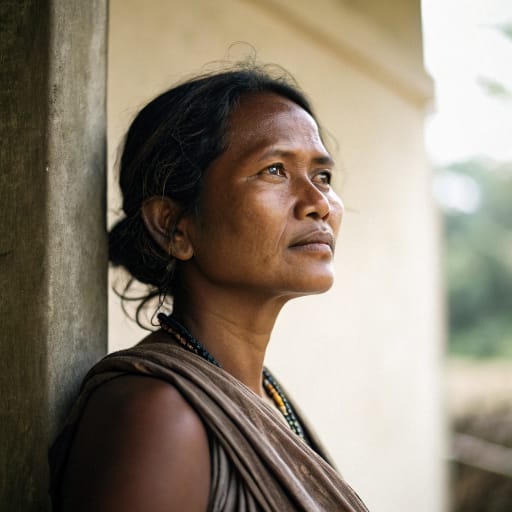
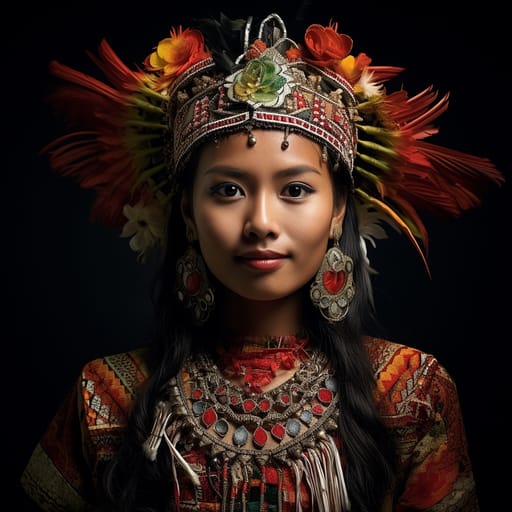
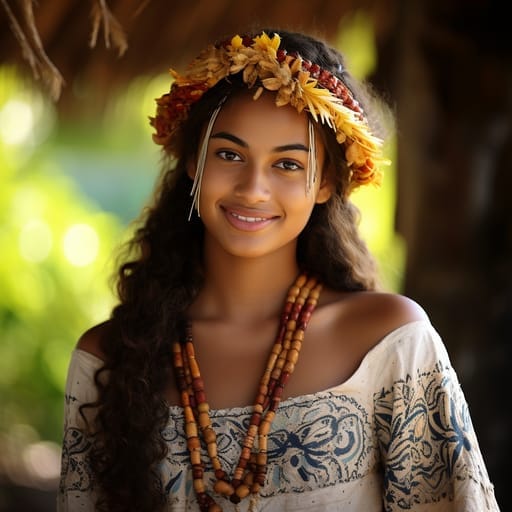
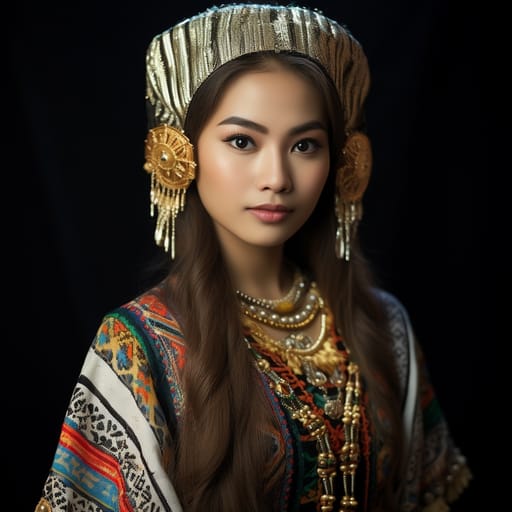
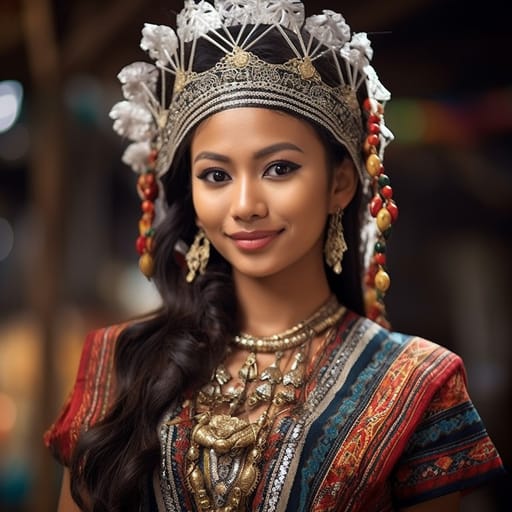
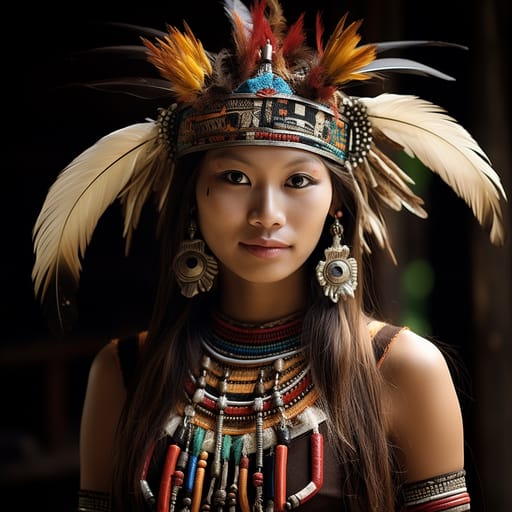
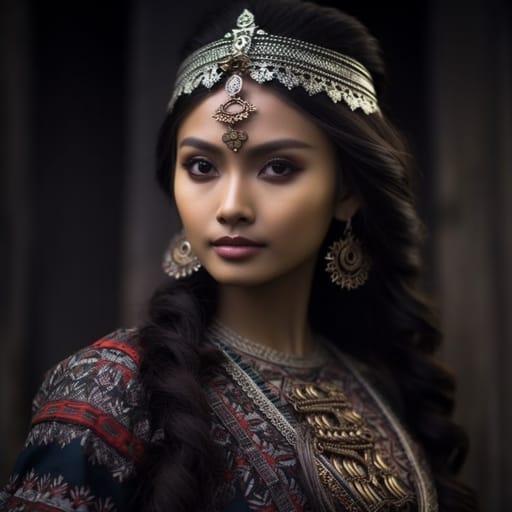
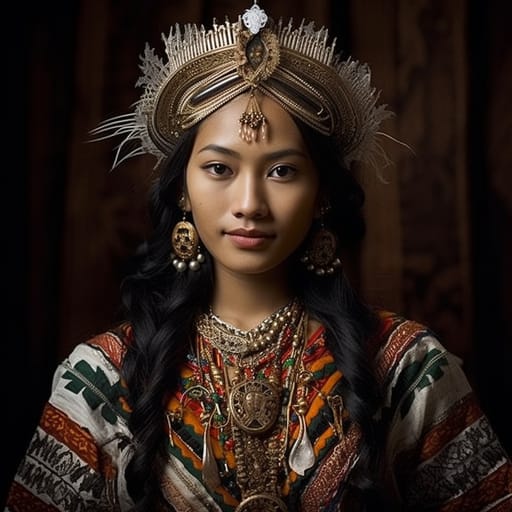
Groups that share Batak's homeland, region, language, or religious tradition. These are likely candidates for comparative phenotype reference.
Geographic Distribution: Batak populations across 1 country
Each row is ranked by the group's share of that country's population, with the source citation drawn from published census and demographic surveys. Click through for the full per-country phenotype profile.
| Country | Share | Source |
|---|---|---|
| Indonesia | 3.6% | Indonesia 2010-2020 Census, Batak (~3.6%, ~8.5M+); concentrated in North Sumatra. Multiple Batak sub-groups (Toba, Karo, Pakpak, Simalungun, Mandailing, Angkola). Distinctive religious history with substantial Protestant Christian conversion (the Toba and Karo Batak sub-populations are predominantly Protestant; the Mandailing and Angkola are predominantly Muslim) |
Typical Batak Phenotypes
Reference for AI generation: hair, eyes, skin, facial structure, build
The Batak phenotype reads as a distinct northern-Sumatran variation on Southeast Asian features, shaped by long isolation in the volcanic highlands around Lake Toba. Hair is uniformly black to very dark brown, predominantly straight to gently wavy, with a fine to medium texture; coarse, fully straight hair dominates among Toba and Karo highlanders, while coastal Mandailing and Angkola lines show somewhat more wave. Premature graying is fairly common and culturally unremarked.
Eye color sits in the dark-brown to near-black range. The epicanthic fold is present but typically lighter and more variable than in mainland East Asian populations — many Batak faces show a partial fold or a single eyelid that's clearly defined rather than deeply hooded, and a meaningful minority have a fully open double eyelid. Eye shape tends almond, set fairly wide.
Skin spans Fitzpatrick III to V, centered on a warm olive-to-light-brown range with golden or coppery undertones rather than the yellower cast common further north in Asia. Toba and Karo highlanders trend lighter; Mandailing and Pakpak running toward the lowlands and west coast trend a shade or two darker and more bronze.
Facially, Bataks are recognizable for a relatively strong bone structure by Southeast Asian standards: broad cheekbones, a defined squared or slightly angular jaw, and a nose that's medium-bridged with moderate alar width — narrower and more projected than typical Javanese, less so than mainland Southeast Asian profiles. Lips are medium-full, often with a well-defined cupid's bow. Footballer Radja Nainggolan illustrates the recognizably broad, squared Batak face at its more pronounced end.
Build runs compact and wiry, with men typically 165–172 cm and women 152–158 cm. Musculature is lean and dense rather than bulky; the highland sub-groups (Toba, Karo, Simalungun) are noted for above-average upper-body strength relative to frame, which surfaces in the group's disproportionate presence in Indonesian football, badminton, and martial arts.
Batak Body & Anatomy Reference
Per-feature anatomical profile for AI nude generation: Southeast Asian Austronesian / Austroasiatic phenotype
Batak Boobs & Breasts
Bust reference for Batak women: small-to-medium cup, modest projection, which is typical of Southeast Asian Austronesian / Austroasiatic ancestry. Areolas measure about 26-38mm across, with medium-brown to dark-brown pigmentation. Body type (ectomorph, petite frame) shapes the bust as well, so Batak tits are usually firm, modest projection. In AI imagery, keep the forward-set shape rather than drifting toward the fuller South Asian or Polynesian bust.
Batak Ass & Hips
The Batak ass is typically small-to-medium, modest projection, narrower hip profile, which sets it apart from the fuller glutes of the Pacific Islander phenotype. Underneath, the pelvis shows narrow-to-medium iliac crests, part of the Southeast Asian Austronesian / Austroasiatic skeletal pattern. For Batak butt pics and AI renders, match that silhouette and the overall build (ectomorph, petite frame).
Batak Vagina & Pussy
Batak pussy and vulvar anatomy presents medium-brown to dark-brown labial pigmentation, consistent with the Southeast Asian Austronesian / Austroasiatic phenotype's pigmentation pattern. Batak pubic hair is typically straight-to-wavy fine-to-medium texture, in the inverted-triangle pattern. For anatomically accurate Batak pussy renders the labial coloration should match the surrounding tan to medium-brown skin tone with a continuous gradient, and the hair should keep its straight-to-wavy fine-to-medium texture.
Batak Dicks & Penis
Batak dicks follow the Southeast Asian Austronesian / Austroasiatic reference data: regional mean ~11cm erect; moderate girth; medium-brown shaft pigmentation. Shaft color should track the tan to medium-brown skin tone with a smooth change toward the glans, and Batak pubic hair keeps its straight-to-wavy fine-to-medium texture.
Batak Body, Curves & Build
Batak body type and overall build presents as ectomorph, petite frame, with mean adult female BMI 20-23: the characteristic Southeast Asian Austronesian / Austroasiatic habitus. Batak curves and proportions should keep the regional skeletal frame (height, shoulder-to-hip ratio, limb proportions) rather than a generic mesomorph default.
Batak Skin Tone & Hair Texture
Batak skin sits in the tan to medium-brown (Fitzpatrick III-V) band. Hair is typically straight-to-wavy 1A-2A, dark-brown to black, in keeping with the Southeast Asian Austronesian / Austroasiatic phenotype. In nude renders the skin should stay one even tone from face to body, and body, pubic and head hair should match.
Data depth
71/100Coverage of image-grounded phenotype observations · drives AI generation diversity
- Sample size
- 40/40· 61 images
- Image quality
- 16/30· 33% high
- Confidence
- 15/20· mean 0.72
- Source diversity
- 0/10· wikipedia
- ·Wikipedia-only source, not population-representative
Observed Distribution: Image Sample
Empirical observations from analyzed photographs · supplementary signal, not population truth
Sample: 61 images analyzed (61 wikipedia). Quality: 20 high, 21 medium, 19 low, 1 very_low. Avg analyzer confidence: 0.72.
Skin tone (Fitzpatrick): II (5%), III (10%), IV (61%), V (20%), VI (2%), unclear (3%)
Hair color: black (56%), gray/white (38%), blonde (3%), light/medium brown (2%), unclear (2%)
Hair texture: straight (52%), wavy (16%), curly (2%), coily (2%), shaved (2%), covered (26%)
Eye color: dark brown (89%), blue (2%), hazel (2%), unclear (8%)
Epicanthic fold: 77% present, 15% absent, 8% unclear
Caveats: Sample is 100% Wikipedia notable people, which skews toward male, public-life, and modern figures, not population-representative.
Last aggregated: May 7, 2026
Explore phenotype categories
Structured taxonomy with peer-reviewed scales · 22 anatomical categories
Notable Batak People
87 reference figures, sourced from Wikipedia
- Amany Lubis, rector Syarif Hidayatullah State Islamic University
- Bakri Siregar, teacher, lecturer, and writer
- Josh O Mangotang Sitorus, my big friend Joshi, CDE student
- Harun Nasution, Islamic thought
- Lafran Pane, academician and Indonesian national hero
- Likas Tarigan, teacher and politician
- Melanchton Siregar, teacher and politician
- Pantur Silaban, lecturer and physicist
- Willem Iskander, or Sati Nasution, teacher, founded Kweekschool Voor inlandsche onderwijzer in…
- Friedrich Silaban, designed the Istiqlal Mosque and Gelora Bung Karno Stadium among others.
- Akbar, football player
- Alamsyah Nasution, football player
- Alvin Abdul Halim, football player
- Ansyari Lubis, football player
- Anthony Sinisuka Ginting, badminton player
- Ferdinand Sinaga, football player
- Jesse Hutagalung, Dutch tennis player
- Mahyadi Panggabean, football player
- Radja Nainggolan, Belgian footballer
- Riko Simanjuntak, football player
- Rizky Yusuf Nasution, football player
- Saktiawan Sinaga, football player
- Samuel Christianson Simanjuntak, football player
- Sorie Enda Nasution, weightlifter
- Merari Siregar, author of the first novel written in Indonesian.
- Muhammad Kasim Dalimunte, author of the first short story collection in the Indonesian literary canon.
- Norman Erikson Pasaribu, poet and short story writer
- Soeman Hasiboean, author of first detective novel in Indonesian.
- Arifin Siregar, governor of Indonesian central bank, Bank of Indonesia
- Darmin Nasution, governor of Indonesian central bank, Bank of Indonesia
- Amir Pasaribu, pianist, composer and critic
- Anneth Delliecia, singer-songwriter
- Atiqah Hasiholan, model and actress
- Bill Saragih, jazz musician
- Cas Alfonso, singer-songwriter
- Charles Bonar Sirait, television presenter
- Melaney Ricardo, presenter, actress, radio announcer
- Nadin Amizah, singer-songwriter
- Naura Ayu, singer and actress
- Prisia Nasution, martial artist
- Rinto Harahap, musician and ballad singer
- Sharena, model and actress
- Titi DJ, singer-songwriter
- Tumpal Tampubolon, film director, screenwriter, actor
- Sisingamangaraja XII, the last Batak priest-king and a National Hero of Indonesia
- Mochtar Lubis, journalist, writer
- Putra Nababan, journalist, news presenter, politician
- Rosianna Silalahi, journalist, news presenter
- Sanusi Pane, journalist, writer
- Abdul Haris Nasution, five-star general, leader of Indonesian army forces
- Feisal Tanjung, leader of Indonesian army forces
- Maraden Panggabean, leader of Indonesian army forces
- T.B. Simatupang, leader of Indonesian army forces
- Donald Izacus Panjaitan, Indonesian revolutionary hero
- Zulkifli Lubis, first chairman of Intelligence Agency in Indonesia
- Abdul Rasjid, Volksraad member and physician
- Adam Malik, former Indonesian vice president and 26th President of the United Nations Gen…
- Akhyar Nasution, former mayor of Medan
- Amir Sjarifuddin, former Indonesian prime minister
- Bobby Nasution, mayor of Medan
- Burhanuddin Harahap, former Indonesian prime minister
- Ferdinand Lumbantobing, former Indonesian minister of Manpower and Transmigration
- Kaharuddin Nasution, former governor of Riau and North Sumatra
- Lintong Mulia Sitorus, writer and general secretary of Socialist Party of Indonesia
- Luhut Binsar Pandjaitan, Indonesian minister
- Malam Sambat Kaban, Indonesian government minister
- Mangaradja Soeangkoepon, Volksraad member
- Oloan Hutapea, briefly head of the Communist Party (PKI)
- Peris Pardede, Communist politician and political prisoner
- Raja Inal Siregar, former governor of North Sumatera
- Sabam Sirait, member of the People's Representative Council
- Saifuddin Nasution Ismail, a member of the Malaysian Parliament and People's Justice Party
- Sondang Tiar Debora Tampubolon, politician, member of the House of Representatives
- Sutan Mohammad Amin Nasution, former governor of North Sumatra and Riau
- Urbanus Pardede, Communist politician and newspaper editor
- Zainul Arifin, former Deputy Prime Minister of Indonesia
- Alfred Gonti Pius Datubara, Roman Catholic Archbishop of Medan
- Anicetus Bongsu Antonius Sinaga, Roman Catholic Archbishop of Medan
- Assim al-Hakeem, Islamic cleric
- Martinus Dogma Situmorang, Roman Catholic Bishop of Padang
- Ludovikus Simanullang, Roman Catholic Bishop of Sibolga
- Darwin Lumbantobing, 16th Ephorus of the Batak Christian Protestant Church
- Ramlan Hutahaean, 9th General Secretary of the Batak Christian Protestant Church
- S.A.E. Nababan, Lutheran theologian, Ephorus of the Batak Christian Protestant Church
- Sholeh Mahmoed Nasution, Islamic preacher
- Dolorosa Sinaga, sculptor
- Reynhard Sinaga, convicted of rape in the United Kingdom
Erotic Poses & Sex Positions
From the pose catalog: 219 named positions with reference skeletons
Frequently asked questions about Batak people
Where is the Batak homeland?
The Batak homeland is North Sumatra (Indonesia) in Southeast Asia.
What countries do Batak people live in?
Batak populations are documented across 1 country: Indonesia.
What language do Batak people speak?
Batak people primarily speak Austronesian / Northwest Sumatra-Barrier Islands / Batak.
What religion do Batak people practice?
The predominant religion among Batak people is Christianity / Protestantism.






Make your own Batak images
Five a day, free, no credits to buy. The studio starts from this group's phenotype data, so you can set body type, pose and style and keep the traits accurate.
Start with Batak