Help us get this right
Does this portrait look right for Abung?
Nobody has judged this one yet. You would be the first.
Abung Erotic
Interior river lowlands of Lampung province, southern Sumatra, Indonesia, mainly the North, Central and East Lampung regencies around Kotabumi
Lampung, Nyo (Abung) dialect (Austronesian, Lampungic)
Sunni Islam, practiced alongside customary adat law in marriage and title ceremonies
Pepadun branch of the Lampung people; organized as Abung Siwo Mego, nine clans: Nunyai, Unyi, Nuban, Subing, Beliuk, Kunang, Selagai, Anak Tuha, Nyerupa
About Abung People
The Abung are the inland Lampung of southern Sumatra. They call themselves Abung Siwo Mego, the Abung of the nine clans, and that name says most of what matters about them. They are a confederation of patrilineal descent groups, or buay, that trace themselves to shared ancestors. Those clan lines still organize ceremony, rank and marriage. Their villages sit in the river lowlands of what are now the North, Central and East Lampung regencies, and the district map around Kotabumi is full of places that carry the Abung name.
Among the Lampung, the main cultural divide runs between two customary traditions. Saibatin communities on the coast keep a hereditary aristocracy. The Abung belong to the Pepadun side, named for the carved wooden seat where a man is installed when he takes a noble title. Under Pepadun custom, rank is not simply inherited. A family can move up by staging a begawi, an expensive public ceremony with buffalo slaughter and feasting, carried out with the approval of the assembled customary leaders. At the end the host takes an honorific title. Wealth and standing count as much as birth in this system, and it still sets the pecking order in many villages. Holding it all together is piil pesenggiri, the Lampung code of honor. It values a good name, open hospitality and showing up for communal work.
The Abung speak Lampung in its Nyo dialect. The dialect takes its name from its word for what, nyo, which sets it apart from the Api dialect spoken elsewhere in the province. Lampung is an Austronesian language with its own script, derived from Indian writing systems, though Indonesian now dominates school and business. Islam came into the region through trade and political ties with the Banten sultanate across the Sunda Strait. Nearly all Abung are Muslim, and their faith sits easily alongside customary law at weddings and title ceremonies.
The biggest change of the last century came from outside. Under Dutch rule, and much faster after Indonesian independence, Lampung became the main destination for settlers moved out of crowded Java. The Lampung-speaking peoples are now a minority in their own province. Custom is still easiest to see at weddings. Brides wear gold-threaded tapis skirts and the pointed gold siger crown. Some families also keep up sebambangan, a ritual elopement in which the young woman leaves behind a letter and a small sum of money before the two families begin negotiating.
Related ethnic groups
Groups that share Abung's homeland, region, language, or religious tradition. These are likely candidates for comparative phenotype reference.
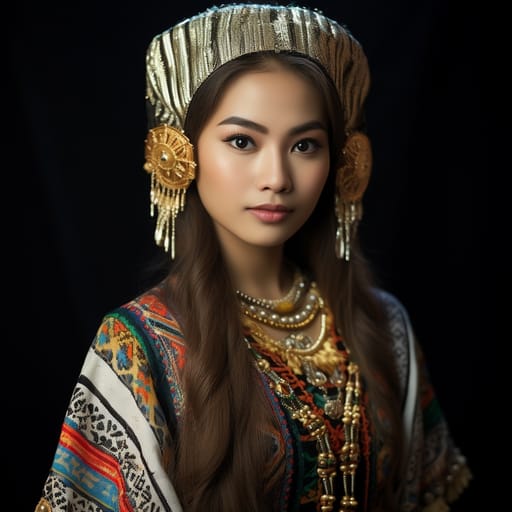
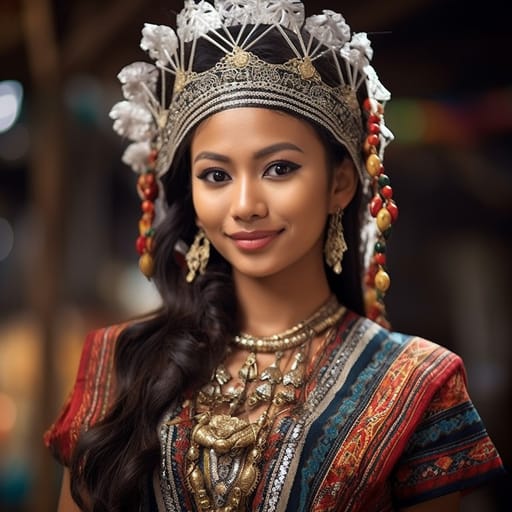
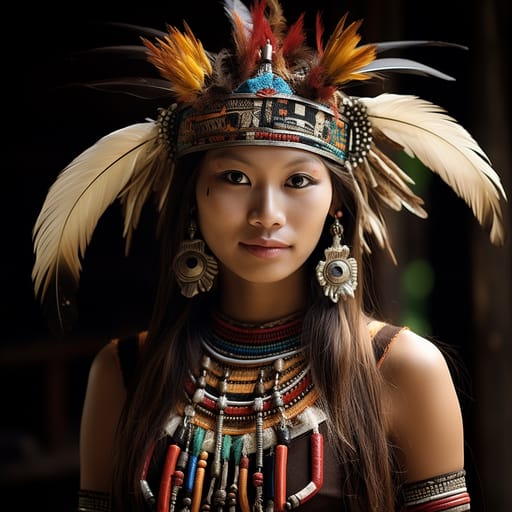
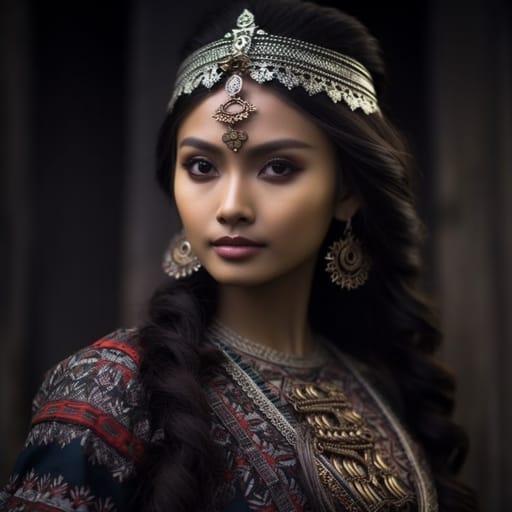
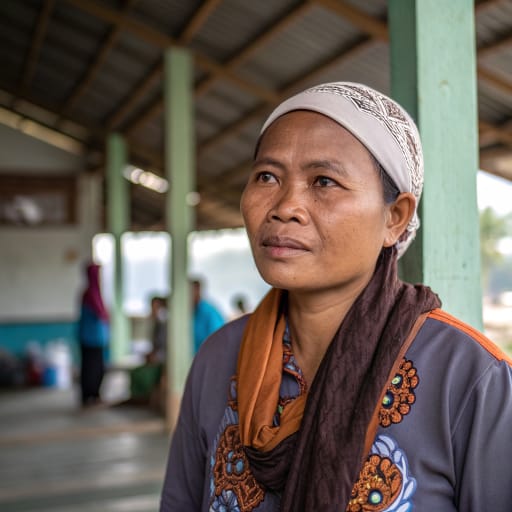
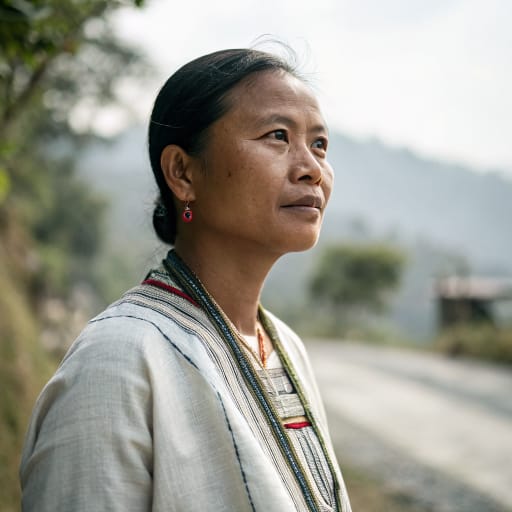
Typical Abung Phenotypes
Reference for AI generation: hair, eyes, skin, facial structure, build
Abung Body & Anatomy Reference
Southeast Asian Austronesian / Austroasiatic phenotype: anatomy reference for AI nude generation
Abung Boobs & Breasts
The typical Abung bust is small-to-medium cup, modest projection, in line with the wider Southeast Asian Austronesian / Austroasiatic pattern. Areolas usually fall in the 26-38mm range, with medium-brown to dark-brown areolar pigmentation against the tan-to-medium-brown skin tone. Compared with the fuller South Asian or Polynesian bust, Abung breasts sit forward and are generally firm, modest projection. A faithful AI render of Abung tits keeps that shape and areola size.
Abung Ass & Hips
Butt shape among Abung women: small-to-medium, modest projection, narrower hip profile, over narrow-to-medium iliac crests. This follows Southeast Asian Austronesian / Austroasiatic ancestry and looks quite unlike the fuller glutes of the Pacific Islander phenotype. An accurate Abung ass in adult AI imagery keeps both the silhouette and the overall build (ectomorph, petite frame) instead of a generic average.
Abung Vagina & Pussy
Vulvar anatomy among Abung women: medium-brown to dark-brown labial pigmentation. Pubic hair tends to be straight-to-wavy fine-to-medium texture, in the usual inverted-triangle pattern. Both follow Southeast Asian Austronesian / Austroasiatic pigmentation, which is why Abung pussy renders should not fall back on a pale, sparse Western template.
Abung Dicks & Penis
The Abung cock profile, from Southeast Asian Austronesian / Austroasiatic anthropometric data: regional mean ~11cm erect; moderate girth; medium-brown shaft pigmentation. Pubic hair has a straight-to-wavy fine-to-medium texture and forms the usual inverted-V pattern. Whether Abung men are circumcised follows religious and cultural practice rather than phenotype.
Abung Body, Curves & Build
Build and curves among Abung women follow the Southeast Asian Austronesian / Austroasiatic pattern: ectomorph, petite frame, mean adult female BMI 20-23. Proportions matter as much as skin tone, so Abung figures should keep their regional height and limb ratios.
Abung Skin Tone & Hair Texture
The Abung skin range is tan to medium-brown (Fitzpatrick III-V), and hair tends to be straight-to-wavy 1A-2A, dark-brown to black. That combination marks the Southeast Asian Austronesian / Austroasiatic phenotype, and skin tone is the trait AI generators most often get wrong for Abung women.
Explore phenotype categories
Structured taxonomy with peer-reviewed scales · 22 anatomical categories
Erotic Poses & Sex Positions
From the pose catalog: 219 named positions with reference skeletons
Frequently asked questions about Abung people
Where is the Abung homeland?
The Abung homeland is Interior river lowlands of Lampung province, southern Sumatra, Indonesia, mainly the North, Central and East Lampung regencies around Kotabumi in Southeast Asia.
What language do Abung people speak?
Abung people primarily speak Lampung, Nyo (Abung) dialect (Austronesian, Lampungic).
What religion do Abung people practice?
The predominant religion among Abung people is Sunni Islam, practiced alongside customary adat law in marriage and title ceremonies.






Make your own Abung images
Five a day, free, no credits to buy. The studio starts from this group's phenotype data, so you can set body type, pose and style and keep the traits accurate.
Start with Abung