Help us get this right
Does this portrait look right for Anglo-Burmese?
Nobody has judged this one yet. You would be the first.
Anglo-Burmese Erotic
Myanmar (Burma), historically centered on Rangoon (Yangon), Moulmein (Mawlamyine) and Maymyo (Pyin Oo Lwin); now largely a diaspora in the United Kingdom and Australia
English (Indo-European, Germanic) and Burmese (Sino-Tibetan, Lolo-Burmese); English is the home language in most diaspora families
Mostly Christian (Roman Catholic, Anglican, Baptist), with a Buddhist minority
Eurasian community of mixed European, chiefly British, and Bamar, Karen, Shan or Mon descent; closely related to the Anglo-Indians, with whom they overlapped in colonial Burma
About Anglo-Burmese People
The Anglo-Burmese are a people made by empire and then scattered by its end. They descend from European men, most of them British, and women from Burma's many peoples: Bamar, Karen, Shan, Mon and others. Mixed ancestry was only part of what set them apart. They lived in between. Burmese people traditionally carry no family name, but the Anglo-Burmese passed English surnames from father to child. They spoke English at home and Burmese in the market, and they filled Catholic, Anglican and Baptist pews while often counting Buddhist kin through their mothers' families.
The community took shape as Britain swallowed Burma in three wars between 1824 and 1885 and then governed it for decades as a province of British India. Anglo-Burmese men and women staffed the middle layers of the colonial state: the railways, the telegraph and post offices, customs, the police, hospitals and mission schools. They clustered in Rangoon, Moulmein and the hill town of Maymyo. That position gave them steady work but an uncertain place, since neither the British nor rising Burmese nationalism fully counted them as their own.
The Japanese invasion of 1942 shattered that world. Many joined the grueling overland flight through jungle and mountains to India, and not all survived it. Those who stayed lived under suspicion as people tied to the old rulers. Independence in 1948 set off a first wave of departures for Britain. The deeper break came after General Ne Win seized power in 1962. The state took over businesses and mission schools and pushed a strictly Burmese national identity, which left little room for a minority that spoke English and was largely Christian. Families left for the United Kingdom. Once Australia dropped its racial barriers to immigration, many more went to Perth and other Australian cities, and smaller numbers settled in New Zealand, Canada and the United States.
Today the Anglo-Burmese are above all a diaspora. Associations, reunions, church ties and family recipes hold them together, along with a steady effort to record memories before the generation born in Burma is gone. A smaller community remains in Myanmar, where many took Burmese names and married into the wider population. There, their European lines survive mostly in family photographs and memory.
Related ethnic groups
Groups that share Anglo-Burmese's homeland, region, language, or religious tradition. These are likely candidates for comparative phenotype reference.
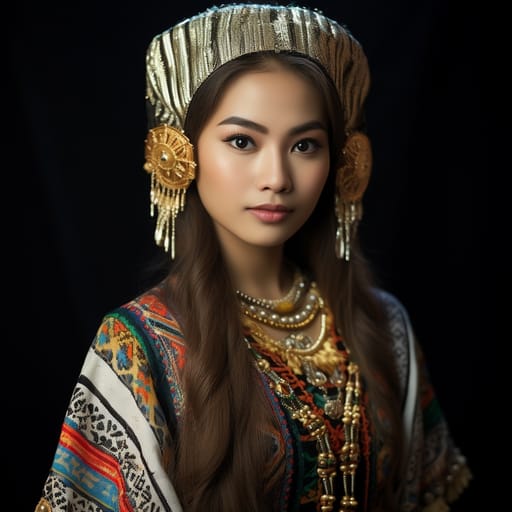
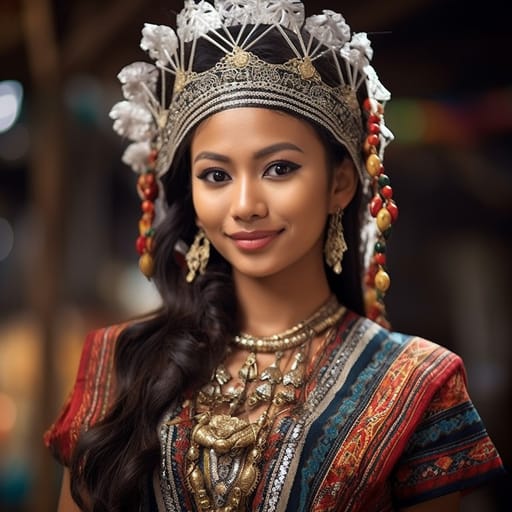
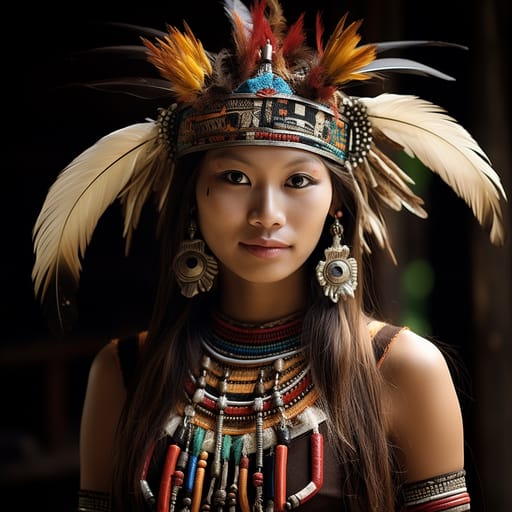
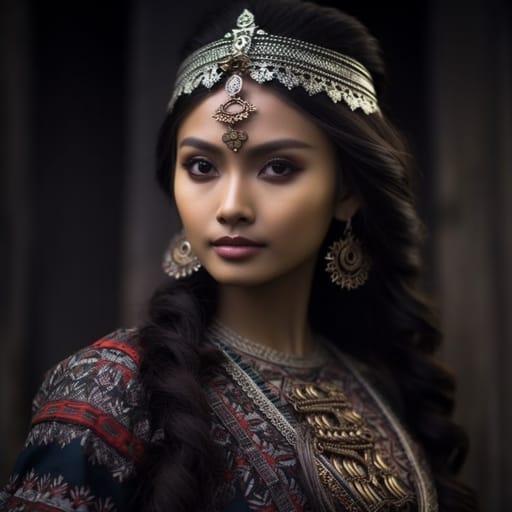
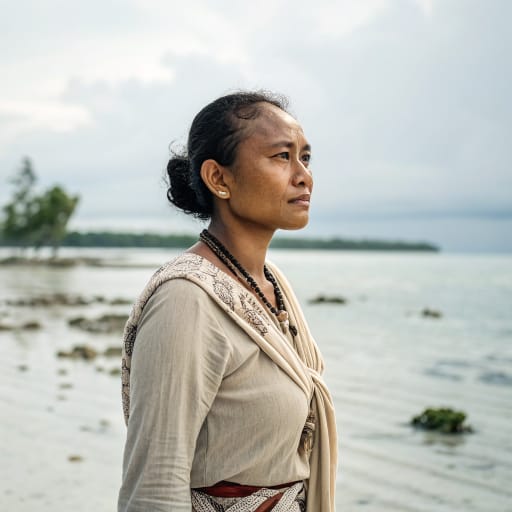
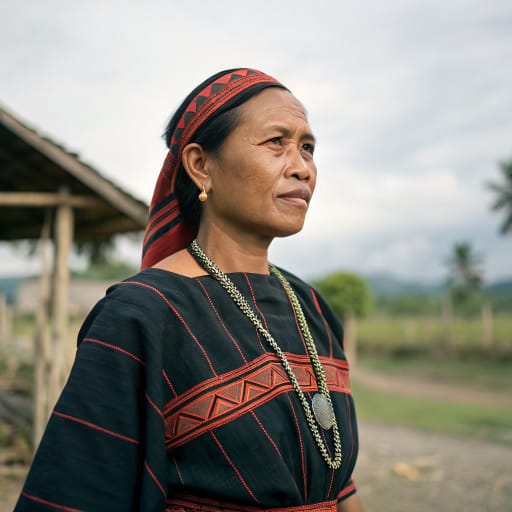
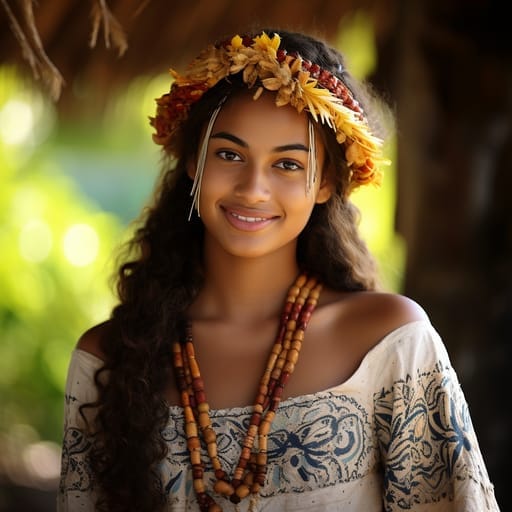
Typical Anglo-Burmese Phenotypes
Reference for AI generation: hair, eyes, skin, facial structure, build
Anglo-Burmese Body & Anatomy Reference
Anatomy by feature, Southeast Asian Austronesian / Austroasiatic phenotype
Anglo-Burmese Boobs & Breasts
Bust reference for Anglo-Burmese women: small-to-medium cup, modest projection, which is typical of Southeast Asian Austronesian / Austroasiatic ancestry. Areolas measure about 26-38mm across, with medium-brown to dark-brown pigmentation. Body type (ectomorph, petite frame) shapes the bust as well, so Anglo-Burmese tits are usually firm, modest projection. In AI imagery, keep the forward-set shape rather than drifting toward the fuller South Asian or Polynesian bust.
Anglo-Burmese Ass & Hips
The Anglo-Burmese ass is typically small-to-medium, modest projection, narrower hip profile, which sets it apart from the fuller glutes of the Pacific Islander phenotype. Underneath, the pelvis shows narrow-to-medium iliac crests, part of the Southeast Asian Austronesian / Austroasiatic skeletal pattern. For Anglo-Burmese butt pics and AI renders, match that silhouette and the overall build (ectomorph, petite frame).
Anglo-Burmese Vagina & Pussy
Anglo-Burmese pussy and vulvar anatomy presents medium-brown to dark-brown labial pigmentation, consistent with the Southeast Asian Austronesian / Austroasiatic phenotype's pigmentation pattern. Anglo-Burmese pubic hair is typically straight-to-wavy fine-to-medium texture, in the inverted-triangle pattern. For anatomically accurate Anglo-Burmese pussy renders the labial coloration should match the surrounding tan to medium-brown skin tone with a continuous gradient, and the hair should keep its straight-to-wavy fine-to-medium texture.
Anglo-Burmese Dicks & Penis
Anglo-Burmese dicks follow the Southeast Asian Austronesian / Austroasiatic reference data: regional mean ~11cm erect; moderate girth; medium-brown shaft pigmentation. Shaft color should track the tan to medium-brown skin tone with a smooth change toward the glans, and Anglo-Burmese pubic hair keeps its straight-to-wavy fine-to-medium texture.
Anglo-Burmese Body, Curves & Build
Anglo-Burmese body type and overall build presents as ectomorph, petite frame, with mean adult female BMI 20-23: the characteristic Southeast Asian Austronesian / Austroasiatic habitus. Anglo-Burmese curves and proportions should keep the regional skeletal frame (height, shoulder-to-hip ratio, limb proportions) rather than a generic mesomorph default.
Anglo-Burmese Skin Tone & Hair Texture
Anglo-Burmese skin sits in the tan to medium-brown (Fitzpatrick III-V) band. Hair is typically straight-to-wavy 1A-2A, dark-brown to black, in keeping with the Southeast Asian Austronesian / Austroasiatic phenotype. In nude renders the skin should stay one even tone from face to body, and body, pubic and head hair should match.
Explore phenotype categories
Structured taxonomy with peer-reviewed scales · 22 anatomical categories
Erotic Poses & Sex Positions
From the pose catalog: 219 named positions with reference skeletons
Frequently asked questions about Anglo-Burmese people
Where is the Anglo-Burmese homeland?
The Anglo-Burmese homeland is Myanmar (Burma), historically centered on Rangoon (Yangon), Moulmein (Mawlamyine) and Maymyo (Pyin Oo Lwin); now largely a diaspora in the United Kingdom and Australia in Southeast Asia.
What language do Anglo-Burmese people speak?
Anglo-Burmese people primarily speak English (Indo-European, Germanic) and Burmese (Sino-Tibetan, Lolo-Burmese); English is the home language in most diaspora families.
What religion do Anglo-Burmese people practice?
The predominant religion among Anglo-Burmese people is Mostly Christian (Roman Catholic, Anglican, Baptist), with a Buddhist minority.






Make your own Anglo-Burmese images
Five a day, free, no credits to buy. The studio starts from this group's phenotype data, so you can set body type, pose and style and keep the traits accurate.
Start with Anglo-Burmese