No portrait yet
Aeta Erotic
Mountains of central and northern Luzon, Philippines: Zambales, Tarlac, Pampanga, Bataan, and the Sierra Madre
Sambalic Aeta languages such as Mag-antsi, Mag-indi, Abellen, Ambala, and Magbukon, plus the Agta languages of northeastern Luzon (Austronesian, Philippine branch); Tagalog, Kapampangan, Ilocano, and Sambal as second languages
Traditional animism centered on Apo Namalyari and nature spirits; widespread Roman Catholic and evangelical Christianity
Philippine Negrito peoples; branches include Ayta Mag-antsi, Ayta Mag-indi, Ayta Abellen, Ayta Ambala, Ayta Magbukon, and the related Agta and Dumagat of the Sierra Madre
About Aeta People
The Aeta are the Negrito peoples of Luzon, and by most accounts the oldest continuous population in the Philippines. Their ancestors reached the archipelago tens of thousands of years before the Austronesian farmers whose descendants now make up the national majority, and the difference still shows: Aeta are short and dark-skinned, with tightly curled hair, in a country where most people are none of those things. Genetic work published in 2021 found that the Ayta Magbukon of Bataan carry more Denisovan ancestry than any other known population on earth, a reminder that this is not simply an old people but a distinct lineage. They live in scattered communities across the Zambales range, the slopes of Mount Pinatubo in Tarlac and Pampanga, the Bataan peninsula, and the Sierra Madre on Luzon's Pacific side, where related groups go by Agta and Dumagat. Their own original languages are gone. What the Aeta speak today are Austronesian languages taken from farming neighbors long ago and reshaped: the Sambalic tongues Mag-antsi, Mag-indi, Abellen, Ambala, and Magbukon in the west, and a string of Agta languages in the northeast, most of them small and several endangered, with Tagalog, Kapampangan, and Ilocano layered on top for daily trade.
Traditional Aeta religion centers on a supreme being, Apo Namalyari, understood to live on Pinatubo itself, along with a crowd of environmental spirits who had to be respected when hunting or cutting trees. Most Aeta today are at least nominally Christian, Catholic or evangelical, though the older spirit world tends to persist underneath. Hunting with bow and arrow, honey gathering, and small swidden plots were the economic base, and Aeta jungle skill was well enough known that American forces at Clark and Subic ran survival schools staffed by Aeta instructors for decades. Among the Agta of northeastern Luzon, women hunt too, with bows and dogs, one of the few well-documented cases anywhere of women as routine big-game hunters. The defining rupture of modern Aeta history came on June 15, 1991, when Pinatubo erupted and buried the heartland under ash and lahar. Tens of thousands were pushed into lowland resettlement sites, where disease, dependency, and land loss followed. Some have returned to the mountain. Many have not. Under the 1997 Indigenous Peoples' Rights Act, Aeta communities have won ancestral domain titles over parts of their territory, but they remain among the poorest and most marginalized Filipinos, still contesting land with military reservations, mining, and developers, and still treated by many lowlanders as a curiosity rather than as neighbors.
Related ethnic groups
Groups that share Aeta's homeland, region, language, or religious tradition. These are likely candidates for comparative phenotype reference.




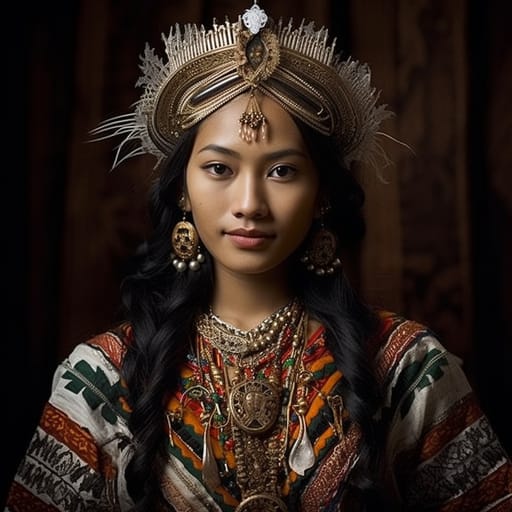

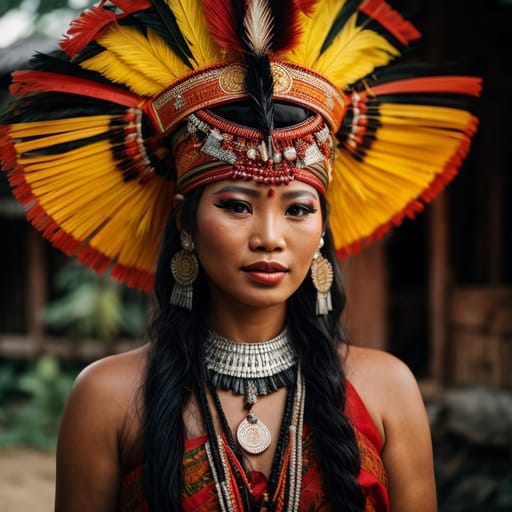

Typical Aeta Phenotypes
Reference for AI generation: hair, eyes, skin, facial structure, build
Aeta Body & Anatomy Reference
Anatomy by feature, Southeast Asian Austronesian / Austroasiatic phenotype
Aeta Boobs & Breasts
Bust reference for Aeta women: small-to-medium cup, modest projection, which is typical of Southeast Asian Austronesian / Austroasiatic ancestry. Areolas measure about 26-38mm across, with medium-brown to dark-brown pigmentation. Body type (ectomorph, petite frame) shapes the bust as well, so Aeta tits are usually firm, modest projection. In AI imagery, keep the forward-set shape rather than drifting toward the fuller South Asian or Polynesian bust.
Aeta Ass & Hips
The Aeta ass is typically small-to-medium, modest projection, narrower hip profile, which sets it apart from the fuller glutes of the Pacific Islander phenotype. Underneath, the pelvis shows narrow-to-medium iliac crests, part of the Southeast Asian Austronesian / Austroasiatic skeletal pattern. For Aeta butt pics and AI renders, match that silhouette and the overall build (ectomorph, petite frame).
Aeta Vagina & Pussy
Aeta pussy and vulvar anatomy presents medium-brown to dark-brown labial pigmentation, consistent with the Southeast Asian Austronesian / Austroasiatic phenotype's pigmentation pattern. Aeta pubic hair is typically straight-to-wavy fine-to-medium texture, in the inverted-triangle pattern. For anatomically accurate Aeta pussy renders the labial coloration should match the surrounding tan to medium-brown skin tone with a continuous gradient, and the hair should keep its straight-to-wavy fine-to-medium texture.
Aeta Dicks & Penis
Aeta dicks follow the Southeast Asian Austronesian / Austroasiatic reference data: regional mean ~11cm erect; moderate girth; medium-brown shaft pigmentation. Shaft color should track the tan to medium-brown skin tone with a smooth change toward the glans, and Aeta pubic hair keeps its straight-to-wavy fine-to-medium texture.
Aeta Body, Curves & Build
Aeta body type and overall build presents as ectomorph, petite frame, with mean adult female BMI 20-23: the characteristic Southeast Asian Austronesian / Austroasiatic habitus. Aeta curves and proportions should keep the regional skeletal frame (height, shoulder-to-hip ratio, limb proportions) rather than a generic mesomorph default.
Aeta Skin Tone & Hair Texture
Aeta skin sits in the tan to medium-brown (Fitzpatrick III-V) band. Hair is typically straight-to-wavy 1A-2A, dark-brown to black, in keeping with the Southeast Asian Austronesian / Austroasiatic phenotype. In nude renders the skin should stay one even tone from face to body, and body, pubic and head hair should match.
Explore phenotype categories
Structured taxonomy with peer-reviewed scales · 22 anatomical categories
Erotic Poses & Sex Positions
From the pose catalog: 219 named positions with reference skeletons
Frequently asked questions about Aeta people
Where is the Aeta homeland?
The Aeta homeland is Mountains of central and northern Luzon, Philippines: Zambales, Tarlac, Pampanga, Bataan, and the Sierra Madre in Southeast Asia.
What language do Aeta people speak?
Aeta people primarily speak Sambalic Aeta languages such as Mag-antsi, Mag-indi, Abellen, Ambala, and Magbukon, plus the Agta languages of northeastern Luzon (Austronesian, Philippine branch); Tagalog, Kapampangan, Ilocano, and Sambal as second languages.
What religion do Aeta people practice?
The predominant religion among Aeta people is Traditional animism centered on Apo Namalyari and nature spirits; widespread Roman Catholic and evangelical Christianity.






Make your own Aeta images
Five a day, free, no credits to buy. The studio starts from this group's phenotype data, so you can set body type, pose and style and keep the traits accurate.
Start with Aeta